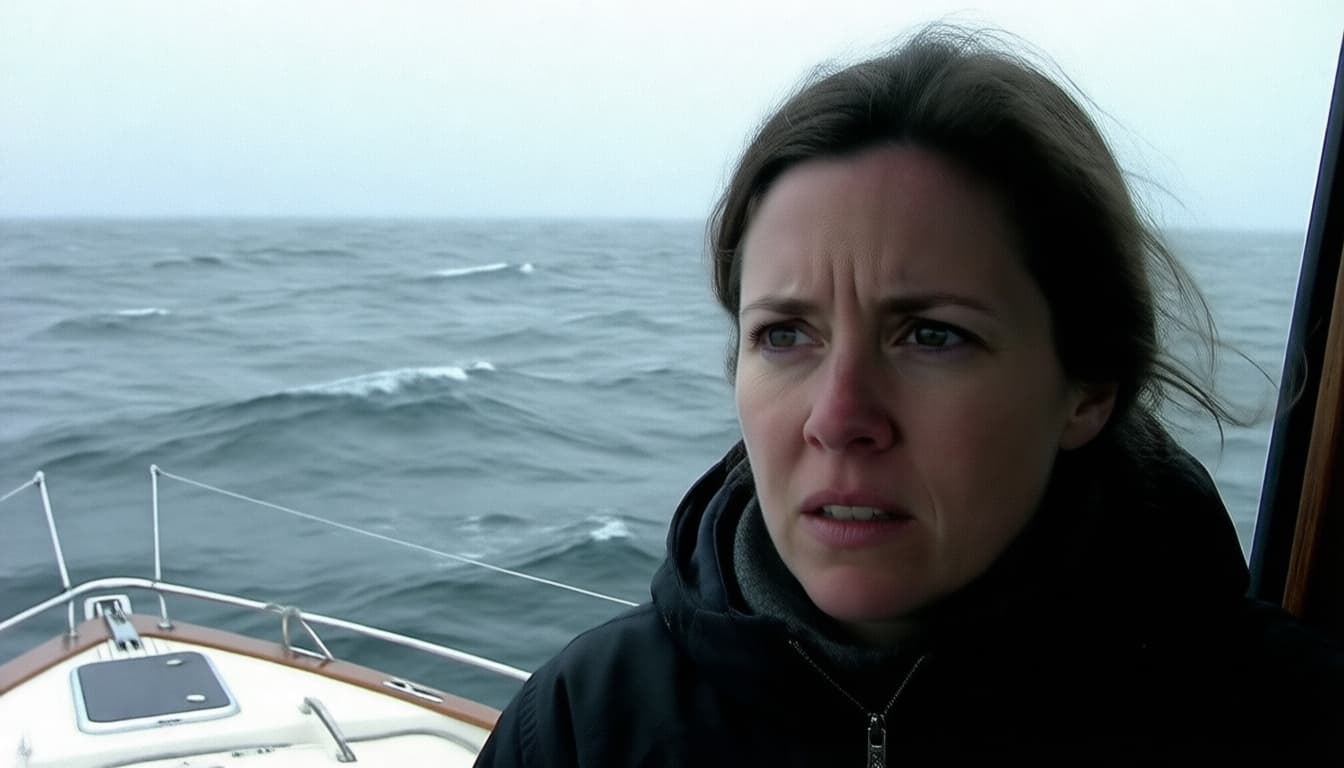
The Ancient Gaze of the Deep Sea
In 1817, Gloucester Harbor, Massachusetts, was gripped by an unprecedented wave of sightings. Numerous credible witnesses—captains, judges, and respected citizens—uniformly described a colossal, serpentine creature, measuring 15 to 30 meters long, undulating across the bay. This was no drunken sailor's tale; detailed newspaper accounts and notarized affidavits became evidence of an inexplicable event recorded in maritime history. The Linnaean Society of New England, convinced by the evidence, launched an official investigation, and the "Gloucester Sea Serpent" became an eerie mystery in the annals of marine history.
For over two centuries, the story remained an enigma, dismissed as mass hysteria or misidentification. Then, in late 2023, modern technology relayed another ominous echo. While surveying a deep, poorly charted trench about 25 kilometers off the Gloucester coast, the NOAA (National Oceanic and Atmospheric Administration) research vessel *Albatross IV* reported unprecedented sonar anomalies. A massive, abyssal object, moving at impossible speeds at extreme depths, was briefly detected. Concurrently, three commercial lobster boats operating nearby experienced simultaneous, inexplicable power surges and rudder lock-ups, accompanied by localized swells in calm seas. Official NOAA reports cited "unusual thermocline activity" and "isolated equipment malfunctions," but in the harbor's taverns, fishermen whispered of something far older and larger stirring in the cold, dark depths.
This collision of historical testimony and recently officially dismissed data compelled Dr. Aris Thorne, a marine cryptozoologist known for her meticulous and skeptical approach. She wasn't seeking monsters; she was tracking discrepancies, anomalies, within the conventional explanations of the ocean.
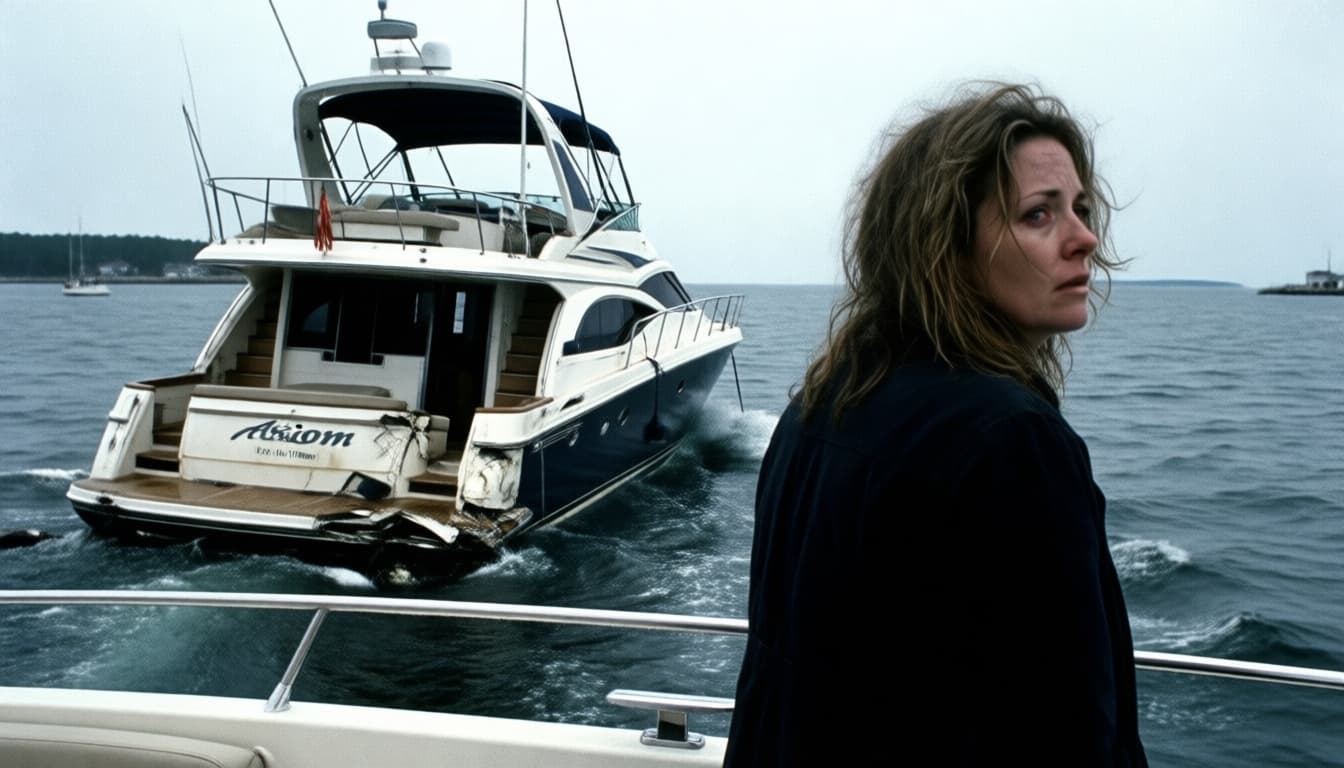
Dr. Thorne chartered the *Axiom*, a sturdy 8.5-meter cabin cruiser, equipped with state-of-the-art multibeam sonar, ROVs, and specialized deep-sea thermal sensors. The morning she departed Gloucester Harbor was overcast, the air thick with the smell of the sea, promising autumn rain. The rhythmic slap of water against the hull and the steady hum of the diesel engine became a monotonous backdrop over the vast, grey expanse of the ocean.
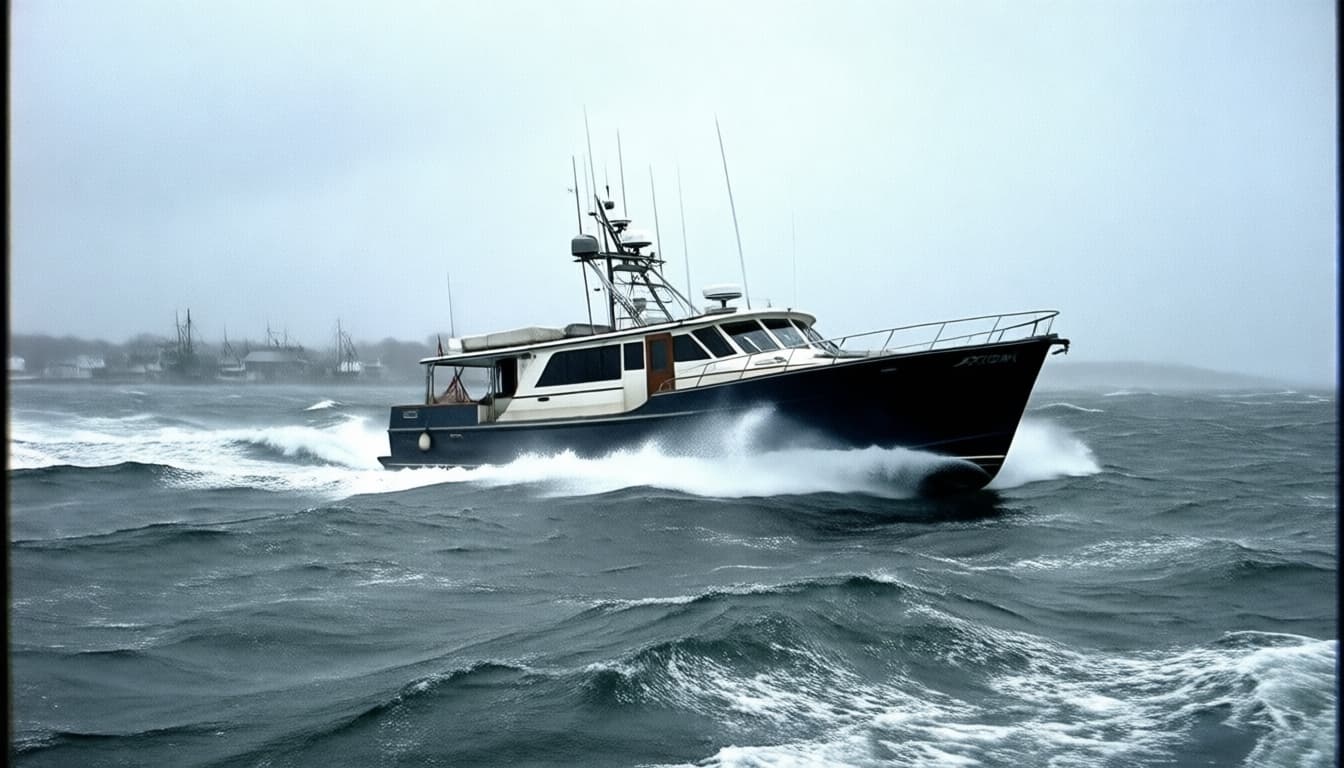
Her destination was the coordinates of the *Albatross IV*'s reported anomaly: a deep, narrow submarine canyon, a rare geological singularity dropping to depths of 300 meters within the relatively shallow waters of the continental shelf. As she approached "Serpent's Trench," the familiar swell of the open ocean subtly began to change. The waves lost their regular rhythm, becoming more chaotic and unpredictable. Dr. Thorne deployed her sonar, watching the familiar blue and green topographical lines scroll across the screen, looking for deviations from charted depths—traces of the "unusual thermocline activity" NOAA had mentioned. The sheer depth of the trench, as seen through her instruments, was overwhelming, like peering into a bottomless abyss.
The first anomalies were subtle, easily rationalized. The engine sound seemed to diminish strangely, as if the water itself was muffling the hull. The distant cries of gulls and the lonely wail of a buoy also seemed warped and delayed, then briefly vanished altogether, leaving an unnatural silence. Ever the rationalist, Dr. Thorne attributed these to atmospheric conditions or peculiar sound-dampening effects of the unique trench topography.
Then the water itself changed. Despite the choppy waves around, a terrifyingly still, glass-smooth circular patch of water appeared directly ahead. As the *Axiom* entered it, the water temperature displayed on her sensors plummeted by a startling four degrees Celsius. She shivered, despite her thick foul-weather gear. The boat momentarily felt incredibly sluggish, as if caught in something viscous, before slowly regaining speed as it pushed back into the choppy waters.
Her sonar began to behave erratically. Fleeting, colossal blips appeared on the screen, too massive, too deep to be any known marine life in the region, vanishing without a trace in seconds. These were not typical echoes; their signals were distorted, almost blurred, unlike the clean, sharp returns her high-resolution system usually produced. For a moment, an immense shadow seemed to glide deep beneath the boat, too deep, too fast to properly identify, but undeniably long and vast. It moved with a wave-like grace, sending a queer shiver down Dr. Thorne's spine. She rubbed her temples, trying to dismiss it as an optical illusion or a large school of fish viewed at an oblique angle. But a small, persistent seed of unease had been planted. Something immeasurable was moving beneath the waves, and the feeling of being watched was almost palpable.
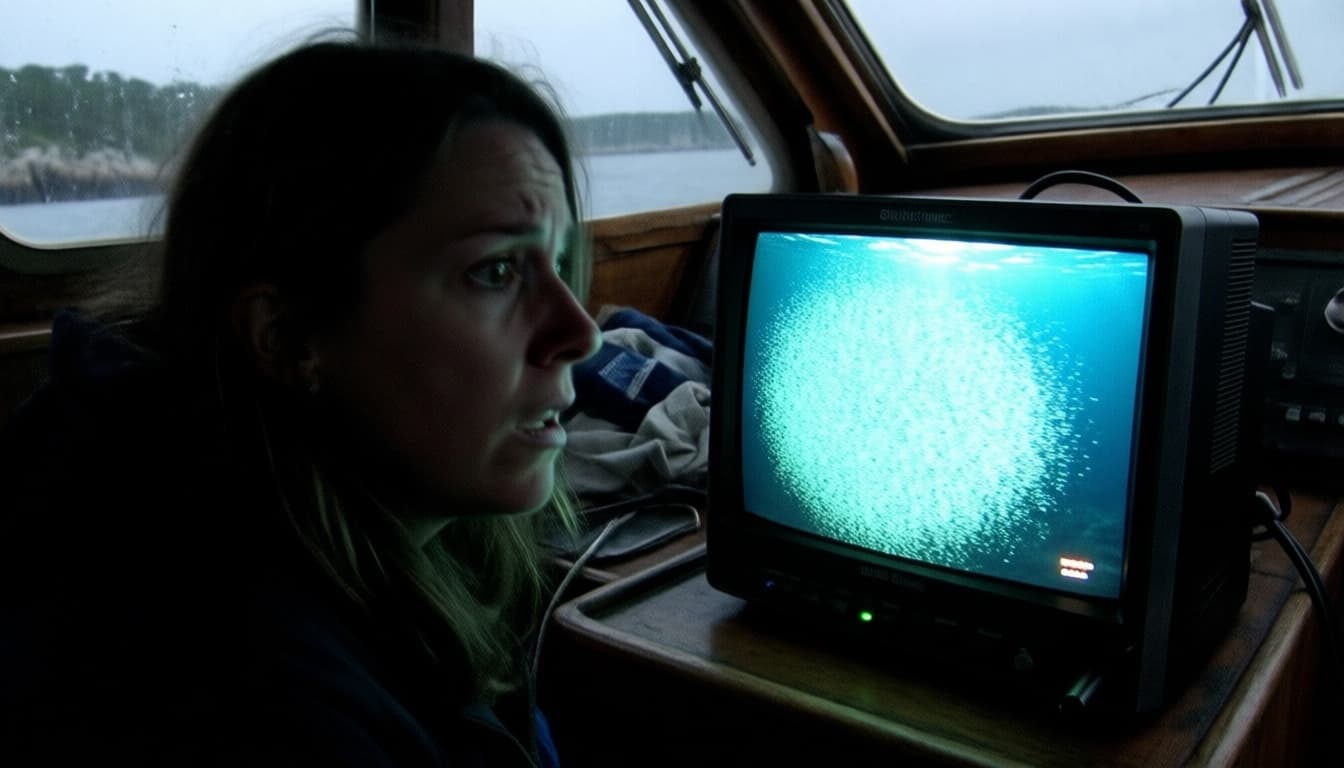
Dr. Thorne detected a particularly persistent anomaly deep within the trench: an unidentified sonar return, consistently detected at approximately 240 meters, suggesting a slow-moving object of immense size. She decided to deploy her deep-sea camera equipment, hoping to capture visual evidence that would either dispel or confirm her growing dread. As the heavy equipment descended, the water around the *Axiom* began to change dramatically. It wasn't merely choppier; it was violently agitated, but only within a 12-meter radius of the boat. Waves impossibly crashed against the hull from multiple directions, defying natural currents, creating a localized, furious vortex while the horizon remained mockingly calm.
And then the water began to pull downwards. Not a current, but a colossal, overwhelming suction emanating from directly beneath the boat, as if trying to drag the camera equipment and the boat itself into the abyss. The surface of the water around the *Axiom* wasn't just churning; it seemed to boil with an unseen, internal energy.
A massive black form began to rise through the surface. Not a sudden lunge, but an impossibly slow, deliberate ascent about fifteen meters to starboard. It wasn't a head, but a vast section of a long, serpentine body. It was slick and dark, appearing to be covered in ancient, smooth plates or scales. It absorbed the dim light, emitting a faint, almost supernatural iridescence. Its unimaginable bulk was paralyzing.
The creature made no sound. No roar or aggressive posture in any way Dr. Thorne understood. Instead, it moved with an inhuman, deliberate precision. The localized turbulence intensified, the water around it creating powerful, specific waves that rocked the *Axiom*. The boat was being inexorably pushed sideways, towards the vast, unyielding flank of the creature. Dr. Thorne wrestled with the helm, but the boat was caught, pressed violently against the colossal, firm hide. The hull groaned, fractured, and screamed under immense pressure.
Dr. Thorne was thrown across the cockpit, her head striking a reinforced bulkhead. Dazed, she looked up, and for a fleeting, horrifying moment, she saw it: a colossal, unblinking eye. Black as the deepest trench, ancient, utterly devoid of emotion or recognition, yet undeniably fixed on her. It wasn't the eye of a predator. It was the indifferent gaze of an ancient, patient observer, something beyond human comprehension.
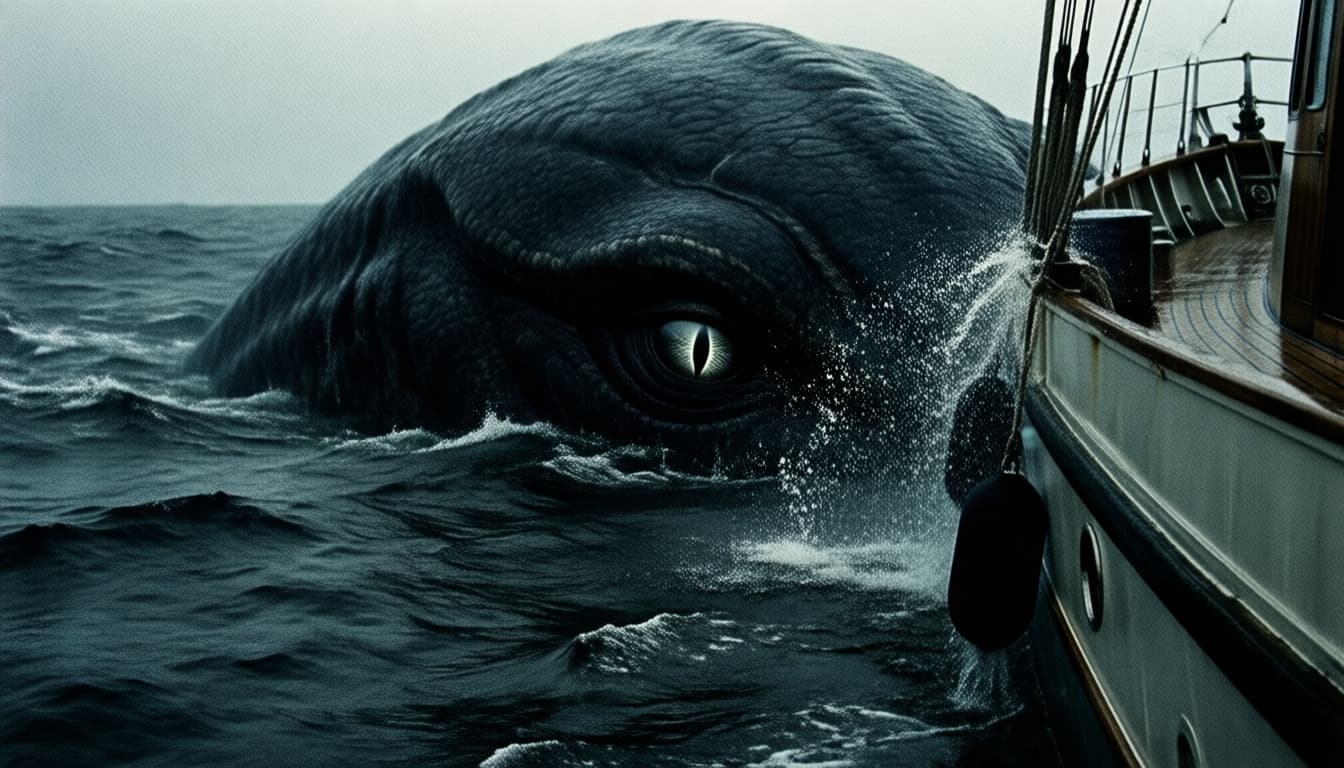
The creature then slowly, deliberately, began to coil around the boat. Not a predatory embrace, but simply to crush it out of existence. The pressure was immense, the sound of tearing fiberglass and wood filled the air. Driven purely by instinct and adrenaline, Dr. Thorne barely managed to sever the straining camera equipment and re-engage the sputtering engines. With a last desperate surge of strength, she pushed the throttle forward. The boat scraped violently against the creature's firm hide, the grinding metal and splintering fiberglass agonizingly loud. And then, finally, it broke free, bolting away. Trailing a wake of shattered debris, the silent, immense form slowly submerged once more.
Dr. Thorne barely made it back to shore. The *Axiom* was a wreck: its starboard side crushed, engines gasping, forever scarred. She was exhausted, battered, and profoundly, irrevocably shaken. Her breathless account of a massive, ancient creature was met with polite skepticism. Official marine accident reports cited "navigational error in rough seas and collision with an unknown submerged object, likely derelict fishing gear."
But the damaged hull of the boat bore deep, unidentifiable gouges. They were too wide, too smooth for any known marine collision, certainly not "fishing gear." Embedded in the splintered fiberglass was a faint, almost invisible crystalline dust that defied conventional chemical analysis, glimmering microscopically in certain oblique light. Her deep-sea camera equipment was ruined, but miraculously, a few corrupted frames remained on its memory card. Images of immense dark forms, distorted and flickering, were almost unidentifiable, yet their mass and scale were clearly non-biological. One frame momentarily stabilized, showing a faint, circular indentation on the "skin" of the creature the boat had contacted, emitting a brief, faint luminescence before freezing into static. The crystalline residue was dismissed as "saline contaminants," the damaged footage as "equipment malfunction."
Aris Thorne is no longer a skeptical scientist. She carries the indelible imprint of that unblinking, ancient eye. The true horror isn't that she encountered a monster, but that she met something so alien, so colossal, and so indifferent, that her scientific understanding of the ocean was rendered utterly meaningless. The silence of its power, its immense scale, and its ancient, profound presence haunt her. She knows what lives in "Serpent's Trench." She knows it is still there, undisturbed beneath the seemingly placid waves. A living secret, occasionally brushing the edges of human perception. And the most chilling realization? Its existence changes nothing. Humanity remains content to dismiss the whispers of the deep as mere rumor, while something truly ancient waits.
[ CLASSIFIED VERDICT ]
[ACCESS LOG - SOURCE FILE]
In 1817, numerous credible witnesses in Gloucester, Massachusetts, reported sightings of a giant serpent-like creature, which became known as the "Gloucester Sea Serpent"—a documented marine mystery. For over two centuries, this story was dismissed as mass hysteria or misidentification, yet it persists as a historical maritime legend.