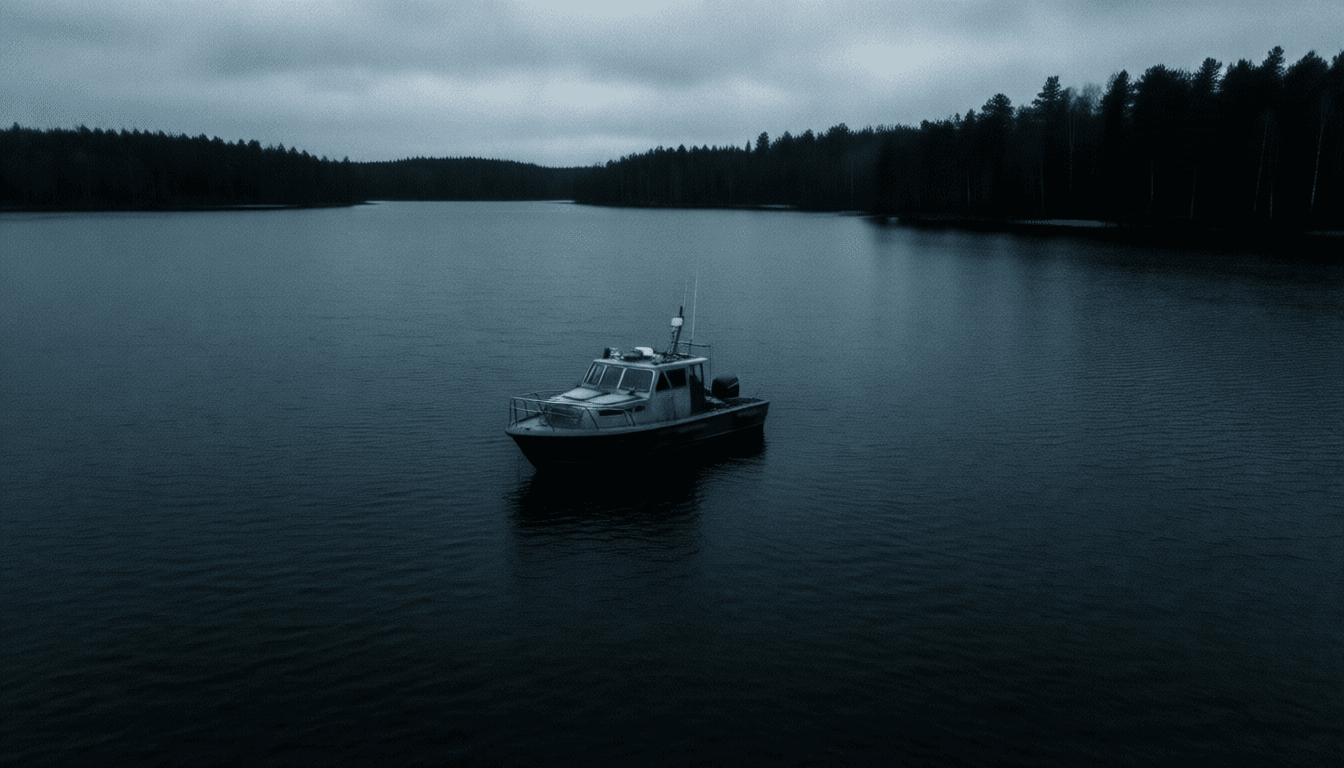
The Abyss of Lake Storsjön: Shadow of an Ancient Being
When sonar scans of Sweden’s Lake Storsjön were discreetly circulated, they were initially dismissed by marine biologists as a 'thermocline anomaly.' The Swedish Meteorological and Hydrological Institute explained them as part of a project to map the deep sea. However, a specific sequence was soon leaked to online cryptozoology forums by anonymous researchers. The footage captured a long, serpent-like entity, reaching up to 15 meters in length, moving at anomalous speeds in the deep, over 80 meters down. The clarity of a few frames revealing a undulating form, distinctly different from deep-sea fish or geological features, spread virally within the local community, reigniting the legend of the Storsjöodjuret (Storsjö Monster). This digital evidence was corroborated by inexplicable incidents of damage to deep-set fishing nets, particularly a chilling account from a veteran fisherman. His multi-ton trawler was suddenly pulled by an unknown, violent force from below, almost capsizing, and his entire fishing net was torn apart by a power 'beyond mechanical comprehension.'
As an independent deep-sea exploration researcher, my approach to unexplained phenomena has always been data-driven. Equipped with a silent electric research vessel, high-frequency sonar, multi-spectral deep-sea cameras, and specialized hydrophones, I arrived at Lake Storsjön. My target was the deepest, most isolated points, historically where sightings converged and where the anomalous sonar records originated – near Hårkan Fjord. The vastness of the lake, its icy depths, and the overwhelming silence of the surrounding dense pine forests immediately created a profound sense of isolation.
For several days, I mapped, calibrated equipment, and conducted baseline scans. The lake yielded predictable data: thermoclines, schools of Arctic char, occasional debris. But I noticed the water's peculiar absorptive quality—a dead calm that seemed to dampen even the hum of my quiet electric motor. And I detected subtle variations in the lakebed topography, inconsistent with geological maps. Too uniform, too elongated, subtle troughs or depressions.
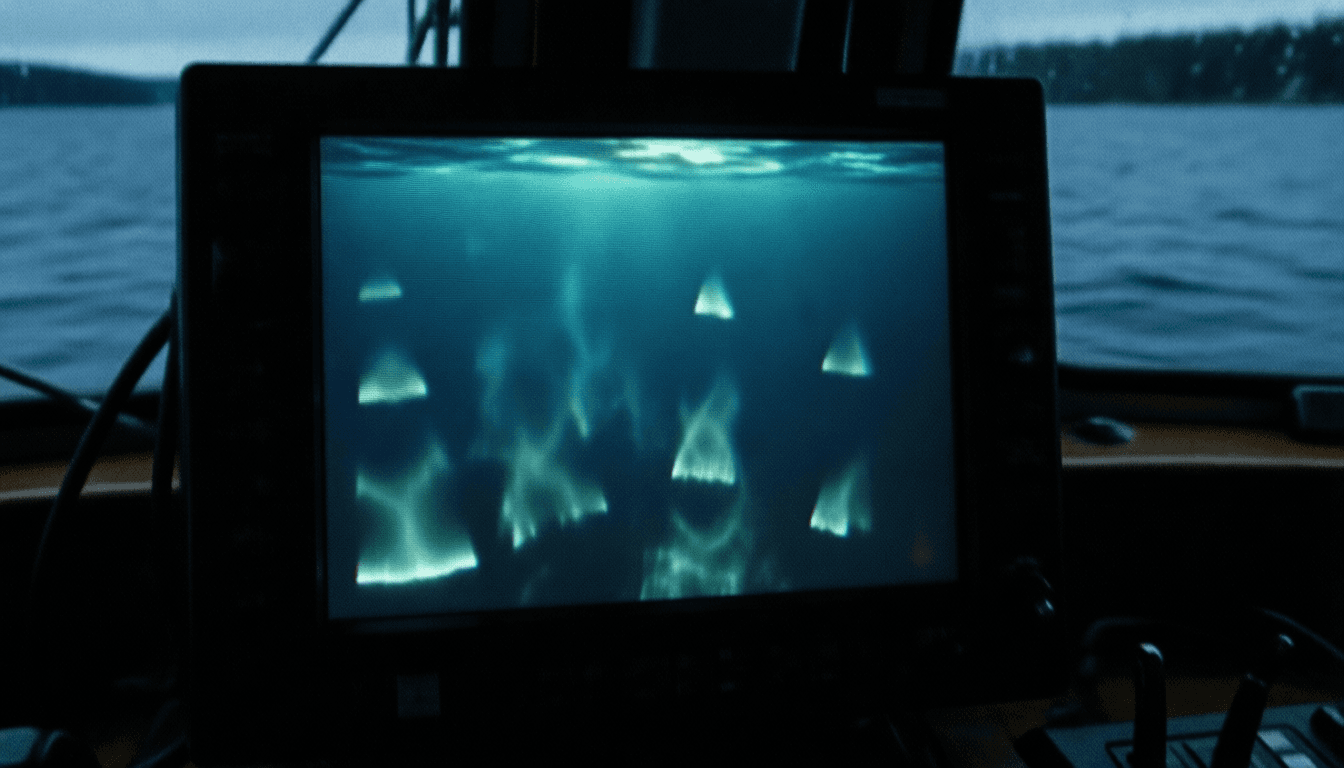
The first signs were almost imperceptible. Isolated, instantaneous echoes appeared on the sonar screen—large, distinct pings that would appear and disappear, too fast for known fish, too fluid for geological features. They always manifested below the established thermocline, at immense depths.
The silence around the boat grew progressively deeper. Even the cries of coastal birds seemed to die before reaching the vessel. The boat's own natural creaks and groans were eerily amplified in the absence of other sounds. The vessel experienced subtle, inexplicable tremors or movements, unrelated to wind or currents. It was as if a massive, unseen mass displaced the water around the hull, creating a gentle but persistent current that subtly sought to reorient the boat.
Depth thermometers recorded sharp, localized temperature drops—colder than the surrounding lake water, more severe than any thermocline shift. These 'cold spots' were transient but seemed to move with purpose.

Initially, I rationalized every phenomenon: debris, sonar glitches, thermal anomalies. But the frequency and co-occurrence of these phenomena began to erode my skepticism. I began to feel an undeniable presence below—a colossal, unseen entity, a giant observer aware of my intrusion. The hydrophones picked up ultra-low-frequency vibrations—a deep, regular hum that resonated through the entire hull, like a living bass note emanating from the abyss, its source unknown.
The decisive encounter occurred while deploying a deep-sea camera along a trench where the recurring 'ghost' sonar echoes had appeared. The sonar screen erupted. A massive, elongated echo appeared directly beneath the boat, not merely passing by but holding its position, moving parallel to the boat's slightest adjustments with terrifying speed.
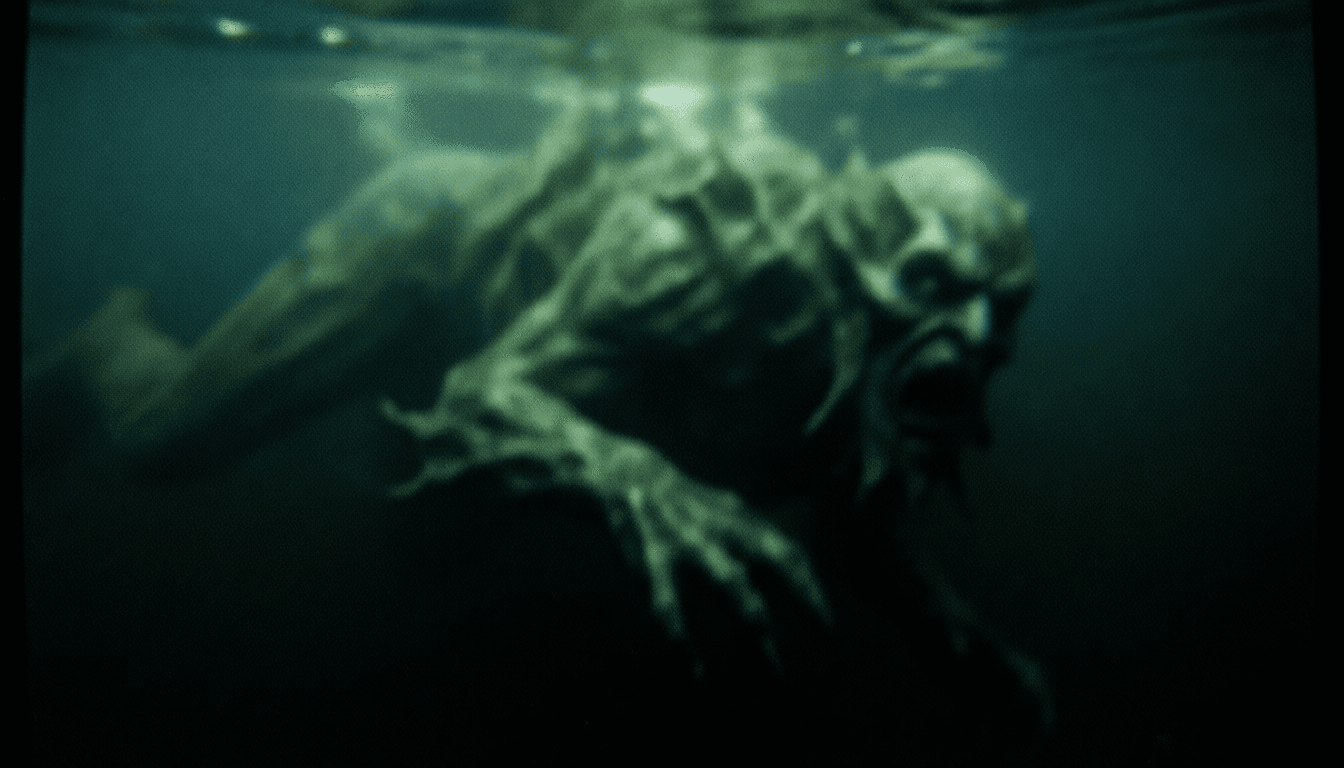
The water around the boat began to churn violently, despite no wind on the surface—an unnatural vortex originating from below, powerful, unpredictable currents attempting to drag the boat towards the deep trench. The electric motor screamed under overload and then died. Suddenly, a massive pressure wave from below struck the hull, lifting the boat several feet into the air before slamming it back down, the hull groaning and cracking. The deep-sea camera feed briefly flickered, showing an immense, indistinct, dark greenish-grey mass—impossibly textured, like smooth, ancient rock. Then, the cable snapped taut, and the screen went blank.
The boat then sustained a series of violent, deliberate impacts from below—not random bumps, but focused blows tearing at the keel and sides. Finally, a tremendous upward impact erupted directly beneath the boat, flinging it into the air, where it capsized endlessly. I was thrown into the freezing, churning water, disoriented. Looking at the overturned hull, I felt an impossibly cold, rough surface brush against my legs and arms—like moving granite. A deep, bone-rattling 'hum' filled my body, silencing all other senses. I gasped for air amidst the foam, resurfacing. I saw a long, impossibly dark shadow pass beneath the water, moving away at a speed that defied the physical laws of any known aquatic creature.
Hours later, I was found by a passing fishing vessel, severely hypothermic but alive. My electric skiff was half-sunk, reduced to debris. Salvage operations recovered the mangled hull. Along one side of the keel, a colossal scratch, nearly three meters long, was deeply gouged—inconsistent with rock abrasion or propeller impact. A forensic analysis team could not identify the source of the impact other than 'immense, blunt, extremely dense pressure.'
Crucially, the submerged, damaged sonar unit was recovered. Data recovery specialists managed to extract fragmentary sequences. They showed the final moments: just before the boat's destruction, a massive, serpent-like echo, estimated to be over 15 meters, accelerating from 80 meters deep to directly beneath the keel in less than three seconds. Its characteristics defied any known marine life, displaying impossible density and speed. Officially, it was dismissed as 'corrupted data artifact' or 'sonar malfunction,' but I knew what I had seen.
I suffer from severe aquaphobia and persistent low-frequency auditory hallucinations—the deep, resonant 'hum' I felt in the water. I carry the weight of an unprovable truth. The vast, silent lake now holds a chilling secret that I understand all too well. I rarely speak of my experience, but my meticulous log notes, kept with the damaged sonar printouts and photos of the keel's scratch, contain a precise line: It is not a myth. It is ancient, sentient, and guards its domain with an indifference beyond human comprehension. And it waits.

[ CLASSIFIED VERDICT ]
[ACCESS LOG - SOURCE FILE]
An ancient legend tells of the 'Storsjö Monster (Storsjöodjuret)' said to inhabit Lake Storsjön in Sweden. This creature is often described as a long, snake-like entity, and has long been considered by local residents to be the source of sightings and mysterious events. Even in modern times, phenomena supporting this legend are reported, such as large, unidentified shadows captured on sonar or fishing nets strangely torn by unknown forces.