
Stockholm Cold Spot: Palme's Tears
For decades, the alley immediately behind the fateful bus stop on Sveavägen in Stockholm has been unofficially known among locals as the "Cold Spot." More than just a shadowed area, it was a place where, even on warm summer nights, the ambient temperature would inexplicably drop. More compelling and less easily dismissed were anonymous reports, sometimes from low-level municipal workers, describing the consistent discovery of small, identical, and abnormally cold metal fragments within this particular narrow passage. Described as having an artificial smoothness, these fragments appeared overnight, particularly around late February, near the anniversary of Palme's death. While authorities consistently attributed them to discarded industrial waste or natural geological anomalies, their repetitive appearance and peculiar thermal properties solidified them in local legend as "Palme's Tears" or "Echoes of the Second Shot," a persistent, physical manifestation of an unsolved case. It was this peculiar and tangible anomaly—the metal fragments and the inexplicable cold—that drew me to Stockholm.
It was a late afternoon, a Tuesday under a late winter's grey sky, when I arrived at the alley, nestled like a forgotten vein between two unremarkable buildings. The bustling urban noise of Sveavägen thoroughfare was a distant hum, yet strangely muted here, despite being only fifty meters away. The air was still, significantly cooler than the street outside, carrying a subtle chill that seemed to penetrate through clothing and into the bones. I carried my unassuming gear: a thermal camera, a handheld magnetic field detector, a small trowel, and a regular camera. The alley itself was unremarkable: grey brick, damp concrete, a thin layer of dust. No graffiti, no discarded litter save for a single damp newspaper. An eerie sterility. The magnetic field detector, set to a low sensitivity, initially showed only faint but distinct intermittent flickers—slight deviations from the baseline. I began my meticulous search, focusing on cracks in the pavement, the base of walls, and natural accumulation points for debris.
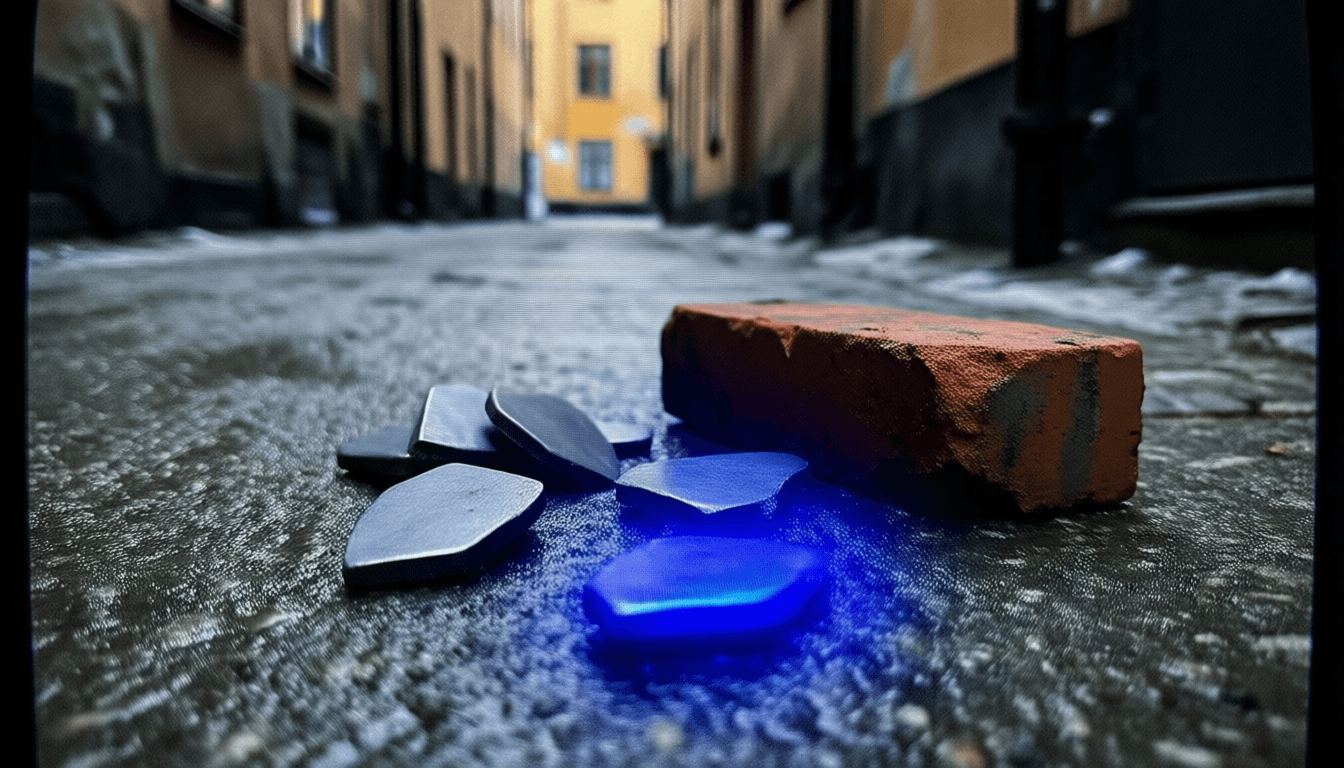
It began subtly. My careful footsteps seemed to echo with an unsettling, minuscule delay, as if sound waves were reluctant to return. And then came the absence. The faint hum of the distant city completely vanished, replaced by an unnaturally overwhelming silence, impossible in the heart of a metropolis. The thermal camera began to show an unexpected pattern: not a draft, but intense pockets of cold clustered near the ground, forming cold air masses that defied convection. Beneath a loose brick, I found the first fragment. Exactly as described in the reports: small, dark grey, perfectly smooth. So cold that it instantly registered as a deep blue on the thermal camera upon contact, seemingly drawing warmth from my gloved hand. The magnetic field detector, held near the fragment, did not give a steady hum, but erratic pulses, soaring wildly. As I unearthed a second and then a third fragment, all clustered together, I felt a faint, almost subconscious vibration beneath my feet. A low hum, like heavy machinery operating deep underground, far away. The flashlight beam, shone on the ground, seemed to lose its crispness, the light absorbed by surrounding shadows rather than reflected. The shadows felt thick, almost physical.
Guided by the increasingly erratic magnetic field detector and the intensifying low hum, I found a subtle crack in the concrete at the alley's dead end, almost invisible beneath decades of accumulated dust. Twisting it open with my trowel, it revealed not a drain, but a narrow, vertical shaft leading into absolute darkness. Bone-chilling cold air rushed out of the shaft. The magnetic field detector screamed. Captivated by an irresistible pull, I lowered myself into the shaft, my flashlight beam carving a weak trail into the descending gloom. The shaft led to a small subterranean chamber. Roughly hewn, it felt more ancient than artificial. Here, the hum was no longer subconscious; it was heard beneath the threshold of hearing, yet vibrated through my entire being. My already weak flashlight flickered violently, then died, plunging me into complete darkness.
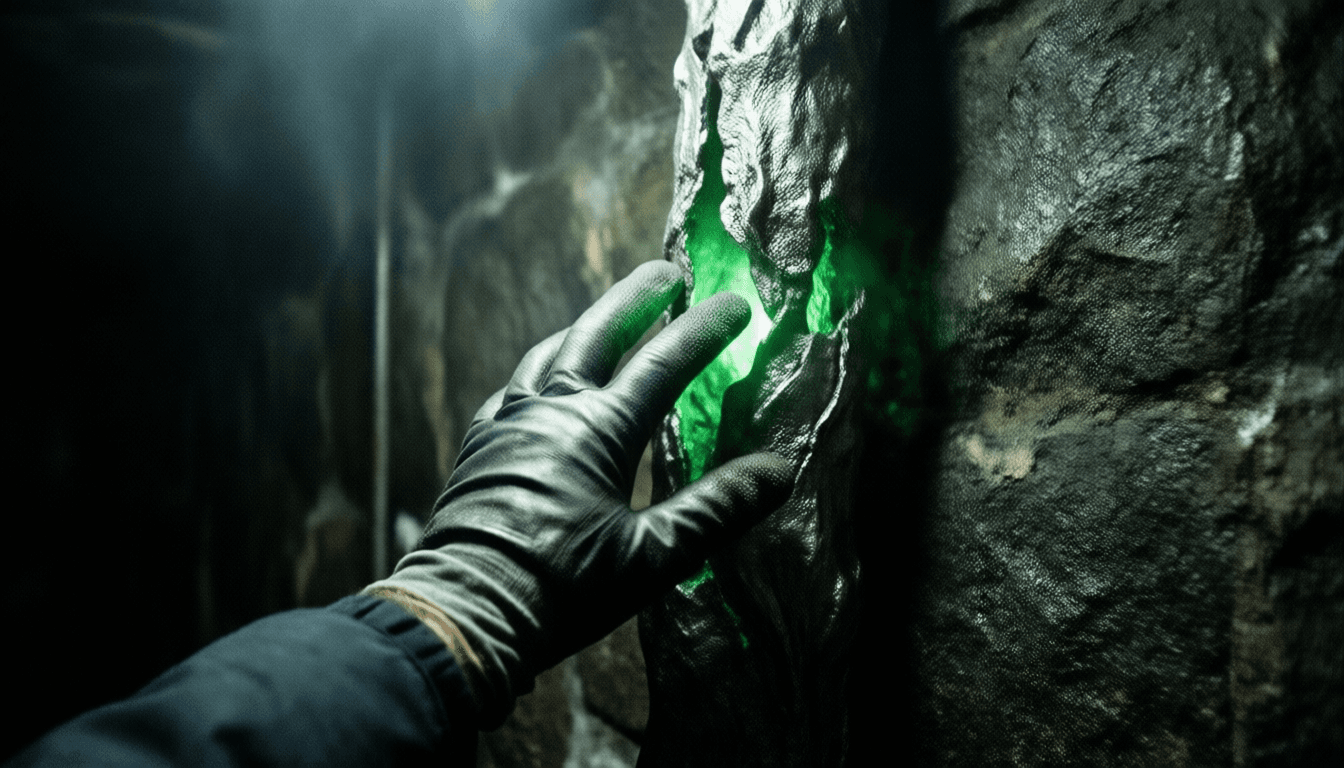
The cold here was excruciatingly freezing. No sound came from above, only the hum resonating within my body. Then, in the overwhelming darkness, a faint, sickly green light flickered from a section of the chamber wall. It wasn't rock. A massive vein of the same metallic substance as the fragments was embedded in the earth, pulsating with a slow, rhythmic glow. Drawn by the strange light, I stumbled closer. The air around me thickened and grew viscous, pressing on my lungs. Reaching out, my frozen fingers touched the cold, smooth surface of the pulsating vein.
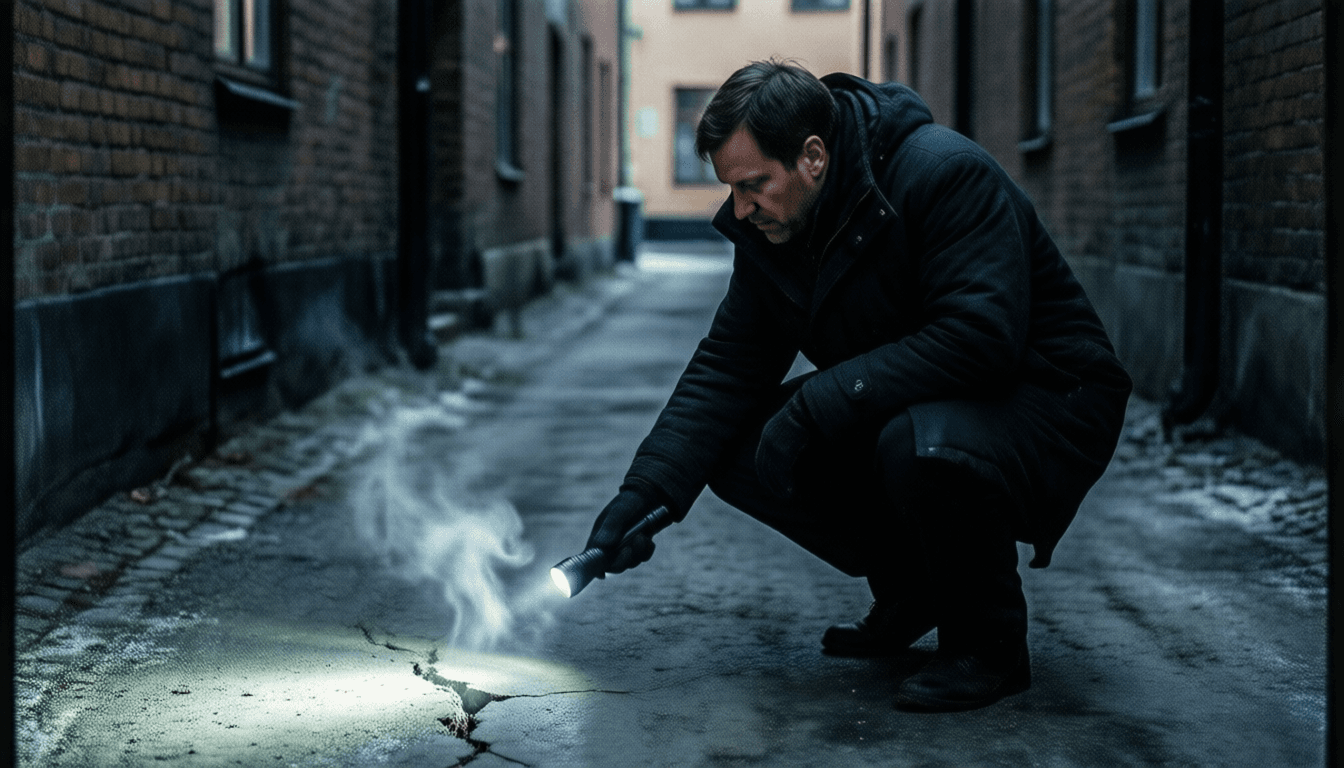
The moment of contact was not physical in any way I understood. A shock of pure cold, not electrical, gripped my hand, coursing up my arm, penetrating to my very essence. The low hum in my chest amplified into a deafening roar within my skull. In my vision, fragmented, discontinuous images flickered: a flash of a dark coat, an impossible burst of light, the sound of cloth tearing, and a sharp, inward-folding crack. It was a gunshot, and at the same time, something entirely different. A disjunction of senses without context, leaving me utterly disoriented. I felt not pain, but an overwhelming emptiness. It was as if my very being was being sucked out, compressed. The chamber itself seemed to contract, walls tightening with impossible force, the air becoming incredibly dense. I was being crushed, not by rock, but by the weight of a single moment, a spatial wound actively devouring me. With desperate, primal strength, I tore myself away from the glowing vein, scrambling upwards through the contracting shaft. My body screamed under the immense pressure. I burst onto the surface, gasping, collapsing onto the concrete. The crack behind me seemed to seal itself with an almost organic finality.
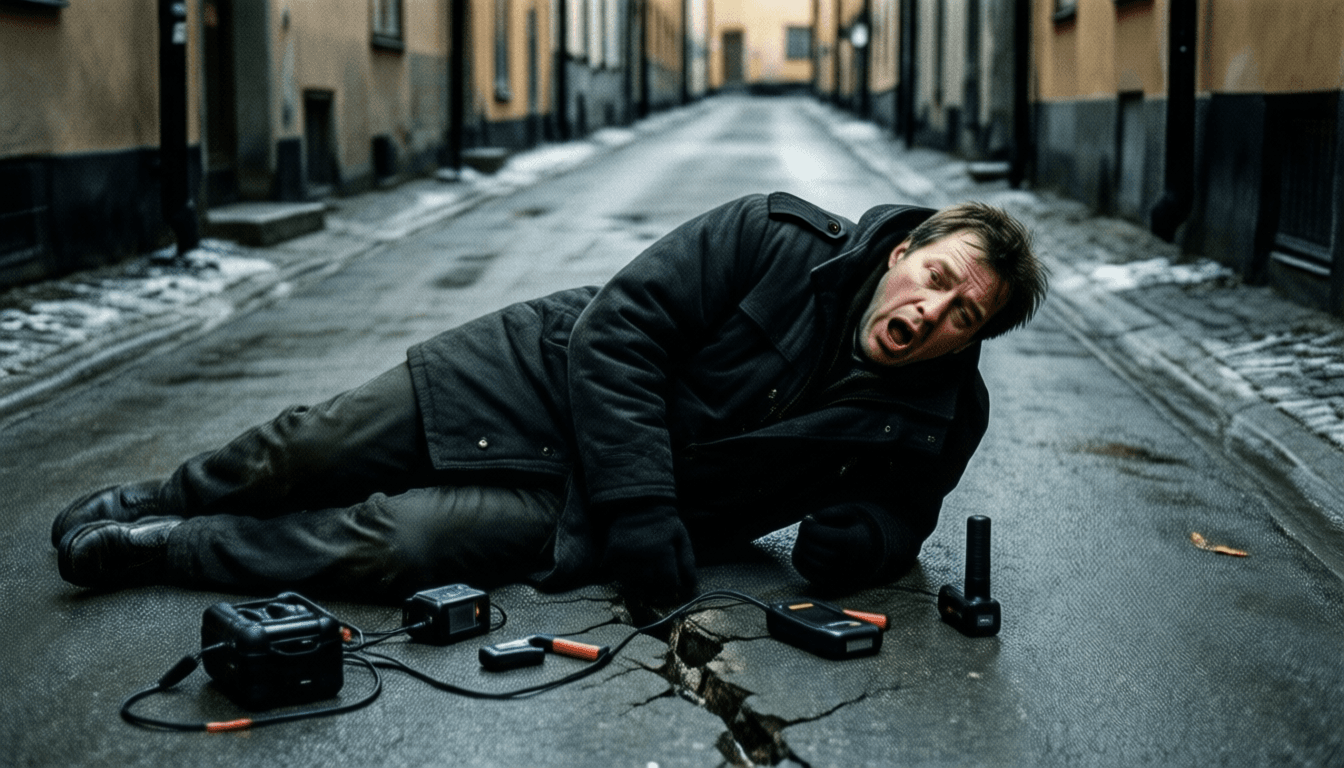
I lay there for minutes, shivering uncontrollably from an internal tremor that had nothing to do with muscular fatigue. When I finally forced myself up, the alley was exactly as I had found it: ordinary, quiet, empty. My equipment was scattered but undamaged. One of the metal fragments I had picked up lay on the ground, inert, showing no peculiarities. I gathered it and my gear, then slowly made my way out of the alley.
Back in my small rented room, I examined the fragment. It was still unnaturally cold to the touch, but the frantic magnetic field pulsations were gone. Yet, holding it, a faint, almost imperceptible metallic taste lingered in my mouth, unable to be washed away. Later, analyzing the thermal images, faint, dark lines, like fine cracks, radiating from the fissure I had tracked, appeared in the few frames just before I collapsed. Fractal patterns, imperceptible to the human eye, crisscrossed the concrete.
The original recordings from the magnetic field detector contained not just the anticipated spikes, but a distinct low-frequency hum underlying the static, almost an infrasound. It echoed the resonance I had felt in the shaft. And sometimes, in the absolute silence of my room, I detect it: a faint, almost subconscious 'click,' like a trigger being pulled, then immediately rewinding in reverse, fading into nothingness. The mystery of Olof Palme's assassination officially remains unsolved, but that 'Cold Spot' in Stockholm's alley still breathes. And now, I carry a piece of its breath within me. A physical manifestation of a wound in reality, slowly, subtly, dismantling everything it touches.
[ CLASSIFIED VERDICT ]
[ACCESS LOG - SOURCE FILE]
The 1986 assassination of Swedish Prime Minister Olof Palme on Sveavägen Street in Stockholm remains an unsolved tragedy. This story is based on an urban legend that mysterious cold spots and peculiar cold metal fragments are found in a specific alley near the crime scene. These phenomena are believed to be physical manifestations of the unsolved tragedy, a persistent wound left in reality.