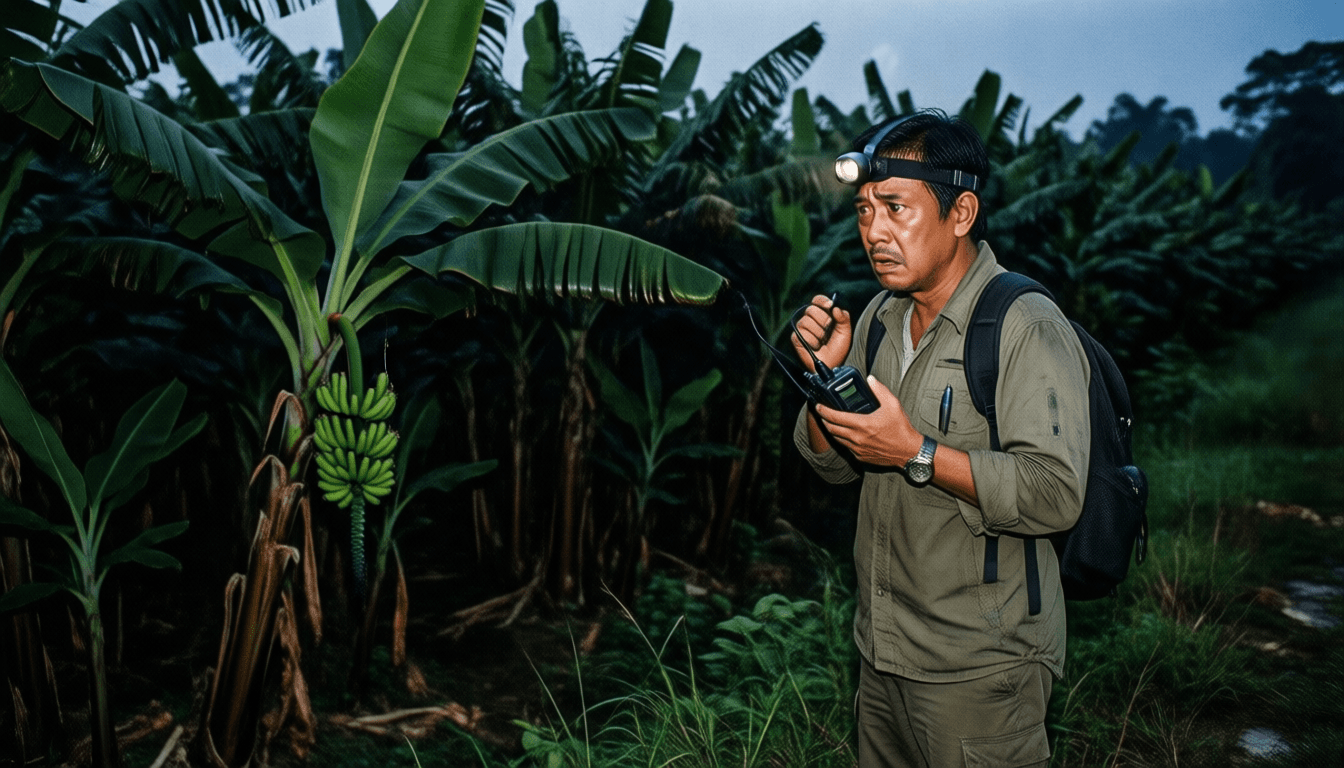
Shadows of the Banana Plantation
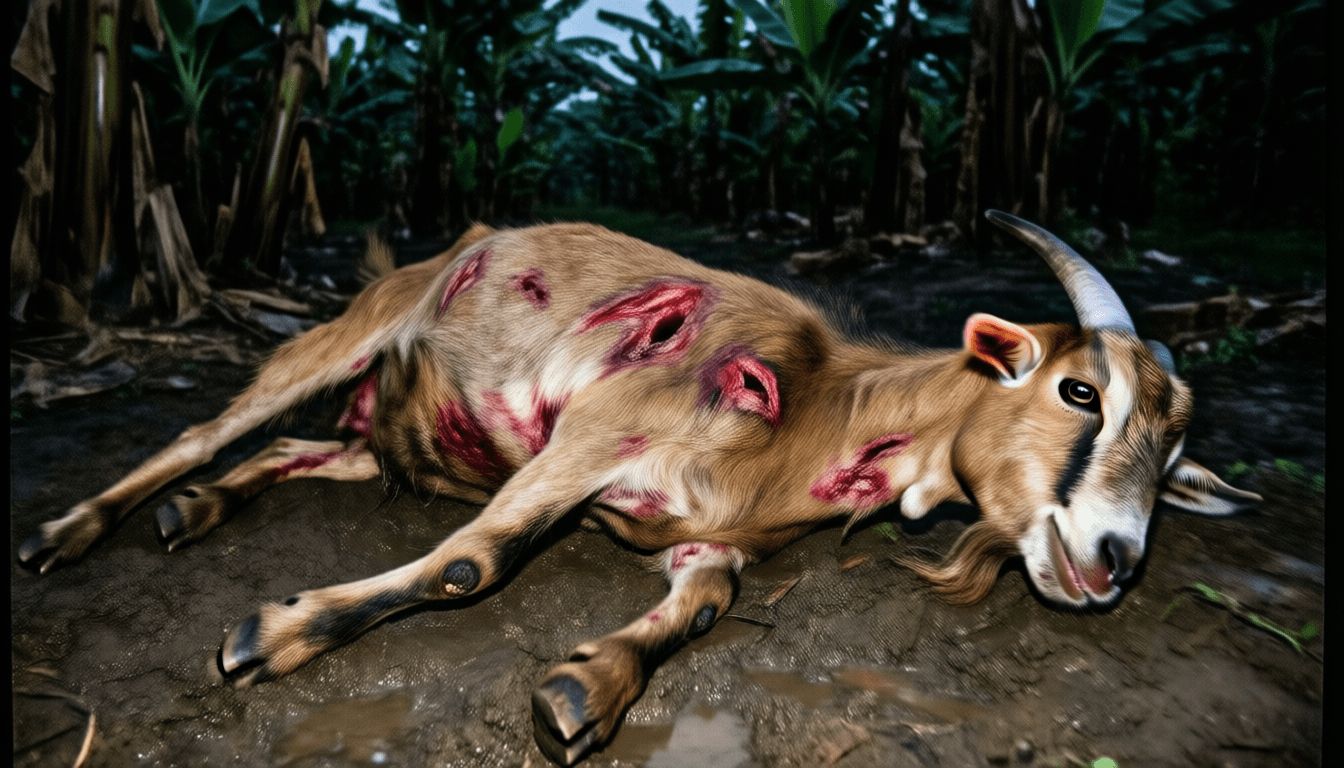
When a series of shocking reports emerged from the outskirts of an old banana plantation in the remote Malaysian village of Kampung Serai, local media and social media initially dismissed them as bizarre animal attacks. But over three months, six cases of mutilated livestock were recorded. Chickens, goats, and even a young buffalo were found disemboweled, yet oddly, there were no predator footprints, no signs of struggle beyond the wounds themselves, and despite severe injuries, a bizarre absence of blood at the scene. Villagers, as expected, whispered about the "Lady of the Banana Forest." However, what caught my attention was a subtle detail consistently mentioned by all first responders and a few brave villagers who dared approach the bodies: "A faint, sweet, cloying aroma, like rotten flowers, yet growing sickeningly pungent closer to the carcass." Police reports listed it as 'unidentified organic odor,' but its recurring specificity was undeniable. This unique olfactory signature perfectly aligned with the nature of the killings, and too closely resembled the classic Pontianak legend. This wasn't mere superstition; it was a pattern demanding close investigation.
I arrived in Kampung Serai as the equatorial twilight began painting the sky bruised purples and oranges. The air was thick and humid, heavy with the scent of damp earth and distant wood fires. The usual chorus of cicadas and jungle insects seemed subdued, hesitant. My equipment—field recorder, thermal camera, headlamp, and scent analysis strips—felt heavy, weighed down by a growing unease.
Villagers, as anticipated, were tight-lipped. Only Pak Cik Karim, an elder with eyes that had seen too much, offered useful information. He described the decades-abandoned banana plantation as a place where the air grew "thin" and "voices echoed strangely." He also spoke of the recent disappearance of Amir, his grandson, a skeptical young man who had ventured into the plantation a week prior to disprove the legend. Only Amir's machete had been found, stuck in the mud near a cluster of ancient banana trees, with no trace of the boy. I recorded it all, trying to maintain a detached, professional demeanor, but the boy's absence was palpable in the old man's grief.
I entered the outskirts of the plantation alone. The air immediately grew colder, a stark contrast to the oppressive humidity of the village. The first lines of banana trees, with their sprawling leaves, cast long, wavering shadows. The ground was soft and marshy, surprisingly quiet underfoot.
Initial unease quickly escalated. My scent strips almost immediately detected a faint, cloying sweetness. A strong floral scent, primarily of the frangipani variety, inexplicable in this environment. I noted it as a twisted game, drifting in and out, appearing and then temporarily vanishing.
Then came the sound. Or rather, the absence of sound. The incessant hum of the jungle, the chirps and rustles of insects, slowly, almost imperceptibly, faded away. The silence became absolute, profound, an abnormal vacuum that pressed on my ears, making even my own breathing sound deafeningly loud. I called out, "Hello?" to test the acoustics. The sound traveled, but the echo was either strangely delayed, or perhaps it didn't return at all, as if the air itself had become a sponge absorbing sound.
Visually, the air between the banana tree trunks wasn't shimmering like a heat haze, but exhibiting subtle distortions. Ripples, as if something invisible was moving, warping the light. My thermal camera detected nothing but ambient temperature. Yet, the sensation of being watched grew intense with every step. A prickling on the back of my neck, a cold spot moving with me.
The floral scent now returned with greater intensity, almost sickly sweet, like a wilting funeral bouquet left too long in the sun. And a new auditory anomaly emerged. A faint, distant sound. Was it weeping? Or a low, mocking laugh? It seemed to drift from deeper within the plantation, an unreal, directionless sound. I turned, my analytical brain desperately searching for rational explanations like atmospheric inversions or auditory pareidolia.
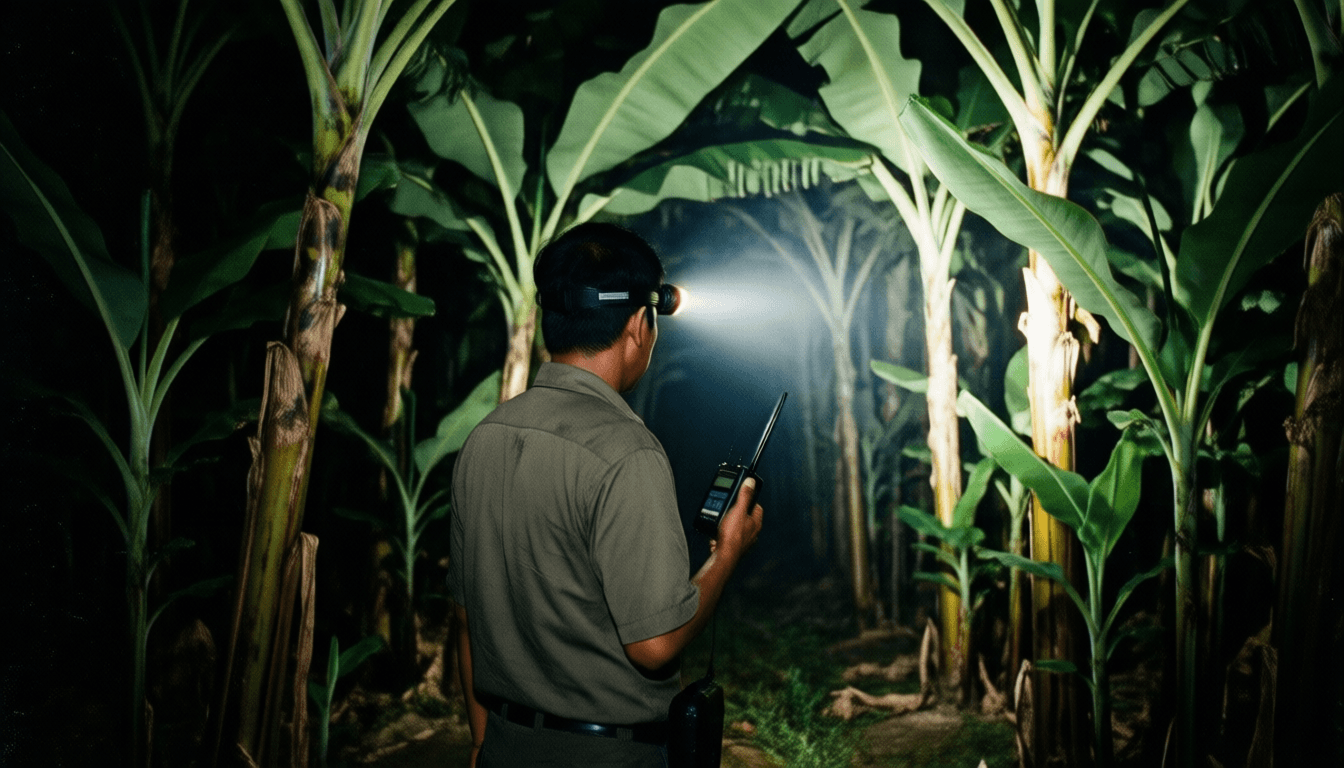
My headlamp beam cut through the encroaching gloom. I froze. On a banana tree trunk ahead of me was an abnormally dark, almost black, stain—not sap. And caught on a broken, jagged leaf were several long, thin strands of black hair. Too long, too fine to be from any animal I knew.
The air suddenly grew sharply cold, and my breath misted in the pungent, overwhelming stench of rotten frangipani. The distant weeping/laughter intensified, shifting into a distinct, high-pitched shriek that seemed to erupt directly behind me. I spun around, my headlamp beam wildly slashing through the shadows. Nothing.
But the environment itself began to rebel. The giant, grasping banana tree leaves seemed to move, the trunks appeared to encircle me in a disorienting way. A heavy black leaf, as thick as a man's forearm, shot *upwards* from its usual drooping posture, blocking my path. It moved with impossible speed and force.
I stumbled backward, almost falling into a small, stagnant muddy ditch. The previously calm water of the ditch suddenly rippled *inward* towards its center, then surged *outward* in a violent splash, as if something massive had plunged in and simultaneously risen back out. Even though nothing was visible.
A cold, damp touch brushed the back of my neck. Before I could fully react, impossibly long, sharp nails raked down my backpack, tearing through the synthetic fabric with a sound like ripping paper. I felt the pressure, a distinct sensation of being held. The crying morphed into a throat-shredding shriek, impossibly close.
Then the form appeared. Shrouded in deep shadow cast by the largest banana leaf, a figure lunged. It didn't run, but *slid*, a pale, blurry shape. I caught glimpses of dark, tangled hair cascading forward, hints of pale skin. Its movement was too fast, too fluid, defying any natural motion. The previously solid ground beneath me suddenly gave way, becoming a sucking quagmire that hadn't been there moments before. I was trapped, sinking.
The crying was now a continuous, deafening shriek directly above me. Invisible claws tore through flesh, and a burning pain enveloped my left leg as I was pulled deeper into the mud. I thrashed wildly, desperately. My hand fumbled for my headlamp, switching it to strobe mode, blinking wildly into the darkness. For a fraction of a second, the dazzling light illuminated a face. Beautiful, yet horribly distorted, eyes dark and vacant, hair flowing long. And in that instant, I realized that where its spine should have been, there was an unnatural, horrific black cavity gaping open on its back. It hissed and recoiled, as if the flashlight was fatal to it.
That moment's respite was all I needed. Adrenaline surged. I kicked and heaved myself up, yanking my leg free with a sickening sound of tearing—not just fabric, but flesh. I heard one final, blood-curdling shriek from behind me. It was a sound of frustration, rage, and hunger. I ran, not looking back, not daring to, bursting through the tree line.
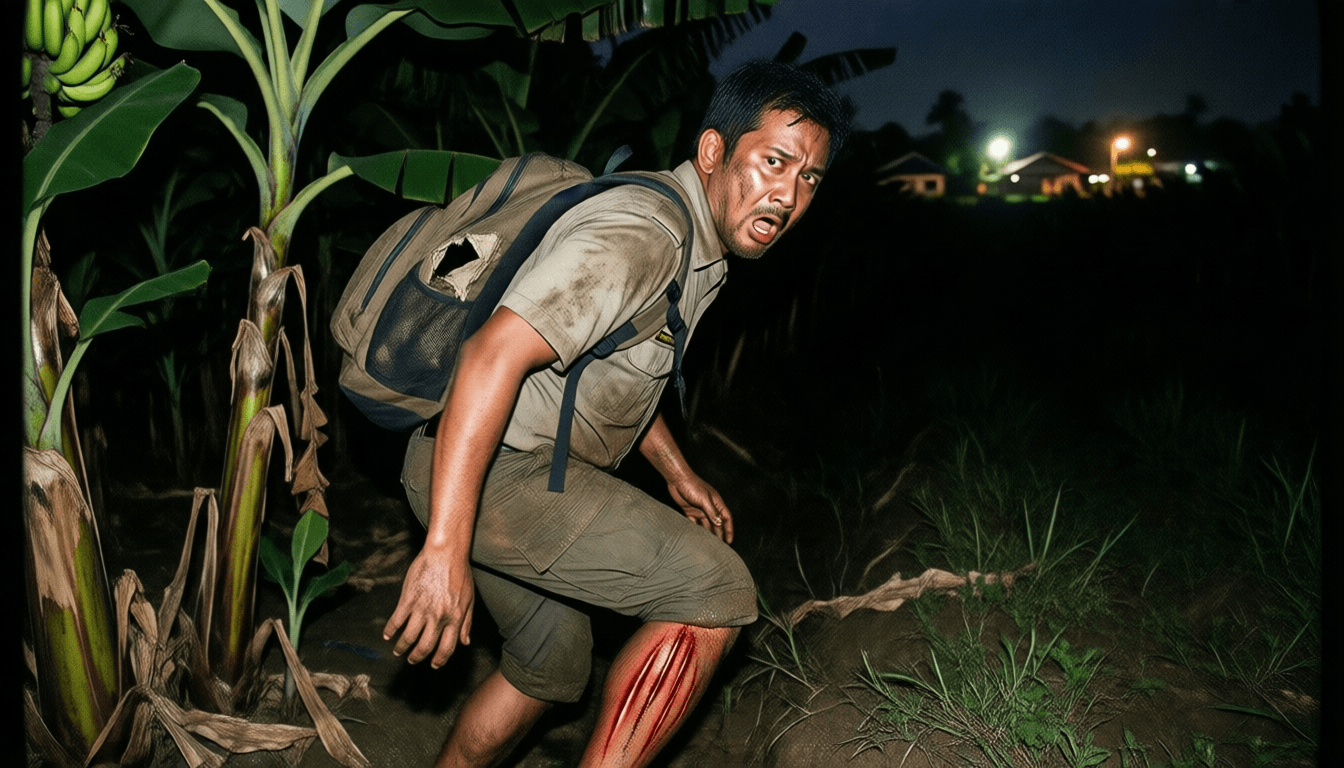
I collapsed at the edge of Kampung Serai, covered in mud and gasping for air. Villagers rushed out, their faces a mixture of fear and cold understanding. My left leg was bleeding profusely from three deep, parallel lacerations, and my backpack was torn clean down the middle. At the village clinic, the doctor described the wounds as "unusually deep and precise, inconsistent with any local animal attack." I mumbled "I fell" and "a large wild boar." I didn't have the courage to tell the truth and invite disbelief, or worse, official scrutiny to an already terrified village.
My immediate physical wounds healed slowly and painfully. But the lingering effects were more insidious. The sickly sweet frangipani scent clung to me for days. No matter how much I scrubbed, I tasted it in my throat, smelled it even when I thought I was clean. I noticed others subtly flinching or wrinkling their noses as I passed, though no one mentioned it directly.

Then came the chill. A faint, persistent cold emanated from the scars on my leg and the back, especially in the quiet hours of the night. It wasn't the cold of a room, but a profound, internal frigidity. And occasionally, in moments of absolute silence when the world seemed to fade away, I would hear it. A distant, almost imperceptible weeping, or was it a laugh? Always at the very edge of my hearing, always just out of reach, but undeniably there.
Back in my archives, sifting through the fragments of my ruined investigative notes, I found it. Tucked between the shredded canvas straps of my field recorder, a single, long, thin strand of black hair. It wasn't mine. Faintly, but undeniably, it smelled of frangipani.
I never returned to Kampung Serai. And I never told anyone the truth of that day. But my archive notes for file #KGS-23-01 contain one cryptic addition, typed with a tremor I refused to acknowledge.
The smell is the clue. And it hunts more than livestock. The cavity in the back... it's not just a weakness. It's where the true hunger resides. And it remembers its intruders, for a long, long time.
My fear is not because of what I saw, but what may have latched onto me. The ghostly chill, the impossible faint scent, the sounds that aren't really there. The knowledge that its hunting ground isn't just the plantation, but anywhere its victims might wander. And that I have become one of its targets.
[ CLASSIFIED VERDICT ]
[ACCESS LOG - SOURCE FILE]
The Pontianak is a famous female vampire ghost from Malaysia and Indonesia, said to be the vengeful spirit of a woman who died during childbirth. She appears as a beautiful woman but is said to have a horrific hole in her back and emit the scent of decaying flowers. This story is based on the legend of the Pontianak, known for attacking livestock and luring people.