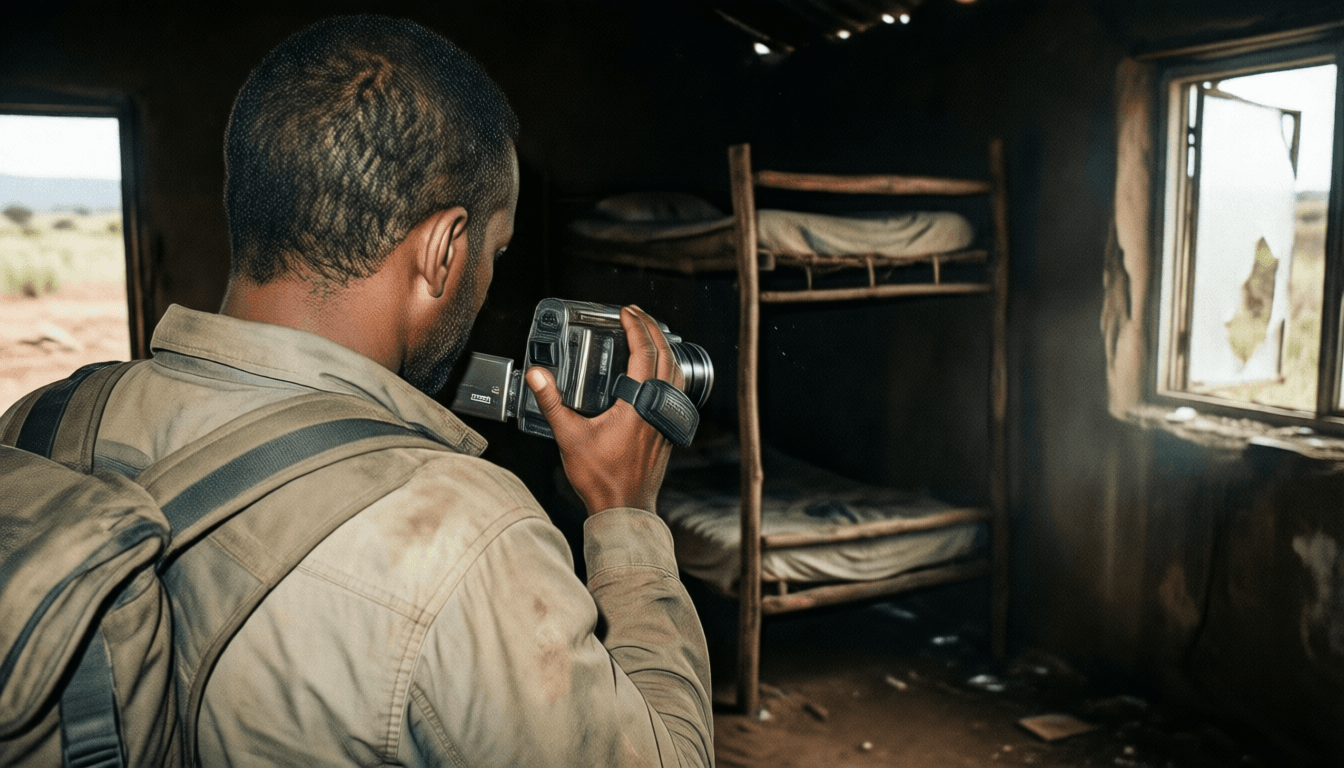
Shadow of the Tokoloshe
As an archivist documenting inexplicable phenomena, I often find myself drawn to peripheral records—the persistent whispers that defy easy categorization. These are not grand mysteries, but localized occurrences, often dismissed as folklore or delusion. Yet, the consistent details found across disparate sources invariably capture my attention.
The eMfecane Homestead Incident first surfaced through a handful of cryptic posts on South African online forums, soon followed by modified local police reports. Initial reports cited "vandalism and domestic disturbance" at a remote homestead in the Eastern Cape, roughly 30 kilometers from any wildlife preserve. What seized my attention was not the dismissive tone of the police, but the subtext within the community's response. Three adjacent families vanished without a trace over a six-month period, their homes left in disarray. Police reports noted signs of a struggle but no evidence of forced entry from the outside. Local newspapers, quick to blame poverty or crime, inadvertently quoted local residents attributing the disappearances to 'imnyama yamanzi' – the darkness in the water – an apparent manifestation of the Tokoloshe. Crucially, every witness, from the first family to flee the homes to the initial first responders, reported an inescapable, cloying, foul stench: "stagnant river sediment and metallic old blood, lingering for days." Moreover, early incident logs consistently specified that personal belongings, particularly sleeping mats and smaller pieces of furniture, were found overturned or beneath larger items, and sullied with damp soil despite the arid environment. This subtle yet precise consistency was too stark to ignore.
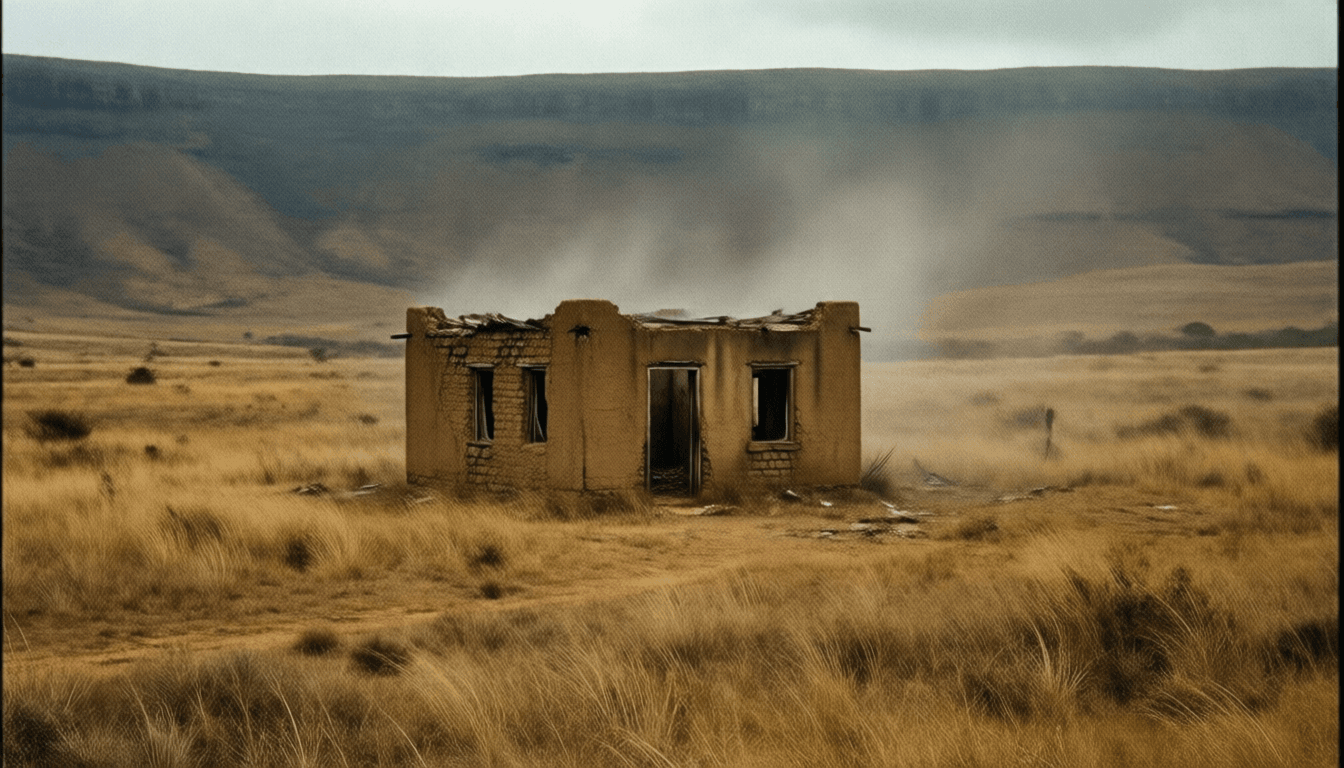
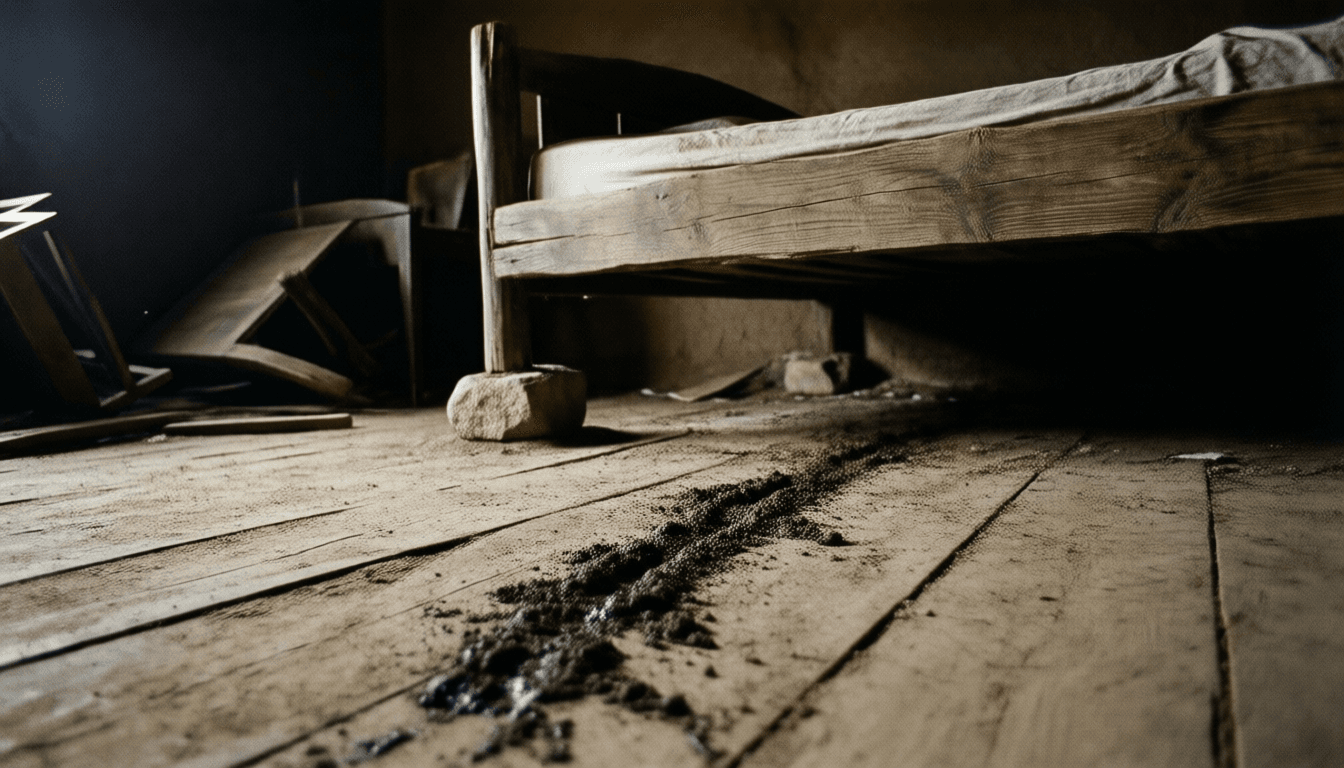
The officially abandoned eMfecane Homestead nestled in a shallow valley, barely visible from the nearest dirt track. Even from a distance, the faint, reported stench was palpable, growing stronger as I approached. The surrounding veld was parched and sun-baked, but a strange humidity clung to the derelict structures. Windows were shattered and doors hung ajar, but the damage seemed to originate from within. Boards erected to seal entry points were broken inwards, as if something had burst out from inside. The main dwelling was a scene of extreme disarray. Furniture was overturned, mattresses torn, yet again, no signs of external intrusion. Beds in every bedroom were noticeably propped up on crude bricks or scavenged rocks – a traditional defense against the Tokoloshe. This was not mere superstition; it was desperate, failed protection. Small, inexplicable trails of dark, damp soil tracked across the dusty floorboards, originating from beneath the elevated bed frames and dissolving without any specific direction. The silence within the house was profound. More than mere abandonment, it was a deliberate, almost vacuum-like stillness.
As I meticulously documented the interior, categorizing patterns of bizarre disarray, the environmental anomalies began. The initial uneasy profound silence transformed into an almost painful pressure, muffling even the faint rustle of dry grass outside. My footsteps, the click of my camera, sounded unnaturally loud, yet their echoes were distorted and delayed, coming from angles inconsistent with the room's dimensions. I opened a rusted faucet in the kitchen, searching for any trace of water; the drops that emerged were impossibly cold, then instantly hot, then for a brief, chilling moment, the flow reversed, spurting upwards before reverting to irregular drips. The scent of stagnant earth and metallic putrefaction, though faint, now intensified with every inhale, stinging my nostrils. Small puddles, the size of a child's palm, spontaneously appeared on the floorboards, slowly expanding and contracting as if breathing, before soaking into the dry wood, leaving no trace. A localized chill, despite the scorching afternoon heat, enveloped me, numbing my limbs. Catching glimpses of my reflection in dusty windowpanes, I was sure I saw something small, dark, and fast dart across my peripheral vision, only to find nothing there when I looked directly.
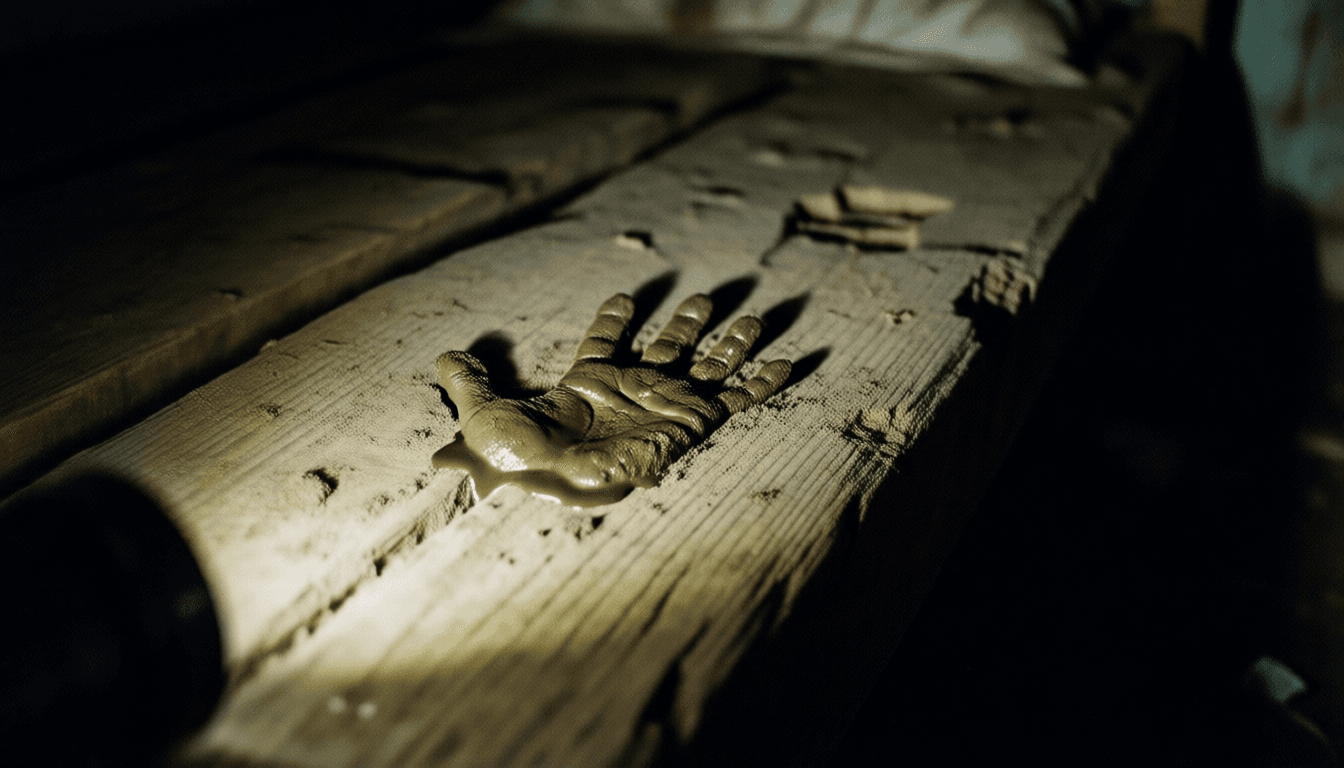
I crouched in the master bedroom, examining a particularly robustly propped-up bed frame. The mattress was gone, but the wood beneath was riddled with deep, unnatural gouges, as if something heavy and sharp had scraped across it multiple times. The surrounding chill condensed, making the air around my face icy cold. The smell of river sediment and iron surged, constricting my breath. Without warning, the heavy wooden door slammed shut with a jarring force that shook the entire homestead. Following the sound, a wet, gurgling, guttural noise distinctly emanated from directly beneath that propped-up bed frame I had just been examining for gouges. My flashlight beam cut across the darkness beneath the frame – nothing. Then, the bed frame itself began to violently vibrate. Not shaking, but vibrating with an incredible intensity, as if something massive thrashed beneath it. As I recoiled, a small, damp, mud-covered handprint – impossibly tiny, yet thick with a viscous, dark liquid and smelling of decay – appeared on the underside of the lowest wooden plank. It wasn't drawn. It was wet, glistening, and materialized, then began to dry instantly, fading into a dark stain before my eyes. The room suddenly tilted, the floorboards beneath my feet groaning and sloping to one side, throwing me off balance. A distinct 'click' came from the doorknob, followed by a heavy dragging sound against the door, sealing off my exit. Desperate, primal terror surged. A cold, wet touch, metallic and sticky, briefly gripped my left ankle. I thrashed wildly, throwing myself towards the window. The wooden floorboards around me began to bend and crack inwards, groaning terribly, as if something from below was pulling the house down into an abyss. The gurgling intensified, now directly beneath the crumbling floor. Adrenaline coursing, I smashed the remaining windowpane with my camera, forced open the twisted frame, and squeezed my body through. Just as the last floorboard beneath me gave way, my legs dangled into the dark, sucking void beneath the homestead, feeling that cold, wet thing brush against my leg one last time.
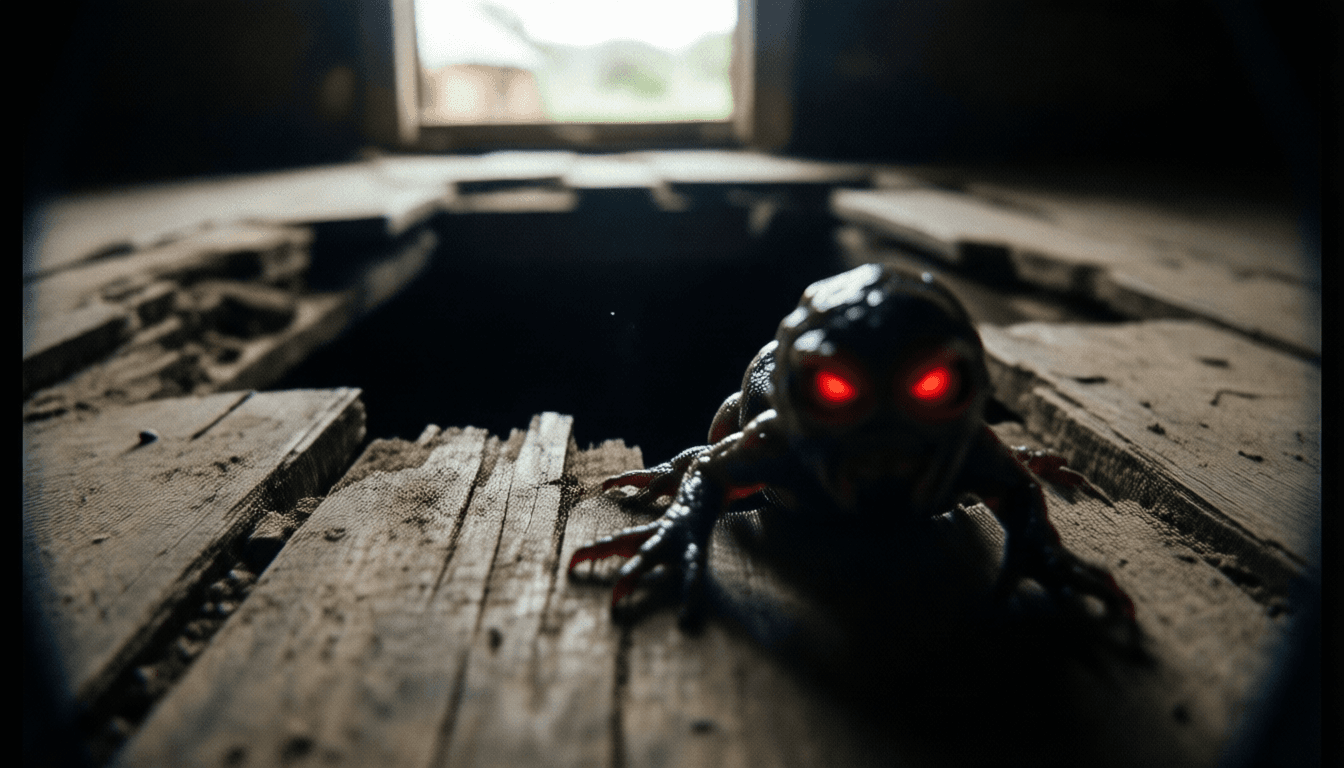
I fell hard onto the parched dirt outside, bruised and bleeding, but the humid outdoor air felt like an escape from a vacuum. Stumbling to my feet, I looked back at the house. Though barely visible in the fading light, the interior seemed to have fallen completely silent again. But that silence now held a new, ominous quality, as if it was waiting for something. The metallic, stagnant smell was less potent than inside the building but still clung to my clothes, hair, and skin. It wouldn't wash off easily. Later, in the relative safety of my vehicle, I examined my left ankle. Amidst the dirt and dried blood, a small, dark, mud-like smudge remained vividly. It wasn't mud. It was the precise shape of a tiny, twisted handprint, already beginning to bruise faintly. My camera, having absorbed the impact against the window, surprisingly still worked. Among the blurry photos from inside, there was one taken just before the lens cracked. It was a low-angle shot of the bending floor, with, in the extreme foreground and almost out of focus, a small, dark, glistening mass clinging to the wood. Its form was vaguely anthropomorphic, but two unnaturally bright, malevolent red dots seemed to be eyes. Too blurry for precise identification, but too specific to be a trick of the light. Days later, back in a controlled environment, the faint, cloying smell of stagnant earth and iron lingered in my clothes, my hair, even my memory, refusing to dissipate. I find small, atypical bruises appearing on my body. Scientific reports will never explain the ruptured floorboards, the non-existent forced entry, or the consistent stories of propped-up beds. The villagers were not superstitious; they simply knew. And now, the meticulous archivist who sought to document the darkness has, himself, been documented by it.
[ CLASSIFIED VERDICT ]
[ACCESS LOG - SOURCE FILE]
This story is based on the Tokoloshe, a small, mischievous, and malevolent spirit from South African folklore, believed to inhabit water. It is thought to torment or even kill people. Traditionally, propping beds up on stones is a known defense to avoid attacks while sleeping.