Shadow of the Ngiri Triangle: The Water Rhino
In the remote Ngiri Triangle of the Congo Basin, conservation organizations and the forestry department have, over the past five years, received a series of perplexing reports. The injury patterns found on elephant carcasses were bizarrely abnormal. While typical poaching incidents involve the removal of tusks and discovery of gunshot wounds, most of these elephants had their tusks fully intact and showed almost no external trauma. In cases where necropsies were possible, massive internal damage was confirmed—crushed and deeply perforated major organs, indicative of blunt, powerful impacts. These injuries differed from attacks by known predators like lions or leopards, and could not be explained by conflicts within elephant herds. Local Mbuti and Bantu community members uniformly whispered about 'Mbele-Kere' or 'Emela-Ntouka'—an unidentified life form of immense power, called the 'elephant killer' or 'water rhino,' said to live in the deepest swamps.
Most dismissed this as superstition, but official reports contained an eerie entry: "Cause of death: Unknown, Atypical Trauma." Such documented phenomena, quietly circulating within professional ecological networks, became a strong practical basis for an investigation to uncover the truth behind these inexplicable deaths.
As an archivist specializing in zoological mysteries, I eventually headed to a specific swamp area within the Ngiri Triangle. I was accompanied by Kamba, a local tracker who reluctantly agreed to guide me. The air was thick with sticky humidity, and the overwhelming silence of the dense jungle was broken only by the buzzing of unseen insects and the deep croaking of bullfrogs in the distance. Our initial goal was to investigate known elephant trails and recent carcass discovery sites. The terrain was perilous: submerged roots, boggy mud that sucked at our feet, and a labyrinth of thick, thorny vegetation. Kamba pointed out areas where the dense canopy cast an eternal twilight even at midday.
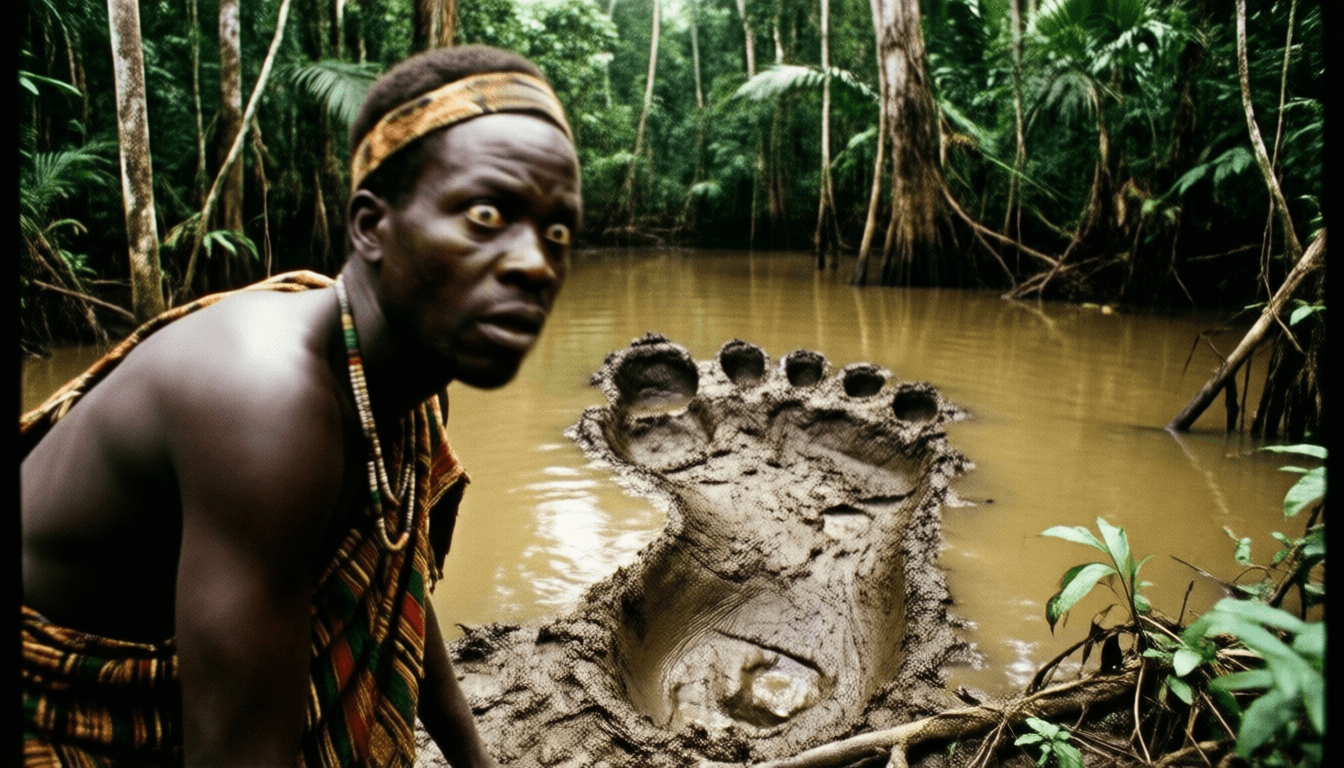
We discovered a recently abandoned elephant trail, chillingly quiet. Following it, we encountered the first physical anomalies: incredibly deep and enormous marks on the soft earth—unlike the footprints of any known elephant or large mammal. Tree trunks bore large, dark stains, too high for most animals to leave. A faint, pungent odor, a mix of decay, mineral earth, and stagnant water, hung in the air.
As we ventured deeper, environmental anomalies gradually intensified. Birdsong became strangely muted in certain sections, replaced by a suffocating silence. Distant forest sounds were unnaturally delayed or seemed to echo from impossible directions. Kamba grew increasingly agitated, attributing all these changes to 'water spirits.'
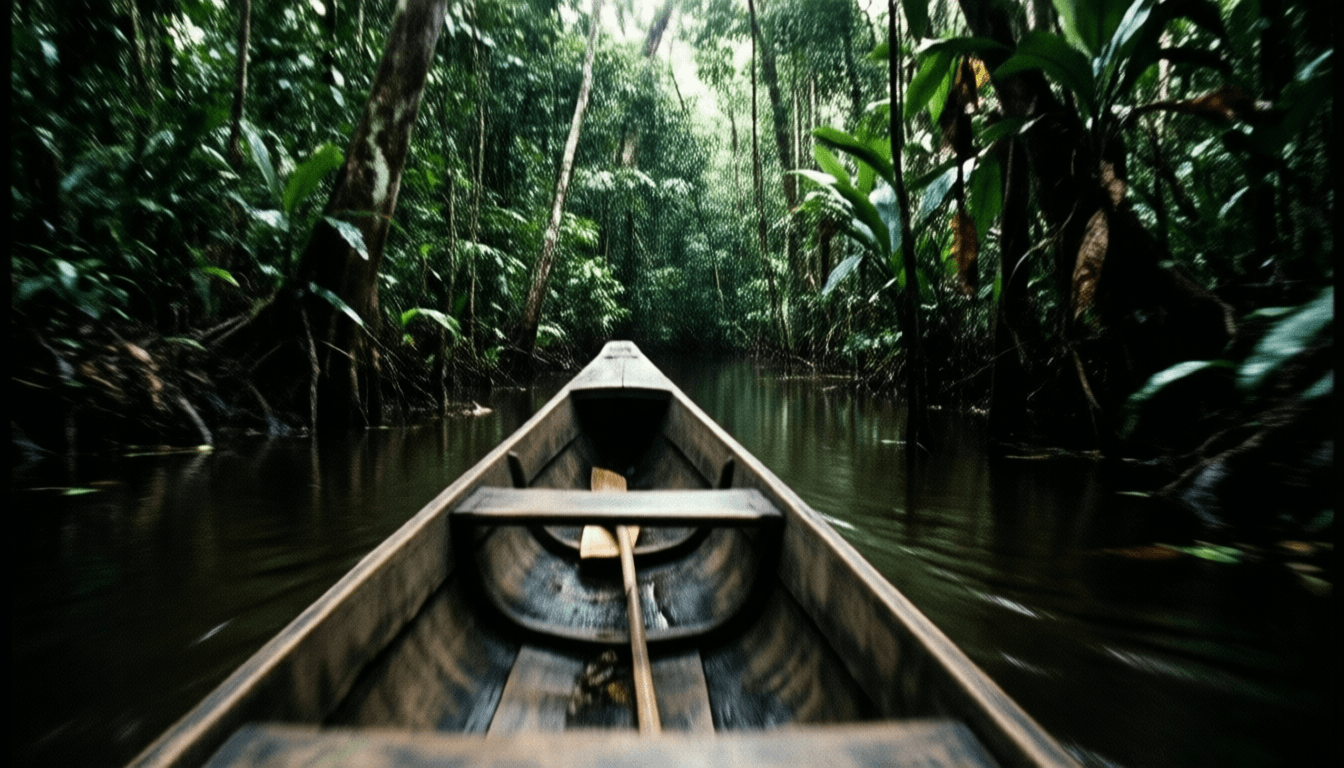
We crossed a slow-moving river by dugout canoe. The usually calm water suddenly created inexplicable, powerful underwater currents that pulled at our paddles. Even where there was no visible change in depth or flow, the canoe risked being thrown off course. Deeper in, Kamba pointed to areas where reeds and water hyacinths were violently trampled. A path was carved into the seemingly impenetrable swamp, too wide and massive for any crocodile or hippopotamus to create.
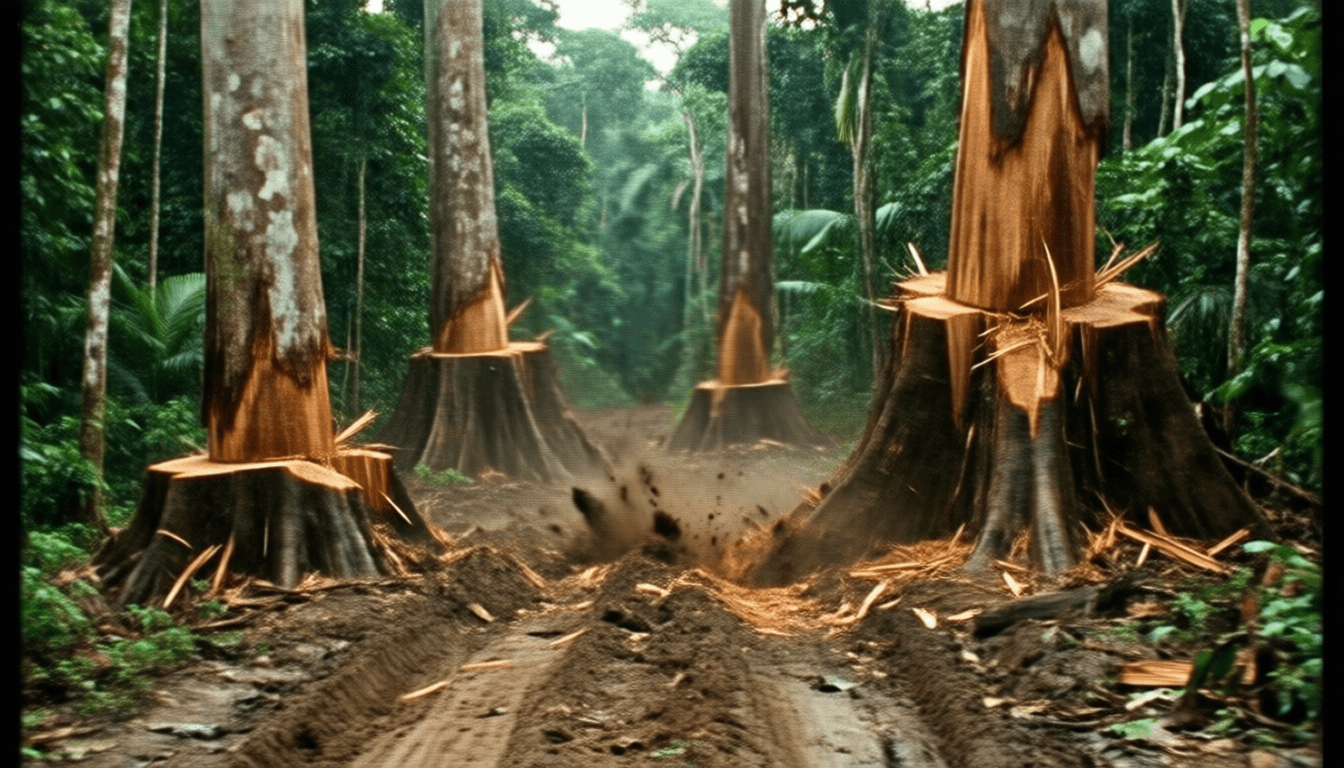
We found a small clearing, clearly once an elephant feeding ground, now transformed into what looked like a battlefield. Trees were not merely broken but cleanly snapped in two, some completely splintered as if an immense force had been applied from an abnormal direction. The ground was deeply overturned, almost pulverized. The pungent odor was much more intense here. There were no clear footprints, only massive, amorphous churned earth masses. The air was heavy and oppressive, as if something unbelievably colossal and savage had recently passed through.
Following the destroyed vegetation and the increasingly strong pungent odor, we entered a vast, shallow marsh—a pool surrounded by impenetrable thickets. Suddenly, the water around us began to churn violently. It wasn't the wind or currents. It was an immense force within, beneath the water. The ground shook. Kamba screamed and pointed. From the blurry depths, a giant, black form rose.
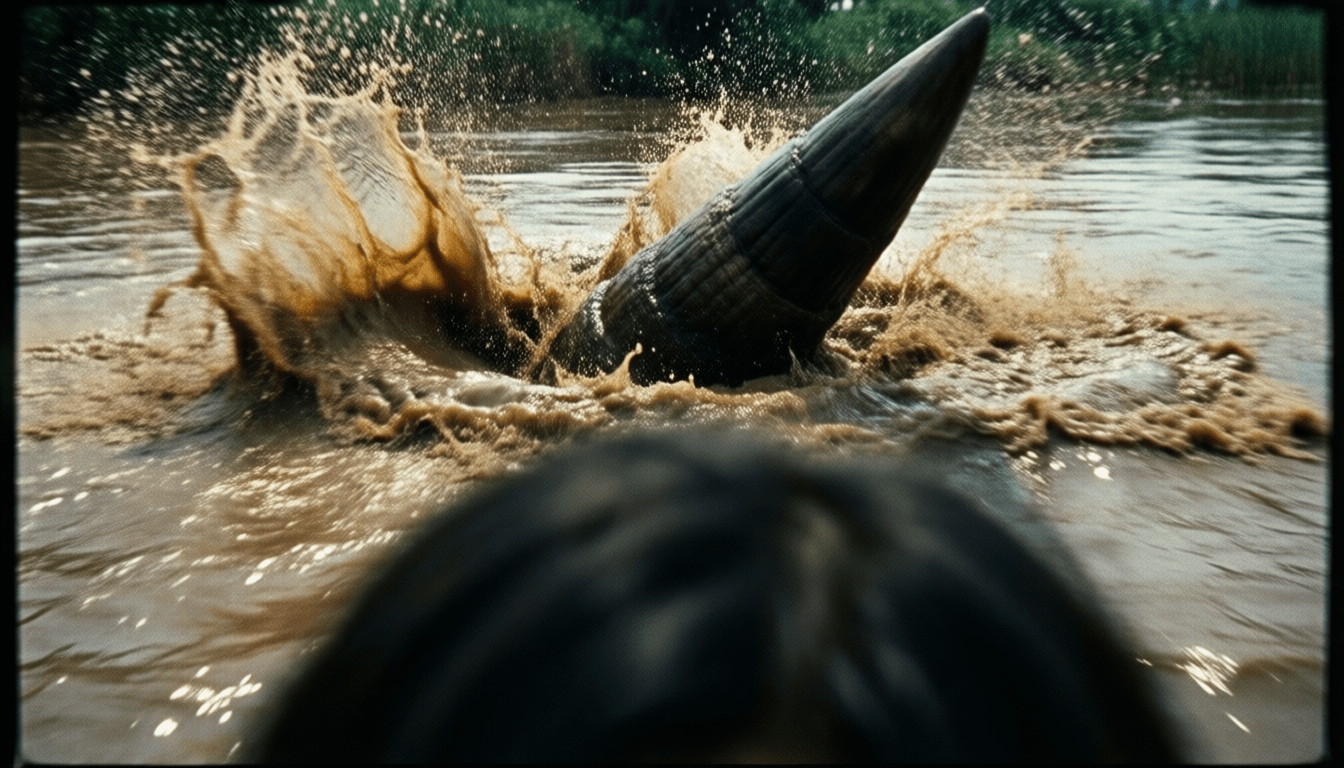
It was enormous, far larger than any rhinoceros. Its skin was like weathered stone, and it had a single, massive, horn-like protrusion that wasn't merely keratin but seemed fused with bone. Its head was held low, primordial. It moved with incredible speed and power, sending colossal waves and mud crashing over us. It was Emela-Ntouka.
Instead of a roar, a low, guttural rumble vibrated through our bones. It didn't charge directly at us but in a wide arc—an act of territorial display. The physical impact of its movement was devastating. A thick stand of palm trees in its path shattered and fell as if struck by lightning. Despite its immense bulk, its speed in the water was eerily fluid. We were tossed about by the pressure of the water. And then, the creature began to actively hunt us. It circled, its massive horn rising like a spear above the water. It defied the laws of physics. Its immense weight didn't slow it down even when it crashed into submerged logs, merely pulverizing them. The water around it briefly sucked inwards, a powerful suction almost trapping my legs in the mud.
We abandoned our gear and clambered onto a half-submerged log. The creature slammed its enormous head into the log, sending splinters flying and nearly throwing us back into the water. Kamba, in a panic, almost got impaled by its horn, but a sudden bank collapse momentarily diverted its attention, saving his life. We plunged into the underwater root systems and narrowly escaped. The creature's immense weight continued to destabilize the bank above us, causing partial collapses that temporarily obscured our pursuer.
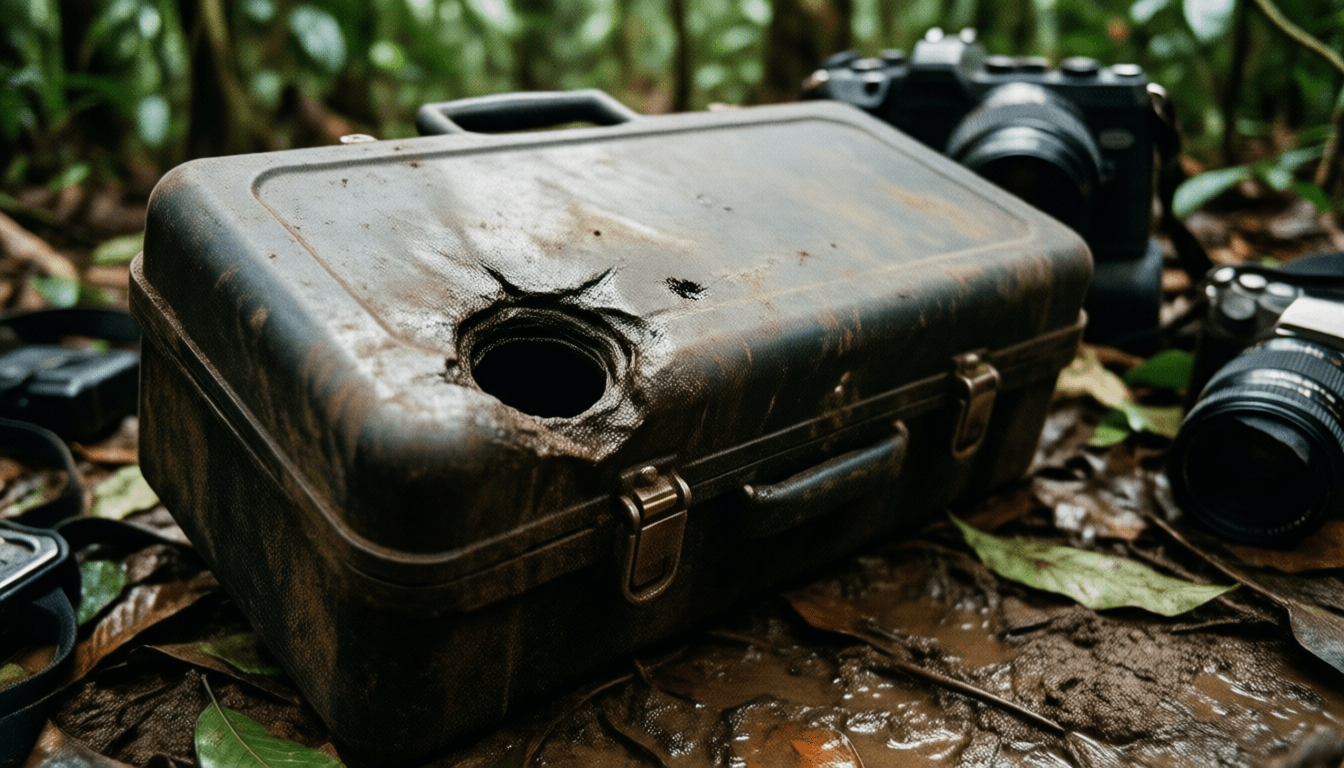
Days later, battered, disoriented, covered in mud and leeches, Kamba and I barely made it out of the swamp and were rescued by a distant patrol. Our story was dismissed as a mix of jungle fever, encounters with aggressive elephants or hippos, and general trauma. Kamba refused to speak about it further, only saying, "Some places are not for humans." My injuries were consistent with violent impacts and deep lacerations, but the damage patterns on my broken camera equipment (a massive lens case inexplicably dented and punctured in an abnormal way) and the scale of the immense, incomprehensible destruction witnessed in the swamp could not be explained by any known animal.
Back in civilization, reviewing limited, blurry footage taken from the periphery of the 'clearing,' a fleeting glimpse captured an impossible, indistinct blur in the distance – a massive aquatic disturbance that shouldn't exist. Medical reports noted my bruises were atypical; deep, localized impact points were difficult to categorize. An eerie, undeniable truth remained: the mythical creature was terrifyingly real. It was not just an unidentified life form, but a top predator of immense, unknown power, a living fossil actively resisting scientific classification, continuing to roam the deep, forgotten corners of the Congo. Official reports would never acknowledge it. But the growing reports of 'atypical trauma' elephant carcasses would continue to accumulate as quiet, mounting evidence of the undeniable king of the Ngiri Triangle's aquatic wilderness. The knowledge permeated to the bone. The hunt wasn't over. It had merely returned to the depths.
[ CLASSIFIED VERDICT ]
[ACCESS LOG - SOURCE FILE]
This story is based on urban legends and rumors about the cryptid 'Emela-Ntouka', said to inhabit the remote regions of the Congo Basin. According to local legends, this massive creature, known as the 'elephant killer' or 'water rhino', is reported to kill elephants and dwell in deep swamps.