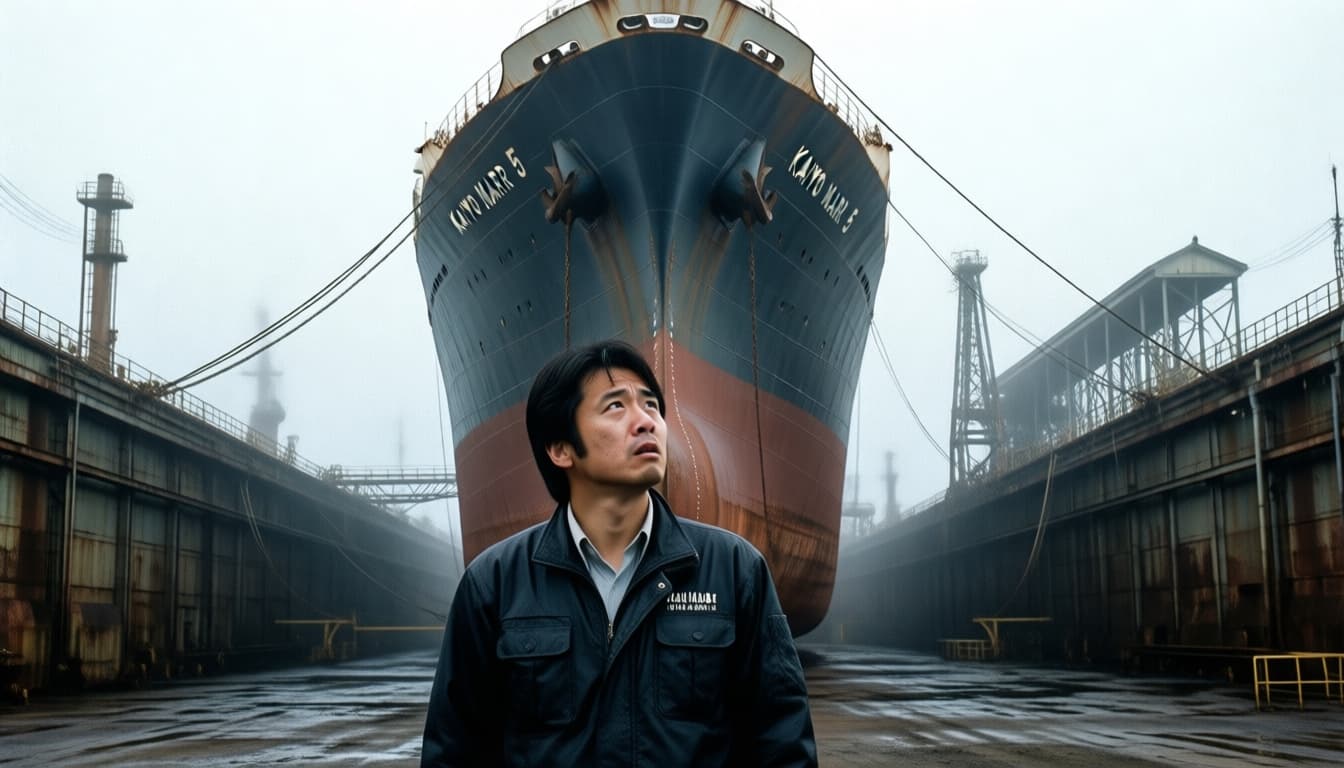
Shadow of the Deep Sea: Kaiyo Maru 5 and the Ninggen
In the early 2000s, rumors of a creature known as 'Ninggen' (人間) began to spread across Japanese internet forums, especially 2channel. These rumors, about a colossal marine creature reportedly sighted by Japanese Antarctic research and whaling vessel crews, circulated alongside blurry, grainy images. These images were easily dismissed as doctored iceberg photos or digital noise, and the Japanese government immediately repudiated all claims, categorizing them as urban legends or misidentifications of known marine life. However, the rumors persisted. Stories spoke of a massive, pale, humanoid entity, sometimes with distinct limbs, other times with a single, tail-like appendage, seen gliding beneath the ice or surfacing near ships. What set Ninggen apart from other unidentified creature sightings was the Japanese government's 'excessively' proactive denials, and the subtle, cautious silence of former crew members. Under pressure, they would only utter vague warnings about "things hidden in the ice" or "entities watching from below."
I was drawn in by a deleted internet post from 2007. The post hinted at a hidden truth behind the official announcement that Japan's research vessel, 'Kaiyo Maru 5,' had suffered "significant damage" during an Antarctic expedition due to an "unprecedented storm." The author, who identified himself as a former naval engineer, darkly speculated about the nature of the damage, mentioning "tearing marks not caused by ice" and "crew members traumatized not by weather, but by *something else*."
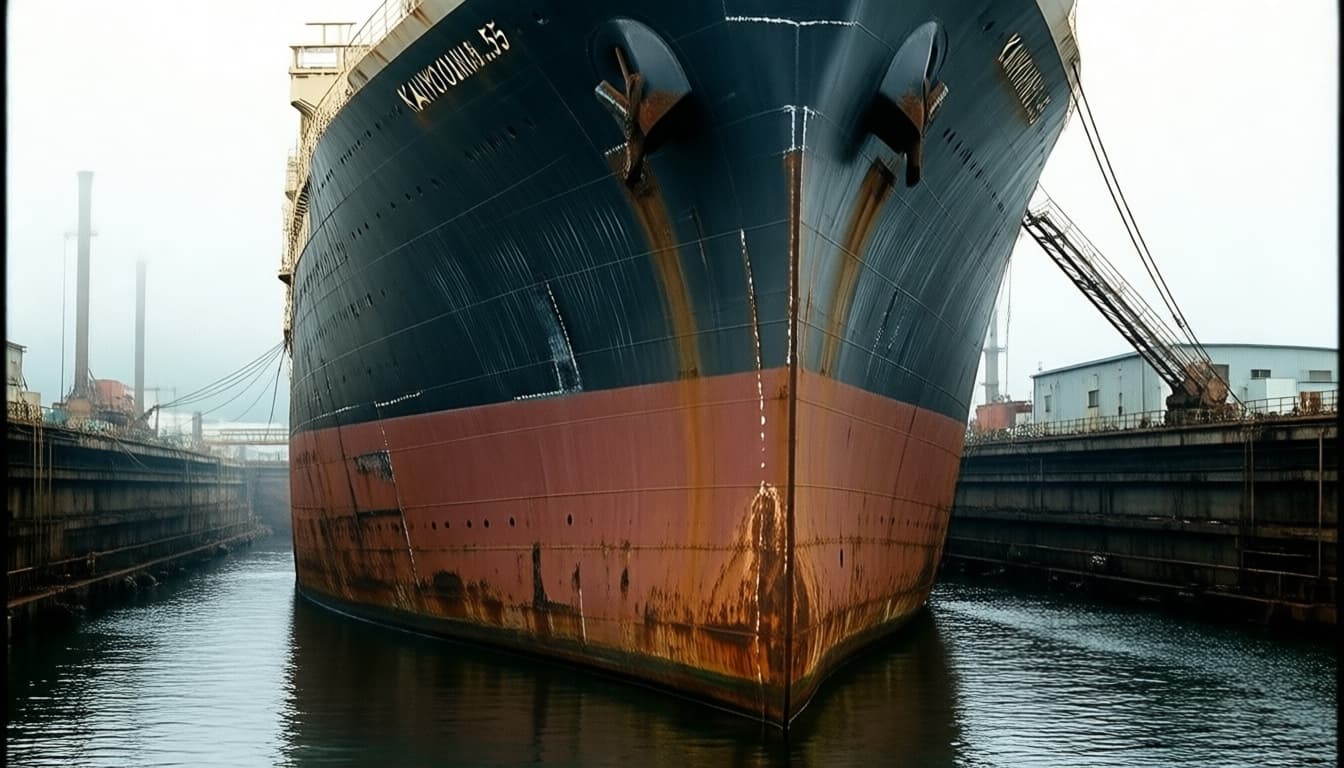
Now retired, I obtained exclusive access to the Kaiyo Maru 5, moored in a remote, foggy dry dock in Hokkaido. My official purpose was to document the ship's engineering history before its dismantling, but unofficially, I was seeking the truth behind the engineer's cryptic post and the Ninggen legend. The Kaiyo Maru 5 was a ghost ship: a colossal, silent mass of cold steel. Rust bled down her flanks like old wounds. The air was heavy with the smell of brine and damp metal. A few old dockworkers kept their distance, muttering about "bad luck" and an "ominous chill" that seemed to cling to the ship even in summer. My initial investigation focused on the stern, where the 'storm damage' was reportedly concentrated. The hull there had been hastily patched, but beneath the primer and fresh welds, the faint outline of *something else* was visible. A series of massive, parallel indentations and deep scratches were etched into the reinforced steel plating – too precise and linear to be natural ice impacts or storm debris.
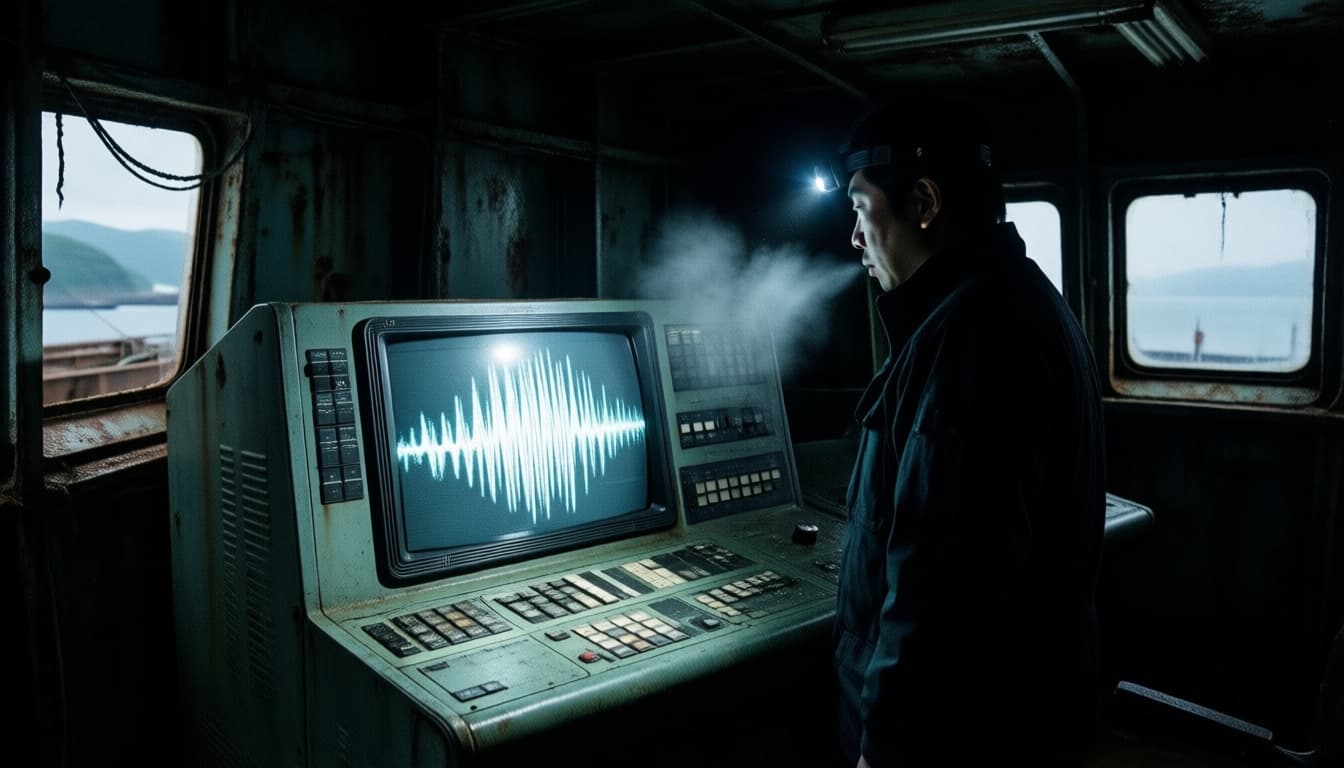
Deep within the ship, on the lower decks near the sonar room and engine rooms, an unnatural stillness prevailed. There was none of the usual groaning or creaking of a vessel settling; instead, a deep, absorbent silence swallowed even my footsteps. Though the external weather was mild, temperatures in certain sections dropped sharply, making my breath visible in the air. Water dripped rhythmically from unseen sources, not like a leak, but a hollow, echoing sound resonating from the metal plates themselves. In the unpowered sonar room, the main console screen flickered intermittently, momentarily coalescing static into impossible patterns that resembled a colossal, rhythmic pulse. It sounded as if it resonated from the deep sea. A faint, cloying odor permeated these lower decks – a cold, briny scent beyond mere salt and rust, like the interior of some colossal, ancient mollusk. I discovered a severely water-damaged logbook hidden behind a bulkhead. The final entries, written in agitated handwriting, described "pale watchers" and "deep echoes," concluding with the chilling phrase: "It knows we see. It learns what we are."
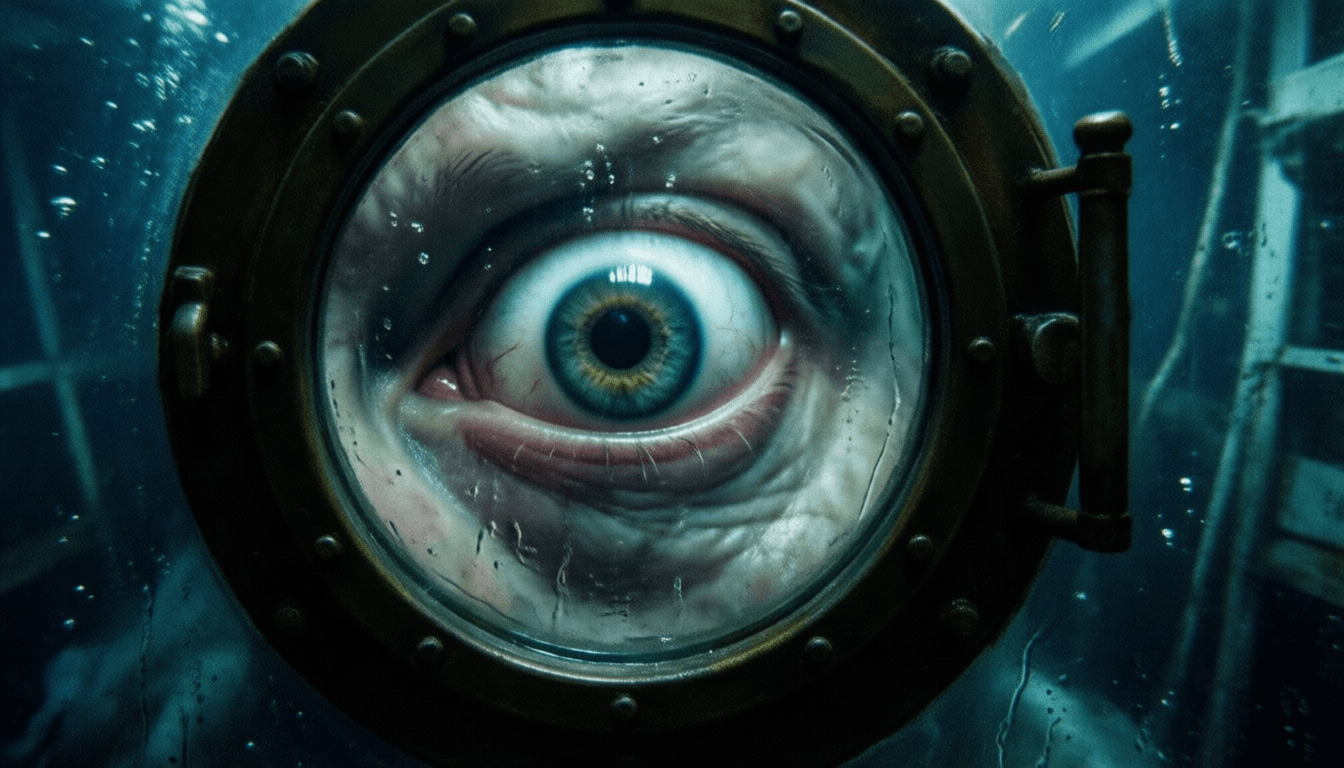
Following faint, high-frequency sounds picked up by my portable acoustic recorder, I descended into the partially flooded lower cargo hold. This was now a dark, cavernous space, with seawater seeping from damaged bulkheads. The usually murky, still water here began to slowly swirl, defying the ship's inert state. A deep, resonant *hum* vibrated through the hull, originating from beneath the ship but seeming to bypass the steel entirely, as if resonating within the water around me. My headlamp flickered erratically, dimming to a weak glow. The surrounding water grew impossibly cold – an immediate, freezing chill beyond hypothermia. And then, through a small, reinforced porthole, warped by time and tide, a massive, pale form slowly began to reveal itself from the inky depths beneath the ship. It was impossibly huge, far larger than any iceberg or known whale. Its surface absorbed and refracted the dim light, making its exact contours difficult to discern, yet its presence alone was overwhelming. The ship groaned, not from settling, but from immense external pressure. The original scratches on the hull near me suddenly deepened with a sickening metallic shriek, as if being torn *further from the outside*. Not tentacles, but impossibly thick, articulated, colossal pale *appendages* struck against the outer hull, violently shaking the entire vessel. The water inside the flooded compartment surged, pinning me against a bulkhead. I caught a fleeting glimpse of a gigantic, pupil-less 'eye,' glowing with a cold, malevolent intelligence. It was pressed close against the thick glass, directly opposite me. The hum intensified, vibrating through my bones. The creature wasn't merely observing; it was actively pushing, scraping, and *trying to force its way through* the hull. The narrow emergency hatch was jammed tight by the ship's distortion, and the pale, colossal entity outside was still pushing, scratching, exploring.
I don't remember all the details of my escape. Only fragments remain: the screaming metal, the bone-chilling cold, the crushing pressure of the water, and that massive, knowing 'eye' seared into my memory. I barely made it back to the surface from the lower deck, badly injured, gasping, and shaking uncontrollably. The moment I emerged, the structural integrity of the flooded cargo hold gave way, emergency alarms blared, and finally, dockworkers rushed over in a panic. The Kaiyo Maru 5 was declared severely unstable and immediately moved for accelerated dismantling, with the 'structural defect' officially attributed to "advanced, undetected corrosion exacerbated by a severe weather event in 2007."
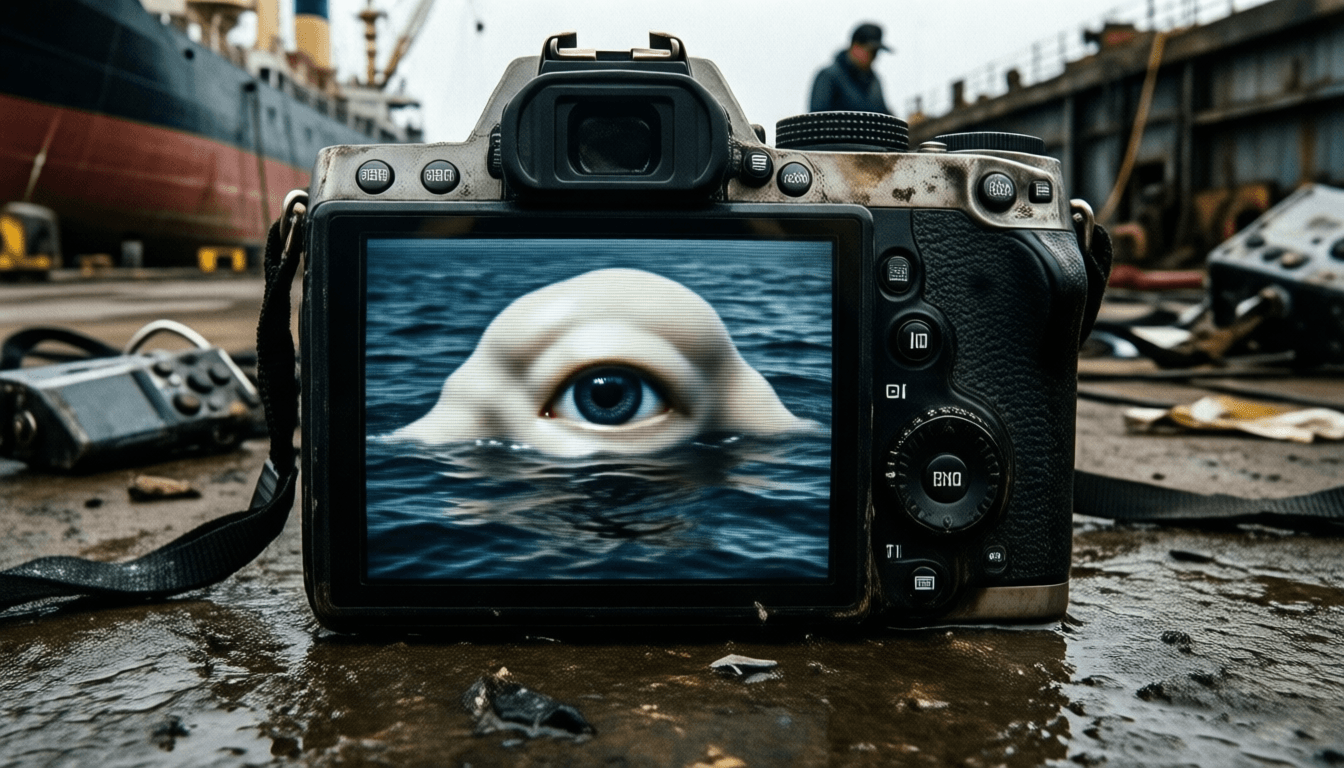
Most of my retrieved equipment was destroyed. Most photo and audio files were irrecoverably corrupted. However, a single fragmented audio file recorded from the deepest part of the hull preserved the rhythmic *hum* and, beneath it, faint high-frequency *clicks* that seemed to convey unnatural complexity. One photograph, taken just before impact, showed only static and blur, but within the digital noise, a colossal, pale *form* was clearly present in the water – a form far larger than any known marine creature. And at the precise center of that immense blur, a single dark, intelligent 'eye' seemed to stare directly into the lens.
I emerged from that ship not only with physical injuries but also with a coldness that seemed to have permeated to the very core of my being, a persistent chill that no amount of warmth could dissipate. The ocean, once an object of scientific fascination, now feels like a vast, cold maw. The true horror was not merely that the Ninggen existed, or that it was a creature of immense scale and power. It was the chilling, persistent realization that the Ninggen had not merely *encountered* the Kaiyo Maru 5. It had *hunted* the ship. It had *learned* from the ship. And in that terrifying encounter deep within the ship's cold heart, it had now *learned me*. The distant hum of the ocean, once background noise, now feels like a deep, echoing promise. It remembers. And it watches. From below.
[ CLASSIFIED VERDICT ]
[ACCESS LOG - SOURCE FILE]
'Ninggen,' a giant humanoid marine creature, rumored to have been sighted by Japanese Antarctic research and whaling vessel crews, spread across Japanese internet forums in the early 2000s. The government's active denials and former crew members' vague testimonies only fueled suspicions of its existence, establishing it as an urban legend about an unknown entity hidden beneath the ice.