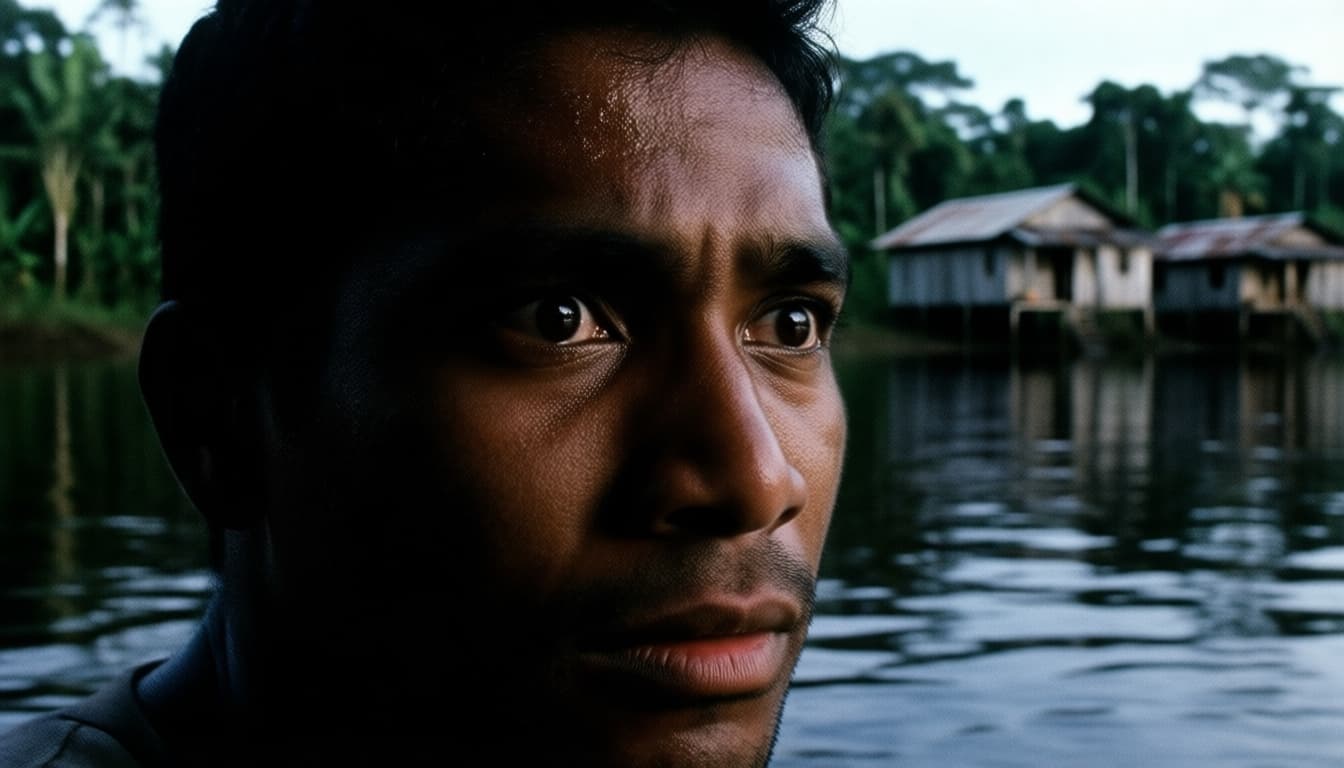
Shadow of the Amazonian Encantado
Records kept in the Santarém City Police archives in Pará State, dating from 1978 to 2003, harbored a chilling commonality. Classified as 'presumed drowning disappearances' or 'unidentified bodies,' most of these reports detailed young female victims found several kilometers downstream. Peculiarly, despite no clear signs of struggle or violence on the bodies, specific personal belongings, such as jewelry or clothing fragments, were reported missing, as if surgically removed with precision. One supplementary report from 1989 specifically noted a small, smooth river stone clutched in the hand of a drowned woman, which a local pajé (shaman) identified as a traditional amulet against "aquele que canta" (the one who sings). While official conclusions always pointed to accidental drowning, residents of the riverside villages diligently whispered tales of the Encantado—a captivating shapeshifting river dolphin. The community's deep-seated fear of this seductive predator, particularly active during the Festa Junina period, only deepened the disparity with official records, marking the starting point of this investigation.
My journey took me approximately 150 kilometers upstream from Manaus, to a remote tributary of the Rio Negro. This area, known as 'Curva do Sereio' (Mermaid's Bend), was notorious for an unusually high number of disappearance stories. The path, navigating a riverboat through the dense rainforest, was long and arduous. The air was heavy and humid, thick with the scent of damp earth and decaying vegetation. The dark, acidic waters of the Rio Negro mirrored the sky like polished obsidian, concealing unknown depths within.
Upon arrival, the few residents of the dilapidated stilt-house village greeted me with wary faces, marked more by resignation than fear. They vaguely pointed towards the deepest and widest part of Curva do Sereio, where the river "swallowed everything whole," offering terse warnings. They spoke of faint lights seen on the water at night, and distant, melodic sounds that were "neither human nor dolphin." No one stayed outside after dusk. I deployed a hydrophone and underwater video equipment, hoping to capture anomalous acoustic signals or visual irregularities.
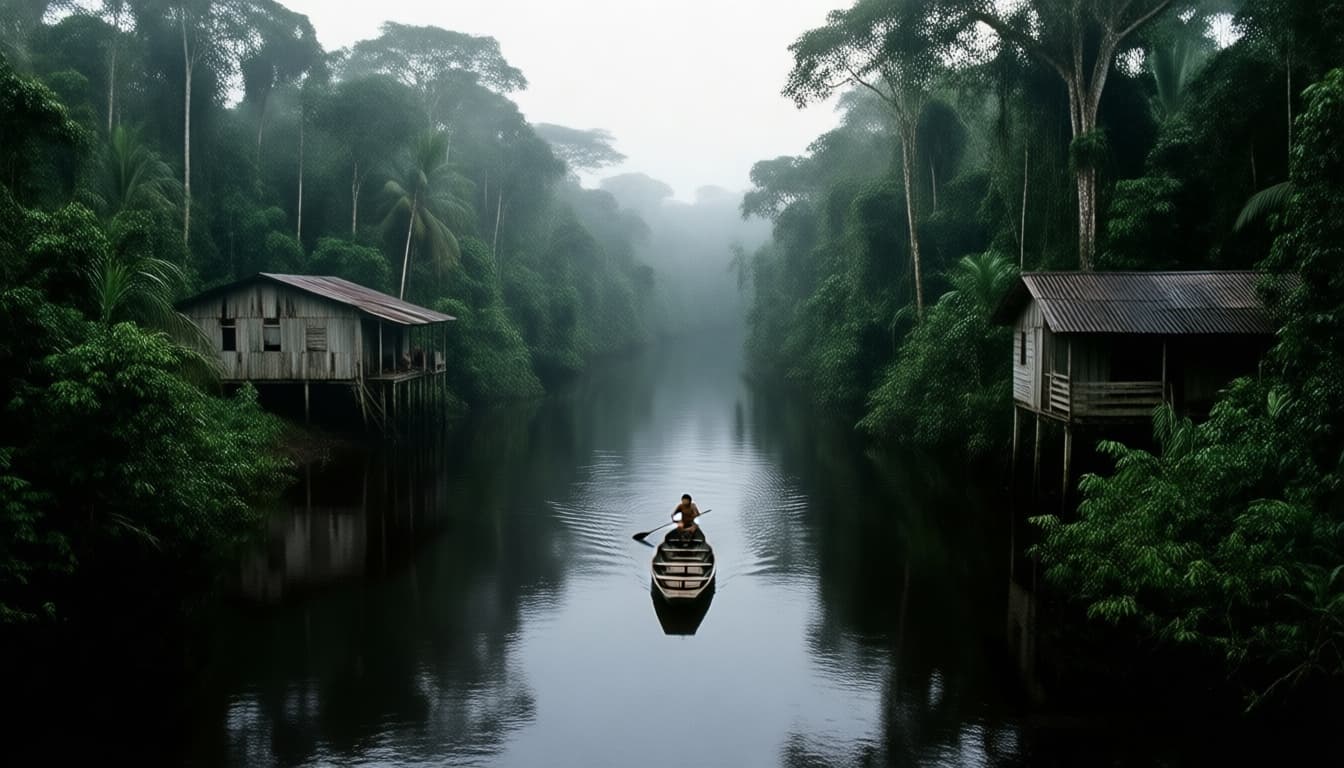
The first few nights were quiet, save for the cacophony of the jungle. Then, the environment subtly began to shift. On the third night, precisely at 2 AM, the jungle's incessant din abruptly ceased, plunging the area into an unnatural silence. It was an absolute stillness, more unsettling than any noise. After several minutes, the silence gradually returned to the usual sounds, as if a switch had been flipped. The black waters of Curva do Sereio also displayed strange movements; reflections on the surface rippled and distorted despite no discernible current or wind. On one occasion, the hydrophone detected incredibly deep currents—a strong, pulling force—despite the topographical characteristics of the water being stagnant. The water temperature in this specific area was recorded to be several degrees colder than the surrounding river.
The acoustic data from the hydrophone grew increasingly unsettling. Faint, distorted vocalizations mingled among the recorded sounds of local pink river dolphins (boto). They were complex and structured, eerily resembling human song, yet distinctly not human. These "songs" were not random; they repeated in patterns, resonating from impossible depths, persistently pulling at something primal within the listener. An inexplicable, sickly sweet yet repugnant odor permeated the air, a blend of blooming water lilies and a metallic, aged scent. The oppressive sensation of being watched from beneath the dark surface intensified, becoming a palpable pressure on the skin.
Boarding a small, motorized dugout canoe, I set out to retrieve a malfunctioning deep-sea sonar device from the deepest point of Curva do Sereio, where the strongest acoustic anomalies had been detected. The subtle hum emanating from the device had abruptly ceased.
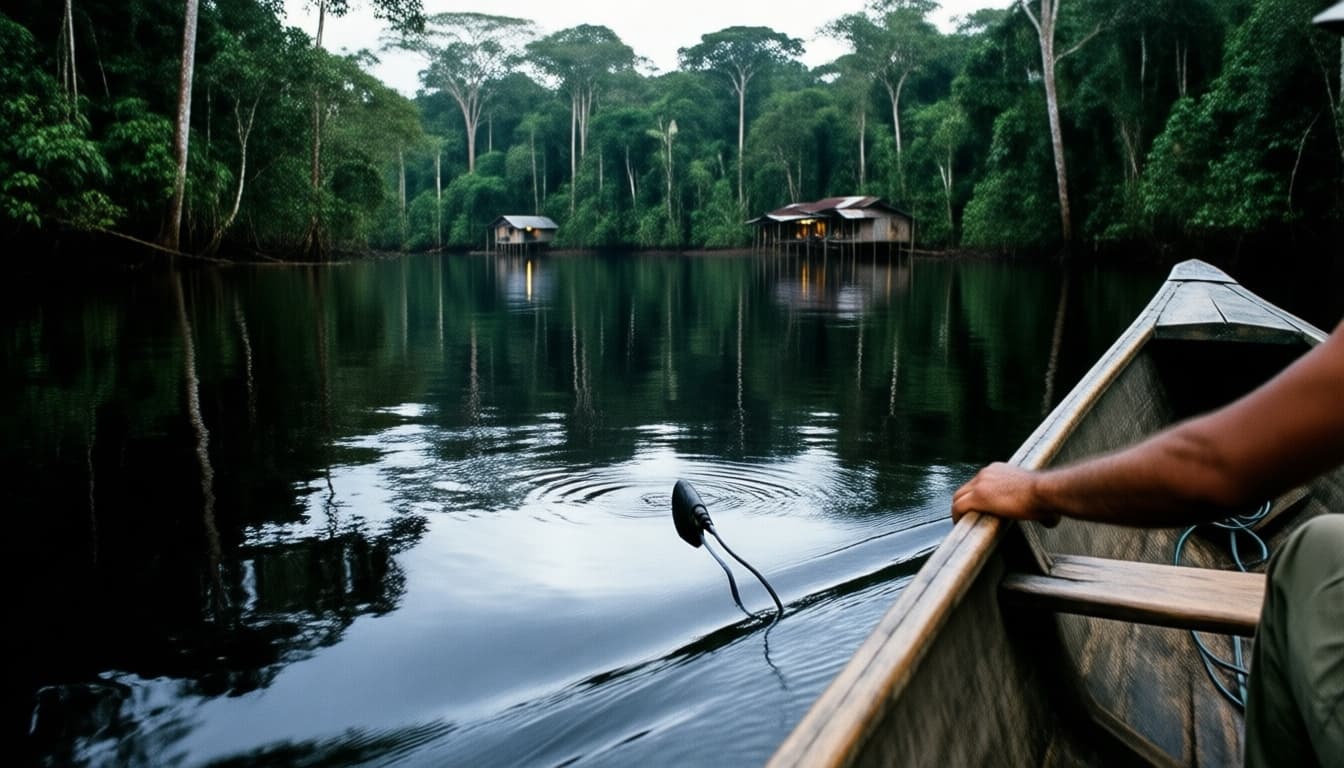
Upon reaching the deployment site, the river surface became unnaturally still and mirror-flat, despite the canoe's ripples. Then, without warning, the entire canoe was pulled downwards by an impossible, sudden force, as if a colossal, unseen hand had seized the hull from below. The air filled with the familiar sickly sweet and repugnant odor, now cloyingly pungent. The water around the canoe began to churn violently, not in a whirlpool, but in an irregular, pulsating motion that defied logic.
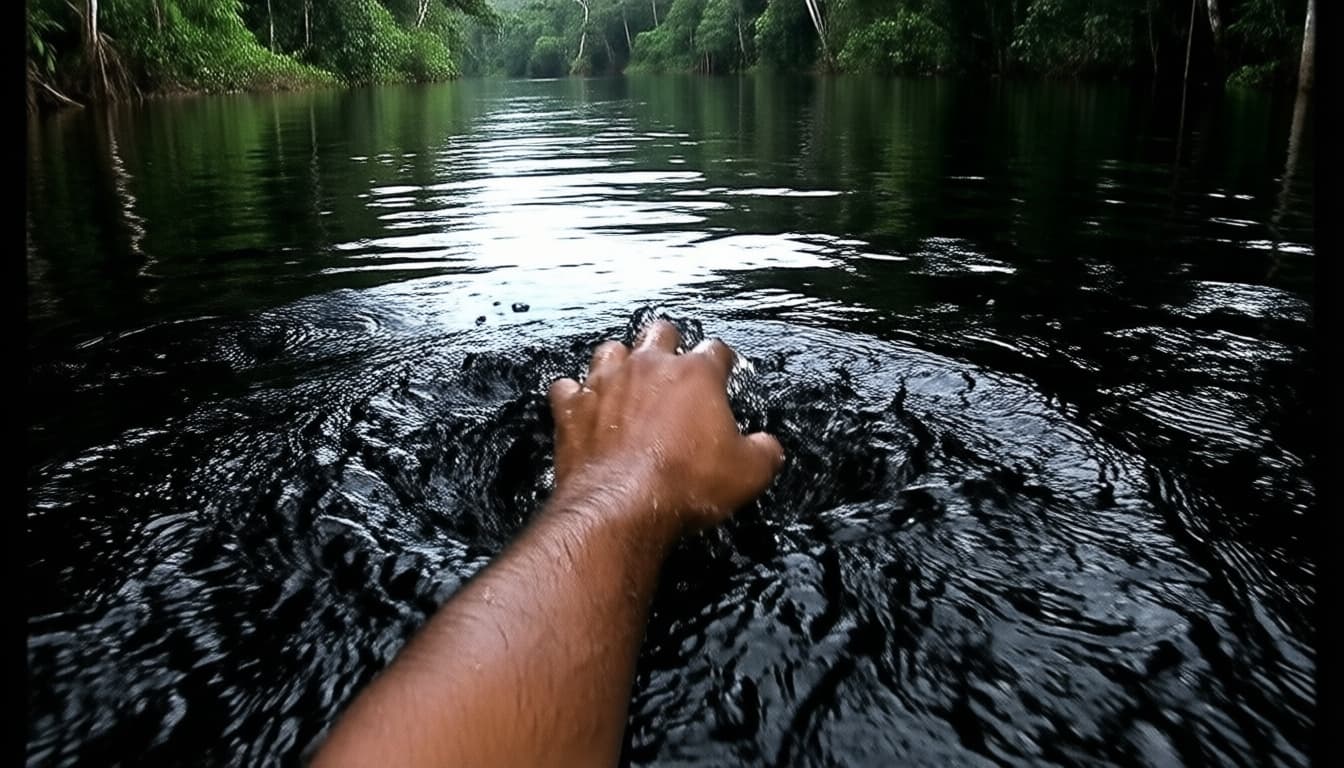
Piercing, high-frequency clicking sounds, unlike those of any known marine mammal, erupted directly beneath the canoe. The sounds resonated through the water, into my very bones, inducing disorientation and nausea. The canoe began to tilt precariously, sinking. Desperate to break free, I plunged my hand into the dark river water. A slick, impossibly strong force seized my wrist. It was unlike a human hand, yet possessed a chilling, smooth suction. It pulled with immense power, attempting to drag me into the cold depths. The entity's grip was shockingly strong, cold, and inhumanly tactile.
I struggled, wrestling against the unseen force. Then, like a flash, I glimpsed a horrifying sight of something writhing just below the surface. It was an impossibly large, shifting, faintly phosphorescent form. In a desperate surge of adrenaline, I plunged a small, serrated utility knife into the point of resistance. I felt a rubbery, alien texture, and something shrieked, recoiling. Simultaneously, a dark, viscous fluid diffused into the water. The grip released, leaving a deep, searing coldness on my wrist. A terrible, invasive revulsion washed over me.
I scrambled back into the listing canoe. The clicking sounds receded into the depths, but the memory of the chilling contact with the unseen entity was burned onto my skin. The damaged, rapidly sinking canoe barely made it back to shore, leaving the deep-sea sonar device to its unknown fate.
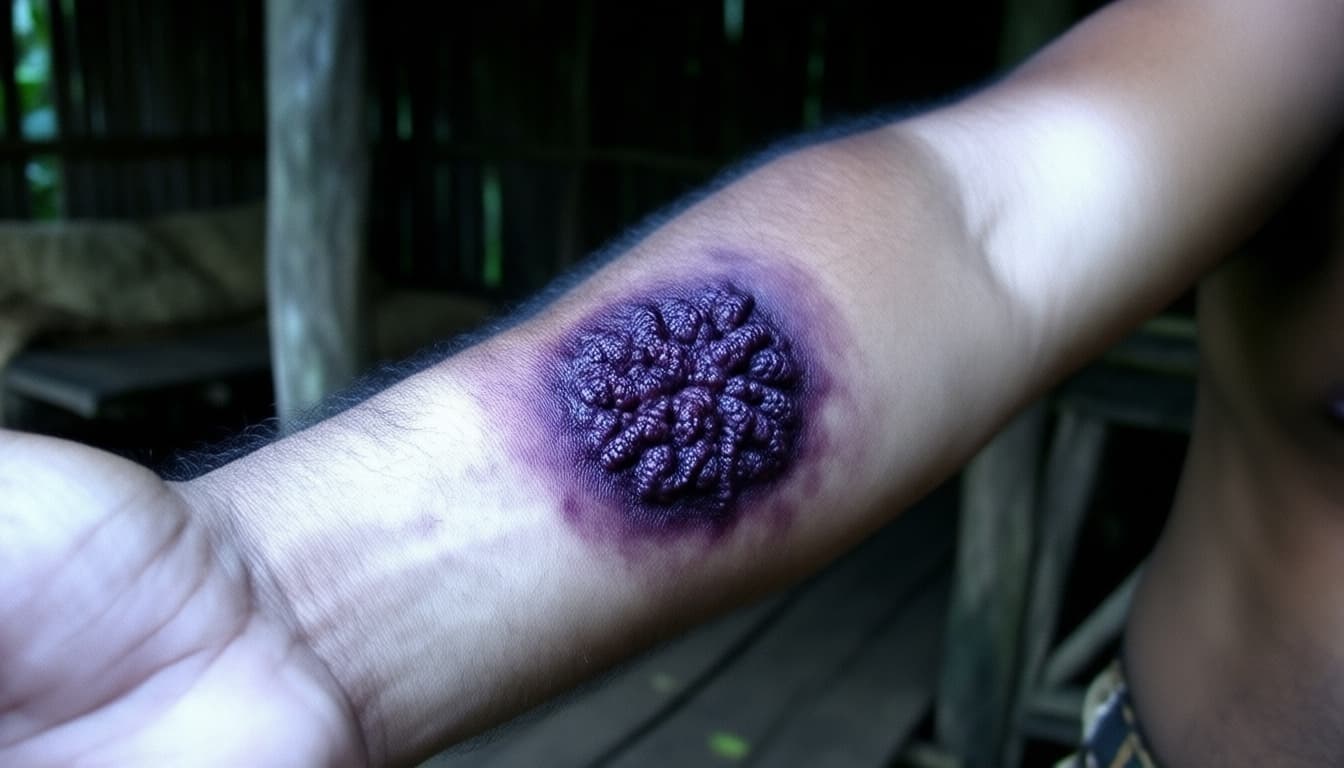
I returned not with clear evidence, but with a horrifyingly indelible mark. My wrist, where contact had been made with the entity, bore a complex, multi-lobed bruise that resisted healing for weeks, eventually fading into a pattern eerily resembling an octopus's suckers or the tessellated skin of a river creature.
Most of the recovered equipment was ruined. The main hard drive of the hydrophone was damaged, rendering all data unrecoverable. However, a single independent SD card from a backup recorder, submerged only for a short period, survived. It contained only a few seconds of audio: initial high-frequency clicking, followed by a brief, deep silence, then a low-frequency rumble, and finally, a distinctly distorted and garbled phrase. It eerily sounded like a human voice whispering, "Venha... dance..." (Come... dance...). Spectral analysis of this vocalization did not match any known human or animal voice profile.
No official report was filed regarding the specific events of that final night. Now gripped by an intimate, horrifying understanding, I merely classified and stored the damaged equipment, photographs of the inexplicable bruise, and the single unsettling audio file under a restricted clearance. The full truth of the Encantado, the true nature of the Santarém disappearances, remains unproven, trapped within the silent warnings that flow along the riverbanks and the chilling personal knowledge of one who ventured too deep. The vast, dark waters of the Amazon continue to hold their secrets, and the whisper of "Venha... dance..." lingers in the silence, a constant reminder that some mysteries are not solved, but merely survived.
[ CLASSIFIED VERDICT ]
[ACCESS LOG - SOURCE FILE]
The Amazonian legend of the Encantado tells of pink river dolphins that can shapeshift into human form. They are said to appear, particularly during the Festa Junina period, to lure people, especially young women, into the river. This legend evokes deep fear among residents in Amazonian riverside communities, often linked to unexplained disappearances or the discovery of bodies in the river.