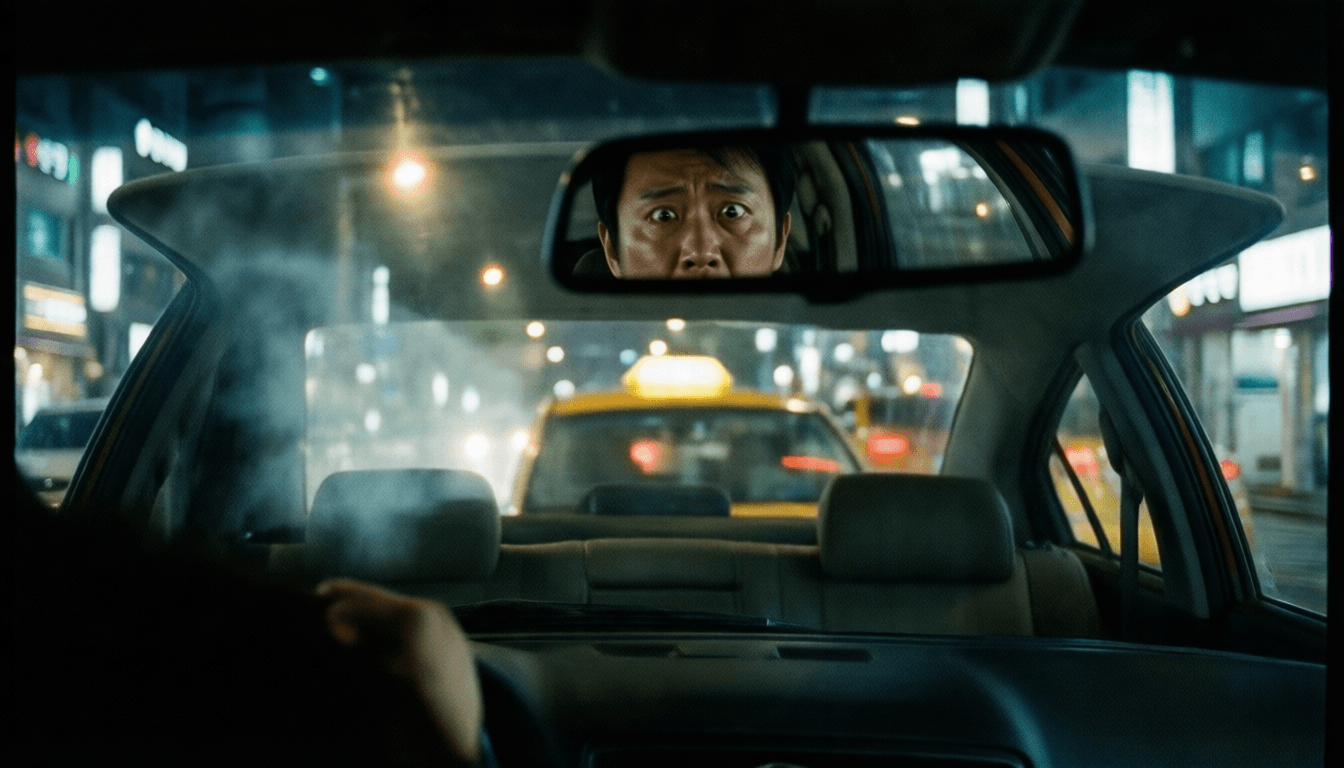
Seongsan-dong Passenger: The Unending Journey
For months, specific and unsettling stories circulated within the digital underbelly of Seoul's taxi driver community. These weren't the usual disputes over fares or complaints about traffic. On Naver Band groups and Daum Cafe threads—places like 'Seoul's Midnight Wheels'—posts appeared with increasing frequency, all sharing a single, chilling theme.
"Is it another 'Seongsan-dong' customer?"
"The disappearing passenger from Geumho-dong. Anyone else?"
"Empty back seat, full meter. Near Jongno last night."
What caught my attention wasn't merely the volume, but the eerily consistent details. Drivers, often strangers to each other, consistently reported picking up passengers between 1 AM and 3 AM, primarily from the bustling districts of Gangnam or Hongdae. The passenger was described as 'featureless' or 'darkly dressed,' and the destination, while seemingly ordinary, invariably led to one of Seoul's older residential areas: Seongsan-dong, Geumho-dong, or Jongno. The core of the phenomenon was this: upon arrival, or just before, the passenger vanished. No sound, no open door, just an empty seat and a running meter. Some drivers reported an inexplicable chill; others, a faint, undefinable smell of damp earth. Most dismissed it, but a few confessed a profound unease—the feeling of having transported something not alive. A post by a driver named 'NightHawk73' described his black box footage flickering briefly, and an inaudible, faint whisper caught on his audio recorder immediately after the passenger disappeared. He eventually sold his taxi. These were not isolated incidents. It was a pattern etched into the city's late-night routes, suggesting a specific, recurring presence, a silent passenger waiting for a ride that ended in an unknown absence.
To gather direct evidence, I rented a standard 'Seoul Orange' latest model Hyundai Sonata for two weeks. I equipped it with multiple hidden cameras, a supplementary audio recorder, and a custom GPS system designed to detect anomalies not registered by standard commercial equipment. My primary area of investigation was the reported pick-up zones, particularly the taxi stands near Gangnam Station, known for their late-night clientele. My routine became monotonous: hours of driving, picking up tired office workers, boisterous students, and late-night revelers. I listened to the chatter on drivers' radios, observing the subtle shifts in the city's energy as the night deepened.
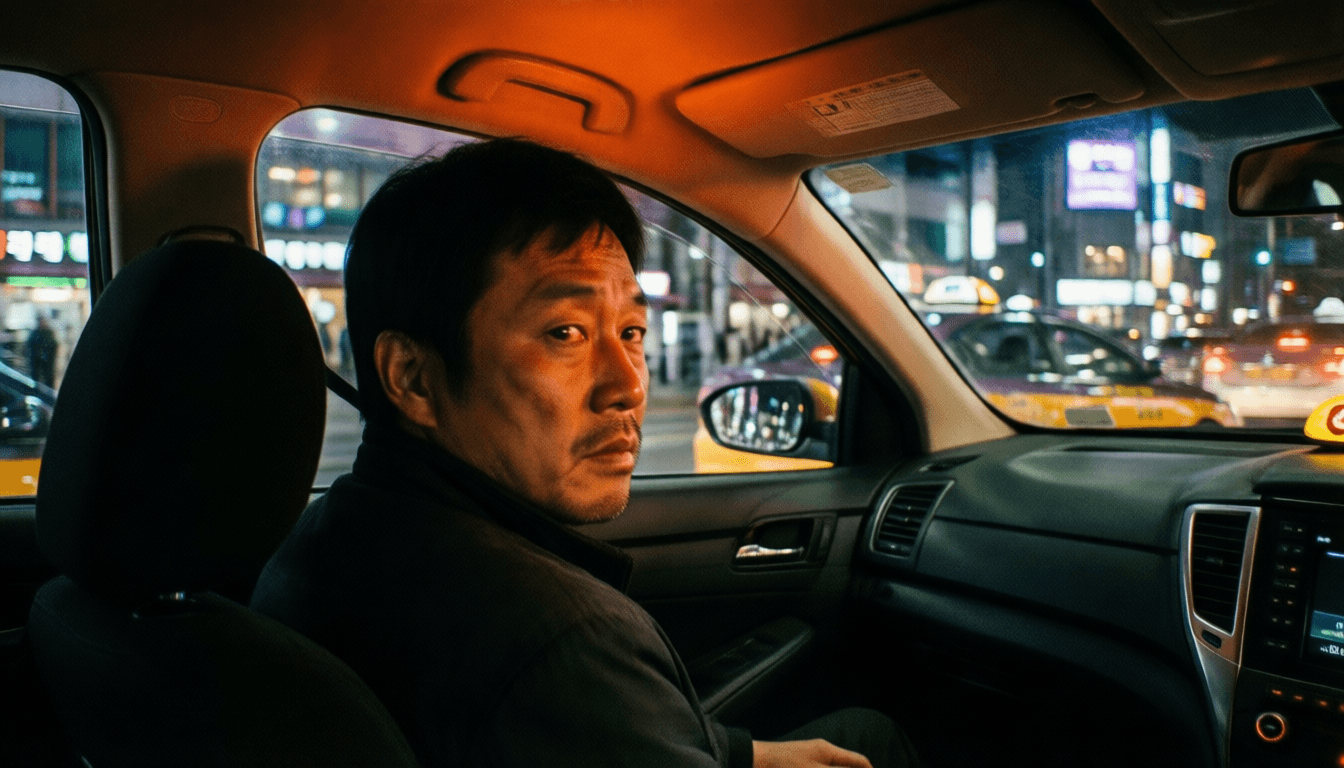
On the fifth night, at precisely 1:47 AM, while idling near Gangnam Station Exit 10, a figure appeared at the edge of my vision. A featureless man in the dim light, seemingly dressed in a dark, ordinary suit. He raised a hand. My heart rate, set to detect changes, registered a slight elevation. This was it.
He opened the back door, slid in, and closed it with a soft click. There was no greeting. In a voice neither loud nor soft, he simply said, "Seongsan-dong." His voice held a peculiar flatness, devoid of any discernible accent. I confirmed the address, repeated it aloud, and pulled away. The car, usually filled with street noise and radio static, became eerily silent the moment he entered.
The journey seemed to begin ordinarily. We drove along familiar, wide Seoul roads. But the stillness persisted. I attempted conversation. "Working late tonight?" I asked, glancing in the rearview mirror. Only a blurry outline was visible; his head was slightly bowed. No response. I tried again. "Traffic's lighter tonight, at least." Still silence. The quiet in the car was profound, seeming to swallow even the usual city hum. The engine's drone, the subtle friction of tires on asphalt—all felt muffled and distant. My audio recorder, which typically captured even slight wind noises and distant sirens, registered almost perfect quiet.
As we crossed Mapo Bridge, the digital clock on the dashboard flickered. And inexplicably, the temperature inside the car dropped several degrees. A distinct, localized chill seemed to emanate from the back seat. I tightened my grip on the steering wheel. My usually robust, enhanced GPS system also began to behave erratically. The estimated time of arrival to Seongsan-dong wildly fluctuated from 5 minutes to 15, then back to 7, despite my maintaining a consistent speed. The route on the display map subtly wavered, sometimes indicating faint, non-existent side roads off the main thoroughfare.
The faint smell I had read about began to manifest. A subtle, damp, earthy scent, like freshly turned soil after rain, overlaid the usual artificial leather and disinfectant smell of the taxi. It was barely noticeable at first but grew steadily stronger. I glanced into the rearview mirror again. The passenger's outline, illuminated by passing streetlights, seemed… flatter. Like a shadow losing its form. I told myself it was just an illusion, a product of fatigue and suggestion. But the cold was real, the silence was real, and the smell was now undeniable.
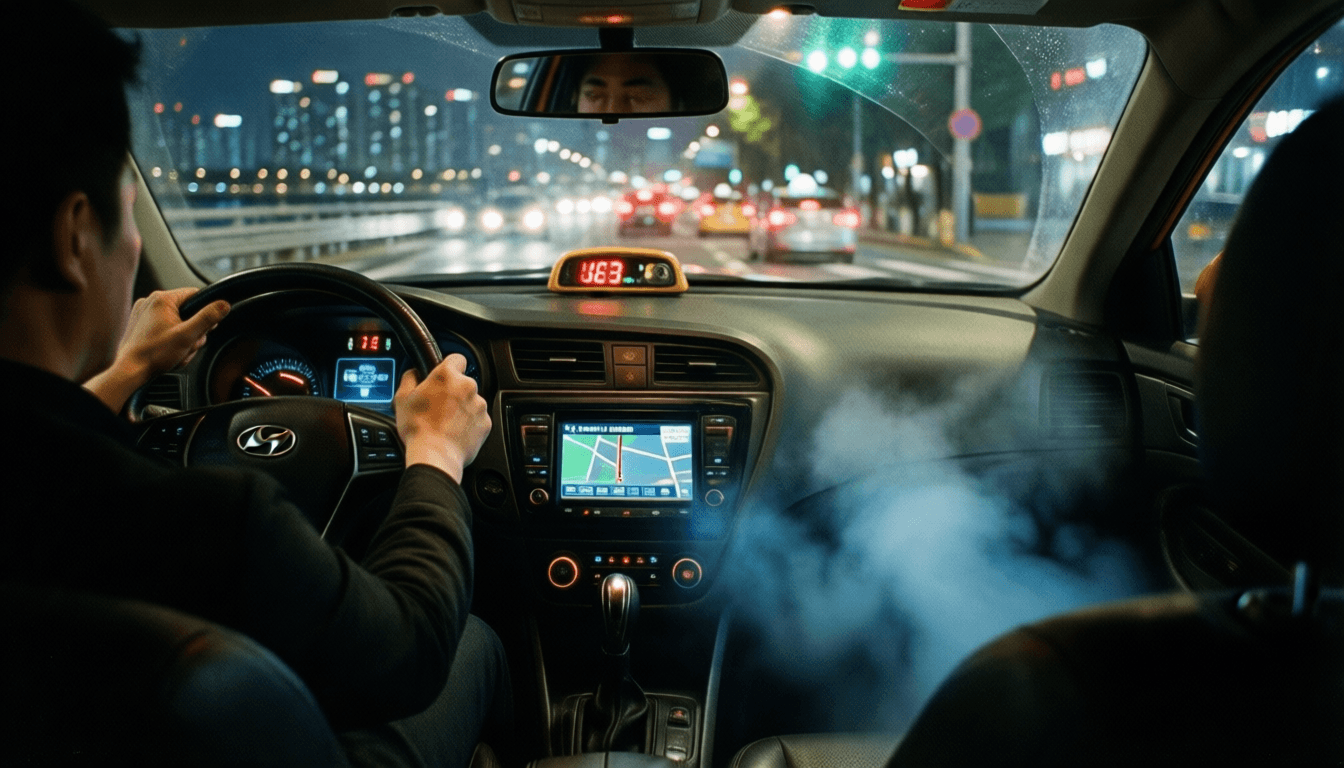
We entered the winding residential streets of Seongsan-dong. The flickering GPS suddenly locked onto an address. It was a typical low-rise apartment building for the area, but the specific unit number displayed, "B1-03," felt oddly out of place for a residential address. The taxi slowed, approaching the designated drop-off point. I braced myself.
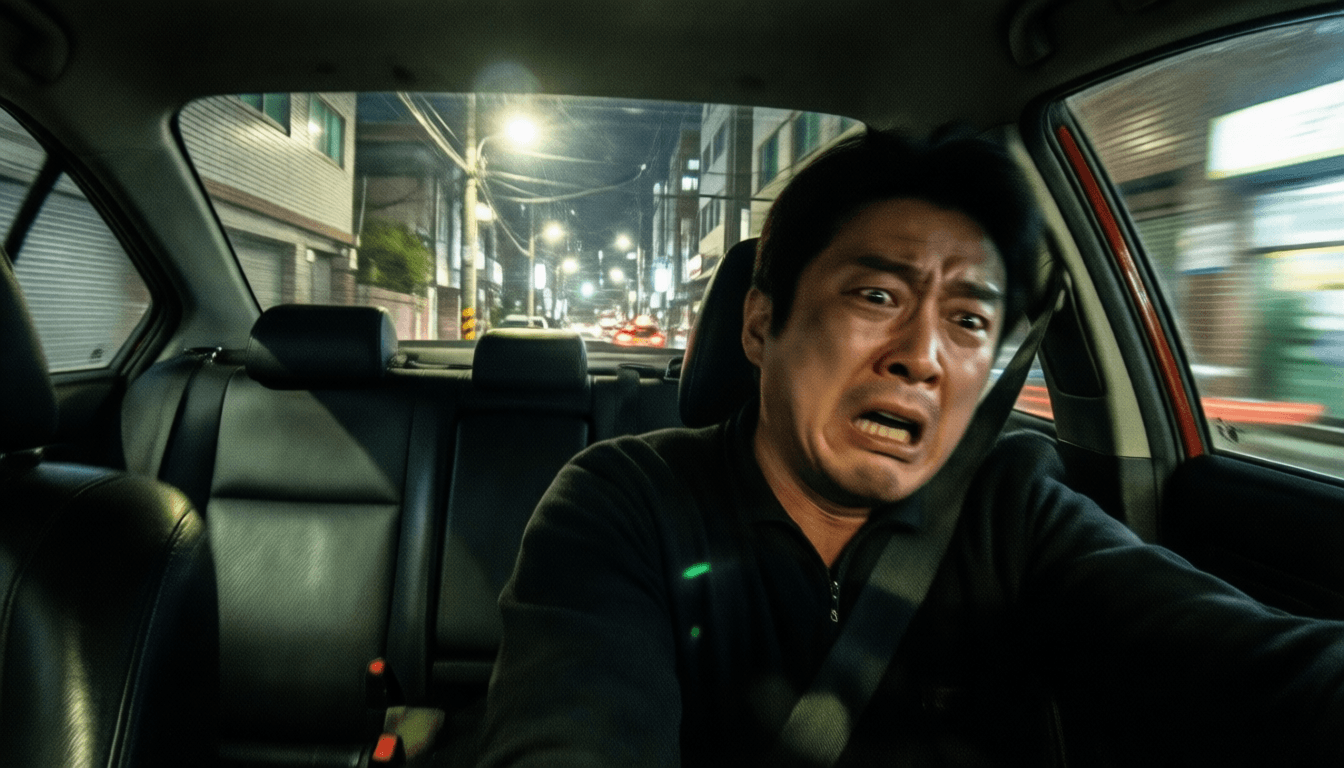
Just as I was about to announce our arrival, the car doors locked with a distinct, hydraulic 'thunk.' I pressed the central locking switch, but it was unresponsive. I tried to manually open the driver's side door, pulling hard on the handle, but it was immobile, as if welded shut. Suddenly, a violent lurch threw me forward. The engine, which had been decelerating, roared back to life, the RPM needle savagely spiking. My foot was nowhere near the accelerator. The taxi, ignoring my attempts to brake, surged forward, hurtling down the narrow street.
The speedometer soared. 60 km/h, 80, 100—in a residential area barely wide enough for two cars to pass. The car felt heavy, almost struggling, yet it hurtled forward with impossible propulsion. My hands were on the wheel, but it moved with a will of its own, turning corners with sickening, inhuman precision. The streetlights outside blurred and elongated, distorting into streaks of color. The buildings themselves seemed to waver, their outlines softening, the familiar geometry of the city melting into a fluid impression.
I risked a glance in the rearview mirror. The back seat was empty. Utterly, completely empty. Yet the distinct, localized cold was still there, now pressing against my seatback with far greater intensity. And the damp earthy smell had become overwhelming, filling the enclosed space. A new sound joined the impossible engine roar: a faint, indistinct gurgling, like a deep, forced inhalation, emanating from the empty passenger seat.
The taxi blasted through a red light, skidding violently to avoid a parked car. The tires shrieked, but the actual physical sound felt detached, as if coming from another dimension. My body was pinned to the seat, the centrifugal force immense. My vision tunneled. The custom GPS, which had been showing a frozen image, suddenly resolved into a single, chilling word, repeating endlessly: "Home. Home. Home."
And then I felt it. An impossibly cold, heavy pressure bore down on my right shoulder from the empty back seat. It wasn't a nudge; it was a slow, pervasive, insistent sinking sensation. The chill pierced through my jacket, into my bones. The air became impossibly thin, constricting my breath. The taxi continued its eerie, autonomous drive through a Seoul that was no longer real. The destination unknown, the journey controlled by an unseen, suffocating weight. I was trapped, a prisoner within my own car, driven by a non-existent passenger, toward a home I knew was not mine.
The next morning, I awoke abruptly, body aching, mind fragmented and jumbled with confused memories. I was sitting slumped over the taxi's steering wheel in a deserted industrial complex on the outskirts of Paju, an hour outside Seoul. The car was perfectly, almost meticulously, parked. The doors were unlocked. The engine was off.
My hidden cameras had stopped recording at precisely 2:37 AM. The audio recorder had captured nothing but static for the last seven minutes of its operation. But my custom GPS system had logged a continuous route. It detailed a journey through Seongsan-dong, then inexplicably 'under' the Han River, through an unknown underground network, before reappearing in Paju. The coordinates recorded during that 'underground' segment did not match any known tunnels or infrastructure.
The only physical evidence I could find was subtle yet chilling. On the driver's seatback, exactly where I had felt the crushing, cold pressure, was a faint, irregular stain. It wasn't moisture or dirt. There were no organic traces even under UV light. Just a subtly darker patch, a color subtly drained from the synthetic fabric, a trace of absence, a shadow of impossible contact. The faint earthy smell lingered in the car for days, despite professional cleaning.
I returned the taxi, offering no explanation for being in Paju or the minor internal electrical issues I claimed. I never drove a taxi at night again. The whispers continue on the message boards. New reports of Seongsan-dong passengers, of Geumho-dong disappearances, still appear. Stories of car radios cutting out for no reason in specific sections near Mapo Bridge, or an inexplicable, localized chill engulfing unsuspecting drivers. The city itself seems to hold its breath during those late-night hours. A collective, implicit recognition of the silent passenger, still seeking a final, impossible destination, and a driver to take them there. The stain on the seatback, the subtle alteration of the fibers, remains in my mind. A physical trace of what cannot exist, a silent testament to a journey I barely survived, and the profound horror that some journeys, once started, can never truly end.

[ CLASSIFIED VERDICT ]
[ACCESS LOG - SOURCE FILE]
This story is based on an urban legend circulating among Seoul taxi drivers about passengers picked up late at night in specific areas (like Seongsan-dong or Geumho-dong) who disappear just before reaching their destination. The phenomenon is characterized by an empty back seat, a running meter, and inexplicable coldness or the smell of earth, causing a sense of unease that one has transported something not alive.