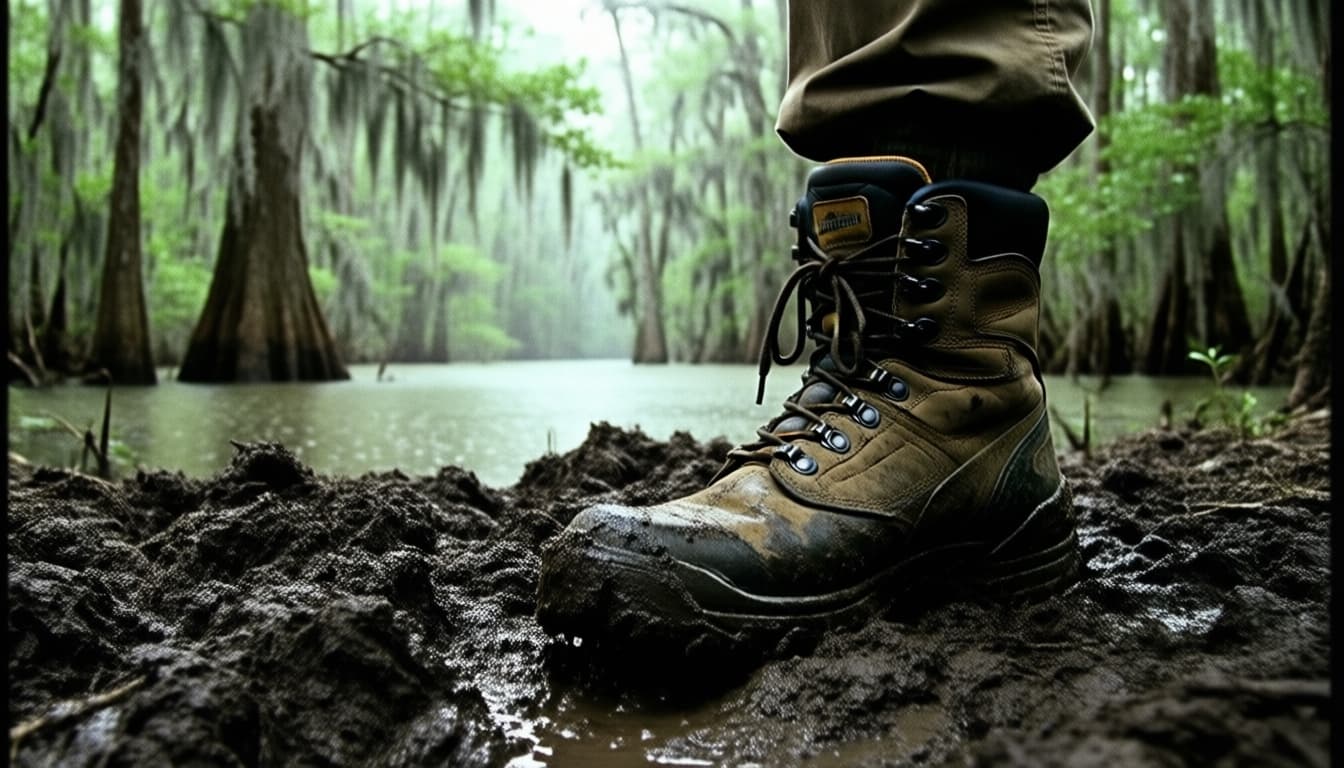
Scape Ore Swamp: The Reality I Witnessed
The 'Lizard Man' incident reported in July 1988 in the Scape Ore Swamp near Bishopville, South Carolina, is often dismissed as mass hysteria or a simple hoax by local residents. However, the initial report, which stated that a 7-foot tall, green-skinned bipedal creature attacked and damaged the vehicle of then-teenager Christopher Davis, left concrete, documented evidence. Sheriffs confirmed deep scratches etched into the vehicle, torn fenders, and traces in the mud described as 'three-toed footprints.' Subsequent sightings, including that of Deputy Mark Stokes, further cemented this anomalous entity in local legend.
What most sensationalized retellings overlook is the subtle yet ominous consistency found across multiple independent testimonies, and the local authorities' inability to clearly explain the physical damage and unique footprint casts. This was not merely a 'made-up story.' It was a series of inexplicable events linked to a specific geographic location, necessitating a sober re-evaluation of the remaining physical remnants and environmental peculiarities. My objective was clear: to visit the core areas of the Scape Ore Swamp where the 1988 Davis incident and subsequent reports were concentrated, to directly observe the environmental conditions, and to search for physical anomalies or patterns that might have been overlooked beyond the widely known vehicle damage.
Late summer, the midday heat hung like a sticky blanket, seeming to absorb all sound. The air, a mixture of stagnant water, decaying vegetation, and an indescribable musty odor, clung to my skin. The swamp entrance near the highway where Davis's vehicle was attacked was almost indiscernible, quickly overgrown with cypress roots and Spanish moss. I moved cautiously, equipped with field recording gear, a thermal camera, and a high-resolution camera. Every change in terrain, every significant sound was documented. The swamp was a labyrinth of shadows and still water. The incessant hum of insects was a constant, almost hypnotic background, occasionally broken by distant bird calls, but a strange silence dominated the deeper I went. Knee-deep murky water reflected distorted tree shadows. GPS coordinates were cross-referenced with archived police reports regarding specific sighting points and known anomalies.
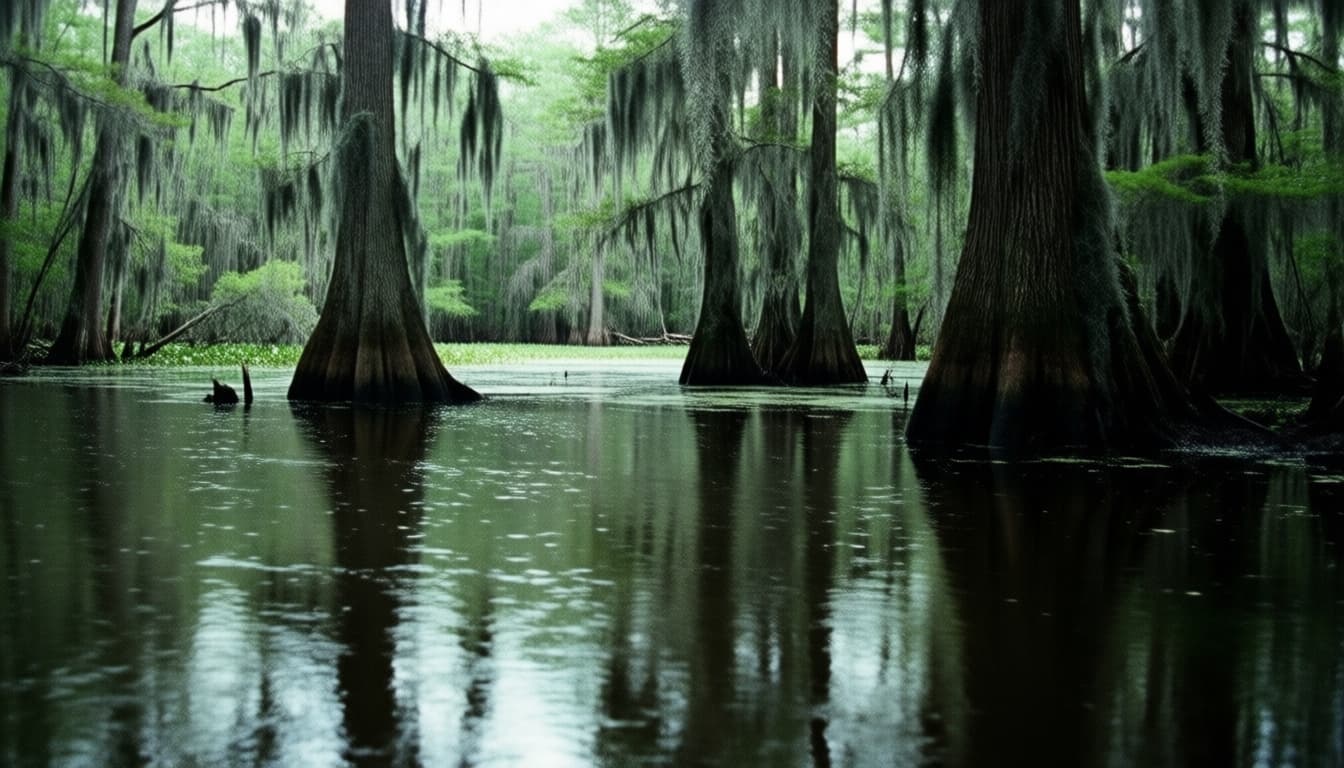
Deep within a particular cypress grove, near a body of water where the 1989 reports mentioned strange 'disturbances,' the incessant hum of insects abruptly ceased. The air became abnormally still, and the overwhelming humidity transformed into localized cold pockets. A small waterway, clearly marked on my survey map as flowing west, was pushing subtle, impossible ripples eastward. Initially, I attributed it to unusual underwater currents, but no such currents had ever been recorded. Moving a little further, a slow, deliberate swirl was occurring in the center of a wide pool, as if something massive was submerged just beneath the surface, moving imperceptibly, even as everywhere else was perfectly still.
My directional microphone picked up the sound of branches breaking to the west, immediately followed by an echo to the east. Then came a deep, guttural cry, its source impossible to triangulate. It seemed to resonate from all directions simultaneously, or perhaps surge directly from the ground beneath my feet. Saw palmetto and young cypress saplings showed fresh, powerful breaks and bends, too high for a deer and too forceful for a human. Some were not merely broken but appeared torn. A faint, acrid odor, distinct from the natural decay of the swamp, occasionally wafted through the air.
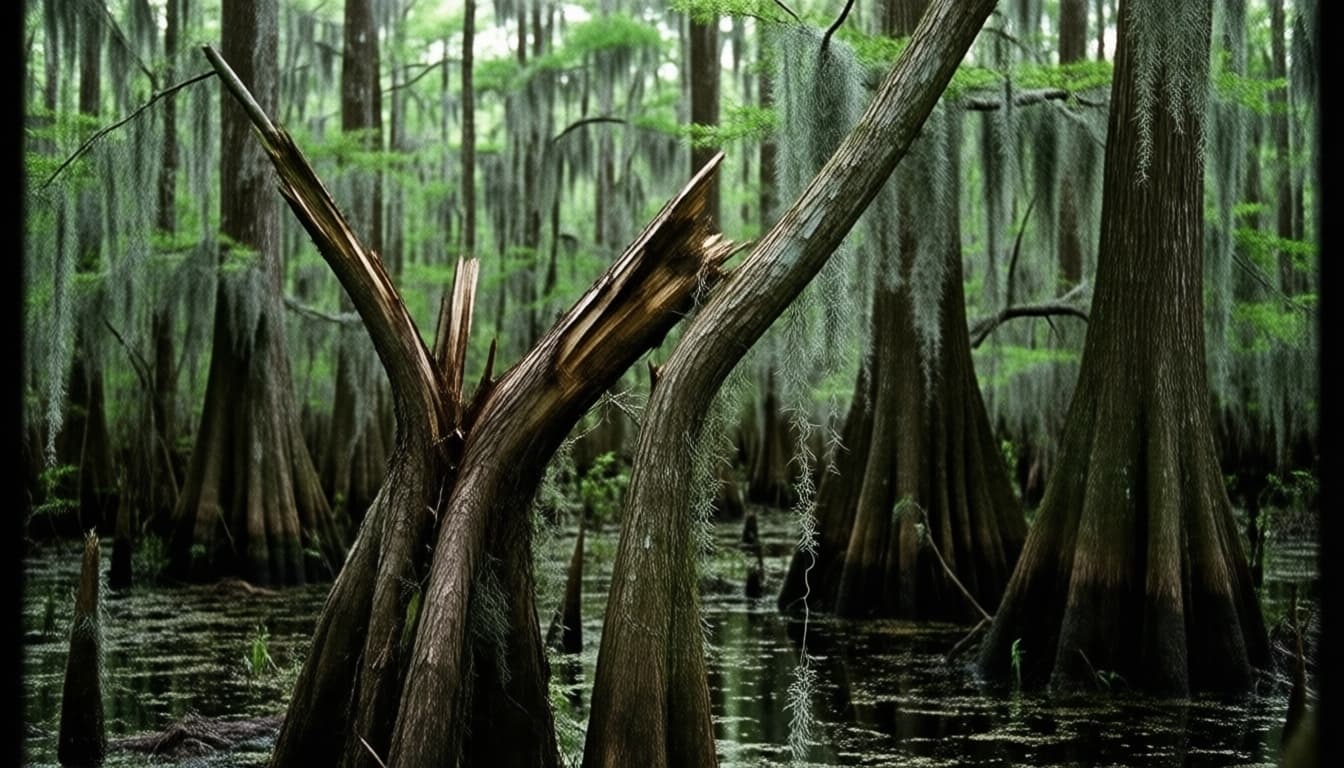
I tried to rationalize each anomaly: unusual wind shifts, natural convection, auditory illusions in a dense environment. But the accumulation of phenomena, especially the contradictory directions of sound and the inexplicable water movements, began to erode my objective reason. The feeling that someone was watching me intensified. Although there was no direct evidence, I found myself checking the thermal camera more and more frequently due to the sense of being tracked, but only background heat sources continued to appear. My heart seemed to skip beats. The camera's autofocus periodically stuttered, as if the light itself was subtly changing, or something was disturbing the very air around me.
I discovered a specific clearing, unusually devoid of undergrowth, described in a 1990 poultry theft incident as where a creature had retreated. While documenting peculiar mud patterns that seemed to defy natural erosion, the ground beneath my feet subtly shifted. Previously stable root systems collapsed with an eerie sound, and I rapidly sank into a soft, sticky mud pit. My left leg was instantly trapped. An immense weight, an immediate and powerful suction, was felt. Efforts to escape were futile; the more I struggled, the deeper I sank. A low, wet growl echoed across the clearing from the dense wall of vegetation opposite. It was impossibly close.
Frantically scanning with the thermal camera, a massive, rapidly moving heat signature was captured. It was far larger and denser than any known swamp animal, surging directly towards the thick brush. The signature did not disturb the Spanish moss or small saplings overhead. It moved through them with minimal visible displacement, as if the swamp itself parted way. The water in the mud pit where I was trapped churned violently around my leg, seemingly increasing the suction exponentially, trying to drag me deeper. With immense pressure, a cold, scaled, gigantic three-fingered hand emerged from the mud and gripped my right arm. It pulled me deeper with an undeniable malevolent intent. My breath caught. The grip was as hard as granite, the scales rough, and a sudden chill permeated my bones. I screamed, but it was swallowed by the swamp's suddenly returned, overwhelming hum of insects. The sound felt like a mocking roar.
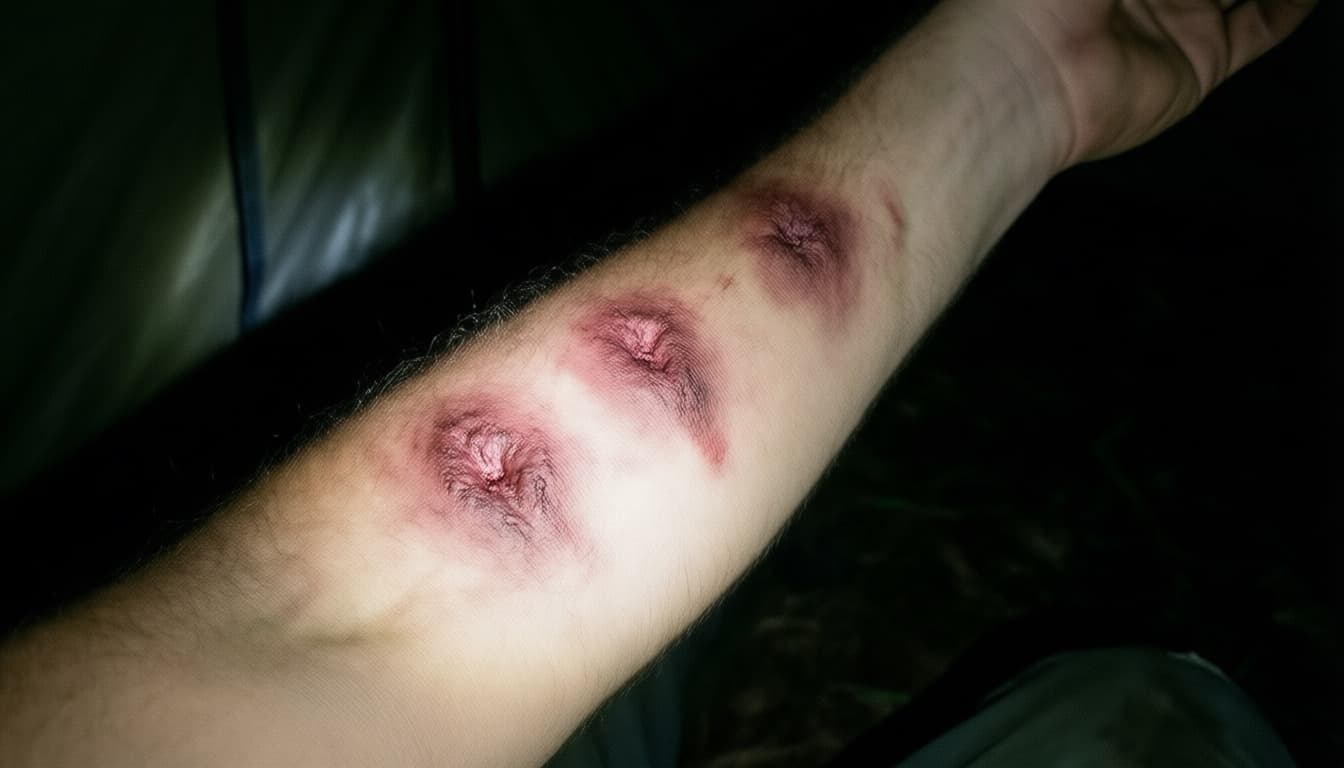
In a desperate, primal burst of adrenaline, I twisted my arm free with all my might. Flesh and muscle tore, leaving behind scraps of clothing and shallow but deep lacerations. The entity did not immediately pursue. It merely held me there. Even as my body was pulled sideways by the mud, its grip did not release, leaving an undeniable mark of its power on my arm. Its red, glowing eyes were the last thing I perceived before I managed to writhe free, finding submerged roots in the mud with a horrible squelching sound. Leaving my left boot and most of my main recording equipment behind, driven by a survival instinct that transcended logic, I fled blindly and desperately.
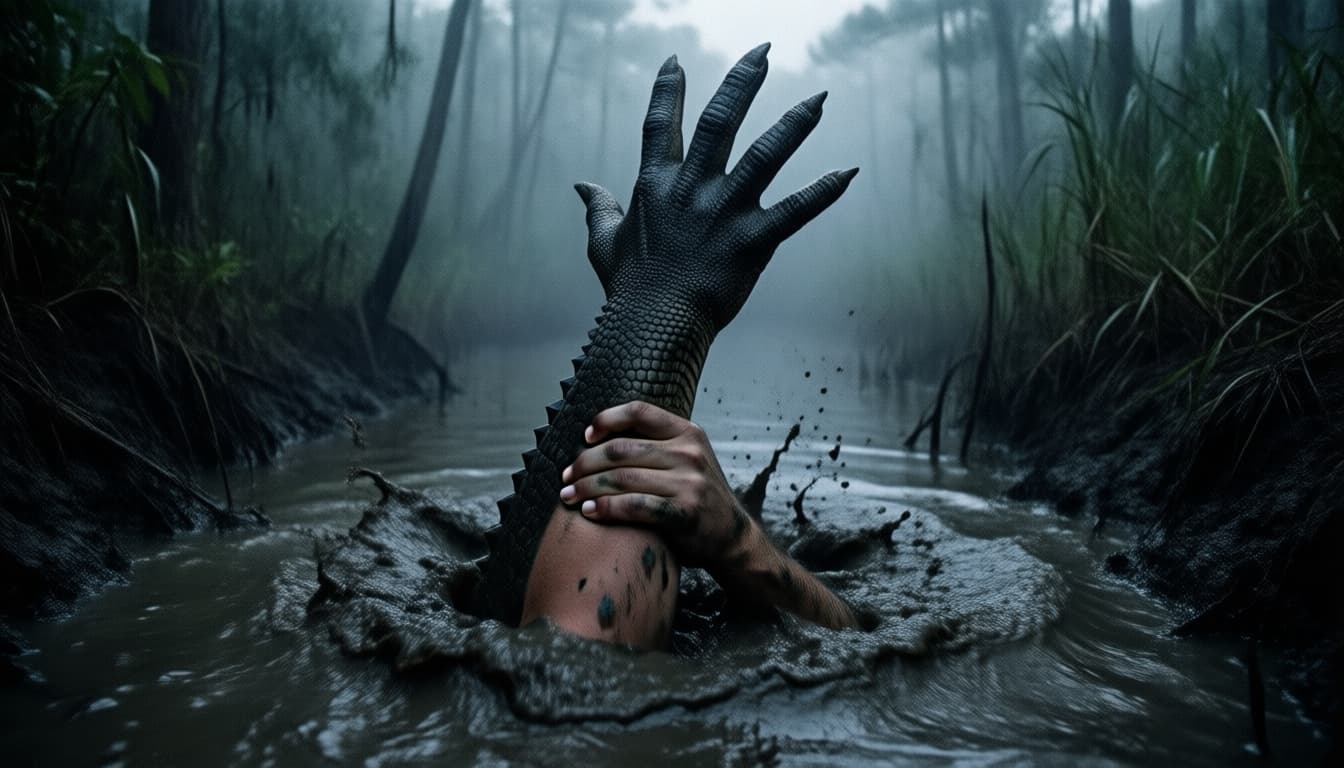
Hours later, I emerged from the swamp physically exhausted, soaked, and bleeding. My right arm was severely scraped and bruised, bearing clear, deep indentations consistent with the 'three-fingered' description. My left boot was gone in the mud. The waterproof field recorder had corrupted files, but one short, raw audio clip played: a deep, wet growl, and a human scream abruptly cut short by violent suction sounds. The thermal camera's final log showed an impossible heat signature, massive and transient, retreating at a speed that defied the swamp's terrain.
My official report on the expedition recorded equipment loss, an 'accidental' fall into an unexpected mud pit, and resulting injuries. The medical report described the unusual bruising patterns and lacerations, inconsistent with typical branch scratches or animal attacks, as 'highly localized blunt force trauma and associated severe epidermal abrasion.' I merely stated that 'environmental conditions were more challenging than anticipated' and that 'more cautious further study is warranted regarding some previously dismissed anomalies.' I now spend sleepless nights in secret. I stare at the three clear, deep indentations on my arm, my skin already beginning to heal around the lingering coldness. The swamp was not merely a place where something was seen. It was a place where something existed, not magical, but a being with a brutally overwhelming understanding of the environment's physical laws, using them as a weapon. The truth is not just that the Lizard Man might be real. It is more real than the physical world allows, and it took a piece of me, leaving behind not just scars, but a chilling, undeniable certainty. The archived files on Scape Ore Swamp now include the entry: 'Confirmed: Extreme physical hazard. Non-intervention recommended.'
[ CLASSIFIED VERDICT ]
[ACCESS LOG - SOURCE FILE]
The "Lizard Man" legend, first reported in 1988 in the Scape Ore Swamp near Bishopville, South Carolina, began with eyewitness accounts of a 7-foot tall, green-skinned bipedal creature attacking a vehicle and leaving deep footprints. Initially met with skepticism, the incident gained traction through physical evidence and multiple independent sightings, solidifying its place as a local urban legend. The core of the story lies in unexplained destruction and the lingering traces of a terrifying presence.