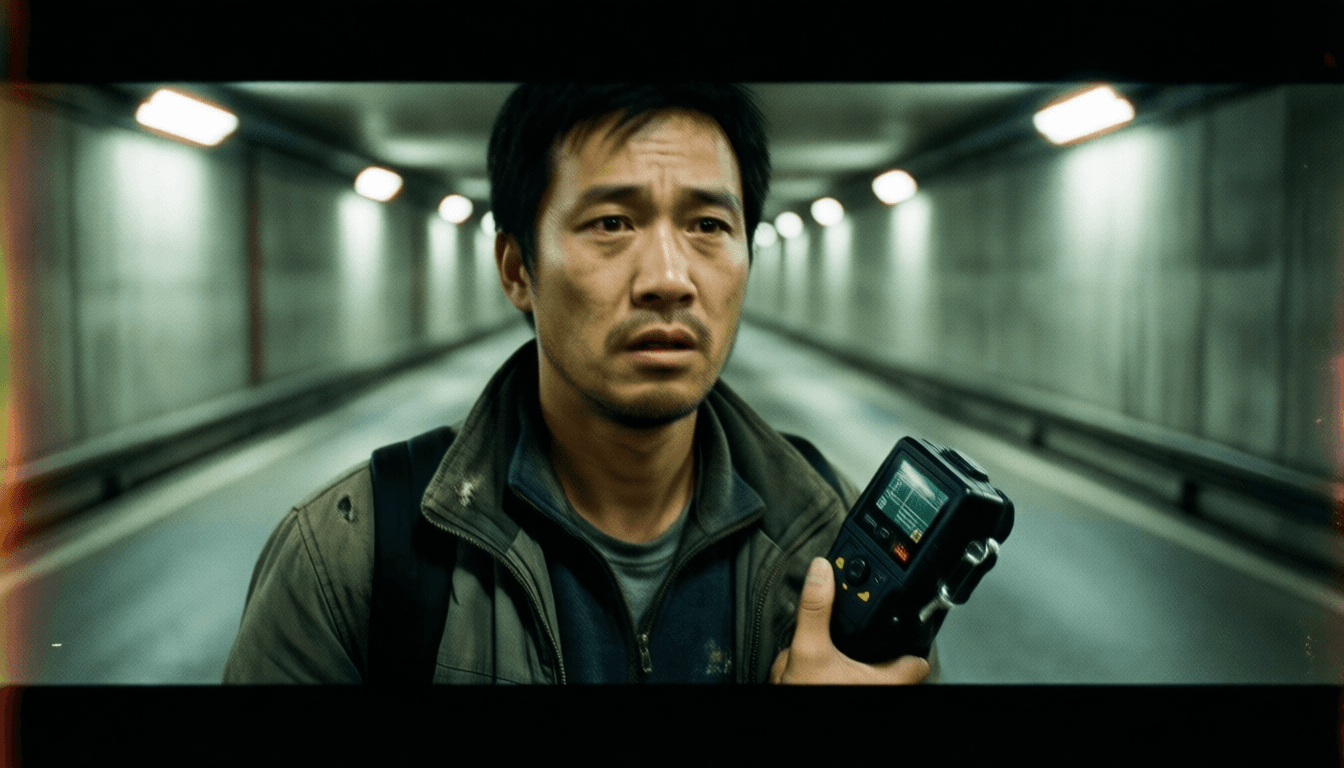
Residual Effect: The Unseen Threat
Official reports detail a swift, brutal assassination using VX nerve agent at Kuantan International Airport 2 (KLIA2). Two women approached Kim Jong-nam, smeared the substance on his face, washed their hands, and vanished, leaving him to die hours later. Yet, the simplicity of it always sparked controversy among a specific anonymous online community of chemical weapons experts and independent toxicologists. They shared modified schematics and forum threads, digging into one consistent inconsistency: if the substance was applied in its pure liquid form, it was highly improbable that the assassins walked away unharmed. One particularly compelling (now deleted) post detailed a theoretical 'smart dispersion' or 'residual effect' vector. This hypothesized that the VX wasn't merely applied and discarded, but 'engineered' to leave an undetectable yet potentially re-activatable 'trace' in its immediate environment. A localized atmospheric weapon designed not just for the target, but to control the subsequent narrative. It was this whisper, this calculated doubt, that drew me in.
My name is Aris Thorn, formerly of CBRN defense. My interest isn't vengeance or justice, but in the cold, hard scientific facts that just didn't add up. Through contacts, I gained unofficial, highly restricted access to a disused cargo handling tunnel and a series of rarely used maintenance passages directly beneath the incident site. Even years later, the air was different. The stale breath of a thousand anonymous journeys hummed, overlaid with a faint, metallic antiseptic scent. My specialized air quality monitor, calibrated for minute environmental shifts, registered normal ambient conditions. Yet, the deep silence in the airport’s forgotten veins felt like a pressure, a stifled scream. The sterile concrete walls seemed to absorb all sound, with only the distant thrum of machinery, like a heartbeat beneath the city, echoing.
Relying on blurry utility schematics, I navigated the labyrinthine passages, heading for the point directly beneath the assault. The first anomaly was subtle: a localized, distinct drop in temperature. Not an air-conditioning chill, but a sudden, enclosed pocket of cold, like stepping into a freezer, yet it vanished as soon as I took a step beyond its perimeter. My monitor, initially showing nothing, began to flicker, registering momentary spikes of unidentifiable trace organic compounds. Too low to be toxic, but erratic, almost rhythmic in their movement.
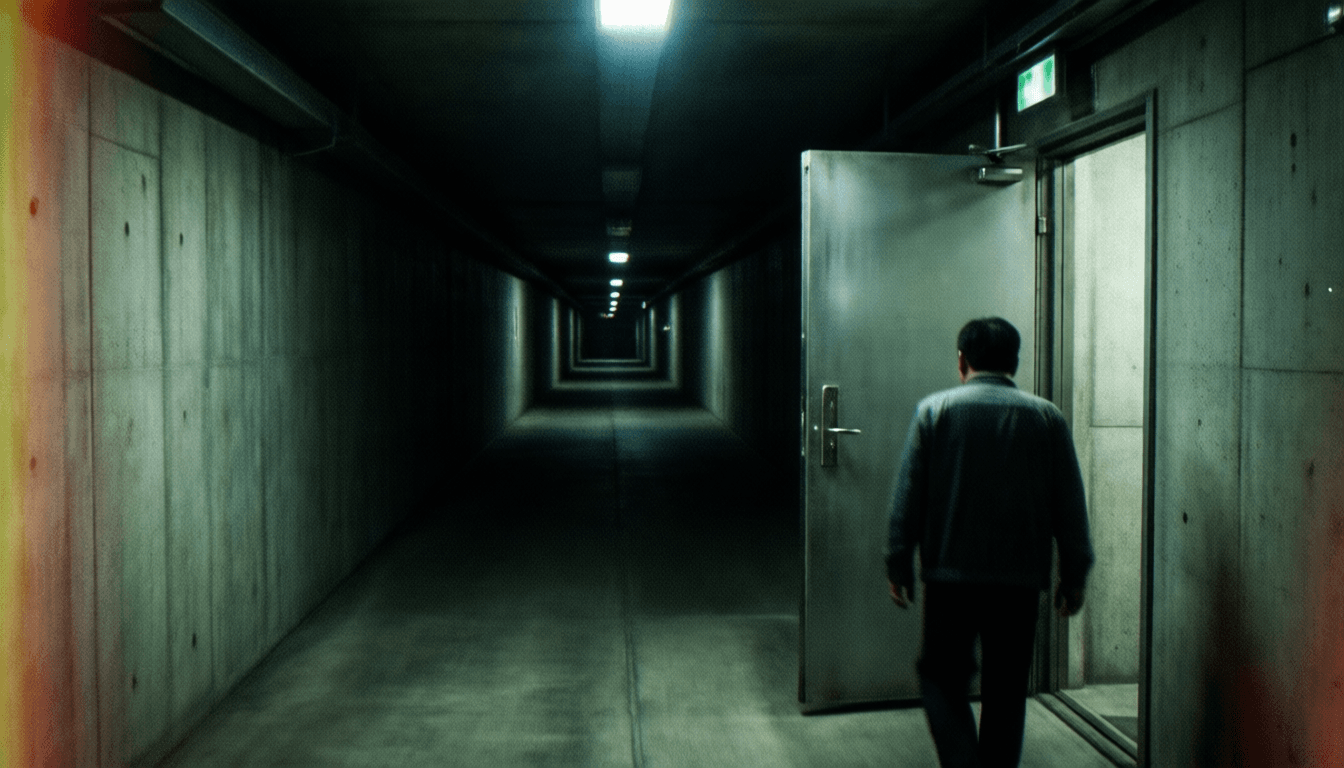
Deeper still, the acoustics played strange tricks. My footsteps on the concrete floor produced abnormally delayed echoes, sometimes resounding ahead of me, sometimes behind. Distant airport announcements, usually an unintelligible murmur, would momentarily shift into unsettlingly clear fragments of speech, then dissolve back into noise, like a phantom radio signal. And then there was the smell. Faint, fleeting, but distinct: the acrid, almond-like metallic tang rumored to be characteristic of nerve agents, vanishing the moment I consciously tried to pinpoint it. Unbidden tears welled, and a dry thirst caught in my throat. I dismissed it as an illusion born of stress and fear, yet the physical sensations were undeniable. The sterile environment only amplified the sinister nature of these subtle anomalies.
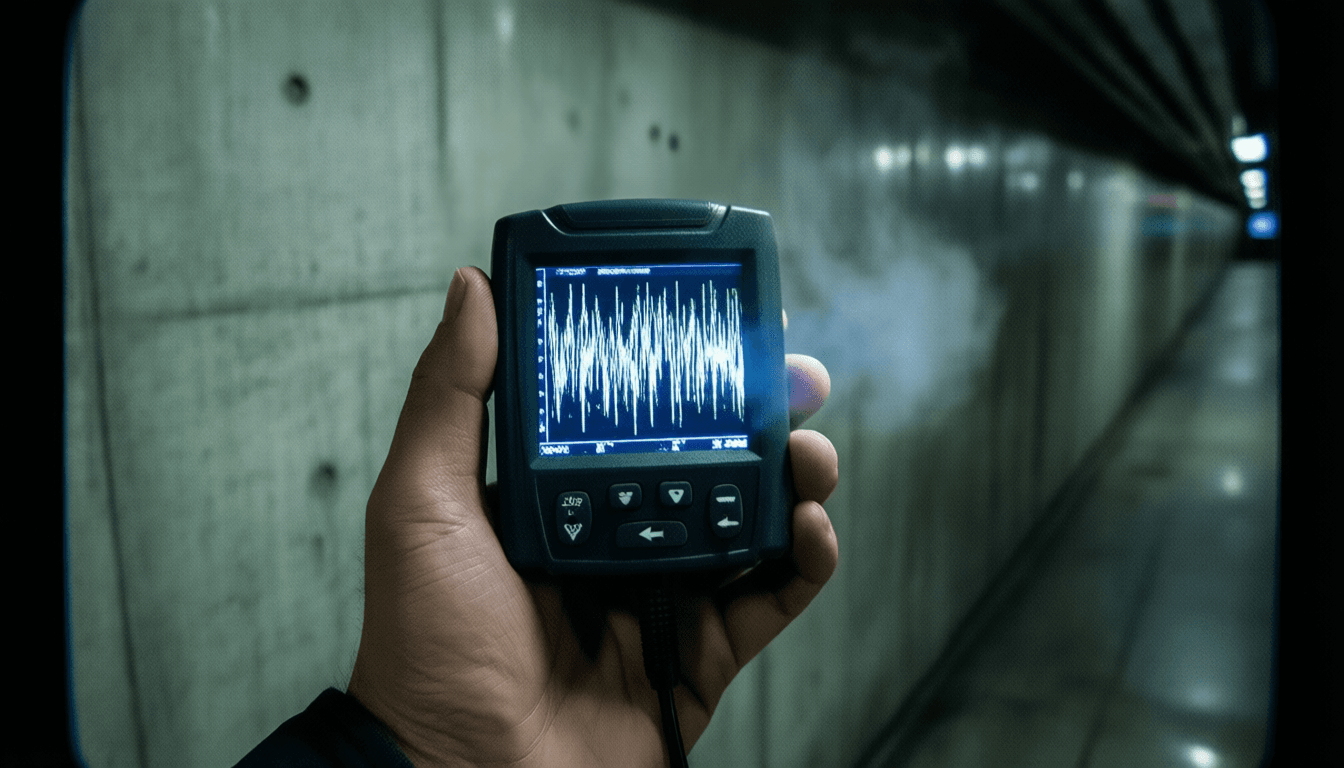
I reached a small, cramped maintenance room, approximately six meters beneath the main incident site. Here, the chill was intense. A bone-deep cold emanated from a specific section of the wall where several ventilation ducts converged. My monitor, now actively alarming, displayed an impossible data stream. The trace compounds weren’t just spiking; they were moving. Rapidly shifting, concentrating, and diffusing within milliseconds, as if possessed of an impossibly directed kinetic energy.
Then, a sharp 'click' echoed from the largest, sealed ventilation grill directly ahead, followed by a low 'hiss'—sounds impossible within a sealed, closed system. Before I could process it, the heavy, reinforced fire door behind me, which I was certain I had seen securely latched, slammed shut with an immense concussion, shaking the entire room and plunging my escape route into instant, absolute darkness.
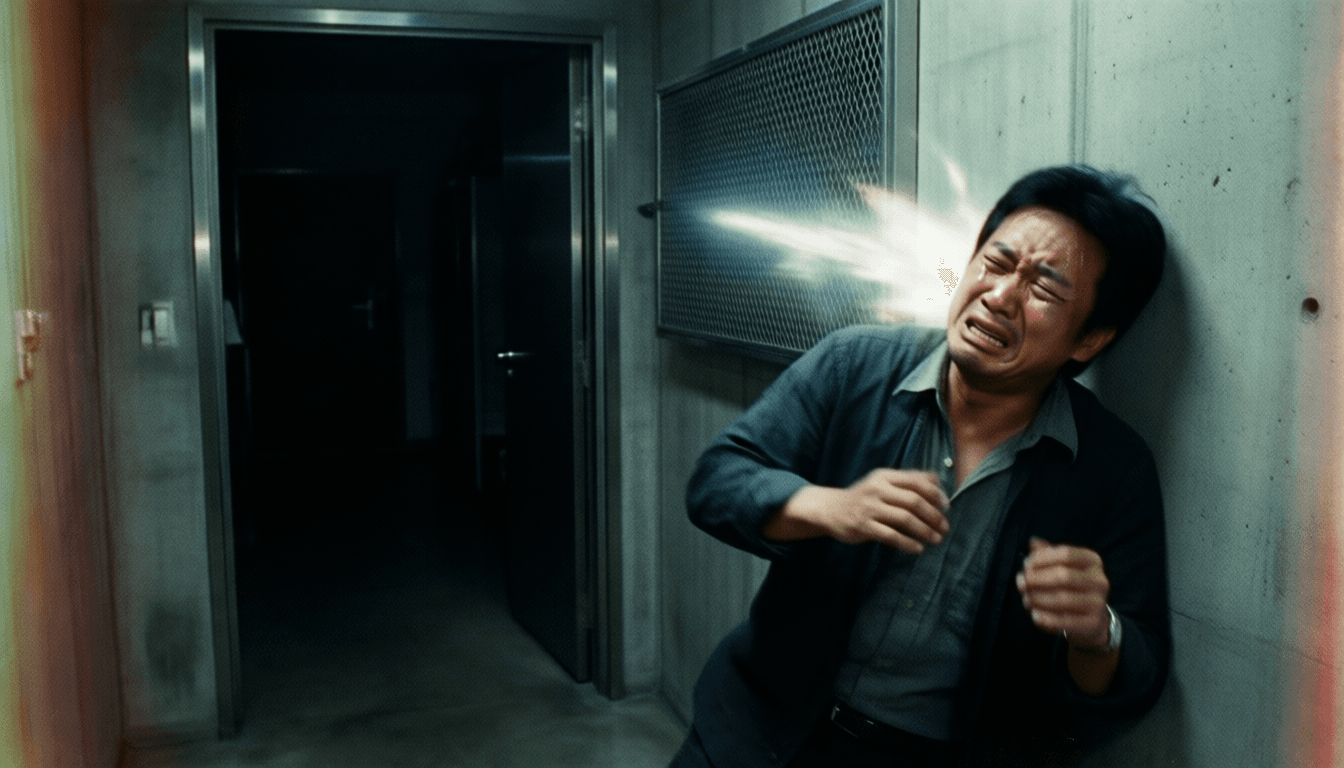
Trapped, I fumbled for my emergency light. As its beam cut through the blackness, a sudden, powerful localized current of air surged from the clicking vent. It wasn't just cold air; it was a concentrated, almost physical pressure, acrid and metallic-smelling, pushing me against the opposite wall. My eyes streamed uncontrollably, my throat constricted, and a sharp, persistent burning sensation, like thousands of tiny needles, flared across my exposed skin. I felt physically targeted by an unseen force, a hostile current of air and chemical residue. My breathing became shallow, my limbs heavy. This wasn't just airflow; it was a deliberate, concentrated environmental assault, leveraging residual particles and air pressure in a way that defied natural currents. The very air around me had become the antagonist. The phantom of the original attack, re-activated, weaponized.
Gasping, blinded by tears and the burning in my lungs, I stumbled, fumbling for an emergency access hatch I'd marked on my schematics, leading to a rarely used stairwell. With trembling hands, I finally found the latch. I scrambled out, disoriented and drenched in sweat, into the bright, mundane public stairwell. The world outside that room was bustling, oblivious. No one gave the gasping, dishevelled man a second glance.
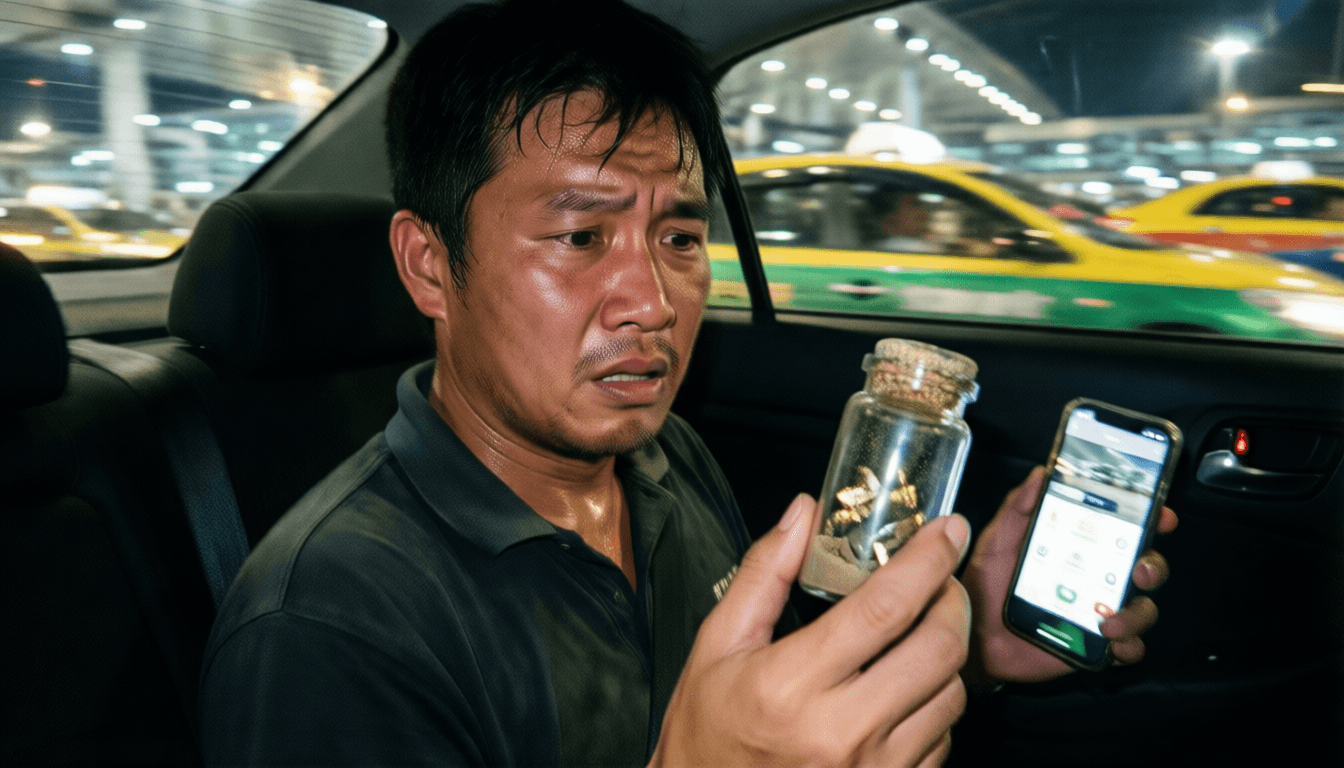
In the taxi, speeding away from the airport's glittering facade, I tried to rationalize it all. Hypoxia? Psychosomatic symptoms from extreme stress? My mind playing tricks in an enclosed space? But the acrid taste still lingered in my mouth, the phantom chill in my bones, and a faint, persistent itch on my skin. I pulled out my air quality monitor. The screen was frozen, 'SYSTEM ERROR' blinking, its internal diagnostics completely corrupted. In my panicked escape, I had managed to collect a small, sealed glass vial of dust and minute metallic fragments from the floor near the hostile vent. Held against the window, with the city lights reflecting on the glass, it seemed utterly inert.
The whispers online hinted at 'smart dispersion,' a 'residual effect.' Now I understood. It wasn't just a chemical agent; it was a meticulously prepared environment. Designed to leave an unseen, lingering presence. Not a ghost, but a precisely engineered localized phenomenon, perhaps merely dormant, or perhaps a controlled, silent threat that could be re-activated, like an echo. The true target wasn't just Kim Jong-nam. It was the 'narrative itself.' To leave a trace that resisted easy explanation, allowing the 'how' to remain a phantom. I hadn't merely uncovered a conspiracy; I had 'experienced' its persistent residue. My phone buzzed in my pocket. Unknown number. I stared at the screen. The passing lights of the taxi illuminated the digits. I wondered what invisible thread I had just tugged, and who, or what, now recognized my presence on the other end.
[ CLASSIFIED VERDICT ]
[ACCESS LOG - SOURCE FILE]
The real-world assassination of Kim Jong-nam with VX nerve agent at Kuantan International Airport 2 (KLIA2) raised questions because the assassins reportedly walked away unharmed. Certain online communities hypothesized that the VX wasn't merely applied but engineered for 'smart dispersion' or a 'residual effect,' leaving an undetectable yet potentially re-activatable 'trace' in the environment, adding a new layer of mystery to the incident.