Popobawa's Shadow: The Undeniable Presence
The legend of the Popobawa, originating from the Zanzibar Archipelago, is not merely a local ghost story. Its earliest records are not found in folklore archives, but in dry documents like colonial-era missionary journals and ethnographic studies written throughout the 1960s and 70s. Researchers attempting to understand local belief systems recorded a widespread, paralyzing terror. At dusk, entire villages would abandon their homes, families opting to sleep outdoors, convinced of nocturnal visitations. The entity was a shapeshifting aggressor, often depicted with bat-like wings and a single eye, notorious for attacking sleeping individuals. Crucially, victims consistently claimed that the Popobawa specifically targeted those who denied its existence. This was no quaint myth; it was a phenomenon actively reshaping daily life, pushing communities into a collective, desperate, nighttime vigil.
My investigation began with a series of declassified medical reports found in a small rural clinic on the Tanzanian mainland. These reports detailed dozens of unexplained nocturnal contusions and psychological traumas, all locally attributed to the "Popobawa." There was never any sign of forced entry or human assault. Often dismissed as mass hysteria, these reports demanded a closer, empirical look.
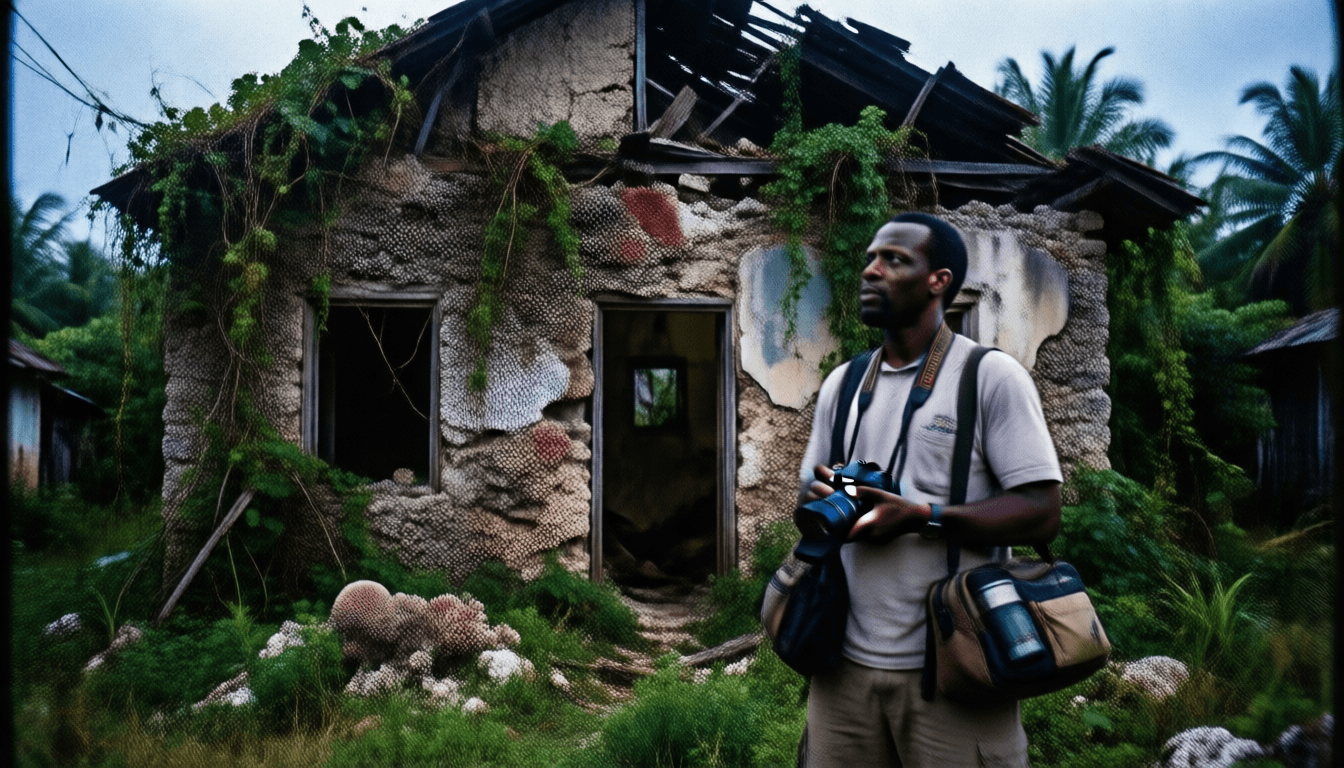
My objective was to isolate and document any measurable anomalous phenomena at a location historically associated with intense Popobawa activity. I chose an abandoned coral-stone house in a remote, overgrown village on Unguja's southeastern coast. Locals, despite generous payment, would not approach the house after sunset. Their fear was palpable, expressed in quiet resignation.
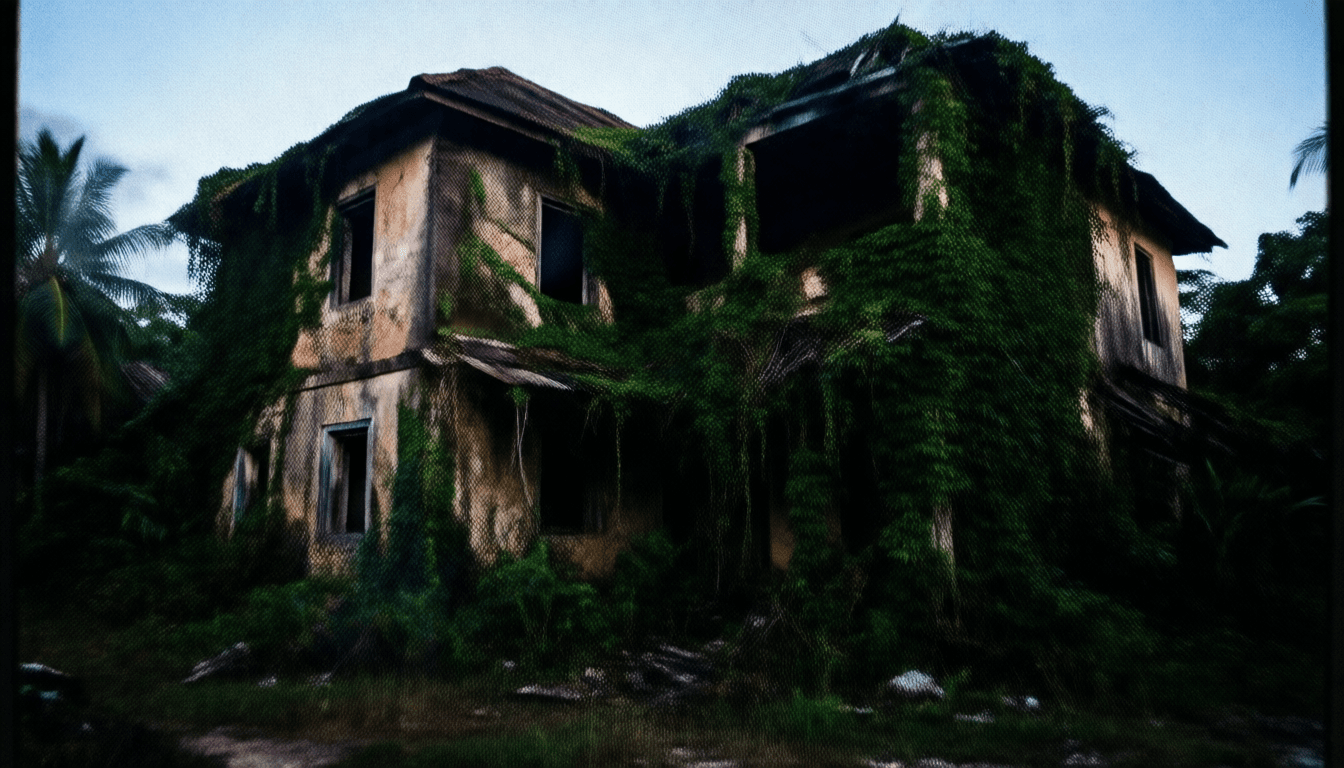
The coral-stone house was half-collapsed, overgrown with vines, and smelled of damp earth and salty air. Inside, it was oppressively humid, with no sound but the regular crash of distant waves. I set up high-sensitivity audio recorders, thermal cameras, electromagnetic field detectors, and a grid of seismic sensors in the largest room, formerly a bedroom. The silence in this space was absolute; it seemed to swallow even the rustle of my clothes, making the low hum of my equipment feel unpleasantly loud. I locked the door from the inside, confining myself to the room where a single hurricane lamp cast a faint, wavering light.
As dusk deepened, the ambient temperature inside the bedroom began to drop unnaturally, despite the oppressive humidity outside. My thermal sensors registered concentric rings of cold air radiating from the center of the room, yet there was no discernible draft. The EMF detector spiked erratically, not with the consistent hum of electrical interference, but with sharp, transient bursts.
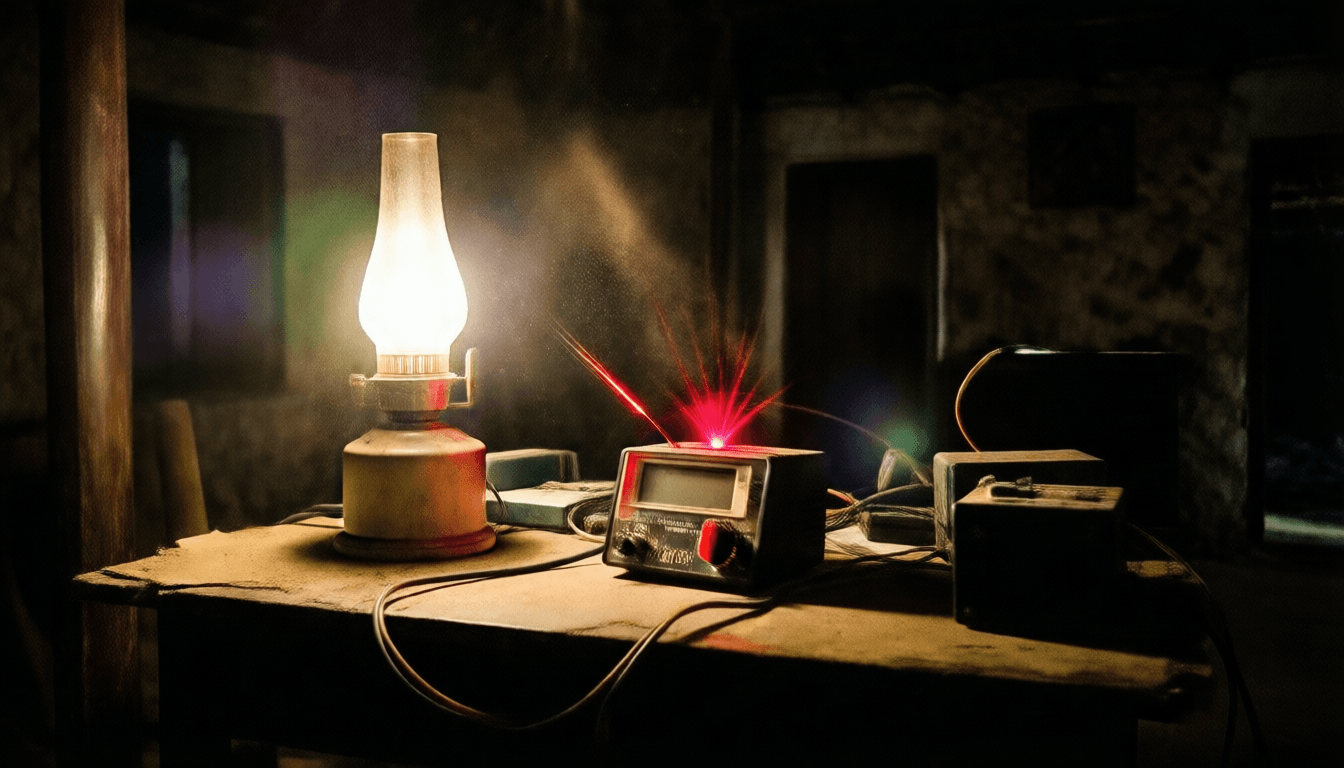
Most unsettling were the sounds. The constant crash of distant waves, audible moments before, now sounded muffled, as if filtered through thick cotton. My audio recorder, which initially picked up crickets and rustling leaves, now began to register pockets of inexplicable, localized absolute silence, like a momentary vacuum that swallowed all sound. A faint, pungent odor, reminiscent of ozone and something vaguely organic, briefly filled the air before dissipating. Turning involuntarily, my peripheral vision caught shadows too large, too fast, darting past, only to vanish when I focused. Without any air movement, the hurricane lamp's flame flickered erratically, sometimes even tilting towards the stone wall, defying basic physics. The psychological pressure was immense; an eerie sense of a presence pushing in from all directions seeped through my skin.
I lay down on the bed, pretending to sleep, with my infrared camera aimed at my face. My heart hammered wildly. The oppressive cold intensified. Suddenly, the air around me became incredibly heavy, as if I was submerged in thick syrup. My chest tightened, not from fear, but from an external, crushing pressure. My equipment registered a sudden, massive localized increase in atmospheric pressure. My eardrums should have burst, yet no sound accompanied it. The EMF meter shrieked.
Then came the physical impact. An immense weight settled upon my chest and abdomen, pinning me to the bed. My body convulsed, gasping for breath, but my lungs refused to expand, resisting an unseen force. I distinctly felt a firm pressure, as if a leathery, broad surface completely enveloped and pressed down on my entire torso. It wasn't sharp, but utterly unyielding. I struggled, my muscles screaming, but I was completely immobile. A raspy, guttural vibration, felt deep in my bones rather than heard, resonated through me, echoing in my skull. My vision blurred, forming a faint tunnel.
Just as consciousness began to fade, a surge of primal adrenaline allowed for one desperate struggle. As if a lead blanket had been ripped away, the pressure suddenly released. I tumbled off the bed, hitting the floor hard, gasping for air. The room was physically undisturbed. The door remained bolted.
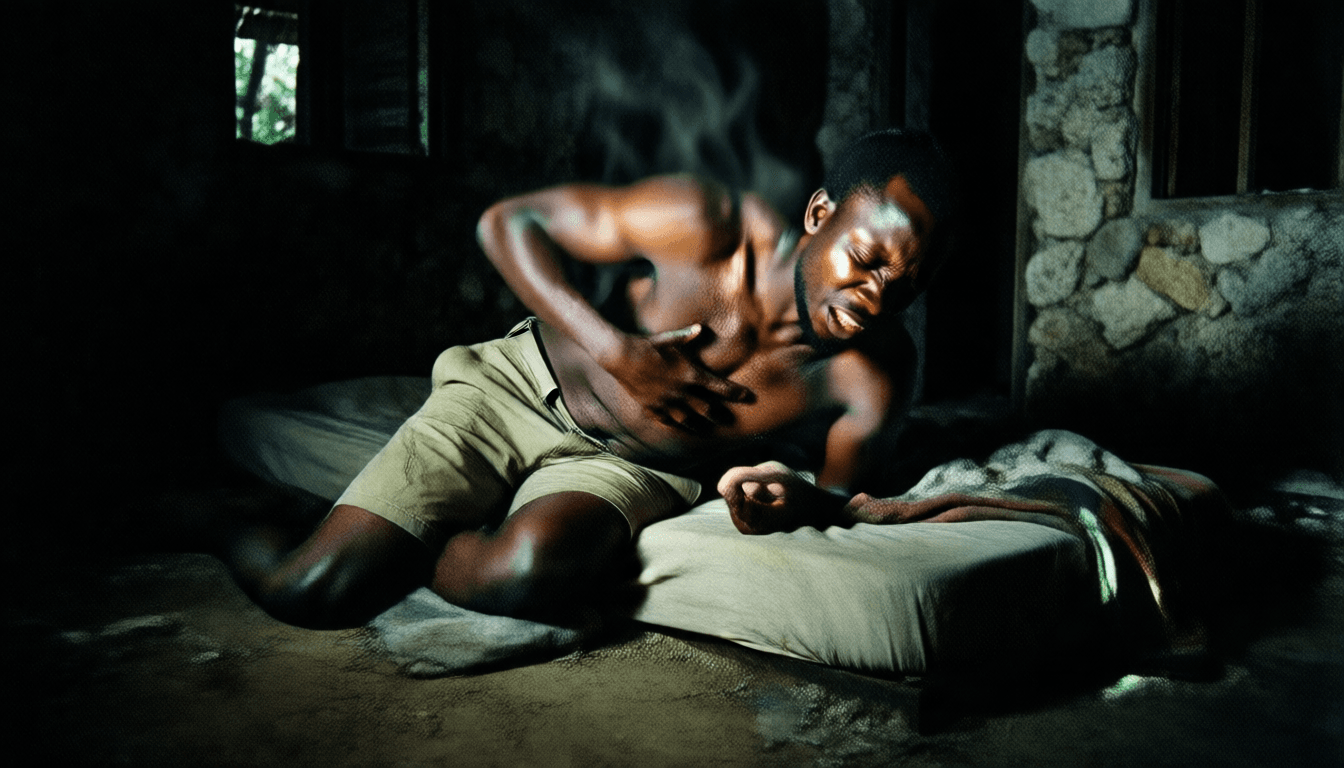
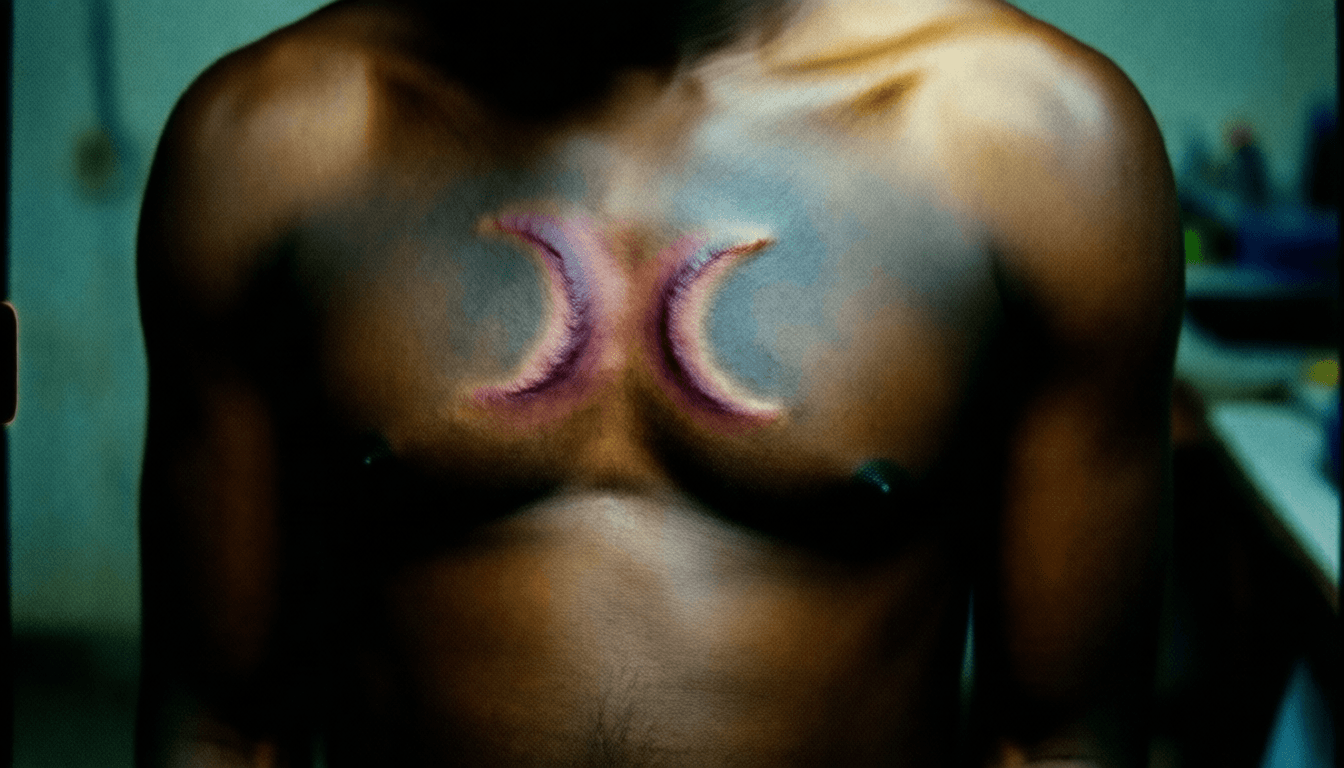
My body ached, every muscle sore. My ribs felt bruised, but there was no immediate visible trauma. The hurricane lamp still flickered, its flame now steady. The infrared camera had stopped recording at the moment of impact, its internal memory corrupted. My main audio recorder, however, captured a terrifying surge of resonant frequencies just before an explosion of static, followed by my ragged breathing. Thermal imaging records showed a sudden localized temperature drop of over 20 degrees Celsius within a one-meter radius around my bed just before the recording ended, with no corresponding heat exchange in surrounding surfaces. Weeks later, back in my lab, subtle bruises became visible on my chest and abdomen – perfect crescent-shaped marks, as if a giant, dense hand or sole had pressed down on me. My skin wasn't broken, nor were there any distinct signs of intrusion. The coral-stone house remained sealed.
I have no clear evidence of the "Popobawa"—no crisp images or sounds. Only corrupted data, impossible physical phenomena, and inexplicable marks on my own body. The true horror wasn't what I saw, but what I felt but could not see. And perhaps, by daring to investigate and document it, I merely confirmed its existence, making myself its next target – a chilling thought that lingers.
[ CLASSIFIED VERDICT ]
[ACCESS LOG - SOURCE FILE]
Popobawa, originating from the Zanzibar Archipelago, is a shapeshifting evil spirit known for attacking sleeping people. It is said to specifically target those who deny its existence and is often described as having bat-like wings and a single eye. This legend is not merely folklore but has profoundly impacted the daily lives and instilled deep fear within local communities.