Paris Catacombs: The Mark of Being Taken
The Paris Catacombs, a vast underground ossuary, are more than just a tourist attraction. For decades, rumors have persisted about a labyrinthine network of tunnels deep underground, unmapped and forbidden. This is a clandestine realm where urban explorers, dubbed 'cataphiles,' risk fines and imprisonment. But sometimes, what they encounter is far more terrifying than a patrol officer.
The most compelling evidence emerged around 2005: an anonymous video, purportedly recovered from a camcorder found deep within the forbidden underground network. It showed an individual navigating increasingly narrow and disorienting passages. The escalating sense of dread, punctuated by heavy breathing, climaxed as the camera abruptly fell. For the next few minutes, the floor-mounted camera recorded violent thrashing, cries of agony, and then a deep, unnatural silence. The video continued for approximately three minutes until the battery died, capturing only faint, dry 'scratching' sounds emanating from just out of lens sight. Authorities dismissed it as an elaborate hoax, yet the video’s chilling realism continued to fuel unsettling rumors: those who ventured too deep into the Catacombs weren't just getting lost; they were being 'taken.'
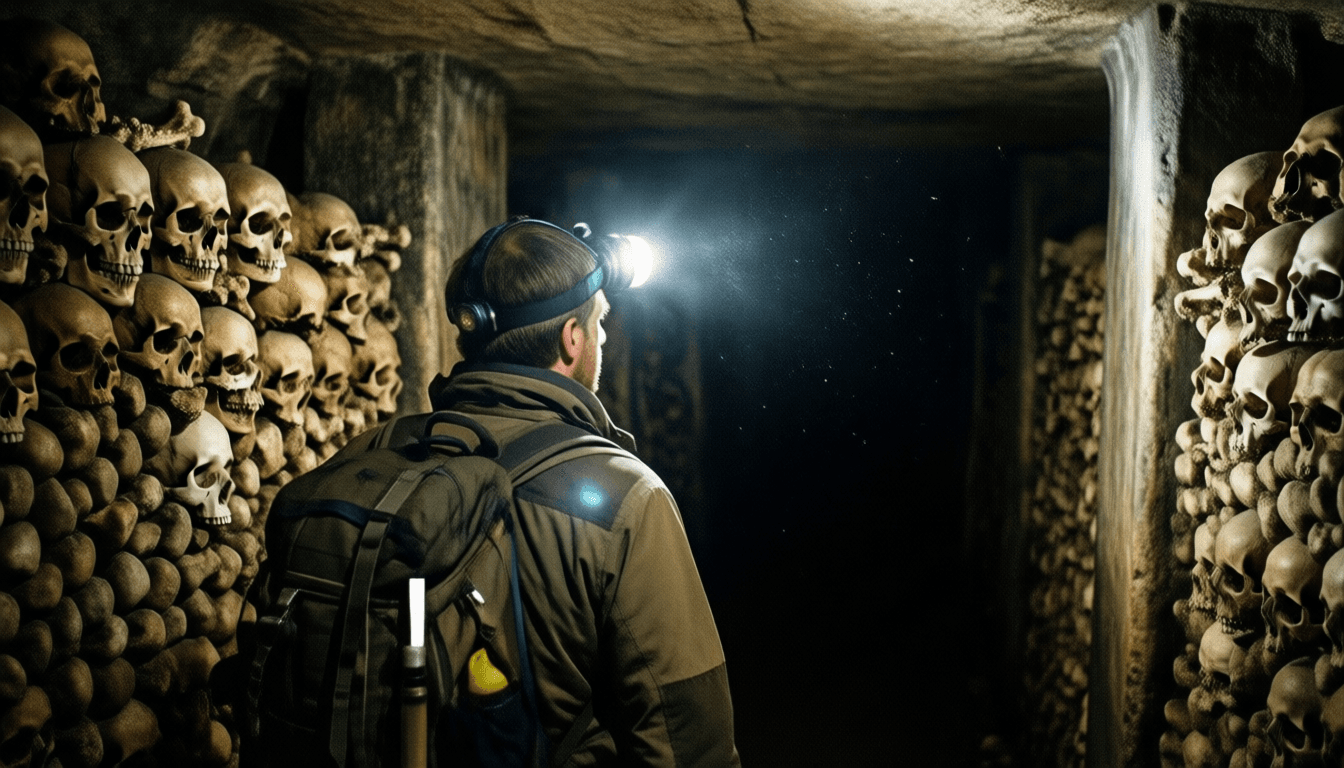
Drawn by that persistent strangeness, I made my own pilgrimage. My objective was to find one of the discreet fissures connecting the official passages to the forbidden network, taking advantage of the late hours. I carried minimal equipment: a high-powered headlamp, two spare batteries, a compact audio recorder, a thermal monocular, and a sturdy iron pry bar for any unforeseen obstructions.
I slipped through a gap in a metal grate in a rarely used service alley. The air immediately changed. A damp, mineral-laced chill, heavy with the scent of wet earth and bone dust. The silence, even in these initial stages, was profound. It swallowed the faint hum of the city above, replacing it with the subtle sounds of dripping water. These tunnels were unlike the elaborate ossuaries open to the public. Roughly hewn passages often narrowed to barely a person's width, the walls shifting from exposed limestone to ancient, crumbling brickwork. My headlamp cast long, dancing shadows, making the femurs and skulls piled in forgotten chambers seem to writhe. Deeper in, the labyrinth grew more formidable. Passages branched, twisted, and dead-ended with unnerving frequency. My phone's compass was no longer reliable, merely flickering useless data. I relied on the primitive yet essential measure of chalk marks and twine to prevent myself from becoming completely disoriented.
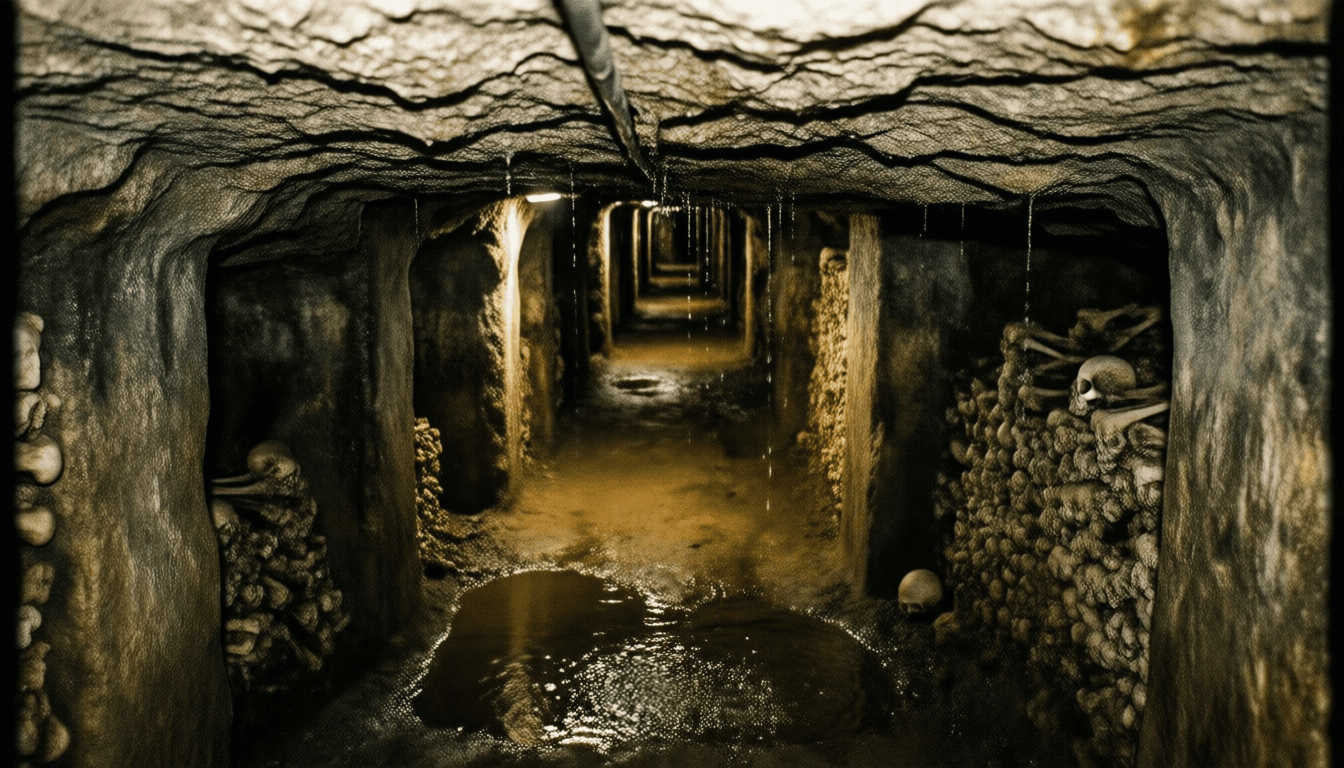
Hours passed. The deep Catacombs possessed unique acoustic properties. Sounds dispersed abnormally, yet distant echoes seemed to linger or replay in impossible ways. I deliberately coughed to test the space, but there was no immediate echo. Yet, several minutes later, a faint, almost imperceptible residue of that cough seemed to drift back to me, as if from a passage I’d already passed through—from behind me. It wasn't merely a delayed echo. It felt as if the sound had circled, or perhaps been caught and then released.
Deeper still, in an ossuary section where bones were piled floor to ceiling, the air grew noticeably colder, despite the Catacombs’ relatively constant ambient temperature. My thermal camera registered no immediate source for this anomaly; the surrounding rock maintained a baseline temperature. But the distinct chill persisted, focused exactly in the narrow space directly in front of me. Passing through it, the cold felt like a physical presence, raising the hairs on my arms.
And then, the rustling. Faint at first, like dry paper being scraped. As if something was being dragged over loose stone. It was distant, yet undeniable in its presence. It subtly altered my perception of the profound silence that had previously dominated. Attempts to pinpoint its source with the thermal camera yielded nothing. When I stopped, the sound ceased, only to resume when I moved again. Always just tantalizingly out of direct perception, a persistent, unsettling companion that never truly left me alone. My claustrophobia, previously manageable, sharpened into primal terror. The ancient bones, once objects of macabre curiosity, now felt like silent, judging observers.
I reached a circular chamber. Its walls were covered in centuries of etched graffiti—names, dates, crude drawings. The air here was still and heavy, carrying the damp earth smell combined with another, subtly sour scent, like old blood or stagnant metal. As I examined a blurred, distorted figure etched into the wall, my headlamp flickered. A single, sharp blink that plunged the chamber into total darkness for a split second before relighting. My heart pounded. I swore and checked the battery pack. It was secure.
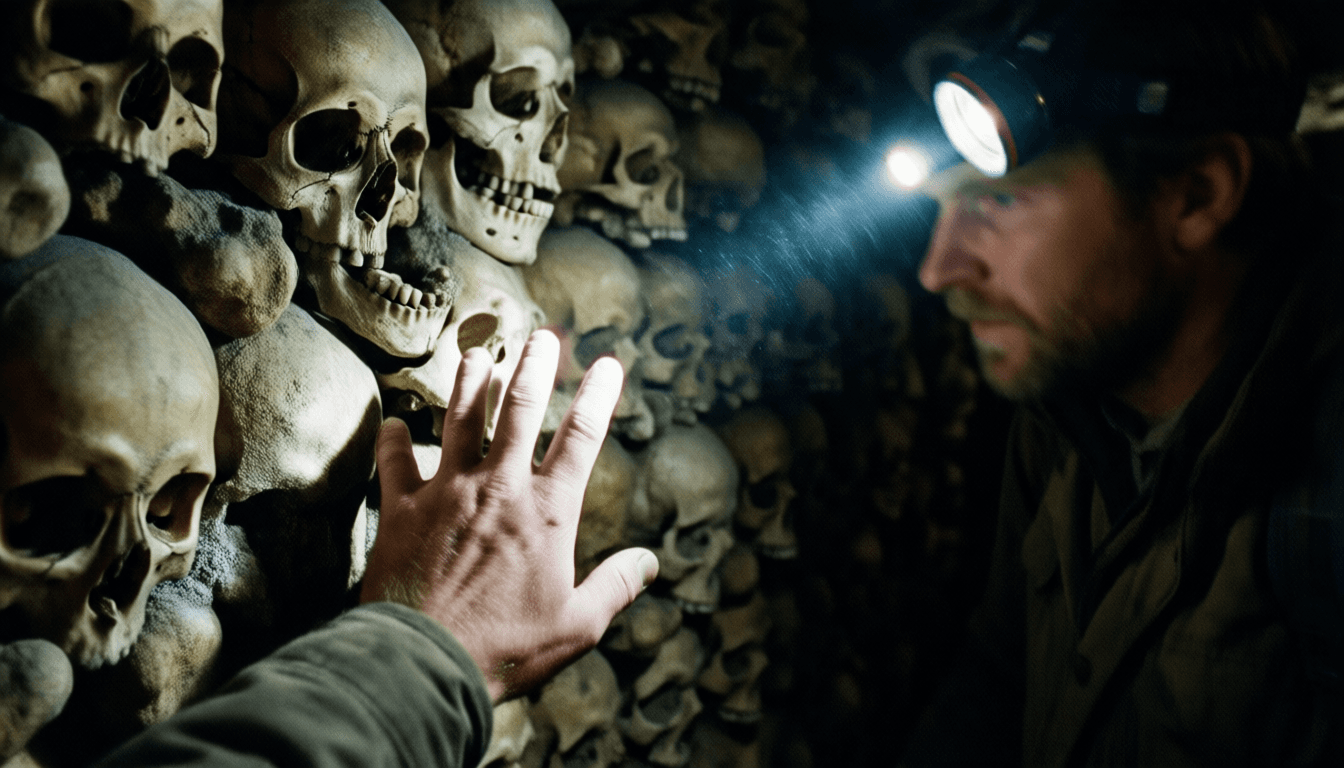
Then it happened. The tunnel entrance, which had been clearly visible just moments before, was no longer open. It hadn't collapsed, nor was it obscured by shadow. It was closed. A perfectly smooth limestone wall stood where the passage had been. There was no rubble. It was as if the rock itself had sewn itself shut. My mind struggled to process the impossibility. No sound of falling stone, no dust. It was simply gone.
Panic threatened to engulf me. I scrambled to the impossible wall, my hands slapping against the cold, unyielding rock. It was utterly solid. My headlamp flickered again. This time, more intensely, casting jagged, dancing shadows that made the bones in the chamber seem to writhe. The cold I had felt earlier returned, but now it was intense, all-encompassing. My breath plumed visible in the air.
Suddenly, the headlamp died completely. Absolute, total darkness. The silence that followed was not merely the absence of sound, but an overwhelming, palpable weight. It felt like cotton pressed against my ears, water filling my nasal passages. I tried to scream, but the sound caught in my throat, only a strangled gasp escaping.
Then, the contact. Not a gentle touch, but a sudden, impossibly strong clench around my ankle. It was cold, dry, and hard, like fossilized wood or ancient bone, yet possessed immense strength. I was yanked forward violently, crashing onto the rough stone floor. My audio recorder clattered away into the darkness. I thrashed wildly, but the grip tightened further, burning with a strange, icy intensity. I felt myself being dragged, slowly but inexorably, toward the far side of the chamber, where the darkness seemed deepest, most absolute. A low, unsettling sound, like heavy stone grinding against heavy stone, rumbled beneath me, growing louder, closer. Not a growl or a groan, but an impossibly slow friction. I clawed at the ground. My fingers tore on jagged stones, desperately trying to anchor myself. The air thinned, crushing my chest. An immense weight pressed against my back. It felt as if the rock itself was contracting around me. In the absolute blackness, my vision swam, only phantom flashes sparking behind my eyes. I tasted blood. My body was pulled, twisted, my bones screaming. This wasn't just getting lost. This was being swallowed.
Hours later, I awoke disoriented and gasping for breath, lying in a narrow, unfamiliar passage. My main headlamp was gone. Spare batteries, thermal camera, pry bar—all gone. Miraculously, only my audio recorder lay a few feet away, its 'record' light faintly blinking. I clutched it like a lifeline and crawled. My entire body was bruised and scraped, my clothes tattered. My left ankle throbbed, but surprisingly, nothing seemed broken.
Guided by the recorder's faint light, I stumbled through increasingly familiar passages, eventually staggering into a maintenance tunnel. As dawn broke, I emerged through an unlocked grate onto a deserted Parisian street. The sudden rush of morning air, the distant sounds of traffic, were alien and overwhelming.
Later, in the sterile silence of my archiving office, I replayed the recorder. The initial audio captured my last hours underground: my commentary, the subtle echoes, the faint rustling. Then, the distinct sound of panic as my headlamp flickered, my strangled gasp, the recorder hitting the ground. This was followed by about a minute of muffled struggle, my own ragged breathing interspersed with that dry, 'grinding' sound I’d heard earlier, now much louder, and a distorted inflection that was unmistakably my own voice. The thrashing continued for about 40 seconds, ending with a sharp, sickening 'crunch' heard too close. And then, the deep, oppressive silence returned. This silence lasted for almost three minutes, punctuated by the occasional faint, distant 'scratching' sound—the same one heard in the original viral video—before the recording abruptly cut out.
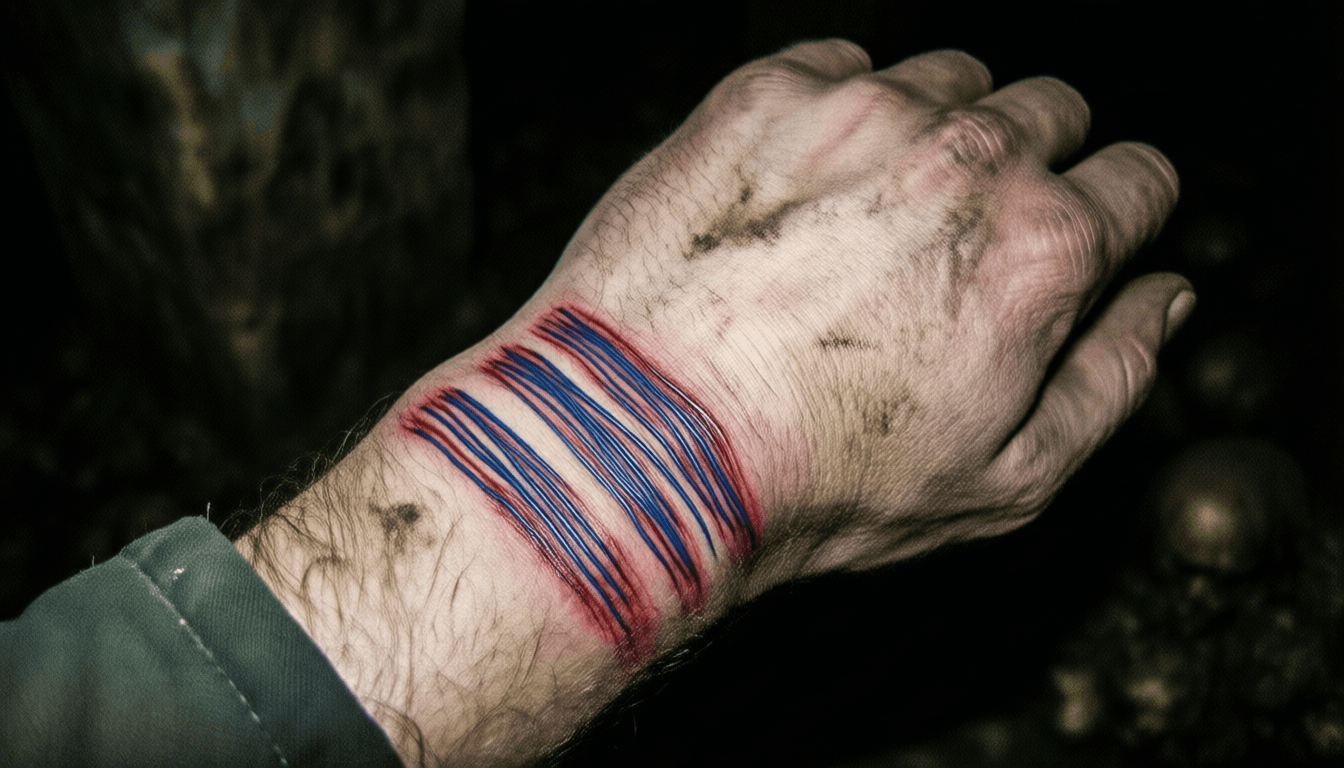
I found no physical trace of the impossible wall. No scientific explanation for my missing equipment. But a week after my return, I discovered something new. On the inside of my left wrist, just above the palm, a mark had appeared. Three perfectly parallel lines, incredibly thin as if cut by a razor, yet with no break in the skin. They were cold to the touch, retaining their chill despite rubbing or warmth. They did not fade. It was a subtle, constant reminder. As if the deep Catacombs and their abyssal silence had left not just psychological scars, but a cold, physical mark. And sometimes, in the absolute quiet of my office, I still hear that distant, dry 'scratching sound.'
[ CLASSIFIED VERDICT ]
[ACCESS LOG - SOURCE FILE]
Rumors persist about forbidden, uncharted sections of the Paris Catacombs where people who venture in disappear. Around 2005, a camcorder video allegedly recovered from these labyrinthine tunnels captured an explorer being 'taken' by an unknown entity, sparking widespread fear. Although authorities dismissed it as a hoax, the video's chilling realism has fueled ongoing mysteries about the Catacombs.