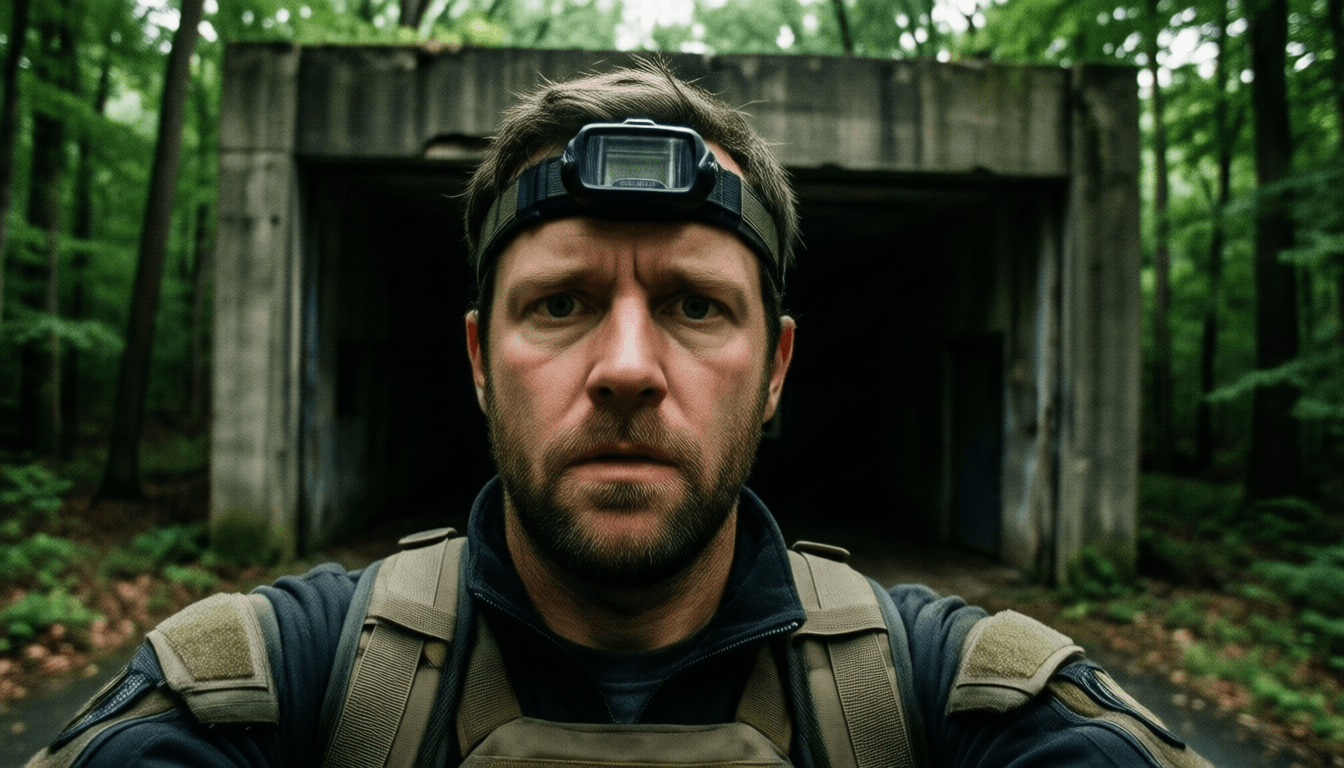
Nightingale Academy: Readjustment
The digital footprint appeared to be purely accidental. Fragmented discussions began surfacing in specialized online forums like 'DeepVault' and 'CypherNet', groups dedicated to unraveling bizarre phenomena from the Cold War era. Early whispers coalesced around heavily redacted, declassified CIA documents concerning 'Project MKULTRA, Subproject 773.0: Environmental Sensory Withdrawal and Auditory Readjustment'. These documents, slowly released after Freedom of Information Act lawsuits, vaguely alluded to an 'External Behavioral Modification Annex' code-named 'Nightingale', operational between 1957 and 1964.
It wasn't just the declassified text that seized my attention. It was the local folklore that accompanied it. For decades, residents of forgotten rural Maryland whispered of 'The Academy', a windowless concrete structure deep in the woods. Stories spoke of strange lights at night, hallucinatory screams, and a baffling series of disappearances between the late 50s and early 60s – individuals, seemingly unconnected, who simply vanished from nearby towns. Internet sleuths cross-referenced these local tales with the declassified documents, hypothesizing 'The Academy' was 'Nightingale'. One particularly chilling excerpt from a fragmented testimony within the documents, attributed to a Dr. Elias Thorne, read, "The true measure of mental reconstruction is not destruction, but harmonious rebuilding... the environment is merely the scalpel." It was not about violence, but precision. And what consistent early amateur reports of exploring 'The Academy' highlighted was precisely that: an engineered silence.
My journey to 'The Academy' was methodical, cross-referenced with satellite imagery and historical land deeds. It stood at the exact coordinates the legend pointed to: a brutalist mass of windowless, reinforced concrete, miles into the dense woods, far from the nearest paved road. The silence upon arrival was immediate and profound. Not the natural quiet of the forest, but an artificial, deathly hush, as if sound itself was absorbed by the air. Even the rustle of leaves felt muffled and distant.
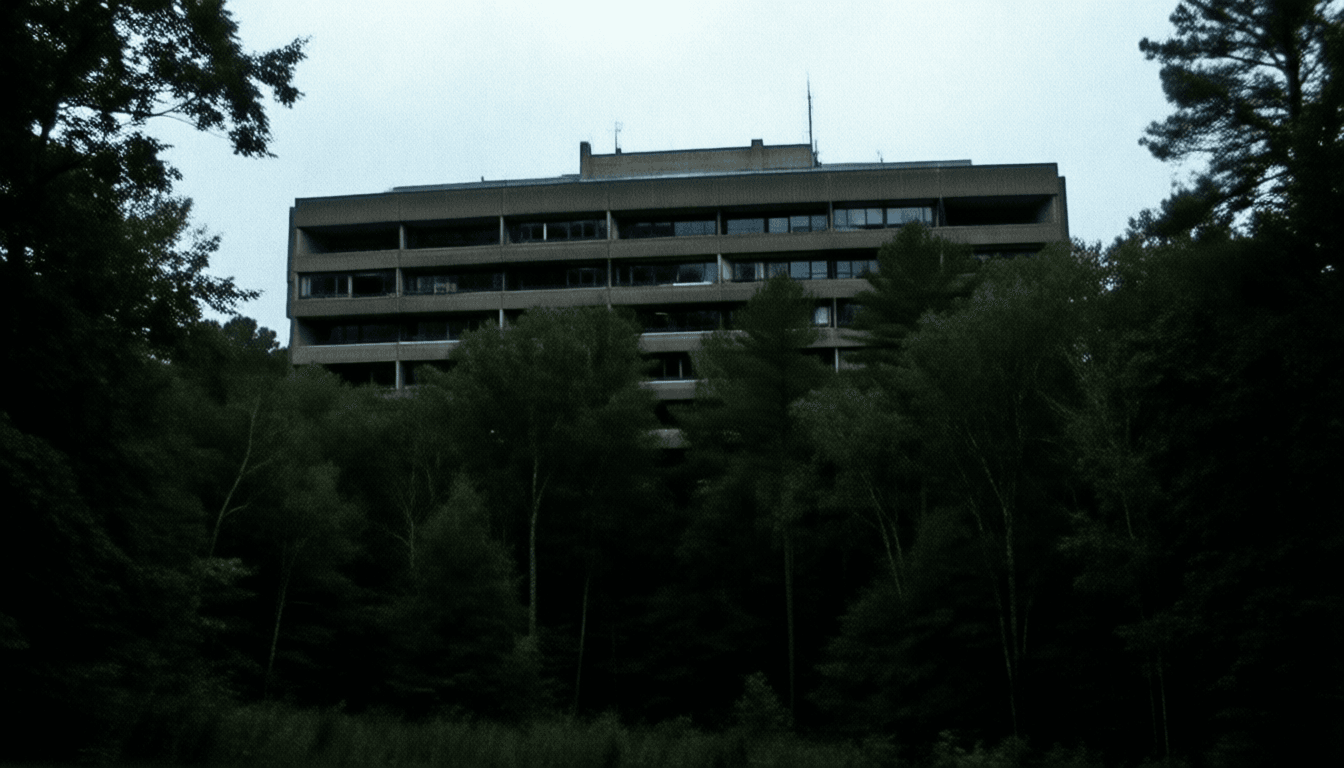
Entry into the building was through a large aperture in a side wall, forced open by previous thrill-seekers. Inside, the air was cold and dry, carrying a faint scent of ozone and decay. The interior layout was eerily functional: long, narrow corridors, heavy reinforced steel doors, no windows. My headlamp cut through the oppressive darkness, revealing walls stained with faded institutional-green paint and bizarre geometric symbols etched into the plaster by unknown hands. My footsteps made barely a sound despite the solid floor. The silence here wasn't merely an absence of sound; it felt like an intentional, engineered presence, an overwhelming vacuum. I passed rows of small, cell-like rooms, each with heavy, soundproofed doors, housing remnants of antiquated, clinical equipment: rusted electrodes, unused speaker mounts, and circular recessed panels in the ceiling. The building hummed with an almost imperceptible low-frequency vibration, felt more in the bones than heard by the ear.
Deeper into the complex, the sensory distortion grew more pronounced. The engineered silence intensified to the point where my own breathing sounded unnaturally loud, and my heartbeat felt like a thundering drum. Then, it began. Faint whispers, at first dismissible as echoes or tricks of the mind in the dark, began to solidify. They seemed to emanate from the walls, from the air, and, more profoundly, from within my own head. They were indistinct, fragments of voices distorted like radio interference. A phrase, perhaps a childhood memory twisted and warped, followed by criticisms, and then questions I'd asked myself just days before.
The environment itself seemed to subtly shift. Not a physical change, but a perceptual one. The headlamp beam appeared to waver, colors desaturated then became hyper-real again. The consistent corridors seemed to subtly elongate and angle at the periphery of my vision. A persistent pressure built in my ears, gradually accompanied by a growing vertigo. My internal monologue, usually a clear guide, became muddled with the phantom whispers, making it difficult to discern my own thoughts from the intrusive voices. The physical phenomena of sound itself seemed weaponized. The distant drip of water would echo for an impossibly long time before abruptly cutting off, leaving an unbearable void. I felt an inexplicable urge to make noise, but a paralyzing fear kept the words lodged in my throat. I was being conditioned.
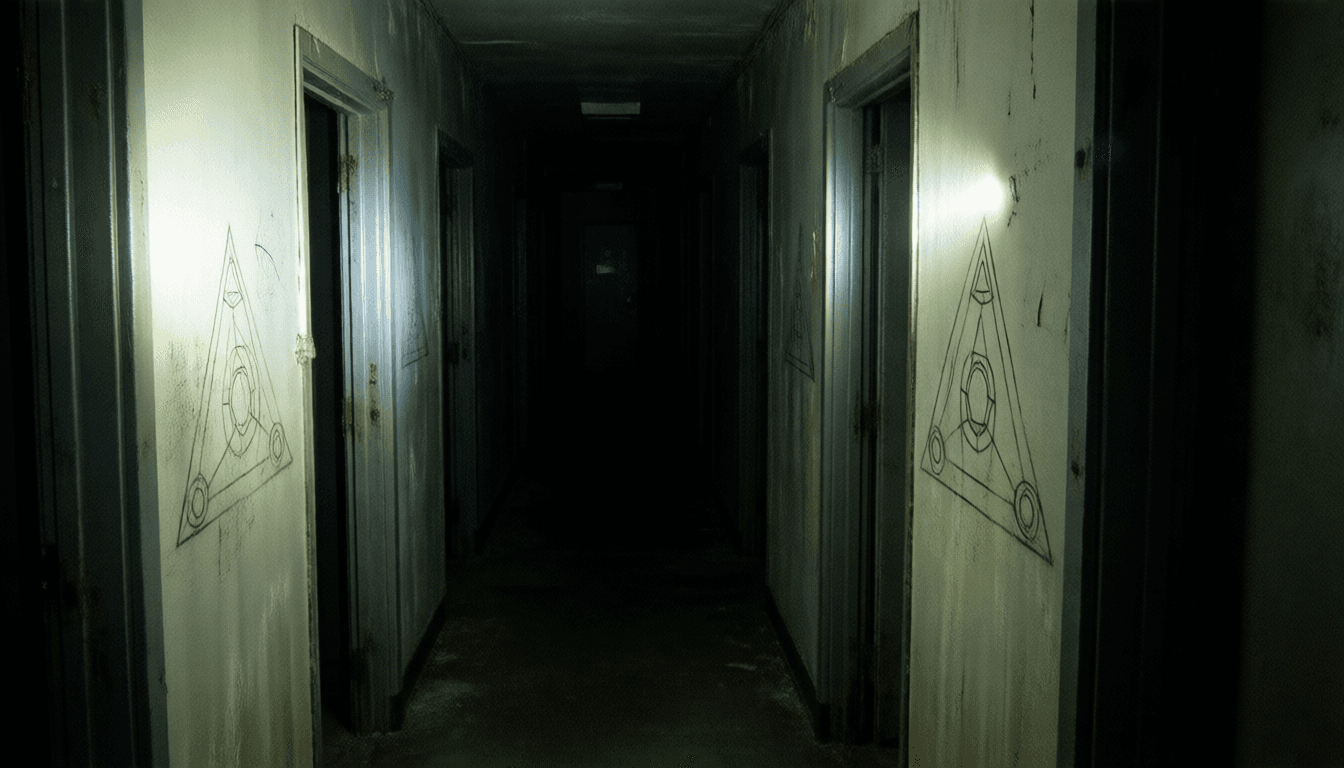
I eventually located a central chamber, deeper than the others, clearly designed for singular, concentrated use. It was a small, octagonal room, completely covered in worn, stained acoustic paneling. In its center, a single antiquated chair was bolted to the floor, restraints hanging loosely. The ceiling was a dense matrix of non-functional circular light panels and what appeared to be dozens of small, unused speakers. This was it: the "subject chamber."
The moment I crossed the threshold, the silence shattered. Not with a bang, but with a cacophony of white noise, followed by specific, ear-scraping frequencies, then a storm of overlapping whispers. No longer indistinct, they were clear, accusatory, manipulative. They tore at my self-worth, dredging up forgotten failures, amplifying my deepest anxieties. "You are inadequate," hissed one voice, while another mimicked a loved one's soft tone, twisting it into a sharp critique: "You were always destined for this. To be readjusted."
The room began to violently distort. The acoustic-paneled walls seemed to breathe, expanding and contracting, while the light panels flickered in an aggressive, disorienting rhythm that seemed synchronized with the intrusive voices. My perception of space warped. The room stretched into an infinite tunnel, then contracted into an impossibly narrow box. An overwhelming pressure built behind my eyes, magnified into a blinding, searing headache that felt like a physical intrusion. My muscles spasmed involuntarily, and I collapsed, crawling towards the chair. A insidious urge to 'comply' with the internal voices fought against my will to resist. This was no ghost; it was the residual programming of the Nightingale Project's purpose, still active, still seeking minds to dismantle. My own thoughts felt alien and fragmented. I felt something shifting deep within my consciousness, a fundamental reordering. It wasn't a physical danger, but my mind, my very self, was being disassembled by an unseen, relentless force. I clawed at the floor, desperately seeking purchase, anything to escape the chair's pull, the room's psychological gravity, the mental unraveling. I had to break free before I broke.
I don't recall the exact sequence of events by which I escaped that room. A moment of intense pain, perhaps biting my arm in a desperate attempt to ground myself in physical reality, that momentarily snapped me out of the program's grip. I stumbled out, gasping for air. The screams and whispers still reverberated behind my eyes, and the pressure in my head remained a dull ache.
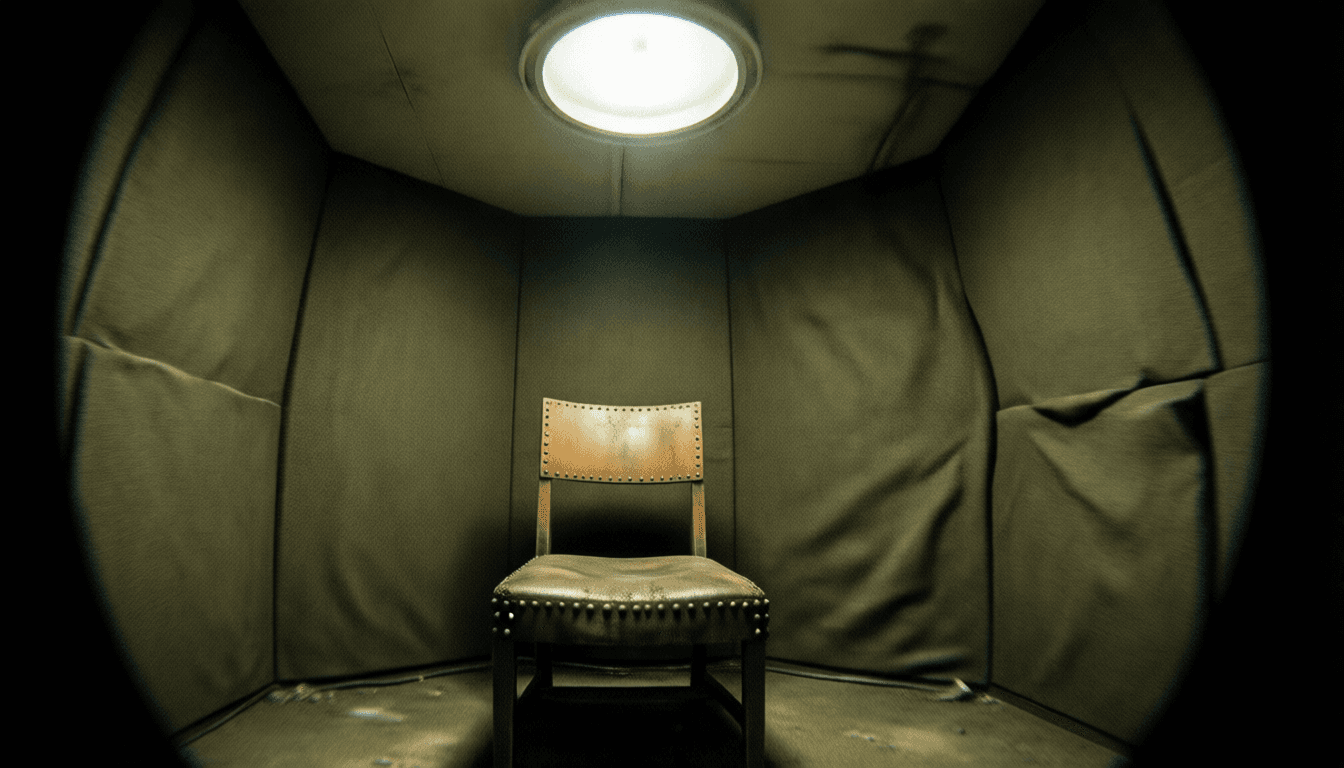
The return journey through the corridors was hazy, blurred by lingering terror and profound disorientation. My perception of the building was still fragmented. The sterile walls seemed to watch me, and the silence outside the chamber felt less like an absence and more like a stalking predator. I finally emerged into the Maryland woods, gasping the unmanipulated, real air. The subdued sounds of the forest were now a welcome, yet still unsettling, chorus.
Days later, safe at home, the physical injuries were minor: a few scratches, a persistent headache. But the deeper effects remained. The whispers hadn't entirely vanished; they were now subtle, an undertone to my thoughts, sometimes indistinguishable from my own. My internal monologue felt... 'changed'. Memories seemed subtly rearranged, and certain beliefs now held a conviction that wasn't entirely my own.
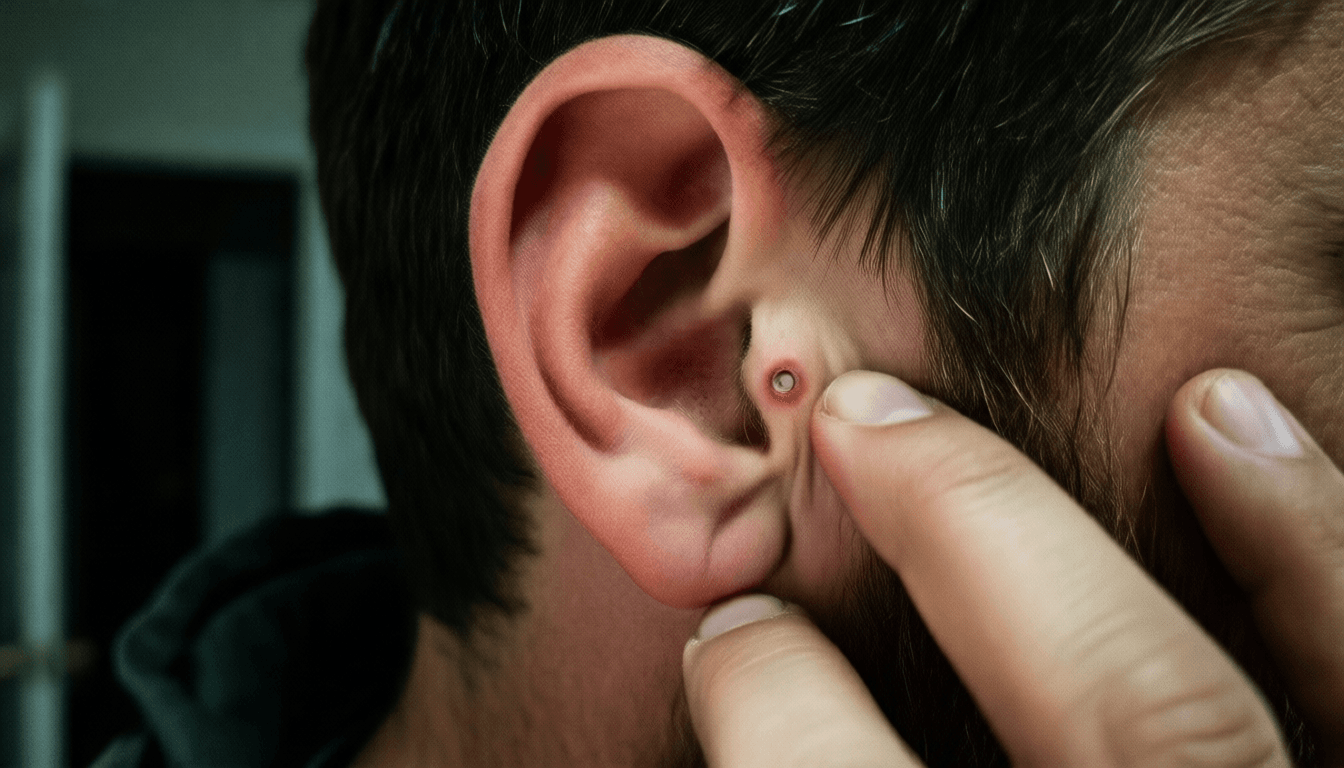
And there was an anomaly: a small, almost imperceptible scar just behind my right earlobe. Perfectly circular, about a millimeter in diameter. It was crisp, and it hadn't been there before. On my desk lay my most trusted field recorder. Its batteries were dead, and there was one corrupted audio file from 'The Academy'. I played it. Amidst static bursts and white noise, a clear, synthesized voice whispered: "Subject 773.0, readjustment complete. Awaiting new directives." This conspiracy wasn't just a historical footnote; it was active. And I was now an irreversible part of its record. Both the silence of the woods and the silence within my mind held a new, chilling meaning.
[ CLASSIFIED VERDICT ]
[ACCESS LOG - SOURCE FILE]
This story is based on conspiracy theories surrounding the CIA's MK-ULTRA project, specifically a sub-project involving 'environmental sensory withdrawal and auditory readjustment'. It weaves in the urban legend of an isolated 'Academy' in rural Maryland, where individuals were allegedly abducted for mental reconstruction, adding a chilling layer of mysterious disappearances.