Nan Madol: The Curse of the Still Water
The whispers of the people of Pohnpei about Nan Madol were always of impossible architecture, of hundreds of tons of basalt columns transported and stacked by unknown forces. Yet, beyond the wonder, there was another story, horrifyingly consistent, especially among local fishermen and seasoned divers: "places where the water forgets how to flow." This isn't mere ancient superstition. Our archives hold cross-referenced multiple online forum posts and local police incident reports, of unclear origin but astonishing consistency, detailing anomalous events within Nan Madol’s intricate canal network: currents inexplicably ceasing, or, more chillingly, actively
In 2017, a diving instructor with decades of experience in these waters described an incident near Idehd where his sturdy fiberglass skiff was inexplicably 'held' against a weak ebb tide for over twenty minutes. His engine was straining. He reported the ambient sounds suddenly, completely ceasing. No bird calls, no distant roar of the ocean, only the sound of his own blood in his ears. The boat was then released with a sudden jolt, his compass spinning wildly. Between 2019 and 2022, three other fishing vessels reported nearly identical phenomena, each incident concluding with an inexplicable, profound sense of terror. These are not mere folktales; these are repeatedly measurable deviations in natural physics.
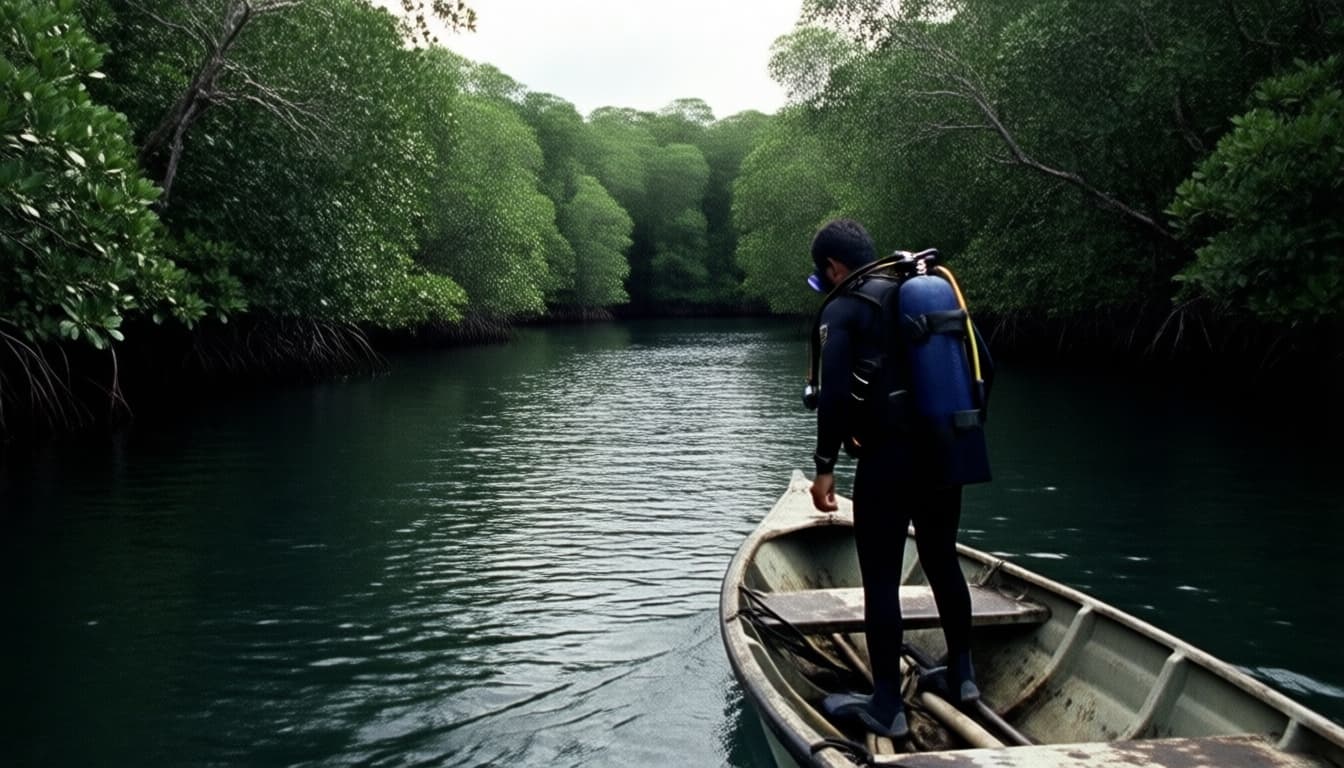
The boat I had borrowed was a small, well-maintained skiff, piloted by Kalol, a Pohnpeian native. His unspoken unease was palpable. He dropped me off at the edge of the mangroves, pointing towards a particularly lush canal leading into the southwest quadrant of the main complex, an area known locally as Pahn Kadira. "The water is not good there, sir," he muttered, refusing to go closer. I nodded, confirming my dive plan and communication schedule, but his anxious gaze spoke more than any warning.
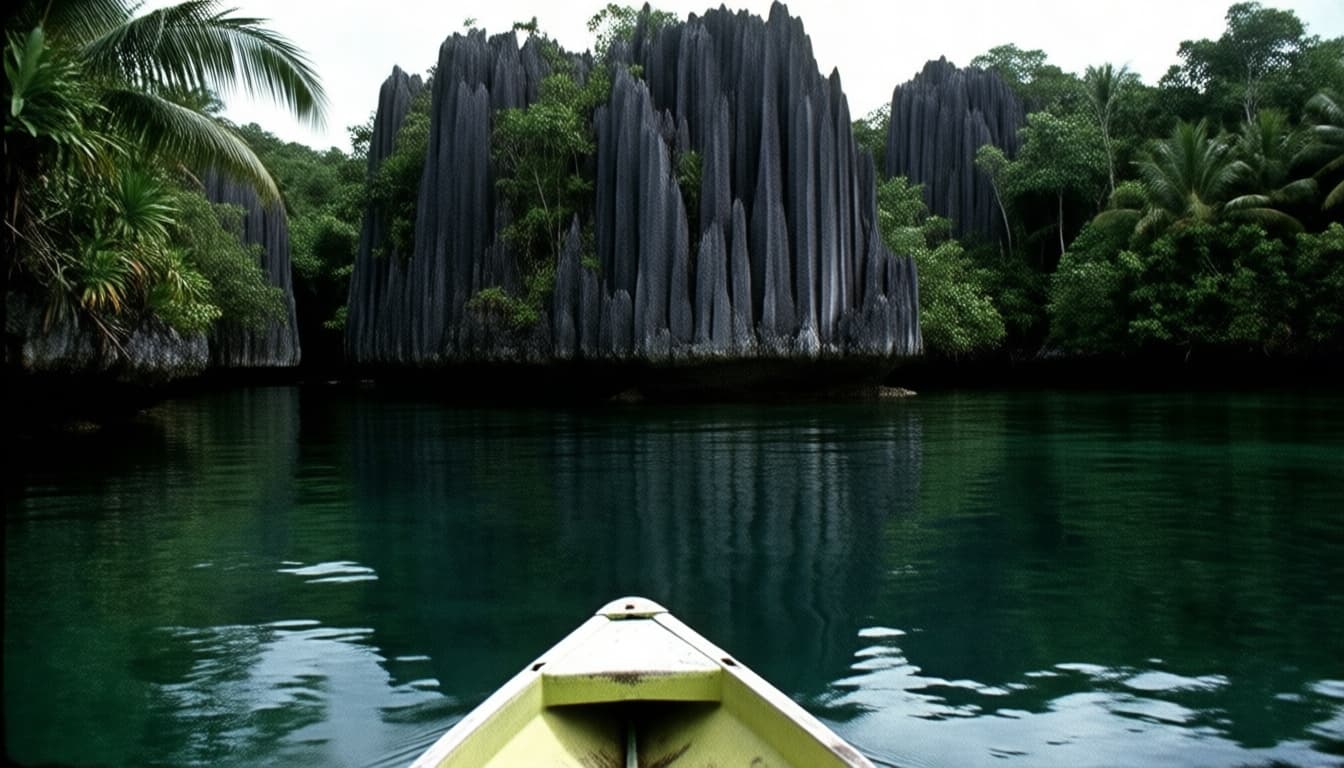
I adjusted my rebreather, checked my pressure gauges, and slipped into the brackish water. The immediate environment was awe-inspiring. Massive basalt logs, some six meters long and weighing tons, rose from the water, forming artificial islands and walls. The air above was heavy with salt and decay, but underwater was a world of murky greens and greys. Visibility was limited to about three meters in the turbid water, made worse by the dense canopy overhead. The currents here were gentle, a subtle, almost imperceptible flow outwards towards the open sea, as expected. My dive computer confirmed expected depths and temperatures. I began my slow exploration, navigating the narrow channels, silent structures pressing in from either side.
About thirty minutes into the dive, nearing what I estimated to be the central plaza of Pahn Kadira, the anomalies began. The gentle current I had relied upon ceased. Not a gradual slowing, but an abrupt, complete halt, as if a switch had been flicked off. My fins, accustomed to resistance, now churned through utterly still water. I checked my compass; it spun madly for a moment, then settled on a random bearing, only to begin oscillating erratically again. I tried to contact Kalol on my underwater comms, but all I heard was static. A low, grinding sound, pulsing with an unsettling rhythm.
The already dim ambient light seemed to grow darker, not from clouds, but as if the water itself was absorbing photons. Even my powerful dive light struggled to pierce the unnatural gloom. Then came the peculiar sensation: the water around me began to feel
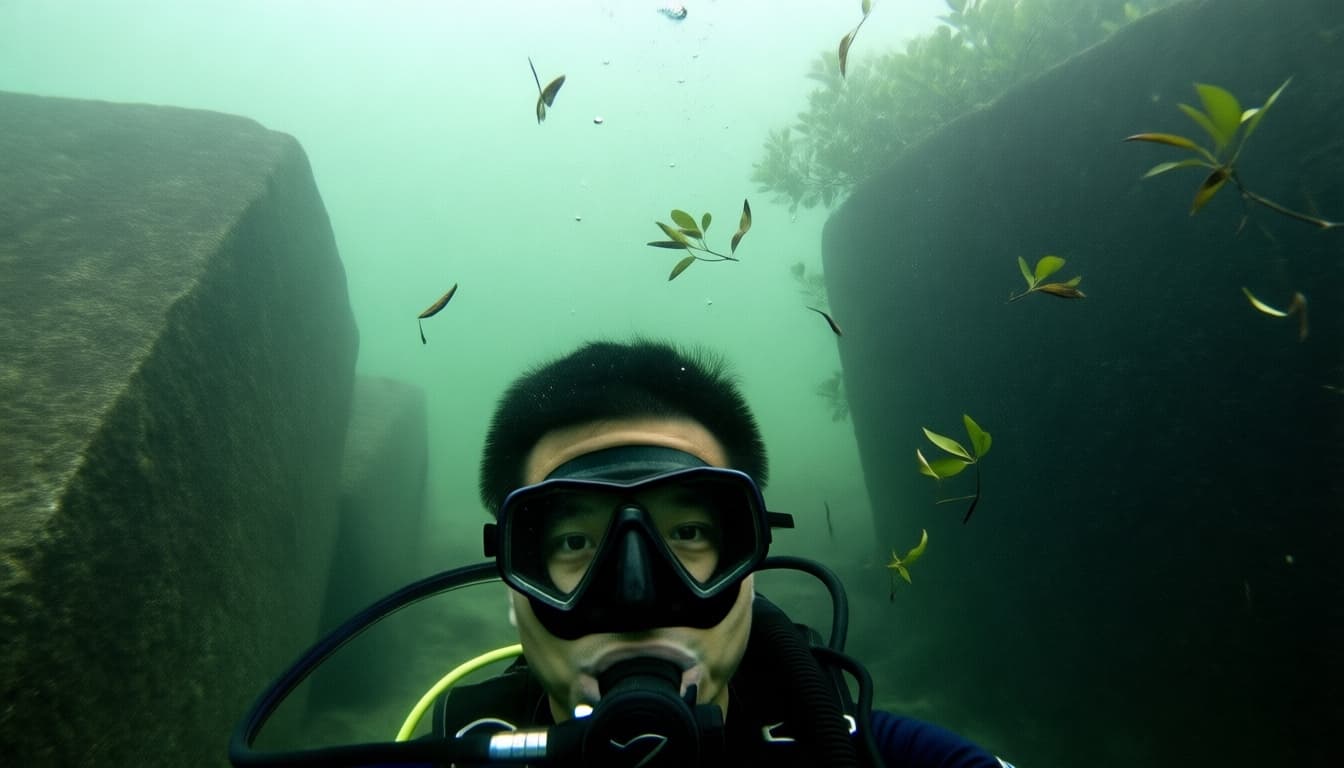
A low, faint hum began to reverberate through the basalt walls. Barely audible at first, it slowly intensified. It vibrated through my chest, seeming to originate from deep beneath Nan Madol, bypassing my ears. In the murky water, I observed mangrove leaves and coral fragments suspended in the water. Then came the truly worrying moment: small leaf fragments directly in front of me were drifting slowly
I reached a wide, submerged courtyard, ringed by colossal basalt walls that disappeared into the oppressive darkness both above and below. Here, the hum was deafening, a bone-rattling vibration that permeated my entire body. My dive computer's depth sensor began to fluctuate wildly. Five meters to twenty-seven meters, and back again in a matter of seconds, defying all logic.
Suddenly, the 'heaviness' of the water became intolerable. It began to press in on me, not just from below or the sides, but
And then came the cold. Not the chill of deep water, but an intrusive,
I burst to the surface, gasping, vomiting brackish water. My lungs burned. Kalol was already there, his face ashen, pulling me wordlessly into the skiff. He didn't ask what I had seen. He just
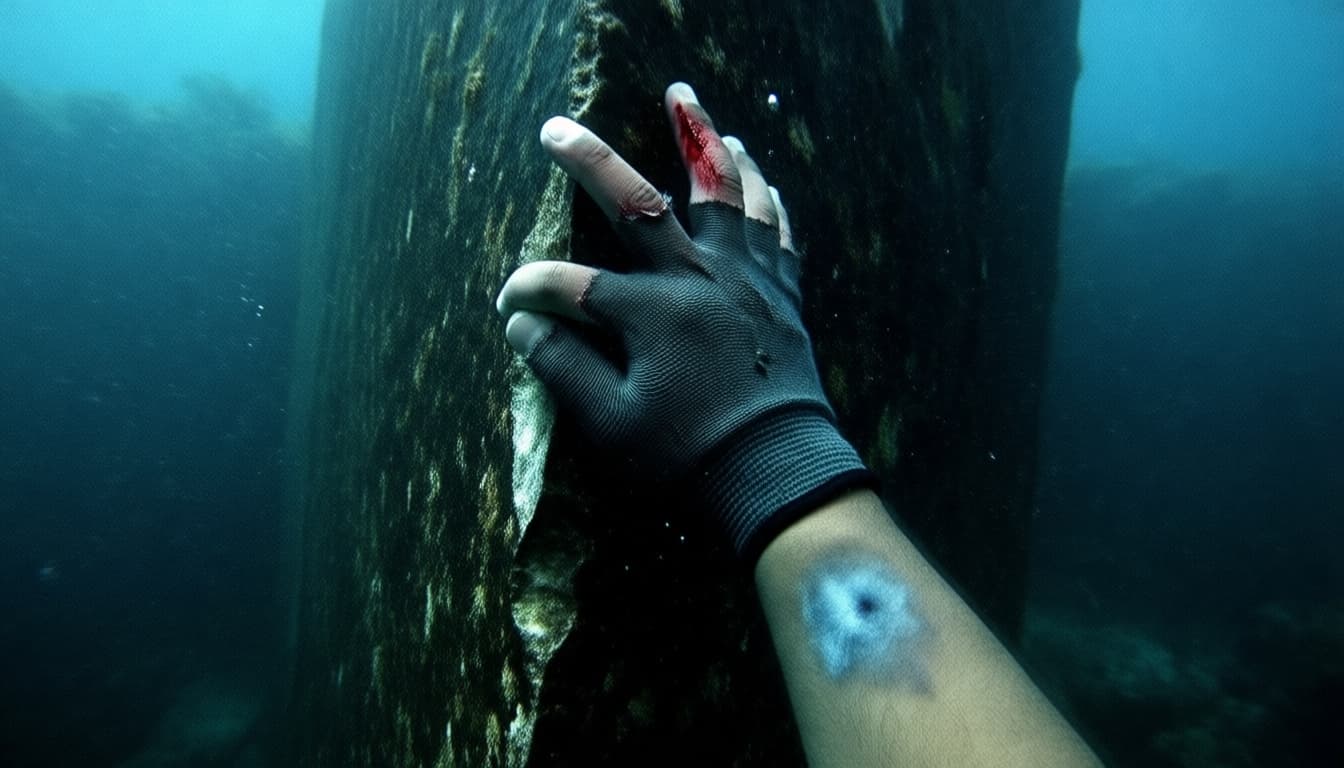
Back on Pohnpei, I filed my official report: "Immediate cessation of exploration due to unexpected structural instability and localized hydrostatic anomalies." Intentionally vague and sanitized. I attached the damaged, static-ridden comms audio, the ruined dive computer, and photos of the strange bruise, labeled "Unidentified Pressure Trauma." The full truth – the suffocating silence, the impossible currents, the cold, grasping touch I felt within the water – remains sealed in my late-night scribbled personal notes. It stands as testimony to an encounter with something profoundly ancient and utterly alien.
Sometimes, even weeks later, I feel that localized, intense cold on my thigh. An echo of the pressure that tried to reclaim me. And in moments of deep silence, I hear it again. The low, resonant hum, reverberating not from the outside world, but from deep within my bones, a chilling reminder of whatever resides in Nan Madol, patiently manipulating the fundamental fabric of water, waiting.

[ CLASSIFIED VERDICT ]
[ACCESS LOG - SOURCE FILE]
Nan Madol in Pohnpei is a mysterious ancient city built with gigantic basalt columns. An urban legend here tells of ocean currents inexplicably stopping or reversing, accompanied by complete silence, and people disappearing. This story is not just a superstition but repeatedly documented anomalies deviating from natural physics.