
Nahuel Huapi: Abyssal Presence
Folk tales about a plesiosaur-like creature, the 'Nahuelito,' said to inhabit Argentina's Patagonian Lake Nahuel Huapi, primarily evoke blurry photographs and speculative zoological expeditions of the early 20th century. However, a lesser-known series of events over the past five years shifted my attention from sensational rumors to a far more sinister pattern. A particular remote arm of the lake, commonly known as 'Brazo Tristeza' – the 'Arm of Sadness' – notorious for its somber, shadowed appearance and unpredictable, sudden wind shifts, became a focal point for anomalous marine incidents. Officially attributed to unpredictable weather or navigational errors, informally, local fishermen whispered of 'currents from the deep' and 'something pulling them down.'
Specifically, three separate cases involved expertly handled fishing vessels, operated by seasoned locals, suffering catastrophic hull breaches and rapid sinkings under conditions described as 'unusually calm' or 'with only slight ripples' – weather conditions entirely insufficient to explain the damage. In one instance, retrieved wreckage displayed peculiar inward bowing on the keel, inconsistent with striking a reef or another vessel. In another, sophisticated sonar arrays deployed by a local research institute recorded a series of massive, amorphous 'signatures' moving at impossible speeds directly beneath the deepest point of Brazo Tristeza, before the equipment inexplicably malfunctioned. This secretly circulated data defied conventional explanation, suggesting a potent, unprecedented force at work in the lake's abyssal depths. These scattered but chillingly consistent reports were the genesis of my investigation.
My arrival in Bariloche was unremarkable. The city teemed with tourists, oblivious to the lake's deeper secrets. I procured a robust, silent, electrically propelled research kayak, equipped with low-frequency sonar, hydrophones, and a reinforced composite hull – chosen for stealth and durability over speed. My objective: Brazo Tristeza, approximately 25 kilometers from the main harbor. The journey underscored the vastness of Nahuel Huapi. Its glacial blue waters rapidly transformed to an obsidian black in the deeper reaches. The peaks of the Andes cast long, ancient shadows.
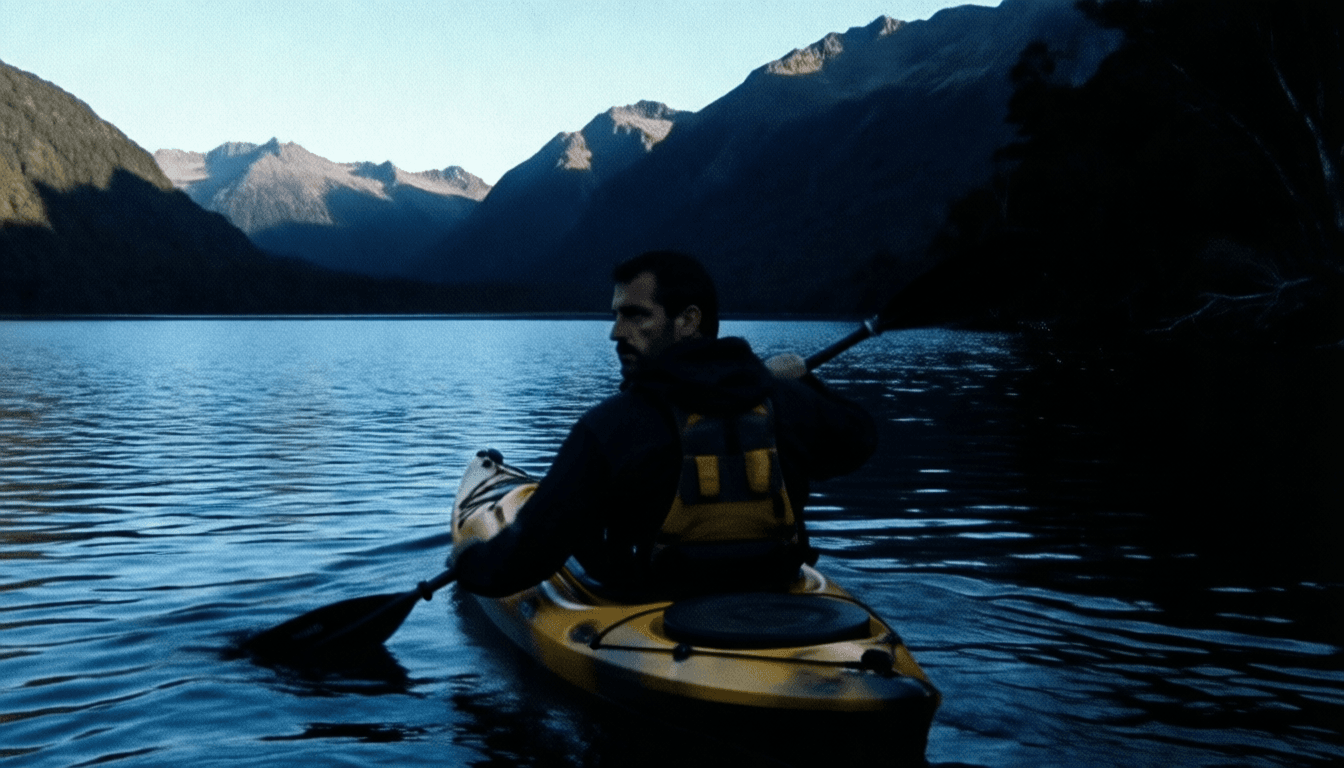
As I entered Brazo Tristeza, the atmosphere shifted. The light seemed to dim, absorbed by the immense scale of the surroundings. Despite the clear weather, the air grew perceptibly colder. The distant drone of motorboats vanished, replaced only by the lapping of water against the hull and a faint, persistent sigh of wind through the pines. Initial sonar readings showed a typical, if profound, lakebed. The hydrophones registered only ambient water sounds. The colossal, silent volume of the lake exerted a palpable pressure. The abyss, seemingly an impenetrable void beneath the surface, overwhelmed the senses, its sheer volume taking on a physical presence that felt crushing.
Midway into the arm, past the point of easy retreat, subtle anomalies began. The first was a disorienting sensation. Despite the calm surface ripples, my compass swung erratically for several minutes before seeming to stabilize. I dismissed it as a local magnetic anomaly and pressed on. It was then that the hydrophones picked up a sound. Not discontinuous noise, but a low-frequency resonance, a deep, guttural vibration that seemed to emanate from the very bedrock of the lake. It was too deep to pinpoint direction, a tremor felt more in the chest than heard with the ears. It ceased as abruptly as it began. An eerie shiver traced down my spine.
Next was the water itself. A specific patch of surface about 20 meters ahead was unnaturally still, flat as glass, despite a light breeze rippling the surrounding area. It seemed to absorb movement. As I drew closer, that tranquility suddenly ruptured, transforming into a momentary, rapidly downward-pulling vortex that vanished in mere seconds, leaving the perfectly calm surface behind. The air temperature seemed to drop further, and tiny, transient wisps of vapor became visible condensing above the water's surface. The cold felt bone-deep.
My sonar began registering short, unidentifiable 'pings' from the deep zone below. Too large for fish, too fast for floating debris. They appeared and vanished between sweeps. An overwhelming sense of being watched from beneath the immense volume of water settled upon me. The vast, dark abyss transmuted from a natural phenomenon into an active, discerning presence. My breath caught in my throat.
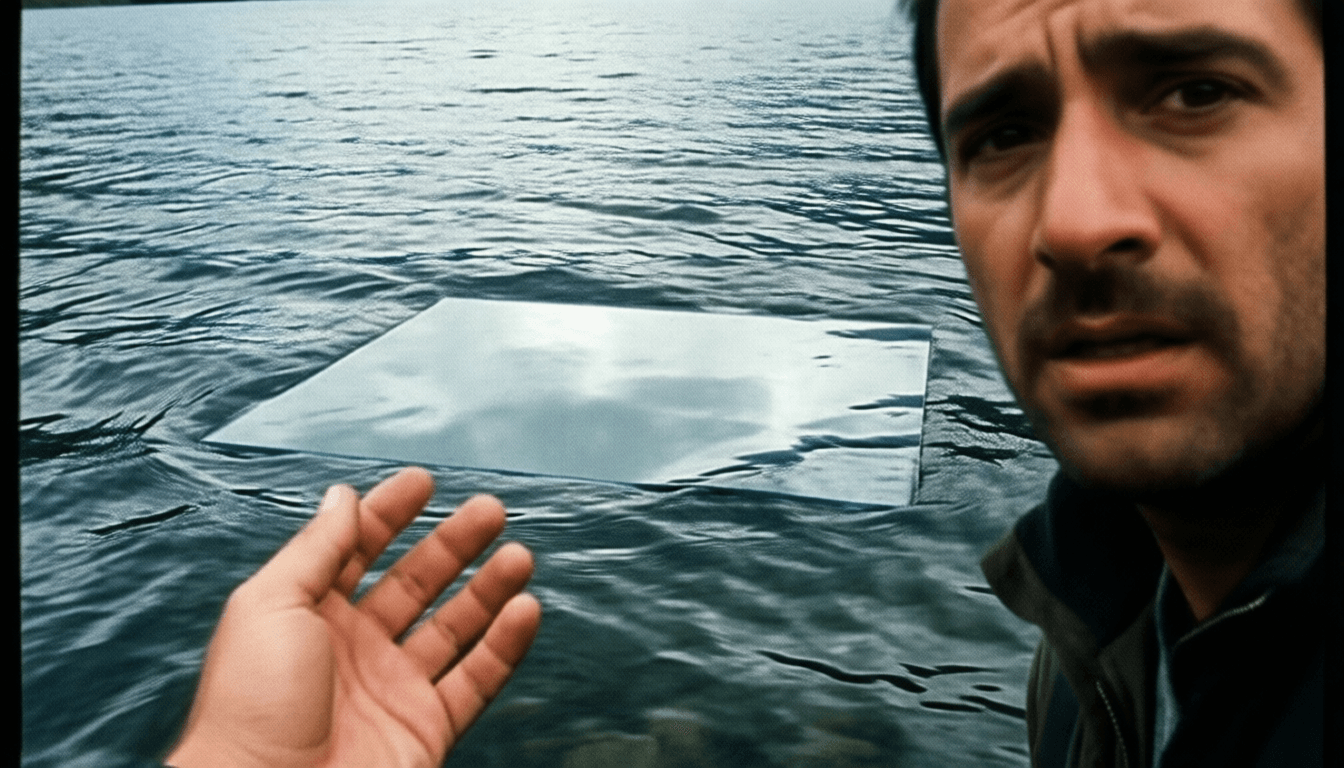
I positioned myself directly over the deepest recorded point in Brazo Tristeza and deployed my deep-water camera rig. The hydrophones were now alive with a constant, low-frequency hum, its intensity steadily growing, vibrating through the composite hull of the kayak. The water around me began to subtly roil, not from wind, but from an unseen force below. The surface dipped and rose in impossible localized disturbances, forming concave depressions suggesting immense displacement from beneath.
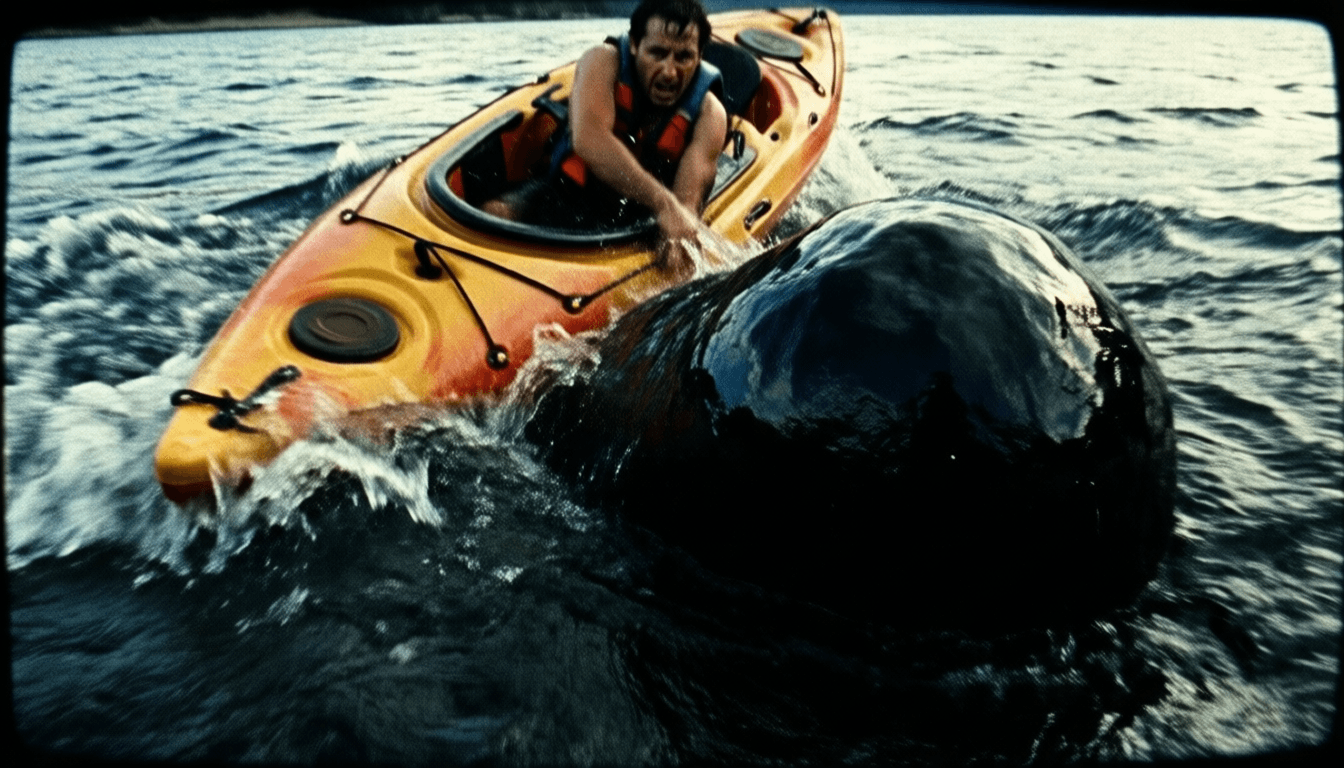
Suddenly, without a ripple or a break in the surface, a vast, obsidian-black mass surged up directly beneath my kayak. There was no warning, no approaching signal on the sonar. It was just there. The water around my boat back-channeled with impossible force, trying to capsize me, pinning the kayak against an unseen current pulling it downwards. And then, abruptly, a violent, powerful impact struck the kayak from beneath. A massive, blunt force lifted the entire craft several feet into the air, throwing me roughly against the gunwales. My head struck a reinforced edge, momentarily blurring my vision. It was like being hit by a giant fist.
Drenched and disoriented, struggling to regain my bearings, I caught a fleeting, terrifying glimpse. No scales, no skin. Just a vast, featureless, dark, wet, non-light-reflective mass receding into the impossible depths. It was smooth, like polished wet stone, but possessed a profound heaviness in its movement that defied hydrodynamics. There was no discernible head, no identifiable limbs. Only a monumental, purposeful presence. My severely damaged kayak, now with a fractured stern and rapidly flooding, began to sink. The glacial cold of Lake Nahuel Huapi instantly permeated my clothing, delivering an enervating shock. Hypothermia became an immediate, fatal threat. Amidst the rising water and numbing cold, I activated the emergency bilge pump and desperately paddled towards the nearest shoreline. The presence receded into the deep as quickly and silently as it had appeared.
I reached the shore in severe hypothermia, dragging the waterlogged and badly damaged kayak. The stern was not cleanly torn, but ruptured by immense inward pressure from below. There were no tooth marks, no claw marks. Only clear evidence of blunt, destructive force consistent with the impact of an object of colossal weight and density, inexplicable by anything known to inhabit the lake.
My emergency signal brought rescue several hours later. The official report on the incident, despite my clinically detailed account, cited 'catastrophic structural failure' due to 'unforeseen stresses' and 'extreme localized weather phenomena.' The damaged kayak was salvaged and examined, eventually archived, its specific type of breakage deemed 'inconclusive.' My logs, however, remain. They meticulously document the impossible hydrophone readings, the anomalous currents, and the chilling, physical account of the impact, though making no direct reference to a 'monster.'
The incident left a deep physical scar on the vessel, but etched an even deeper, immeasurable mark on my perception. Back in my archives, surrounded by maps and historical data, I no longer seek a plesiosaur or an unidentified cryptid. The Nahuelito is not a creature in the conventional sense. It is an eternal, primordial presence in the abyssal depths of Lake Nahuel Huapi. An ecological anomaly, a profound wrongness. It simply was.
The events in Brazo Tristeza were not accidents, but manifestations of its deliberate, protective vigilance. The lake actively, not passively, guards its secrets, and those who delve too deep risk becoming a part of its silent, cold dominion. The silence of Brazo Tristeza is not empty. It is a profound, watchful stillness. And it remembers.

[ CLASSIFIED VERDICT ]
[ACCESS LOG - SOURCE FILE]
There's an old folk legend about 'Nahuelito,' an unidentified Plesiosaur-like creature said to inhabit Lake Nahuel Huapi in Patagonia, Argentina. This legend primarily originated from blurry photographs and speculative expeditions in the early 20th century, with tales suggesting its existence deep within the lake.