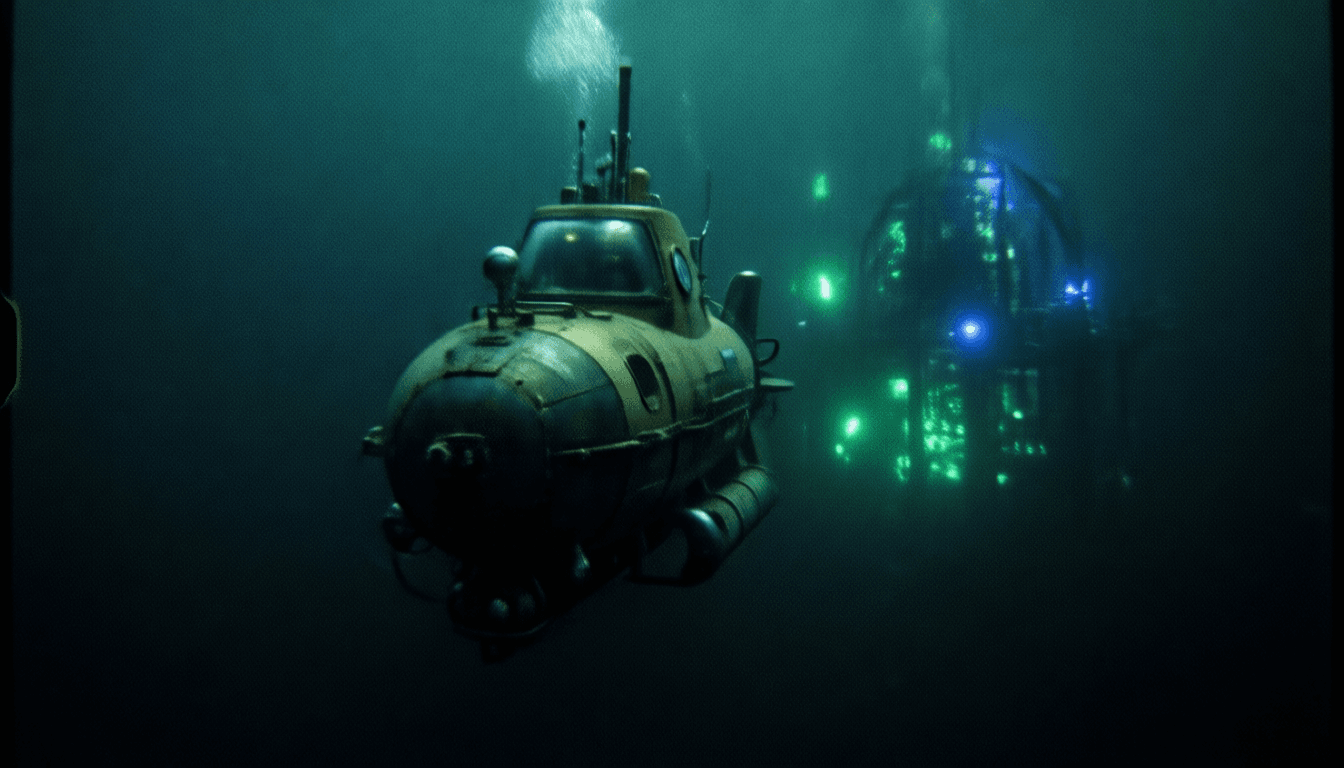
Lake Malawi: Song of the Abyss
For decades, the southern basin of Lake Malawi had been a subject of whispers among deep-sea cartographers and independent researchers. Officially, the region's anomalies—intermittent sonar ghosts, inexplicable power surges affecting local fishing vessels, and most chillingly, a disproportionately high rate of submersible equipment failure reported by the few sanctioned geological expeditions—were attributed to complex thermoclines, fault line activity, or equipment malfunction. However, a recently declassified addendum to a 1978 NOAA report, 'Project Siren Echo,' detailed an experimental submersible equipped with hyperspectral imaging recording complex, non-random bioluminescent pulses at depths exceeding 200 meters. These pulses, as the unredacted report noted, exhibited “anomalous data integrity inconsistent with known biological signaling systems.” Local fishermen still refer to these deep channels as 'the Singing Abyss,' claiming the waters occasionally hum with mysterious light, luring vessels into currents from which they never return. It was a pattern of data and loss that transcended mere coincidence.
Driven by the partial declassification and an almost obsessive academic curiosity, Dr. Aris Son, a specialist in deep-sea bioacoustics and environmental forensics, secured a modified compact research submersible, Nautilus-II, and embarked on an independent expedition. His target: the specific coordinates within 'the Singing Abyss' where Project Siren Echo had detected its most potent signals. The descent into the freshwater abyss was initially uneventful, external sensors recording expected pressure gradients and a gradual temperature drop. But at 150 meters, Dr. Son noted a subtle, almost imperceptible shift in the water's clarity. Normal particulate matter seemed to coalesce and separate like heat haze, yet the temperature was stable. The Nautilus-II's internal clock registered a slight, uncommanded temporal calibration error, momentary but sufficient to trigger a minor system alert.
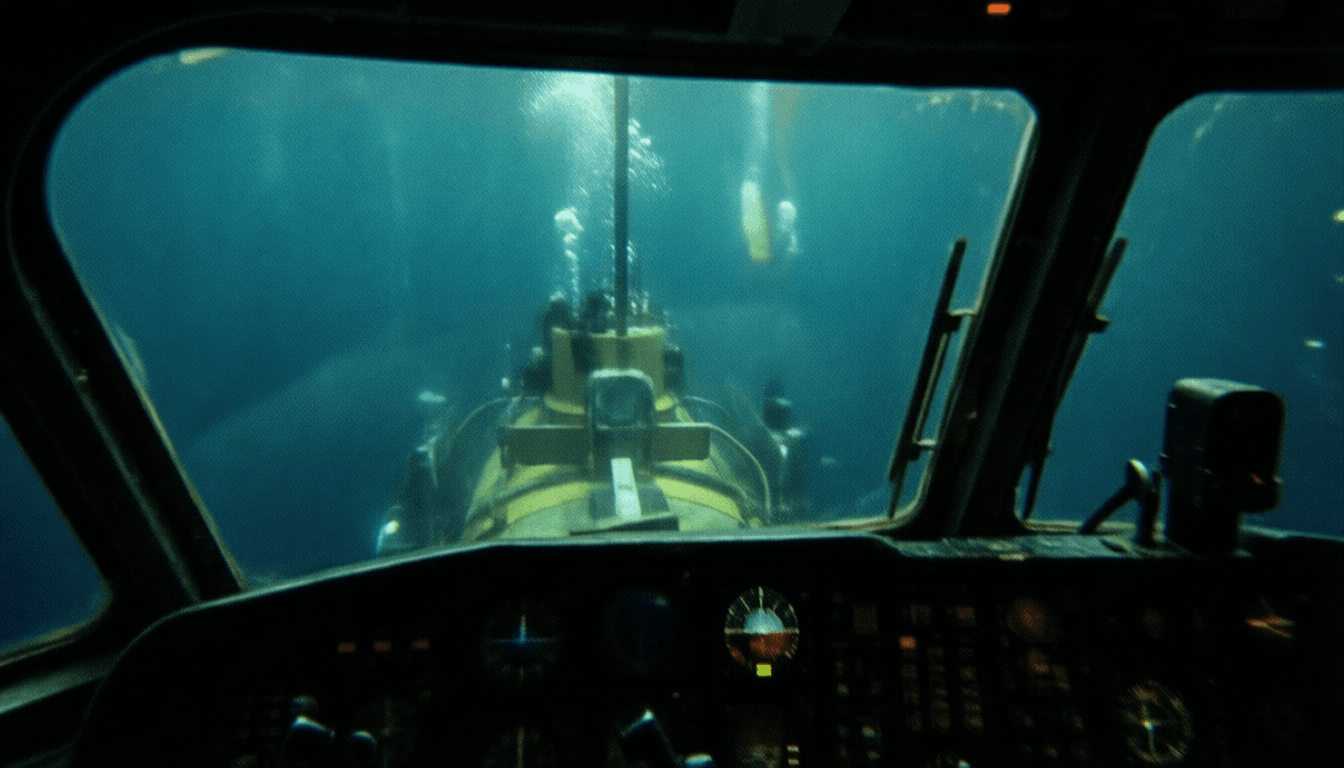
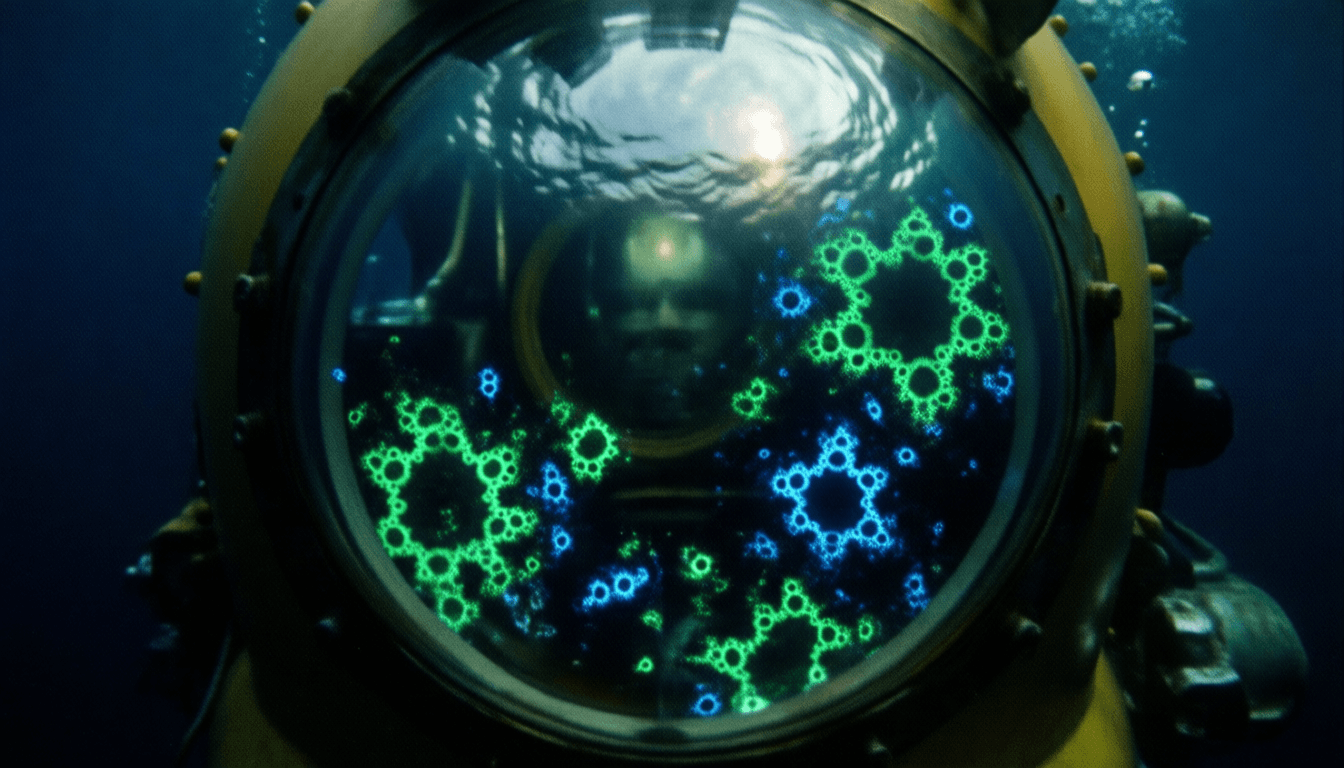
Past 200 meters, the bioluminescence began. Not a diffuse ambient glow, but intricate, vivid pulses of emerald and sapphire light danced across the submersible's viewport, forming complex, dynamic fractals. These patterns were not random plankton aggregations; they were eerily organized, reorganizing with precise intention, outlining the submersible's presence in light. Dr. Son's high-frequency acoustic array began to pick up a faint, resonating hum—layered harmonies that felt unsettlingly structured, like an encrypted data stream. He recorded the external water becoming still in specific zones, defying internal currents that should exist at this depth, creating perfect, glassy reflections that mirrored the glowing patterns. The pressure gauges, though stable, faintly pulsed in sync with the external light, registering phantom values attributable to no known system. His communication devices crackled with persistent static, occasionally resolving into short bursts of incredibly complex, digitally pure tonal arrays, which ominously matched the harmonic structure of the pervasive hum in the water. The deeper he went, the less the water felt like a fluid environment and more like a massive, reactive membrane.
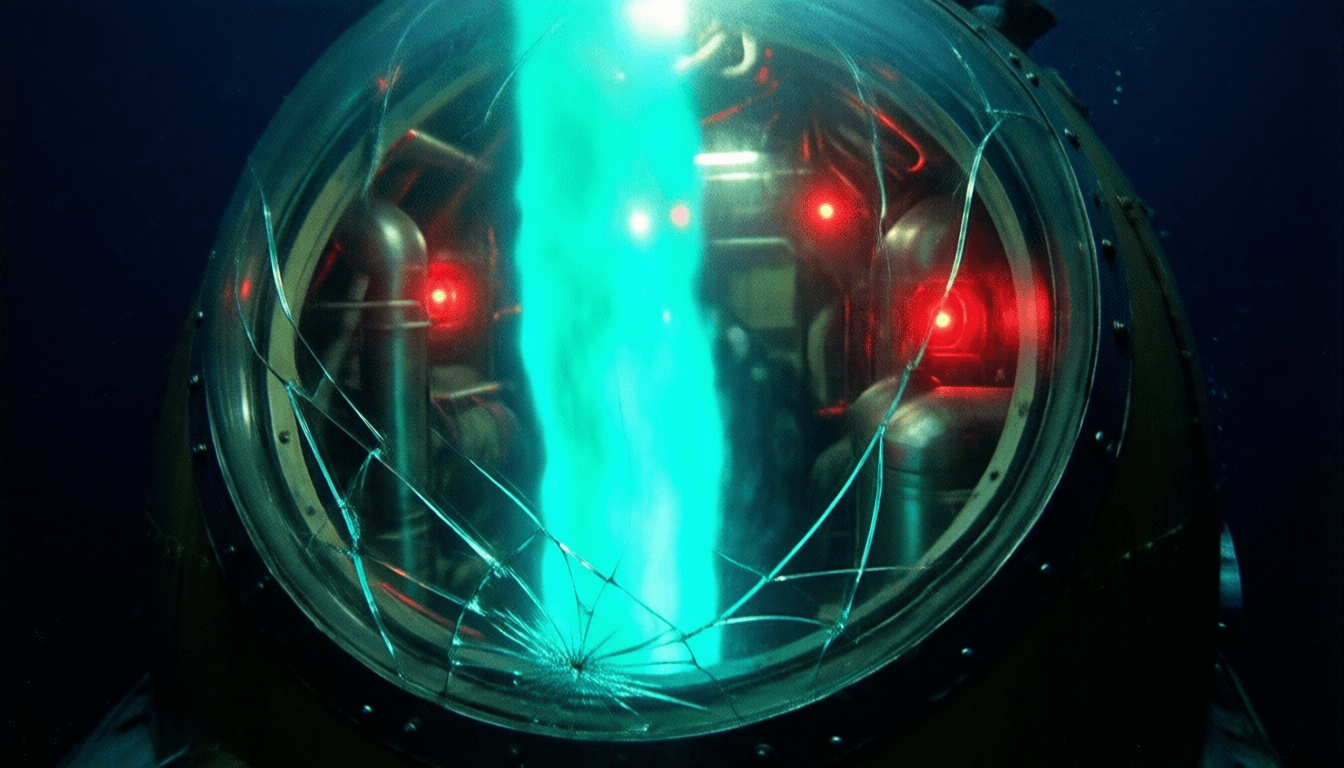
Dr. Son pushed deeper still, now drawn by a colossal, shimmering bioluminescent pillar extending into the black abyss. It pulsed with an almost magnetic rhythm. As Nautilus-II drew closer, the pillar flared, its light intensifying into a blinding emerald-blue inferno, overloading the external cameras. Simultaneously, the external resonating hum escalated into a deafening, multi-frequency shriek that vibrated the entire hull. Inside, emergency alarms blared, and the submersible's main thrusters ground to a halt. The external pressure intensified at a terrifying rate, not uniformly, but at precise, asymmetrical points, causing the Nautilus-II's reinforced hull to groan under an unholy torsion. Fine cracks spiderwebbed across the main viewport.
Then, a section of the bioluminescent pillar, now eerily dense and semi-solid, pressed against the viewport. It wasn't merely light; it was a physical entity, its glowing patterns reforming into a complex geometric lattice, as if scanning and evaluating. An overwhelming surge of high-density data flooded the Nautilus-II's systems. It wasn't information, but an invasive, probing query directly into his biological monitors, as if dissecting his very bio-identity. With a last, desperate surge of power from the emergency reserves, Dr. Son activated the ascent override. The Nautilus-II shot upward, tearing free from the comprehensive, intelligent grip of the light, the escaping vessel screaming as unseen forces scraped and gouged its exterior, leaving deep, impossible wounds. The last thing he saw before the viewport turned completely white with internal fractures was the bioluminescent pillar retracting, leaving a profound, almost sentient void in the water.
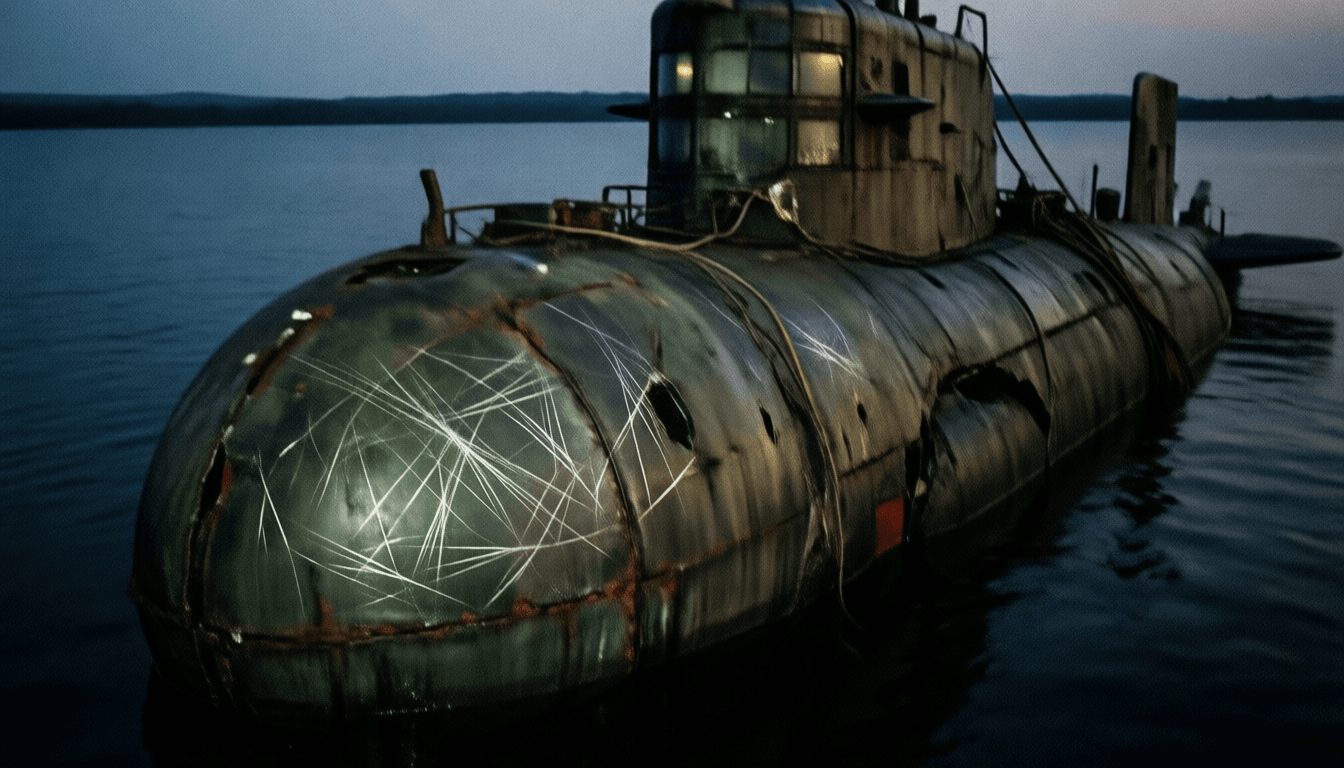
Dr. Son regained consciousness in the mangled wreckage of the Nautilus-II. It was a crumpled shell, its exterior covered in inexplicable, incredibly precise geometric scratches. All onboard data drives were corrupted, containing only an overwhelming noise punctuated by recurring, complex fractal patterns that precisely matched the bioluminescence he had witnessed. He was medically cleared, but now complained of a persistent, low-frequency hum that intermittently pulsed faintly and regularly in his ears, and an ominous hypersensitivity to ambient light. More disturbingly, his personal, completely offline communication device, recovered from his body, contained a single anomalous data file: a short audio clip. It wasn't static. It was the precise, multi-frequency query that had been directed at him, followed by a faint, sustained tonal sequence that was not a question, but an acknowledgment. He showed it to a trusted colleague, who, after reviewing the “impossible” file, attributed it to deep-sea psychosis and system data corruption. But Dr. Son knew.
He saw the subtly shifting fractal patterns in the reflection on the lake's surface, in the way the stars pulsed in a specific order above the water. The vast, dark lake no longer felt like a topographical feature. It felt like a single mind, fully aware of his presence, perhaps deeply interested. And sometimes, late at night, when the light caught his face just right, he could almost see the emerald-blue patterns glimmering deep within his own eyes.
[ CLASSIFIED VERDICT ]
[ACCESS LOG - SOURCE FILE]
For decades, unexplained phenomena such as sonar ghosts, power surges, and equipment failures have been reported in the deep waters of Lake Malawi. Local fishermen call this deep channel the 'Singing Abyss,' believing that mysterious lights lure boats into dangerous currents. This story explores a scientist's attempt to investigate these mysteries.