Loch Ness: The Monster Itself
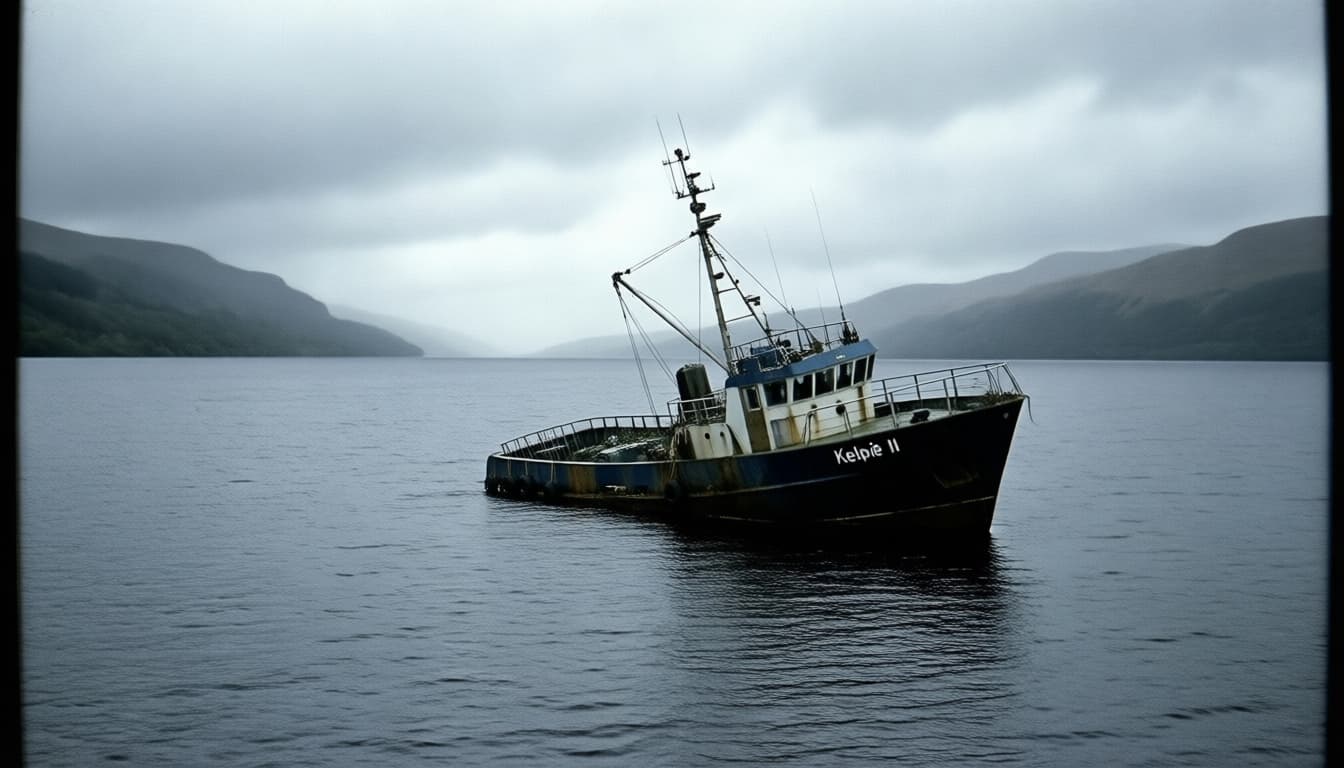
The first anomalies concerning Scotland's Loch Ness didn't emerge from blurry photographs or monster sightings. They materialized from the quiet, digitized depths of modern scientific exploration. Dr. Elias Thorne, a renowned deep-sea acoustician from the University of Aberdeen, embarked on a private expedition two months prior. His career was built on debunking maritime myths. His goal was to definitively prove the non-existence of an unknown colossal organism in the deepest trench of Loch Ness, which locals simply called 'The Black Abyss'. Dr. Thorne deployed a next-generation high-frequency sonar with unprecedented resolution. His last transmission, from a custom submersible at the exact coordinates of the abyss, was distorted and broken. "...unprecedented acoustic absorption... structured interference patterns... originating 250 meters down... impossible..." Then, silence. His research vessel, the 'Kelpie II', was found adrift days later, its power systems crippled, all electronics shorted. No trace of Dr. Thorne or his submersible. Official reports cited equipment failure and tragic drowning. Yet, the recovered black box contained a faint, rhythmic pulse before its final static state – unlike any known natural phenomenon or mechanical hum. A frequency that seemed to warp the recording medium itself, a chilling echo of something profoundly artificial beneath ancient waters.
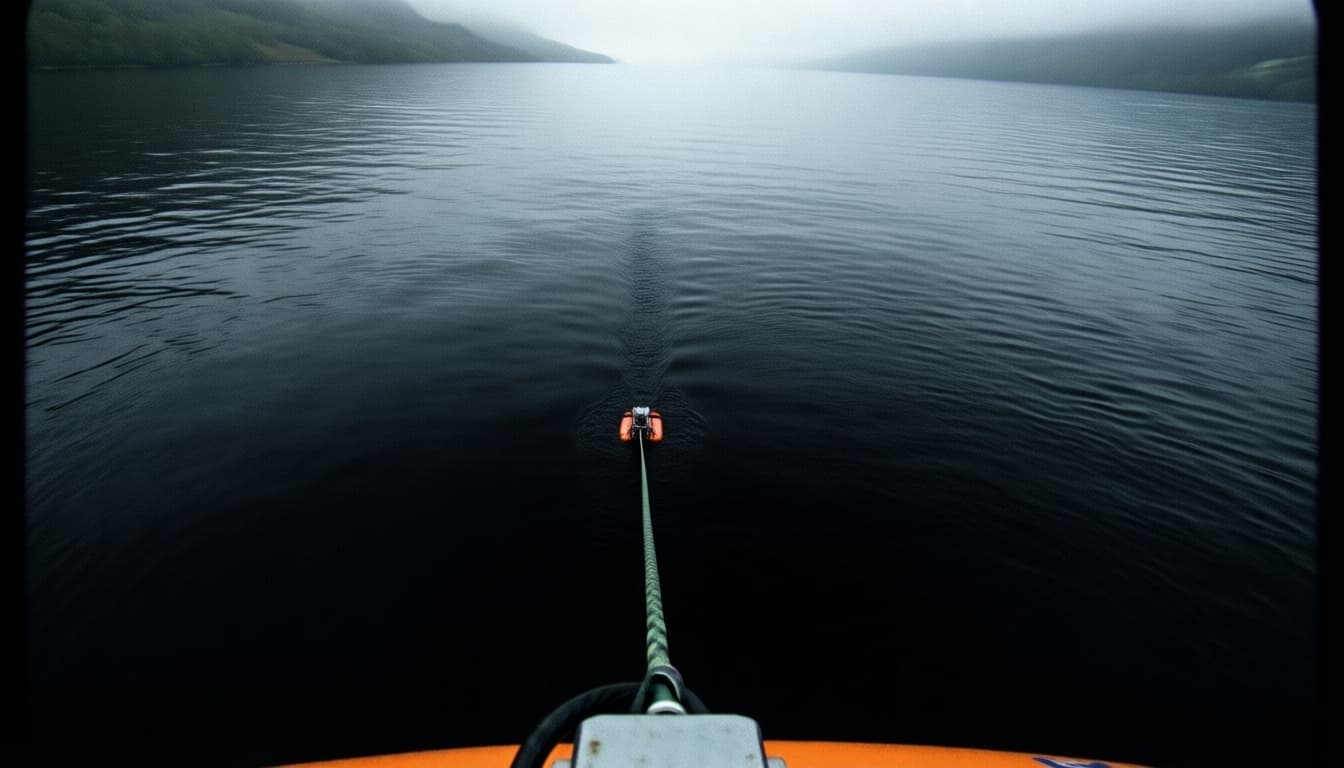
My vessel, the 'Greyfin', was considerably smaller but equipped with similar (though less advanced) deep-scan sonar and a remotely operated vehicle (ROV). I navigated the cold, grey waters of Loch Ness. The sky mirrored the lake's flat, steel-like surface. The air was still and heavy, pressing down on me. The loch itself felt less like a body of water and more like a vast, liquid tomb. Even in summer, the wind carried a chill that seemed to emanate from the water itself. There was an overwhelming sense of scale here – the distant shores receding, the surface stretching endlessly, the abyss yawning beneath.
My first sonar sweep, following Dr. Thorne's last known trajectory, revealed almost nothing. The bottom topography showed rugged, ancient formations. But what was immediately striking was the near-total absence of biological acoustic reflections in the deep. No fish schools, no large invertebrates. Below 150 meters, readings were unsettlingly barren, a stark contrast to most healthy deep-water environments. The loch was silent. Too silent.
As the ROV, 'Nessie's Eye', descended towards the coordinates of the Black Abyss, the silence deepened. My sonar pings, sharp and distinct in shallower waters, gradually faded, then began to subtly distort, as if the water itself was actively absorbing the sound waves. The ROV's thruster noise, usually a distinct hum through the hydrophones, grew faint, then vanished entirely, leaving only the dull clicks of its internal relays.
Inexplicable localized currents began to affect the ROV's trajectory. Subtly but persistently, it was pulled towards a darker, more irregular section of the trench, defying known geological maps. Its internal gyroscopes recorded erratic, impossible movements: drifting sideways against currents, sudden vertical drops without thruster input. Pressure sensors began to spike and plummet rapidly, indicating instantaneous pressure changes far beyond any natural displacement or thermal variation.
The 'Greyfin's hull responded with a faint groan to something massive moving below, vibrating through the deck and into my teeth. On the ROV camera feed, powerful deep-sea lights revealed strangely quiescent, almost viscous-looking pockets of water, in stark contrast to the surrounding fluid. These zones seemed to absorb light too, creating transient, fluctuating 'holes' in vision, pockets of absolute, anomalous darkness. The faint, rhythmic pulse from Dr. Thorne's black box, which I'd been replaying, now began to appear in my own sonar data. Not an echo, but a repetitive, structured pattern superimposed over the acoustic absorption. Too complex for random noise, too precise for interference. It felt like a signature.
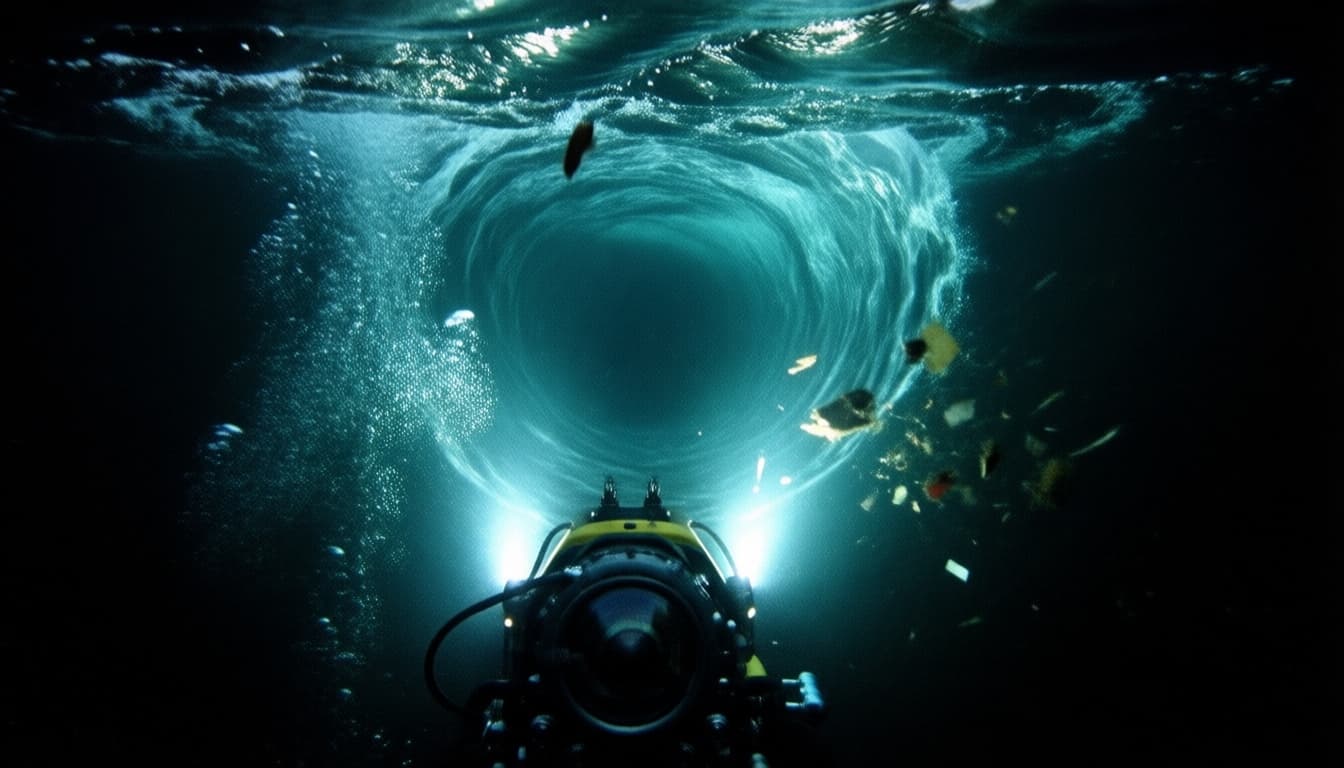
The ROV was now deep within the Black Abyss, its camera struggling against the deepening gloom. Suddenly, all contact with the hydrophones cut out. Complete acoustic silence. The ROV's camera feed flickered violently, then settled on an image that froze my blood. The column of water directly in front of the ROV was actively compressing. Sucking inwards, forming a visible void. Not a vortex. It was as if the water itself was being unmade, pulled into a singularity. Then the ROV was violently pulled into this collapsing column, its thrusters screaming uselessly against an impossible suction. I watched, frozen. The pressure sensor on screen redlined, then flatlined. The external temperature sensor recorded a rapid, localized, unexplainable drop to near-freezing, despite the ambient water temperature still being above zero.
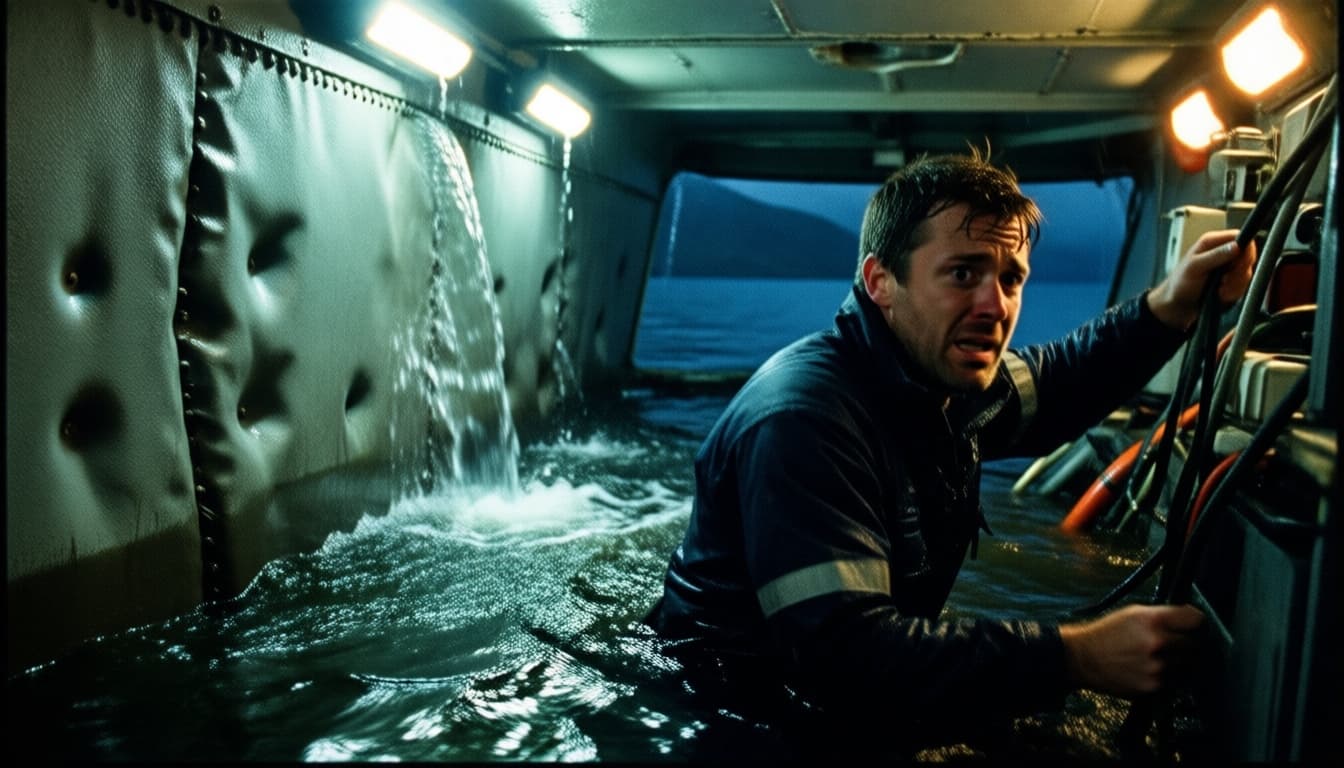
Then, a massive, directed pressure wave struck the 'Greyfin' from below, buckling parts of the hull with a sickening tear. Water began to leak, then poured into the engine room. The main power grid shorted, plunging the cabin into darkness, leaving only emergency lights. The ROV's last transmission was a distorted, agonizing metallic scream—the sound of the compressed water around it collapsing harder, crushing the vehicle. I fumbled in the dark, trying to restore power and stem the inflow. But then I felt it. The boat was being pulled downwards, slowly but inexorably, towards the Black Abyss. The engines, barely sputtering to life on auxiliary power, strained against an invisible resistance.
The hydrostatic pressure on the 'Greyfin's hull became immense, metal groaning, threatening to rupture. This wasn't a current. This was an intentional, directed force. When I desperately reactivated the sonar for one last, fleeting scan, what it briefly revealed was not a solid object, but a chaotic, swirling pattern of absence. A negative space in the water, impossibly dense, impossibly cold, a silent, predatory void expanding upwards towards my damaged ship.
I desperately managed to restore partial power, allowing me to break free from the immediate, overwhelming pull of the abyss. The 'Greyfin' limped back to shore, half-submerged, hull severely damaged. The ROV, of course, was gone. My official report to maritime authorities cited “extreme environmental hazards and irretrievable equipment loss.” I didn't elaborate further, refusing to speak publicly. The 'Greyfin's physical damage included distinct, deep indentations on the hull. Not from collision, but from immense, directed pressure, as if the water itself had focused into an overwhelming, impossible fist.
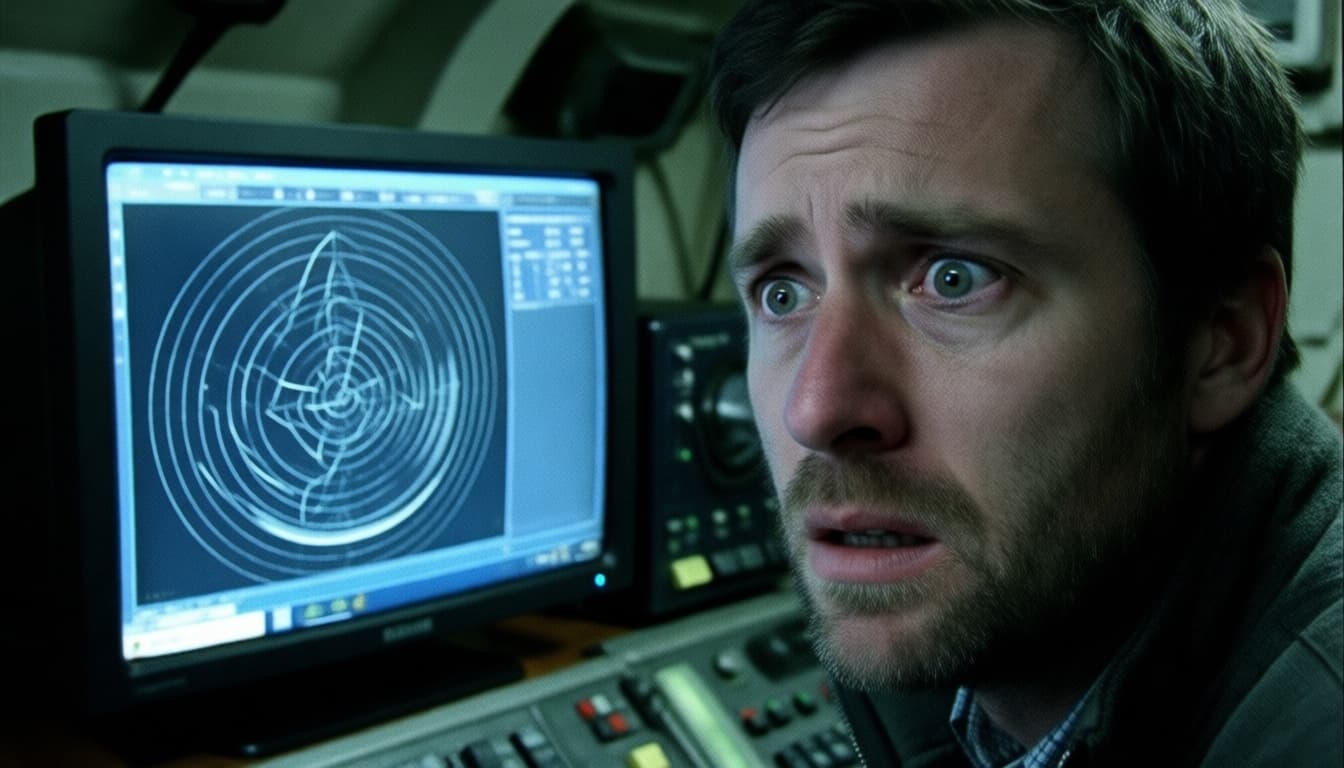
But what truly haunts me is the data. The brief moments of sonar data recovered from that frantic period, though chaotic, showed not random noise, but intricate, geometric patterns superimposed on acoustic distortions. A completely alien mathematical signature, too complex for natural interference. It was similar to the patterns Dr. Thorne had described, amplified and intensified. I huddle over my monitors night after night, analyzing the fragmented recordings. The rhythmic pulse from Dr. Thorne's black box now echoes in my mind. It's no longer just a sound. It's a signature. A terrifying realization: whatever is in Loch Ness is not a monster of flesh and blood. It is something far older, far more powerful, entirely beyond human comprehension. A localized, malevolent intelligence that carves reality itself. The Loch Ness Monster is not a creature in the water; the water itself has become the monster. The true horror isn't being devoured, but being unmade, the very physics of existence bent and broken by an unseen, unspeakable will. I saved myself, but I returned with a secret heavier than the loch itself, a truth that screams silence. And sometimes, in the dead of night, I still feel that cold, focused pressure on my chest. A phantom echo of the water's terrible embrace.
[ CLASSIFIED VERDICT ]
[ACCESS LOG - SOURCE FILE]
This story reinterprets the classic legend of an unknown giant creature living in Scotland's Loch Ness from a modern, acoustic perspective. Beyond a mere creature, it explores the chilling truth that the lake itself is an ancient, malevolent entity that distorts physical laws and carves reality. The narrative depicts the terror of an abyss that transcends human understanding.