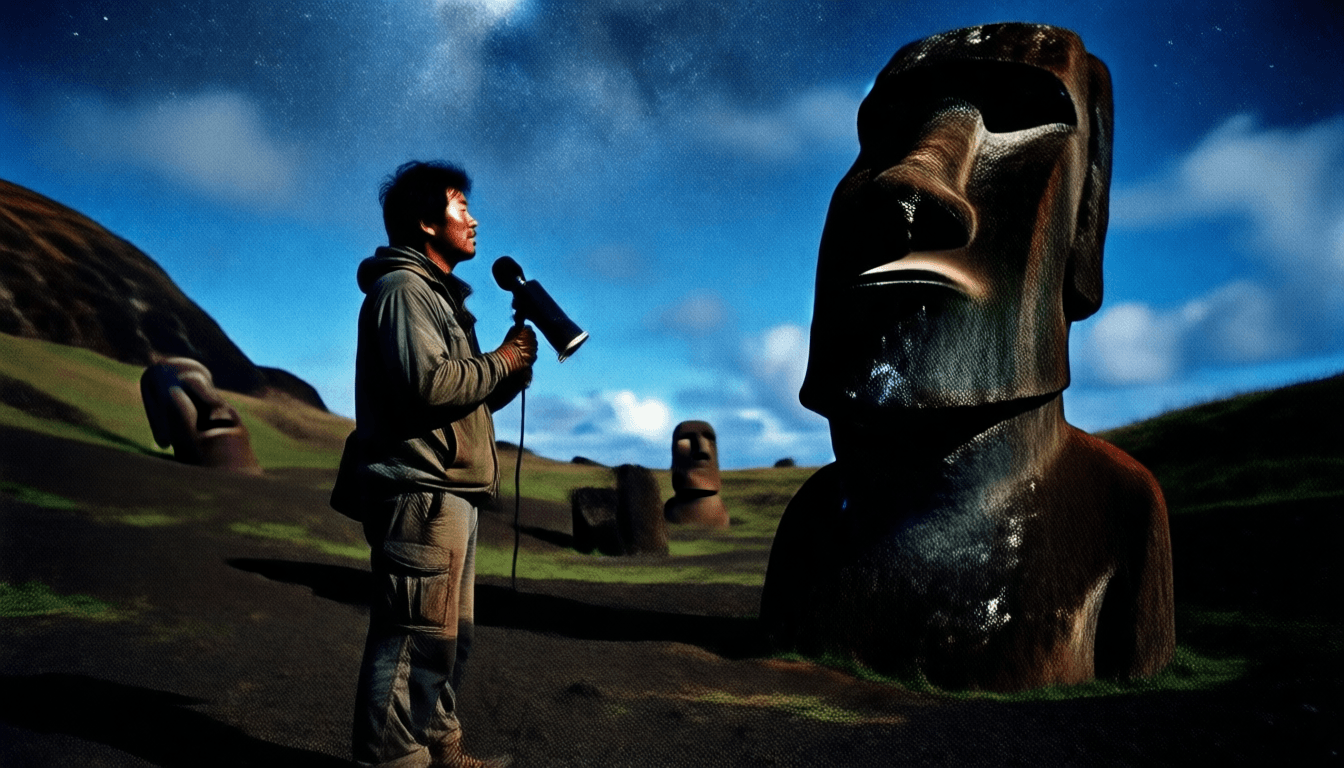
Living Moai: The Island's Heartbeat
A strange rumor began circulating on a subreddit dedicated to unexplained phenomena, sparked by a low-quality cellphone video. Taken by a backpacker near Ahu Tongariki on a moonless night, the video showed nothing particularly striking – just the colossal Moai statues of Easter Island silhouetted against a star-dusted sky. But in the final few seconds, one faint Moai in the distance seemed to move. It wasn't a shake. It was a barely perceptible, deliberate shift, followed by a sudden cessation of all ambient sound, then a magnificent, low thrum that reverberated as if from deep within the earth. The video was often dismissed as an optical illusion or digital manipulation. Nevertheless, the comment section, especially from accounts claiming to be Rapa Nui locals, offered more chilling insights: tales of 'aringa ora' – 'living faces' – from ancient legends, and an ominous warning that if the stones became angered, 'the island’s breath would cease.' The most intriguing detail was the repeated mention of a specific, rarely visited section of Rano Raraku, the Moai quarry, where several colossal, unfinished statues lay half-buried, described as 'asleep but uneasy.'
Drawn by the compelling incongruity of the video and the historical mystery of moving Moai, I arrived on Rapa Nui. Initial inquiries with tour guides or local authorities yielded nothing but polite skepticism or weary dismissal. Focusing on the persistent whispers, I located the specific section of Rano Raraku: a steep, rugged quarry, far from the main tourist paths, accessible only on foot. Here, massive Moai, some still partially embedded in the volcanic rock, seemed to be frozen in the act of emerging from the earth. The air here was different. Drier, heavier. I set up a remote camp, deploying time-lapse cameras, seismic sensors, a high-gain parabolic microphone, and thermal imaging equipment. My focus was particularly on a colossal, unfinished Moai known locally as 'Te Toka' – half-submerged in the quarry floor, its face perpetually shrouded in shadow. Initial data was uneventful. Typical seismic activity, wind patterns. The only remarkable physical detail was the extreme silence that frequently fell over this particular area, even when strong trade winds gusted elsewhere on the island.
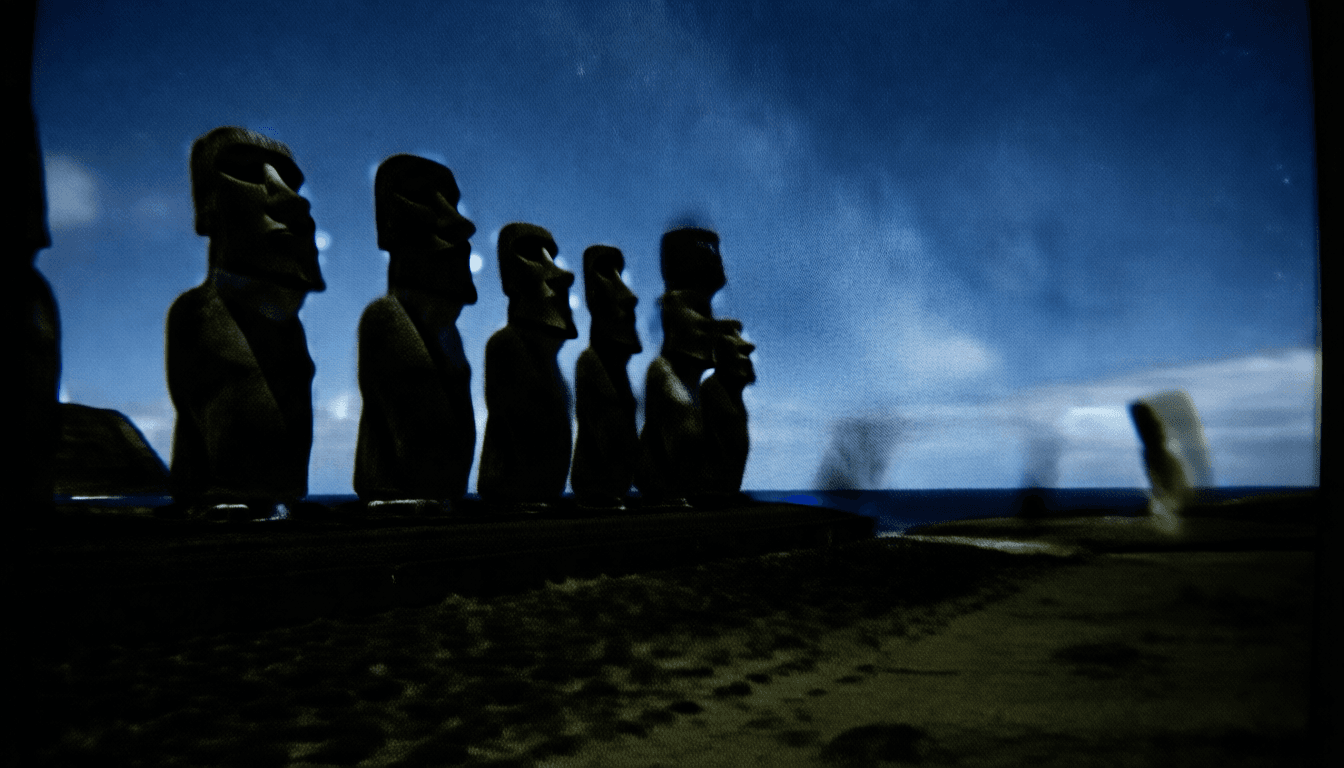
As night deepened, subtle anomalies began to manifest. The parabolic microphone, set to capture infrasound, intermittently began recording extremely low-frequency hums and thumps. These were not seismic events, nor were they wind sounds. They were deep vibrations, resonating from within the volcanic rock itself, particularly around Te Toka, felt just below the threshold of human hearing. They vibrated in my chest, rather than in my ears.
The surrounding environment was also unusual. Pockets of complete air stillness would appear around the giant Moai, causing the wind to abruptly drop, creating oppressive, unnatural voids of sound and movement. Conversely, sudden localized gusts would erupt, swirling dust around the statues without any external cause, only to vanish as quickly. GPS signals would become unstable near Te Toka, sometimes dropping entirely for minutes. My compass needle occasionally spun wildly. I increasingly felt a pervasive pressure in the air – a physical heaviness that seemed to emanate from the mass of the colossal stones, causing a slight sense of disorientation and a low, throbbing ache behind my eyes. The thermal camera intermittently picked up strange localized hot spots within the solid rock itself, flickering into existence and then fading, unrelated to solar radiation or geological activity.
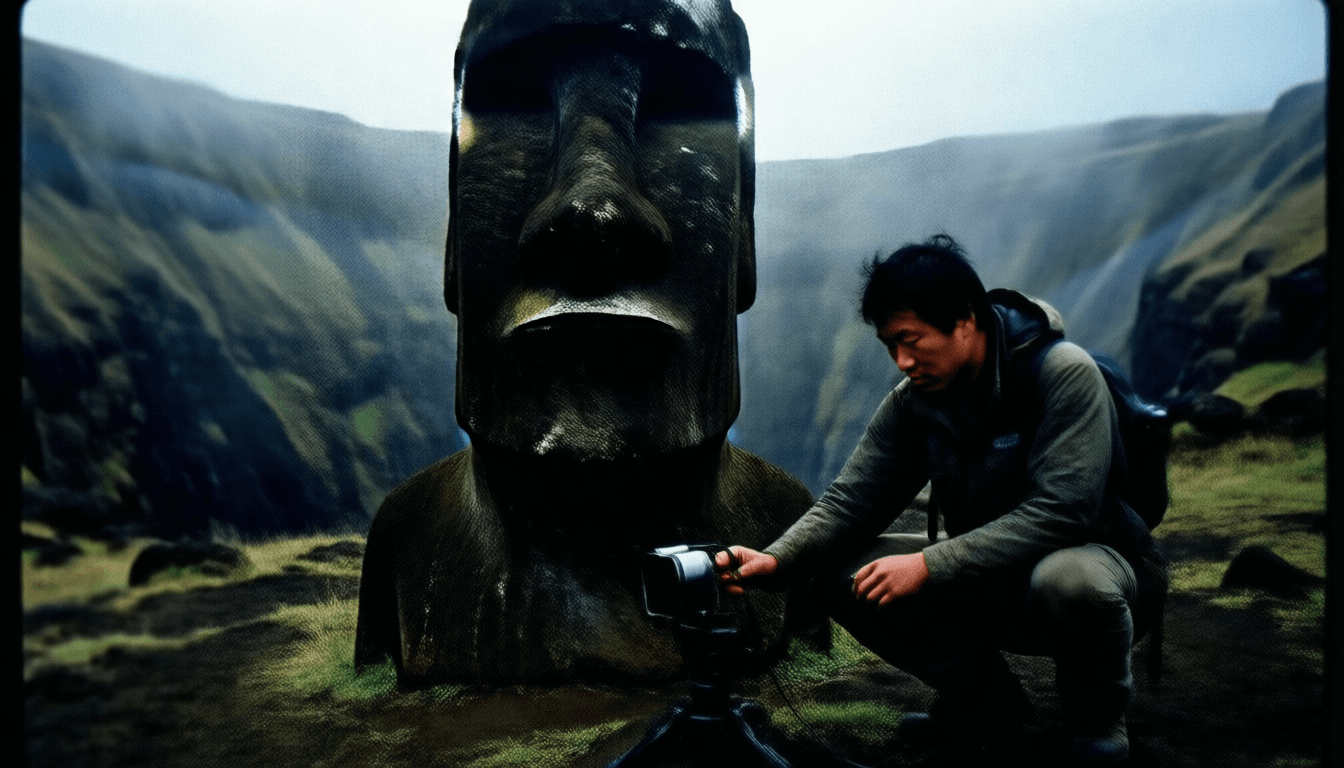
On one particularly dark, moonless night, the low-frequency humming intensified dramatically, becoming physically painful. A bone-rattling resonance filled the entire quarry. The ground beneath my feet began to shift, but it wasn't the uniform tremble of an earthquake. It was a localized movement, directly beneath Te Toka, as if a single, immense organ was beating. I stood near the base of the massive Moai, struggling to gather the rapidly escalating sensor data. At that moment, without warning, Te Toka, still attached to the quarry wall, began to move. It wasn't slow erosion or collapse. It was a deliberate, groaning rotation from deep within the rock, pivoting on an axis. The colossal stone head, previously facing uphill, slowly, agonizingly, began to turn downhill – directly towards me. The primal, immense force of the stone moving without any external agency was terrifying in itself.
As I scrambled desperately up the steep, loose quarry slope, the very ground beneath my feet responded to the Moai’s movement. Rocks and sharp volcanic pebbles began to cascade from above, not in natural descent, but as if propelled by an unseen, directed force emanating from the shifting megalith. A large shard of rock crashed down beside me, annihilating my main camera rig in a flash. Another smaller, heavy rock then pinned my left leg against a jagged rocky outcrop. Trapped and vulnerable, I was engulfed by the oppressive, vibrating air. Te Toka’s now-turned face seemed darker still, its hollowed eyes like black pits staring at my struggles. The overwhelming pressure and deafening hum made breathing painful, feeling as though my eardrums and internal organs would rupture. Adrenaline surged, and with a sickening crunch, I wrenched my leg free. A piece of my jacket remained, shredded, beneath the rock that had crushed me. I clawed my way up the remaining slope. The deep, resonant groan of the stone echoed my pained gasps, and I was certain Te Toka's 'gaze' followed me until I escaped its overwhelming aura.
I got out of the quarry. Bruised and shaken, my leg badly sprained, the normal sounds of the island wind and distant waves felt fragile and precious when I reached my vehicle. I reviewed the remaining data on my small emergency backup audio recorder. There was nothing dramatic on the video – just the dark, silent quarry and the impassive, unmoving Te Toka. But the audio was different. The clipped, distorted file contained a deep, resonant hum, far more intense than any previous recording. And buried within that overwhelming vibration, almost as a byproduct of it, was a rhythmic, percussive 'thump-thump-thump' – like colossal, slow footsteps echoing from deep within the earth.
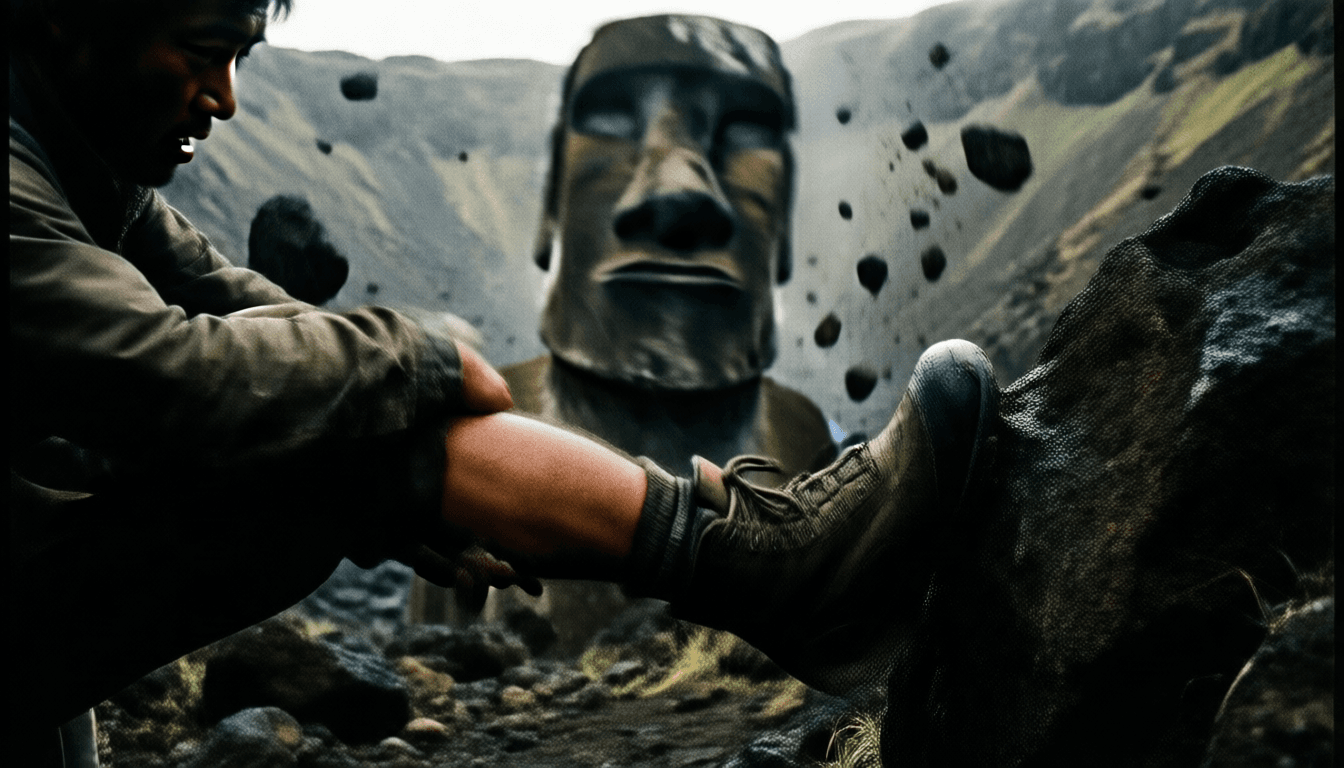
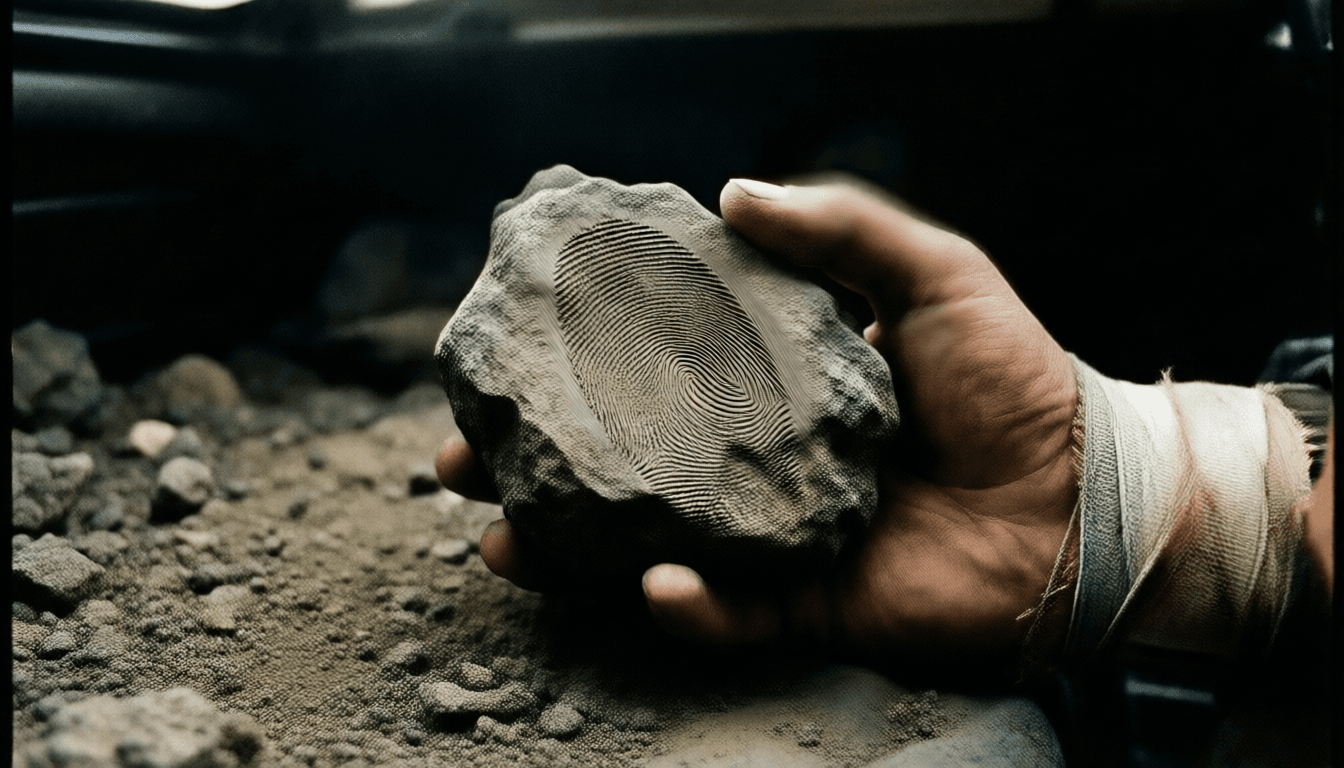
Later, as I tended to my injuries, I examined the small, jagged rock that had pinned my leg. It was covered in fine volcanic dust. On its surface, faint, distinct indentations were visible. Too regular to be natural erosion, too precise to be impact marks. They resembled the marks left by ancient carving tools, or perhaps, the imprints of colossal, unseen fingers that had gripped the stone. The next day, revisited in daylight, the quarry was again quiet, the air still heavy and motionless. It was as if the entire landscape had reverted to a vigilant dormancy. That once-dismissed viral video resurfaced online, suddenly receiving renewed, chilling attention. Now I understood. The Moai didn't just 'walk' in legend. They breathe. And the island, I realized with cold dread, remembers.
[ CLASSIFIED VERDICT ]
[ACCESS LOG - SOURCE FILE]
The colossal Moai statues of Easter Island are famous for ancient Rapa Nui legends claiming they have the ability to 'walk.' This story delves into these mysterious rumors, exploring the idea of Moai as living entities with a chilling warning that if angered, they could cause the entire island to cease breathing, along with whispers of unfinished statues hidden deep within the Moai quarry.