Jirisan Eoduksi-ni: The Mountain's Heartbeat
Whispers circling Jirisan National Park have grown louder over the past two years, accompanied by an unsettling series of disappearances. Experienced hikers venturing alone into the mountains vanished without a trace. No distress signals, no signs of struggle, nothing left behind except for their last known GPS coordinates. Local police reports consistently cited a general lack of evidence – no animal attacks, no signs of foul play. Yet, a darker narrative circulated on internet forums and within local communities: 'The Mountain's Silence,' 'The Presence in the Shadows,' and the whispered name, 'Eoduksi-ni.' Fragmented tales resurfaced of an ancient legend, a colossal bipedal entity said to guard the deepest reaches of the mountain. Its temperament was unpredictable, and few had ever glimpsed its form.
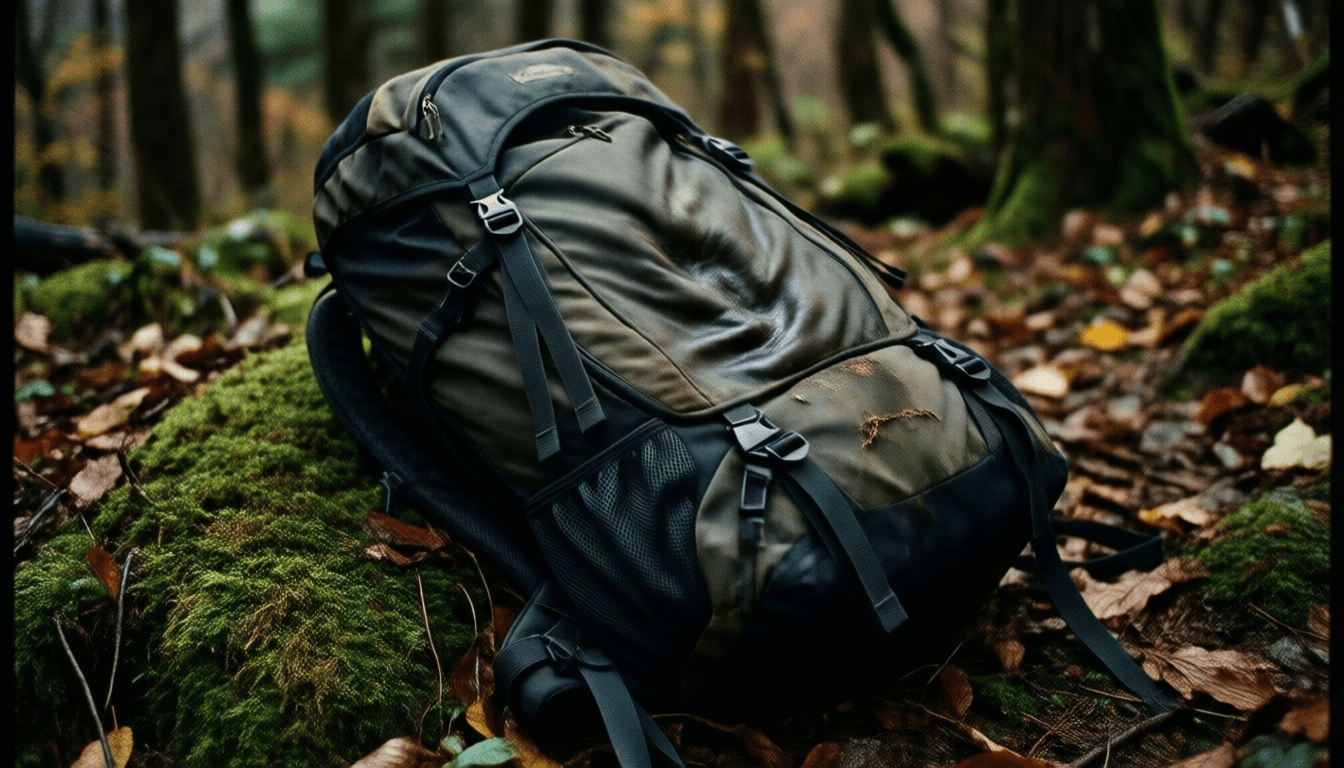
The decisive clue emerged six months ago with the discovery of botanist Professor Lee Min-jun's backpack. He had disappeared on an lesser-known western ridge of the park. The backpack was found over two kilometers from any trail, deep within an unmarked, dense primeval forest. It was perfectly preserved, its contents intact – save for one detail. A deep, elongated indentation marred its reinforced side. It looked as if a massive, broad force had pressed down. The material wasn't torn; it was merely compressed. There were no scratches, no teeth marks. It was as if a solid pillar had been pressed smoothly, yet with irresistible force. This bizarre 'compression mark,' too precise for a rockfall and too wide for an animal, triggered my investigation.
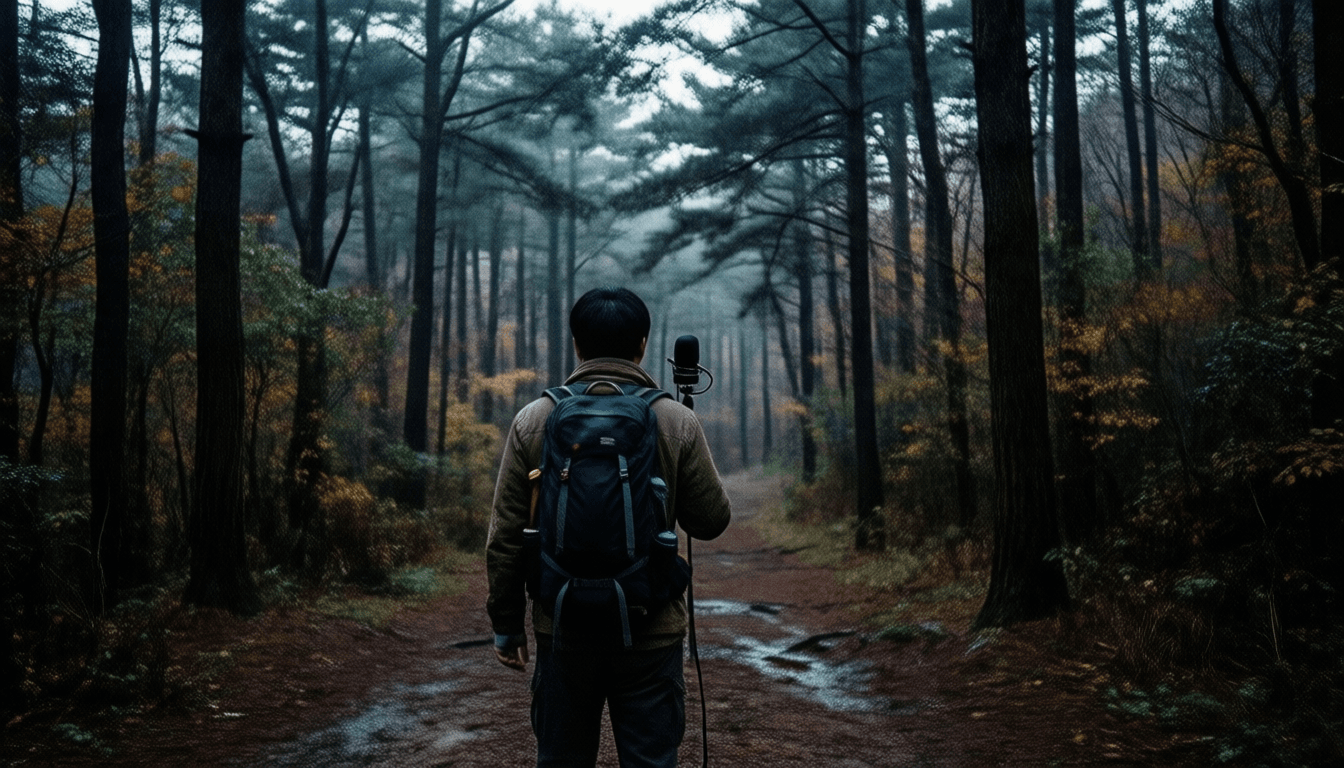
I entered the mountain via a remote Jirisan access point, known to be Professor Lee Min-jun's last explored area. Despite late autumn, the air was thick with the scent of pine and damp earth. My objective was to follow the professor's partial GPS logs, tracing his probable route. The logs showed an unusual, lengthy deviation into an area known as 'Gaegurigol' – Frog Valley – an infamously steep and barely mapped ravine system. The hiking path soon devolved into dense undergrowth and faint game trails, the canopy above so thick that sunlight was filtered into perpetual twilight. An oppressive silence dominated, save for the crunch of fallen leaves underfoot and the faint distant gurgle of a stream. It felt less like an absence of sound and more like an active suppression. I carried a directional microphone sensitive enough to detect minute atmospheric disturbances, and a high-resolution thermal imaging camera, to pick up any heat signatures or anomalies beyond visible range.
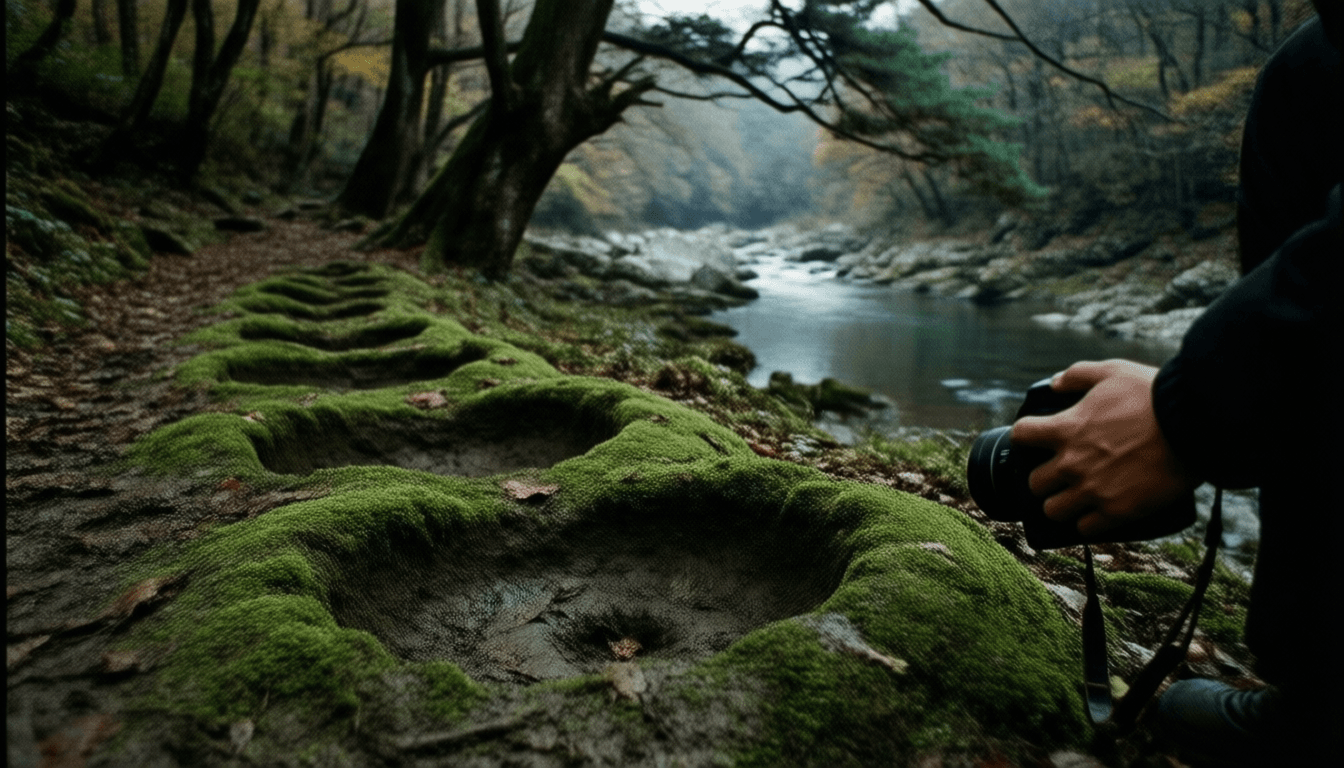
As I delved deeper into Gaegurigol, the silence intensified. The directional microphone began picking up strange, low-frequency reverberations. Intermittent, almost infrasonic, these sounds seemed to vibrate through the soles of my feet rather than my eardrums. It felt as if the earth itself was humming, with no clear point of origin. I dismissed it as geological activity, perhaps distant seismic tremors, but the rhythm of the hum felt... deliberate. Further in, a small, normally babbling stream appeared abnormally still and glassy transparent in certain sections, despite the clear incline. And then I witnessed it: a series of subtle indentations in thick moss. Too large, too evenly spaced to be from common forest animals. No distinct claw or hoof marks, just broad, smooth impressions, as if something immense had pressed down and lifted. These indentations snaked their way through dense thickets impenetrable to humans, leading deeper into the ravine. According to my sensors, the ambient temperature in this particular zone had dropped several degrees – an isolated cold spot contradicting surrounding environmental data. A feeling of being meticulously watched crept up my spine. The air seemed to grow heavy, viscous.
Following the enigmatic indentations, I found myself confined within a narrow, canyon-like section of Gaegurigol. Sheer rock faces rose on either side, ancient trees clinging precariously. The low hum intensified, becoming a full-body vibration. I was examining a particularly deep indentation near some broken branches, too thick to have snapped from mere wind. Then, a thick, deep sound erupted. It wasn't a roar. It was a low-frequency shockwave that pierced my chest, temporarily blurring my vision as well as my hearing.
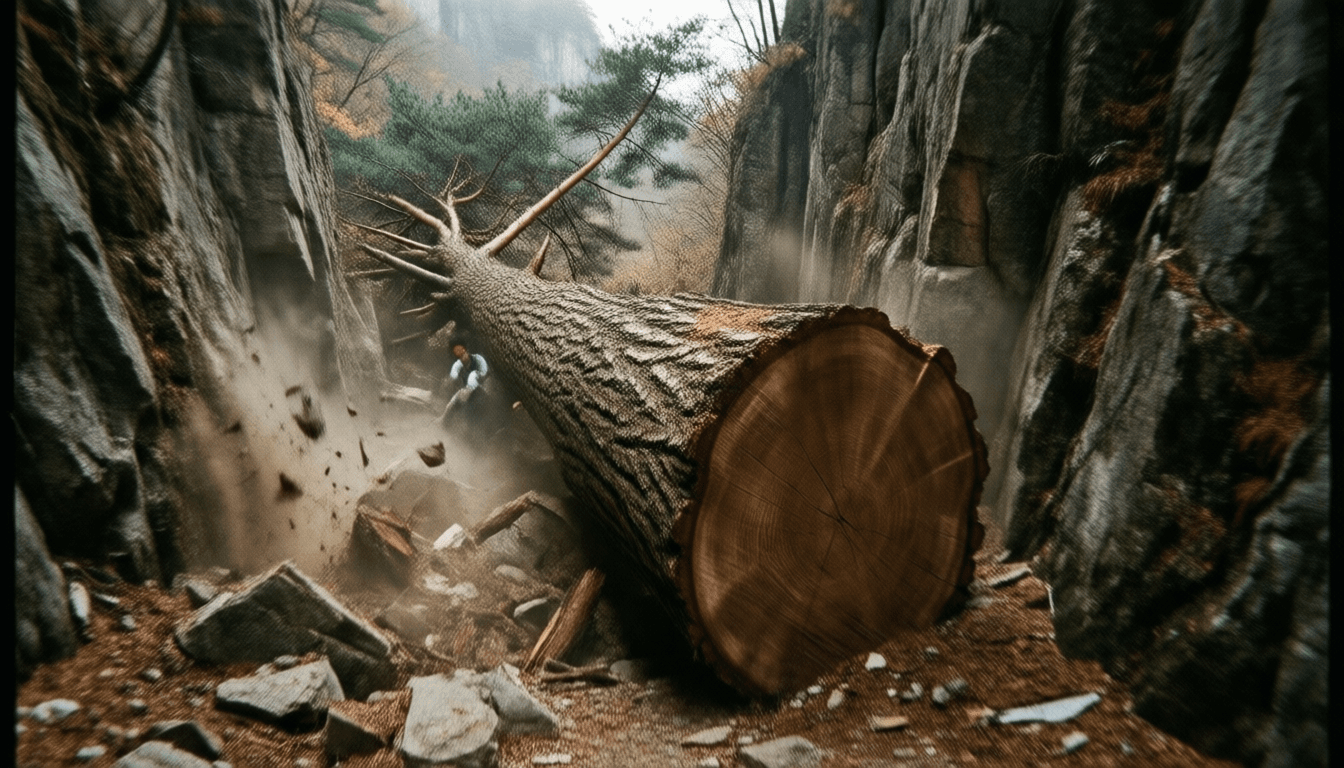
Suddenly, the ground beneath my feet gave way slightly. A section of the rock face to my left, composed of earth and loose stones, began to collapse inward, as if an invisible, immense force was pressing from the opposite side. Simultaneously, my escape route was blocked by a groaning, colossal pine tree – a stump easily a meter in diameter – which fell across the narrow gorge with abnormal speed and precision. I was trapped.
I desperately scrambled for an opening. As I squeezed myself into a barely visible fissure between two massive boulders, a crushing pressure slammed into my back. It wasn't a direct impact, but a broad, overwhelming force, as if the mountain itself was closing in, pushing me deeper into the cold stone. Air was violently expelled from my lungs. I tasted blood. There was no specific point of contact, just the sensation of being held and compressed by an intelligent, impossible weight. The hum became a violent tremor, dislodging more stones. A surge of primal adrenaline allowed me to wrench myself free, perhaps dislodging a crucial small rock to trigger a temporary release. I tumbled through the fissure and down a short, steep incline. Scraped and bruised by sharp stones, I had escaped by a hair's breadth. I didn't see it. I only felt the immense, deliberate pressure and the profound, physical distortion of the environment around me.
Wounded and bleeding, I stumbled out of Gaegurigol, but I was alive. The journey back was a blur of pure instinct and terror-driven motion. My ribs were bruised, my back laced with deep scrapes, but a more terrifying realization had taken root within me, far surpassing the physical injuries.
Days later, reviewing the data in my office, the horror deepened. The directional microphone's recordings from the climax were corrupted, filled with random static and undecipherable low-frequency rumbles. Yet, in the earlier 'eerie' phase recordings, something was there. Beneath the natural forest sounds, the subtle, rhythmic hum I had dismissed as geological activity was now clearer, more distinct. It wasn't random. It had a rhythm, slow and impossibly deep, like a heartbeat.
Even more chilling was the thermal imaging camera data. A single, innocuous-looking frame captured deep in the ravine, just before the climax event, revealed an anomaly. Peeking from behind the gnarled trunk of an ancient oak, a vertical thermal signature was visible. Approximately three meters tall, strikingly broad, with no discernible radiating heat – as if the entity was absorbing the ambient thermal energy. A perfect, dark silhouette against the faintly glowing forest. It was there, and in the next frame, it was gone.
My camera lens, made of high-quality, impact-resistant glass, bore a hairline fracture. It wasn't a star-shaped crack from a direct impact. A single, clean line spanned across the lens, as if immense, invisible pressure had been applied, bending the glass just enough to crack it without shattering.
The Jirisan disappearances remain officially categorized as 'missing persons.' But I know what silenced Professor Lee Min-jun, what left those inexplicable broad indentations in the moss. It doesn't hunt with teeth or claws. It hunts with the mountain itself, moving with impossible silence and force, bending the very fabric of the environment to its will. The Eoduksi-ni isn't merely an unidentified animal. It is a vast, silent power, a living extension of Jirisan. And the mountain, I now realize, had eyes. And it knew I had seen.

[ CLASSIFIED VERDICT ]
[ACCESS LOG - SOURCE FILE]
This story is based on 'Eoduksi-ni,' an ancient legendary being said to guard the deepest parts of Jirisan. Eoduksi-ni is described as a colossal bipedal entity, known to hunt intruders by manipulating the mountain itself to its will. Few are said to have ever seen its form.