Jaya's Unsolved Memories
The meticulously documented Shanti Devi case from the 1930s remains a foundational text in reincarnation research. The young girl from Delhi accurately recalled details of her past life in Mathura, validated by multiple official investigations. Her memories were clear, a mere continuation of consciousness, and harmless. However, less well-known records that followed often contain darker, more intrusive narratives.
What caught my attention was a series of articles, originating in a local Indian newspaper and spreading to online forums for paranormal research. They detailed the case of seven-year-old Radha Sharma, living in the remote village of Haripur in Uttar Pradesh. Initially, her story paralleled Shanti Devi's: vivid recollections of a past life as a woman named Jaya, who lived in a village 100 kilometers away. Radha used adult vocabulary, describing minute details of Jaya's home, family, and daily routines. Unlike Shanti Devi, however, Radha’s memories were punctuated by an unsettling emotional intensity, often leading to extreme distress. She would frequently scream, describing overwhelming fear and an ultimate, suffocating darkness, stating, "She never got to leave. She couldn't." The most compelling and shocking detail, however, was her assertion that Jaya's life had not ended naturally but with a sudden, unexplained disappearance 20 years prior – a cold case unsolved by anyone in the neighboring region. Local police reports confirmed the unresolved disappearance of Jaya Singh in 2002. This wasn't a past life. This was an unresolved ending, spoken through the lips of a child.
The journey to Haripur began under a relentless October sun. The village was a cluster of sun-baked mud-brick homes and dusty paths, far removed from modern civilization. Radha’s family, a quiet farming couple, greeted me with a mix of resignation and hope. They were bewildered by their daughter's transformation. Radha, a small, unremarkable girl, gazed at me with unsettling serenity. When I inquired about "Jaya," her demeanor shifted. Her eyes, which moments before held a child's innocence, sharpened with an adult's intensity. She spoke of Jaya’s husband, Virendra, her two children, specific household items, and the path she walked daily to fetch water. Her details were precise, corroborated by older villagers who remembered Jaya. The unsettling part was not just the accuracy, but the presence. It was as if Jaya herself was observing through Radha’s eyes, speaking through her voice. Radha would occasionally shiver or rub her left wrist, despite no discernible cold. “She was always cold there,” Radha stated, a remark with no logical context for a child raised in this climate. I made a note of Dampur, the specific village Radha identified as Jaya’s former residence. It was a smaller village, two hours drive away, and the true epicenter of this phenomenon.
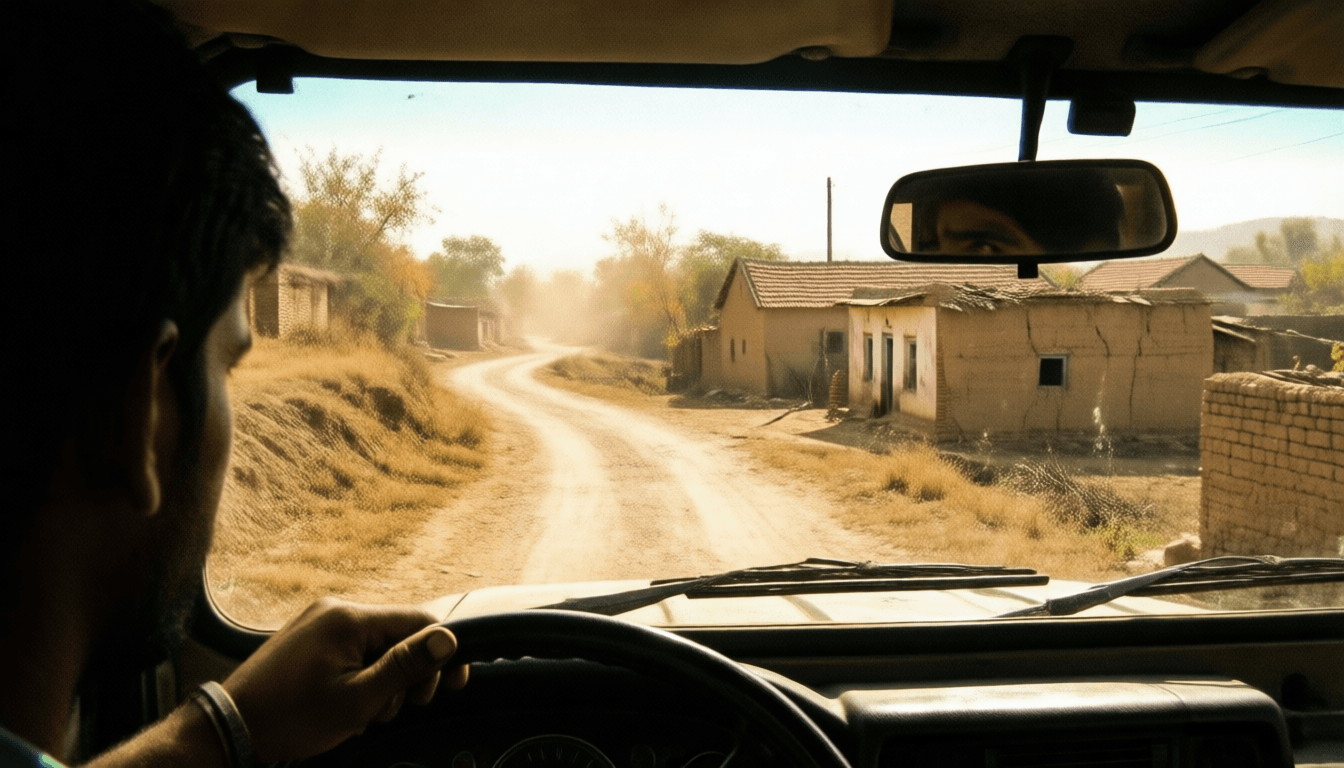
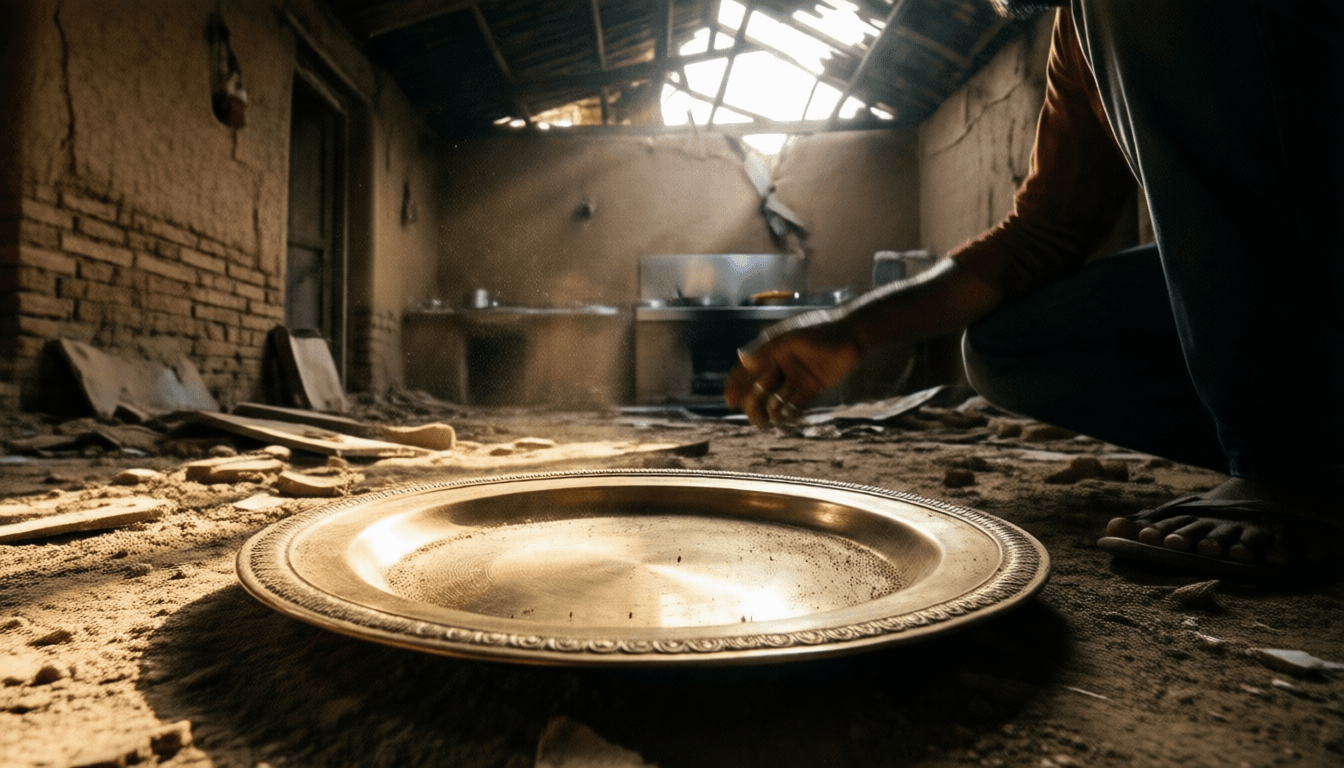
Dampur was even smaller than Haripur, a scattering of dilapidated homes. Jaya’s house stood at the edge of the village, partly collapsed and long abandoned. The air around it was heavy with dust and the smell of decay. A thick, unnatural silence pressed down, amplifying the sound of my boots crunching on dry leaves and the distant caw of a crow. Inside, the house was a ruin. The roof had partially caved in, its skeletal remains open to the sky. Dust lay thick, untouched for years. I moved through the empty rooms, the low sun casting long, shifting shadows. In what Radha had identified as the "kitchen," a single, ornate brass plate lay half-buried in the rubble. It was strangely cold to the touch, despite the scorching heat outside. As I picked it up, a faint, almost imperceptible whisper seemed to brush my ear. It was like the rustling of dry leaves, yet localized and internal.
I tested the acoustics of the space. When I spoke, my voice sounded oddly flat, absorbed by the walls, almost instantly gone. There was no natural echo. Yet, when I dropped a stone, a faint 'clink' was followed by a peculiar, delayed resonance, like a phantom echo arriving a second too late, overlaid with what sounded like suppressed gasps. In what would have been the living room, I found an old, faded photo album, wedged beneath a loose floorboard. The name "Jaya Singh" was scrawled on its cover. As I opened it, a sudden, sharp drop in temperature enveloped me. The air grew heavy and damp, despite the arid conditions. A distinct floral scent, like old jasmine, filled the small space, overriding the dust and decay – the very perfume Radha had described Jaya as favoring. A deep, melancholic dread, not my own, washed over me, a feeling of being utterly lost and abandoned. A subtle, momentary pressure registered on my left wrist – precisely where Radha had rubbed earlier. The psychological intensity was escalating.
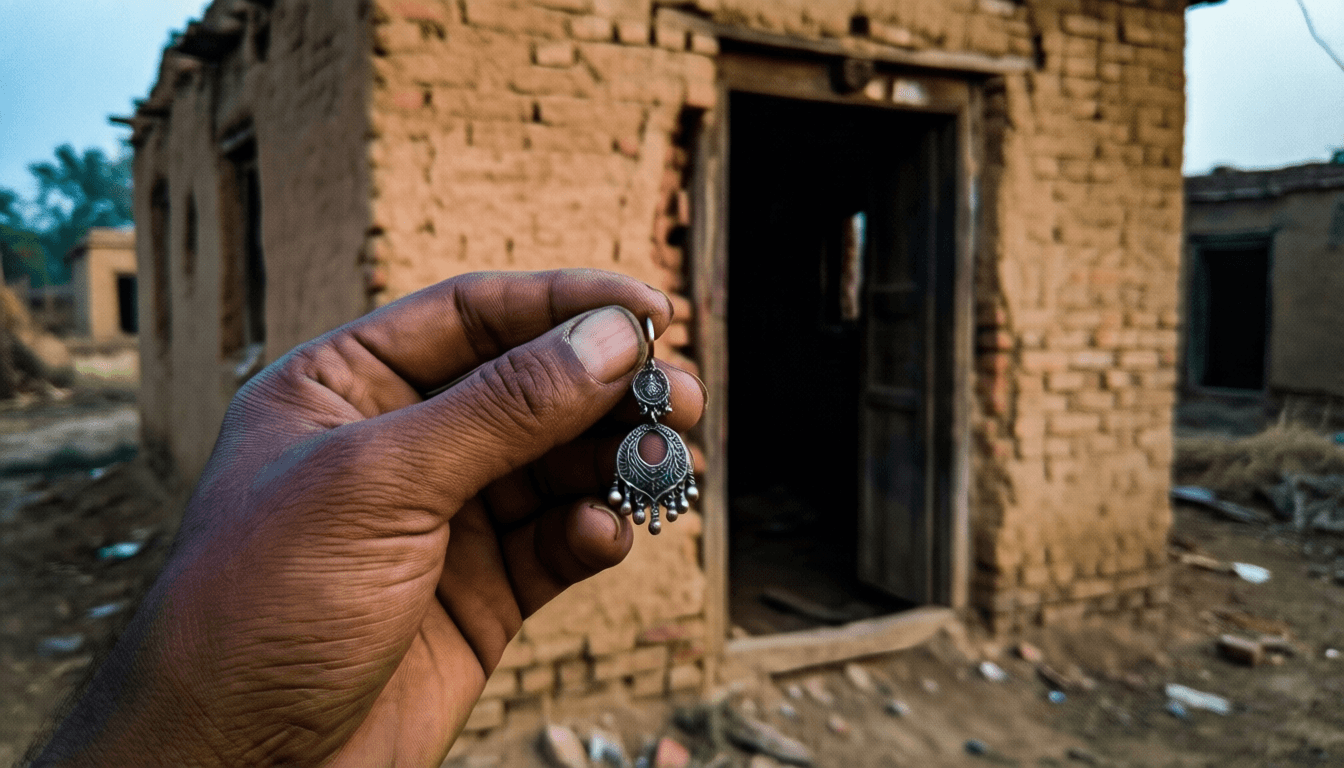
I returned to Jaya’s house as dusk deepened, drawn by a sense of unease and unfinished business. The air was now much colder, the silence absolute. From the album, I retrieved a small, discolored silver earring – the distinctive piece of jewelry Radha had described as Jaya's favorite. I held it in my hand, perhaps thinking it might serve as some conduit. The moment I stepped into the central courtyard, an oddly localized gust of wind slammed the rotten wooden main door shut behind me with a resounding crash. The sound echoed, but instead of fading, it seemed to hang, then reverse itself. A faint 'thump' warped the quiet. I rushed to the door, but the warped wooden gate was now inexplicably jammed shut. It felt as if an ancient bolt had slid into place, though no such mechanism existed.
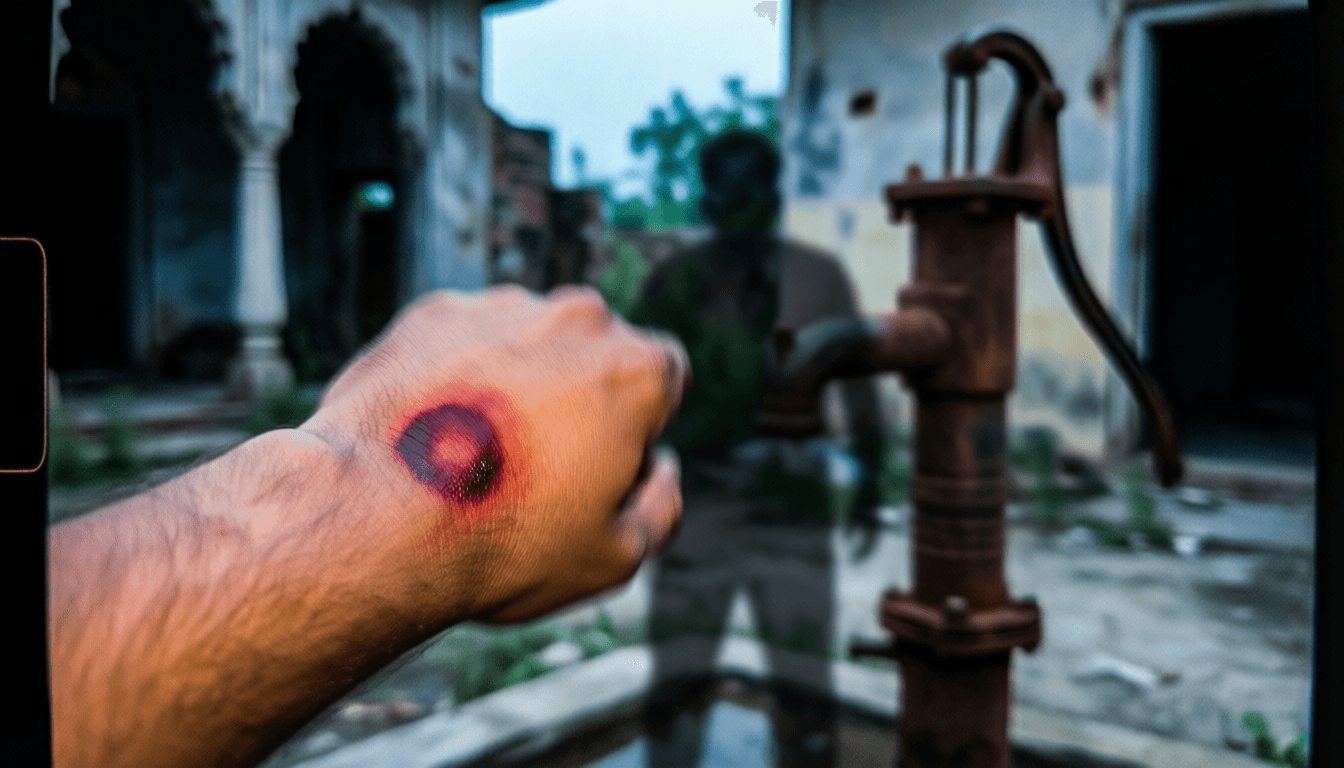
In one corner of the courtyard, a dripping sound began. Water started gushing from the old, rusted, long-dry hand pump. But the water didn't fall to the ground. From the nozzle, it defied gravity, rising upwards in a thin, shimmering column before collapsing back into the pump's throat. It wasn't the sound of water gushing; it was the sound of something thrashing, of choking. A cold, raw terror began to set in. I tried to open windows, but they were firmly sealed by some unseen force. The temperature dropped further, condensing my breath. In the darkened corner of the courtyard, where the water pump now gurgled unnaturally, a deep shadow began to coalesce, vaguely forming a human shape. It wasn't distinct, not a ghostly apparition, but a void that seemed to suck the moonlight into itself. And then came the physical manifestation. The air around me grew dense, suffocating. An immense weight pressed down on my chest, making breathing impossible. My limbs felt heavy and unresponsive. An icy cold, incredibly strong hand clamped onto my left wrist – precisely where I'd felt the pressure before. It wasn't just cold; it was a burning agony, like frostbite and a brand simultaneously. Not a whisper, but a choked, guttural scream tore through the silence. Not from the shadow, but inside my head. It was a frantic, terrified shriek: "Virendra! No! Not here! The well... the well..." The words were Jaya’s, the terror her own.
I struggled against the invisible shackles. The earring in my hand grew searingly hot, then shattered, fragments digging into my palm. A surge of adrenaline, born of pure primal fear, allowed me to twist free, the unseen grip tearing at my skin. I stumbled backward, crashing through a section of the rotten back wall and falling, scraped by splintered wood and jagged stones. I scrambled out into the open, gasping for air, the cold clinging to me like a shroud. I did not look back.
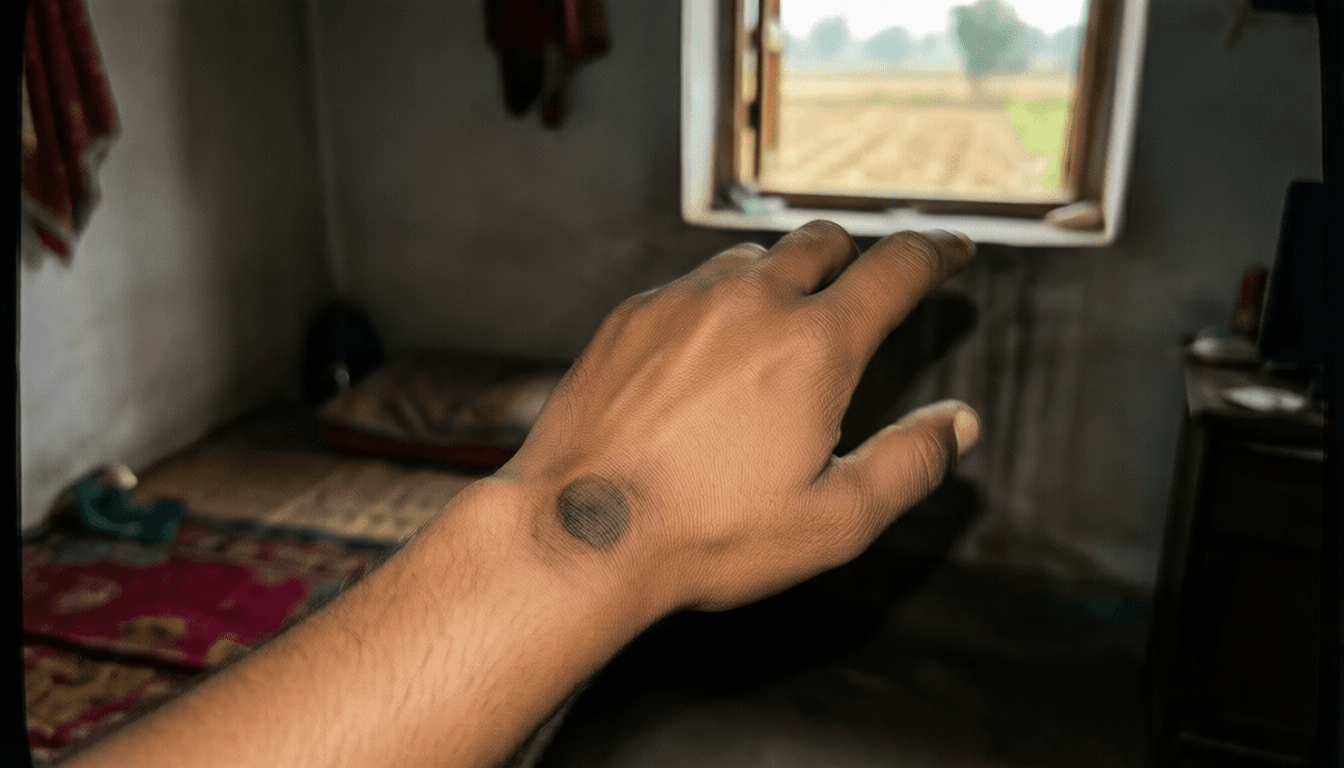
I escaped Jaya’s house with deep lacerations on my forearm and a distinct, circular burn mark on my left wrist – a vivid, blood-red imprint where the unseen hand had clamped. My medical report stated "abrasions and second-degree thermal burns of undetermined origin." There had been no fire, no chemicals. A week later, Radha Sharma’s family contacted me. They reported that Radha's "Jaya" episodes had almost entirely ceased. Her eyes had regained their childlike innocence. She was quieter, calmer, but the unsettling clarity and adult intensity were gone. The villagers believed the "spirit" had finally found peace, or moved on.
I completed my official report on Anomaly A-729, detailing all objective findings, all corroborating testimonies. The subjective experiences were framed as "hypothetical psychological phenomena under extreme environmental stress," a necessary deception for institutional acceptance. I made no mention of the water rising against gravity, the echoing sound reversing, the suffocating pressure.
But the experience remains. Sometimes, in the quiet of my office, a faint, sweet scent of jasmine briefly appears, then fades. My left wrist has healed, yet in certain climatic conditions, it still aches with a deep, bone-chilling cold. More profoundly, I experience intrusive thoughts, fleeting images that are not my own: the specific crack patterns on an earthen pot, the exact angle of afternoon sunlight through a doorway, a deep, unwavering fear of dark, confined spaces.
And sometimes, in the dead of night, my left hand instinctively fumbles for a locket that isn't there, and my lips form a word I didn't know before Haripur, a name tasting of despair and betrayal: "Virendra." The well. Those words echo, not from my memory, but from a deeper, colder place within me. A place where the unresolved, restless Jaya Singh might have finally found her way out.
[ CLASSIFIED VERDICT ]
[ACCESS LOG - SOURCE FILE]
This story is based on the myth of reincarnation, where young children are born with memories of a past life. Specifically, there are verifiable cases, like the Shanti Devi incident, where details of a past life are confirmed. However, this narrative goes beyond simple memories, delving into a darker and more terrifying reincarnation tale where the unresolved past of a tragically disappeared person intrudes into the present.