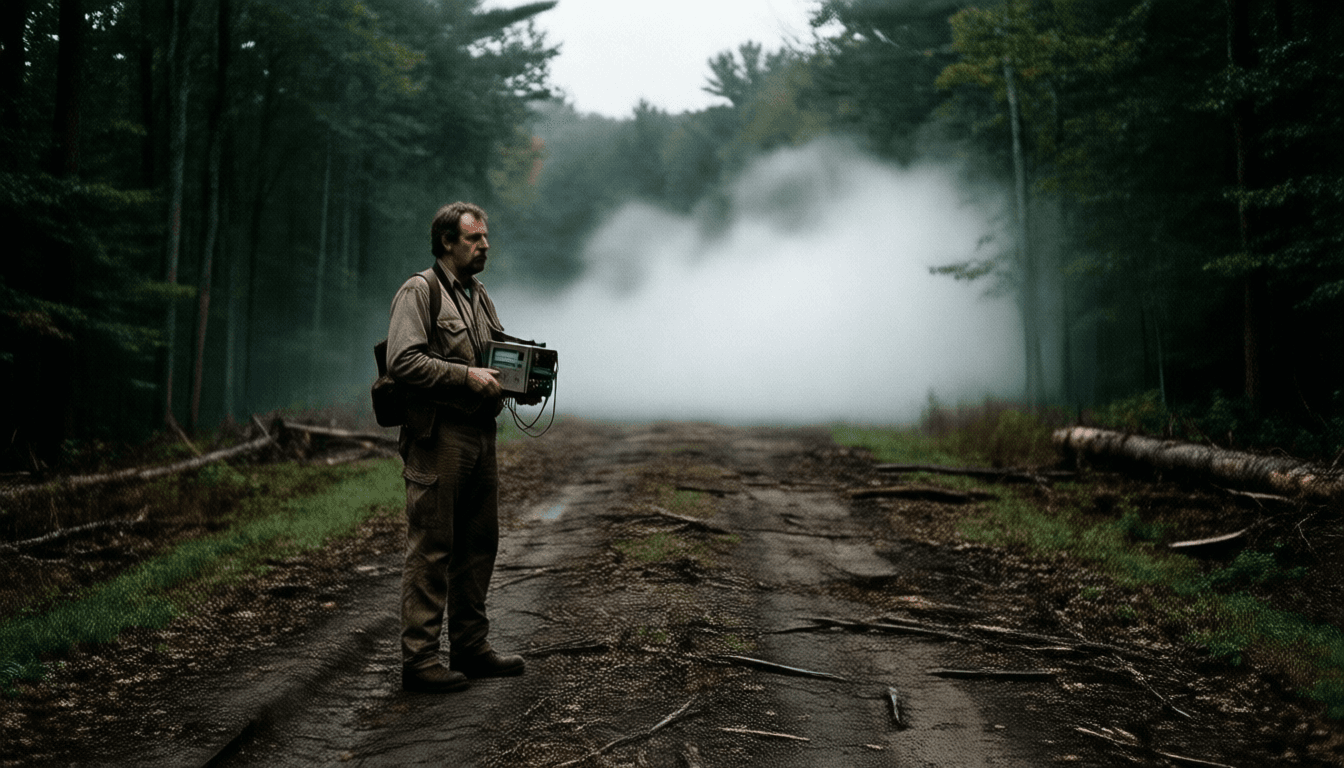
Heart of Sutter Creek Pocket: The Living Fog
Records of the 1952 Flatwoods Incident have been referenced countless times in our archives, often dismissed as mass hysteria or misidentified phenomena. My investigation, however, shifted its focus from historical analysis to the contemporary recurrence of the phenomenon. Over the past 18 months, I have been tracking a series of localized, inexplicable agricultural failures and livestock deaths reported within the ‘Sutter Creek Pocket’ – a small, bowl-shaped valley roughly 15 miles south-southwest of the original Flatwoods site, characterized by unusual geothermal activity and subterranean water systems.
These incidents were consistently accompanied by farmers' reports of a distinctive ‘metallic ozone’ smell preceding crop blight or animal illness. More recently, widespread, low-frequency humming sounds have been increasingly reported, audible only under specific atmospheric conditions. Local authorities attributed these phenomena to soil contamination or rare zoonotic diseases, but private online forums and hushed local anecdotes spoke of an ‘entity’ moving silently within the night fog.
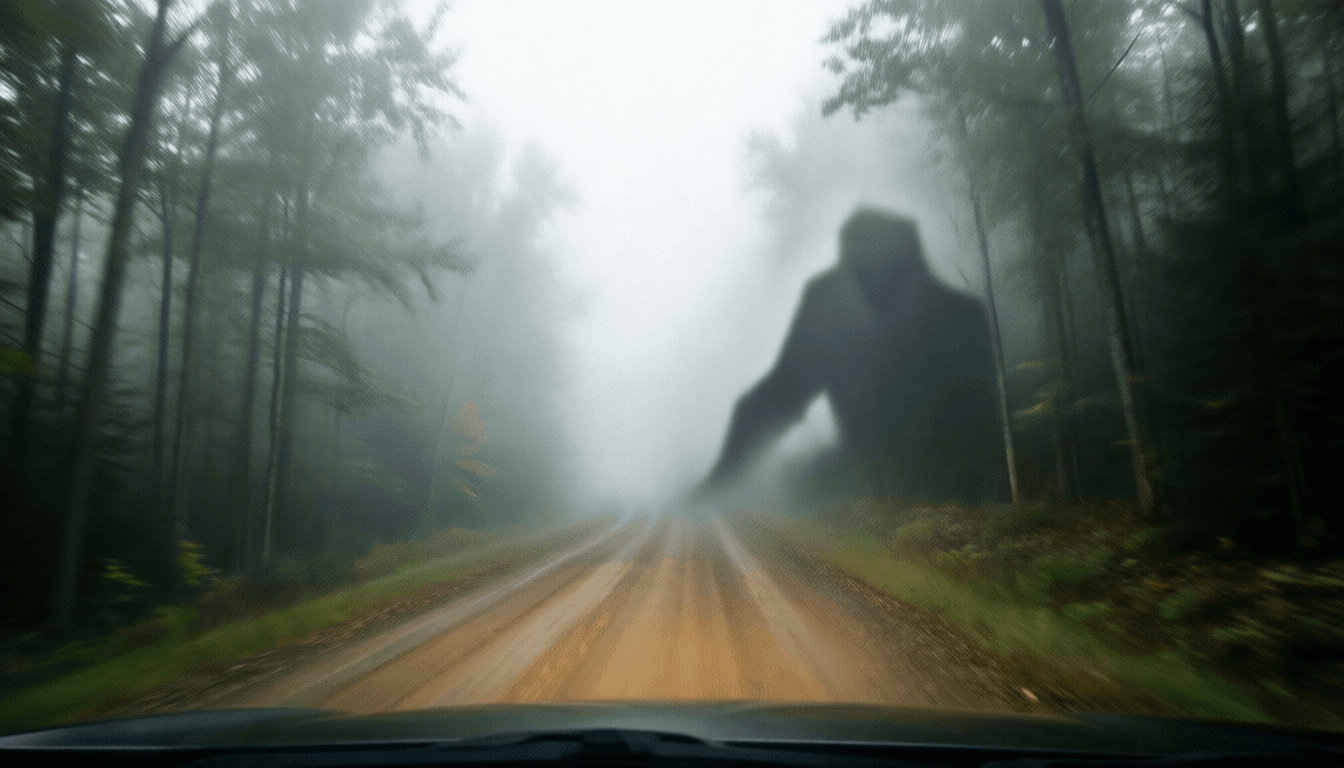
The most compelling evidence emerged from a deep web forum post: amateur dashcam footage uploaded by a local farmer. Filmed during a pre-dawn commute through a heavily fogged Sutter Creek, the low-resolution video briefly showed a faint, large, dark silhouette at the edge of the road before it seemed to vanish into the vapor. Crucially, its outline appeared abnormally sharp and distinct against the blurring fog, rather than fading. It was as if the fog itself recoiled from it. Local news dismissed it as a lens flare or a deer, but the specific geometric irregularities of the silhouette were enough to warrant direct investigation. The pattern matched historical descriptions of the ‘Flatwoods entity’ too closely to ignore.
As an independent archivist specializing in geophysical anomalies linked to regional folklore, I prepared for an overnight observation. My equipment included a high-sensitivity Geiger counter, a wideband acoustic recorder, portable atmospheric sensors (monitoring gas composition, pressure, and humidity), a thermal imaging camera, and a high-luminance spotlight.
The approach to the Sutter Creek Pocket followed winding, poorly maintained logging roads. The landscape transitioned from deciduous forest into a denser, almost primordial Appalachian wilderness. On a cloudy afternoon, as I hiked the final mile into the valley, the air grew noticeably heavier, thick with humidity and the damp scent of decaying leaves and rich peat soil. A profound stillness enveloped the area; no crickets, no birdsong, only the soft drip of condensation from the dense branches above. A faint but distinct metallic ozone smell began to permeate the air.
I established a discreet base camp just outside the perceived boundary of the Pocket. As I advanced into the valley floor, my atmospheric sensors recorded subtle, erratic fluctuations in barometric pressure and gas composition: elevated CO2 levels, trace sulfur compounds, and anomalous oxygen readings. Despite the summer afternoon, the temperature felt several degrees colder than the surrounding ridges. The ground was unsettlingly soft in places, unexpectedly firm in others, as if hiding solid rock just beneath the topsoil.
Darkness fell quickly in the valley. A localized, dense fog began to roll in from the deepest part of the Pocket, moving with an eerie slowness against the faint wind direction I had observed earlier. This was no typical wispy mist. This vapor was too dense, too uniformly white, moving with an almost deliberate cohesion.
Then, the hum began. A deep, ultra-low frequency thrum vibrated not just in the air, but through the very ground, resonating painfully in my chest cavity and inducing a light, persistent nausea. It waxed and waned in an erratic rhythm.
I deployed the thermal imaging camera. The fog itself was cold, yet around the ancient, twisted oak trees, inexplicable hot spots flashed and vanished within the vapor, entirely contrary to principles of thermal dissipation. My previously dormant Geiger counter began to click erratically, registering extremely low but persistent radiation spikes.
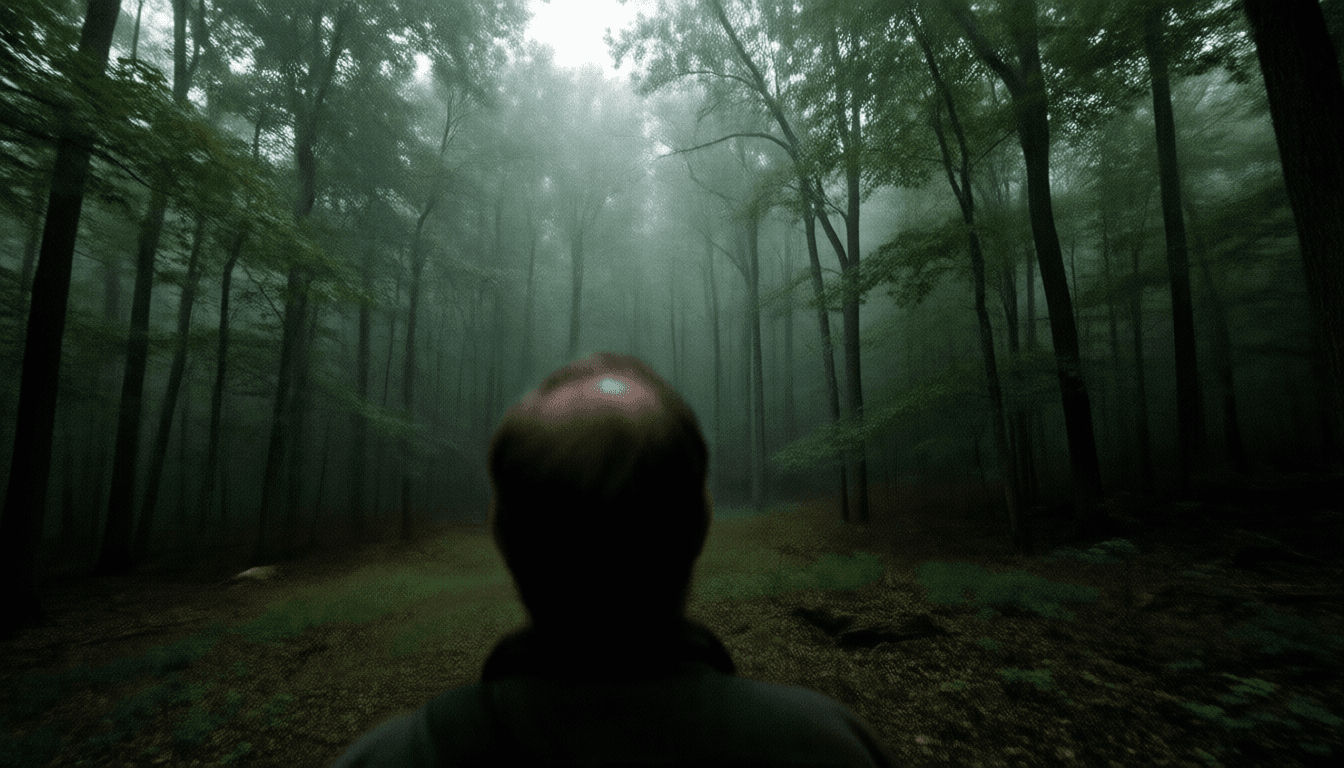
I aimed my high-luminance spotlight into the encroaching fog. The light did not penetrate. Instead, it seemed to be absorbed or refracted in an abnormal way, creating distorted, elongated shadows that danced independently of my beam. In the deepest parts of the vapor, I glimpsed ‘glowing points’ – not individual eyes, but faintly vibrating bio-luminescent dots deep within the white mist, seemingly moving in unison. The small creek, previously babbling, was now unnaturally still, its surface reflecting the oppressive white of the fog like polished metal, with almost no visible water flow.
Drawn by a sudden, intense wave of light and a painful crescendo of the hum, I pressed deeper, feeling the suffocating pressure of my mask filter. The fog rapidly thickened around me, tightening its grip, crackling with an indescribable, metallic ozone scent.
The hum amplified into a deafening, agonizing roar that vibrated through my skull. The fog around me suddenly stirred, coalescing inward, feeling physically heavy and constricting. I tried to retreat, but the ground beneath my feet instantaneously became swampy and unstable, then solidified with alarming speed, gripping my boots. I was trapped. A massive, invisible pressure bore down on me, forcing me to my knees.
Within the fog, directly before me, the ‘glowing points’ proliferated and merged, forming not individual features, but a pulsating, diffuse bio-luminescent field, vaguely vertical and column-like. Light bent around this cohesive field, creating a terrifying illusion of a sharp, angular ‘head’ and ‘ कंधे’ – resembling the distorted silhouette from the dashcam footage. The air around me crackled distinctly, thick with the smell of ozone and burning metal.
This was no mere environmental effect. It felt like a sudden, localized gravity well had formed. I was crushed to the ground, immobile, my chest screaming for air. My equipment malfunctioned. The atmospheric sensors flatlined, the Geiger counter shrieked then died, and my phone screen melted inward. The fog began to burn my exposed skin – a strange electrochemical reaction that felt like searing frostbite. All ambient noise vanished, leaving only the agonizing hum in my skull and the frantic pounding of my heart. I felt a cold, utterly non-physical sensation; a deep, indifferent pressure settling into my mind. It wasn't malicious, but overwhelming and alien – as if something was examining me with an immense, unknowable force.
In a final, desperate burst of adrenaline, I managed to yank one leg free, feeling a sharp tearing pain in my calf muscle. This sudden, violent movement seemed to momentarily disrupt the localized field. As the crushing pressure infinitesimally eased, I was able to half-crawl away from the pulsating column of light and burning fog. I collapsed, gasping, just outside the densest vapor, skin blistering, ears ringing with an extreme high-pitched tinnitus. Slowly, painfully, the hum began to recede.

Screaming from the pain in my body, I half-crawled back to base camp, almost unconscious. I barely reached my vehicle and escaped the valley, leaving the Pocket behind in impenetrable darkness.
Days later, I was recovering from severe chemical burns, mild but persistent radiation sickness, and a deep, continuous tinnitus that still echoed in my ears. My equipment was ruined. Many components had internally melted or deformed, indicating extreme localized heat and electromagnetic interference. My dashcam footage from the escape showed only a static-ridden blur of white fog.
A week after my return, an obscure report from a local amateur geologist arrived on my desk. It detailed the rapid proliferation of unusual, highly conductive mineral deposits found deep within the Sutter Creek Pocket. The deposits exhibited a unique crystalline structure, traces of previously unknown isotopes, and emitted a low, continuous electromagnetic pulse. The report, naturally, made no mention of the phenomena I had experienced.
I look at my scarred, recovering hands, gazing at a map of West Virginia, my finger tracing the outline of Braxton County. I know the mineral deposits are not the cause, but a symptom. I realize the ‘Flatwoods Monster’ is not a creature from space, but perhaps an environmental anomaly of Earth itself, or something else acting as a localized, conscious phenomenon. It hasn't gone away. It is still there, growing, pulsating, waiting within the fog of the Sutter Creek Pocket, its strange hum a silent sentinel to a slow, geological-scale machination. I saw something utterly indifferent and completely alien. It simply is, and its presence alone reshapes the very ground it occupies. And it is still there. For me, the understanding of the 'monster' has shifted from an external entity to a patient, calculating intelligence woven into the Appalachian land itself. It watches. It waits. And it grows.

[ CLASSIFIED VERDICT ]
[ACCESS LOG - SOURCE FILE]
The Flatwoods Monster is a famous urban legend from Flatwoods, West Virginia, USA, stemming from a 1952 incident where an unidentified creature was reportedly seen alongside a UFO crash. Witnesses described a tall, ace-of-spades-headed being that appeared with a noxious mist, significantly influencing popular culture. This story explores the possibility that the 'Flatwoods Monster' might not be an extraterrestrial entity but rather a geological anomaly of the Earth itself.