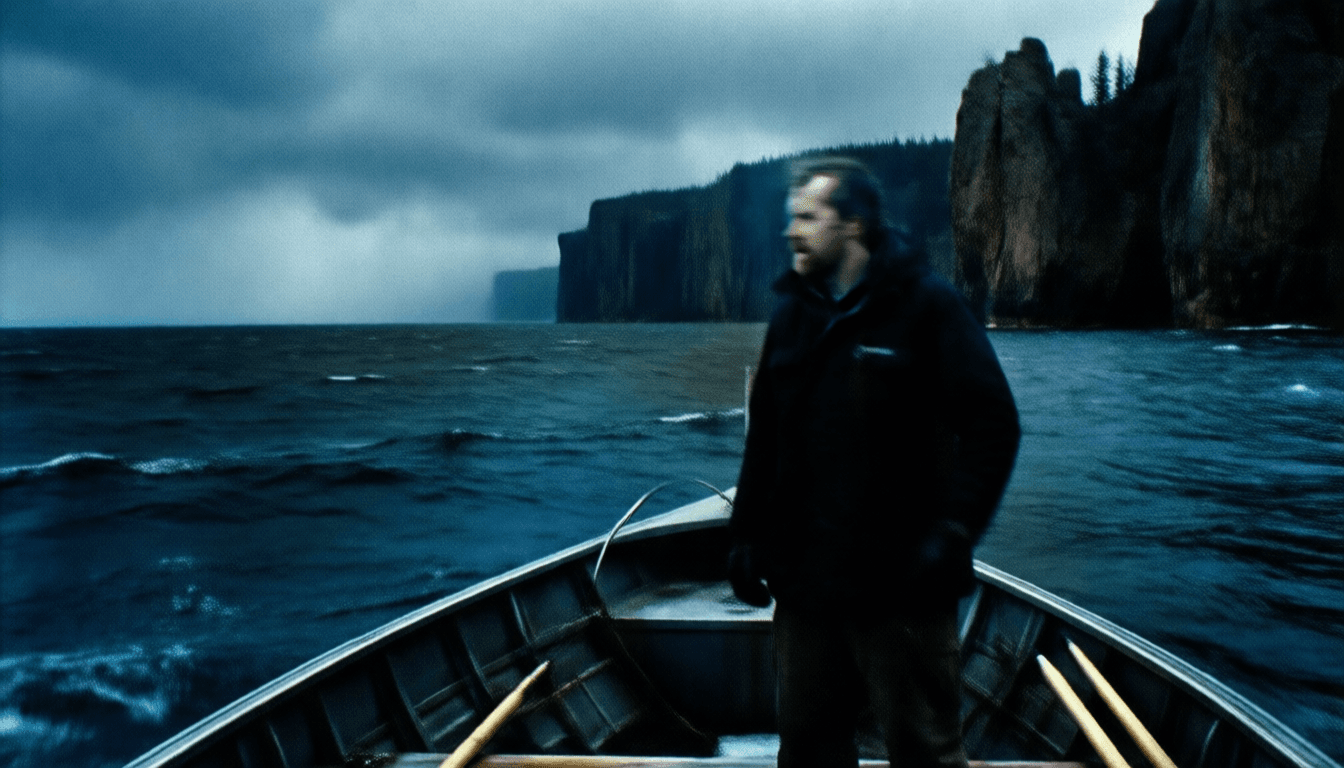
Guardian of the Great Lakes Abyss: Mishipeshu
For decades, mysterious reports have emerged from the deep channels of the Great Lakes, particularly in the sparsely populated northern inlets. From 1978 to 1985, six commercial fishing vessels reported inexplicable damage to their robust nets. These weren't mere tears but marks of being shredded and severed by immense force. One captain stated his nets, along with 2-inch steel cables, were "cleanly cut" by "something hot and fast." There was no clear explanation.
In 2003, near the mouth of the Baptism River, a Coast Guard sonar detected a "large signature" at a depth of approximately 60 feet. Estimated to be 20-25 feet long, it moved with impossible acceleration before vanishing. It was classified as a "transient deep-water anomaly." Audio logs from that time contained a low-frequency hum, but controllers dismissed it as a geological phenomenon. Then, in 2017, marine biologist Dr. Elias Thorne mysteriously disappeared. His research vessel, the
This recurring pattern of inexplicable force, strange sonar readings, and the absence of conventional evidence caught my attention. Despite pressure, local Ojibwe elders merely exchanged knowing glances and reiterated warnings about the "Guardians of the Copper Path." My interest was purely scientific. What real phenomenon could explain such consistent and perplexing reports?
My investigation narrowed to the bay where Dr. Thorne's vessel was found. A deep, almost circular basin on the northern coast, accessible via a narrow channel surrounded by sheer cliffs. Satellite imagery revealed unusual erosion patterns on the bedrock seabed, suggesting consistent, powerful currents or disturbances. I chartered a small, sturdy research skiff, the

The channel water was noticeably cold. An immediate chill permeated the boat's hull. Engine noises sounded muted, absorbed by the massive rock walls and returning seconds later, distorted—like whispers from an empty cavern. The air above the surface was utterly still, yet below, the sonar showed subtle, unpredictable currents defying the placid surface. Silas, who had navigated these waters for forty years, frowned, muttering about "ghost currents." Our primary objective was to deploy the ROV, trace Dr. Thorne's last trajectory, and focus on the deep-sea anomaly. The
As we reached the coordinates, an ominous change began. Even in the windless calm, strange, slow, massive ripples emanated from the center of the bay's surface. Not waves, but a deep, rhythmic pulsation, as if the water itself was breathing. The hydroacoustic sensor, lowered to 50 feet, picked up an incredibly low-frequency hum. A sound almost infrasonic, vibrating through the hull. It wasn't geological. There was a subtly organic rhythm to it. Occasionally, a sharp 'CLANG,' like metal striking rock, echoed dully through the water. Silas gripped the helm tighter, his knuckles white.
As the ROV descended to 80 feet, light began to distort. The deep blue darkened further, then shifted to an impossible murky grey. The ROV's temperature sensors plummeted several degrees before spiking erratically. On screen, a distorted shape flashed across the lens, momentary. Too fast to identify, too substantial to be mere interference. It appeared like a short, powerful current, but its source was unknown. Then, the hum ceased. No sound from the hydroacoustic gear. Not silence, but an absolute, terrifying stillness, as if even the lapping of water against the hull had been swallowed. The air above the surface was heavy, charged with an electric tension. It was the silence of a predator waiting.
I tried to rationalize it all, checking the instruments. The temperature shifts, the currents, the sounds… all could be explained by geological vents or unusual thermal upwellings. But the combination of anomalies, increasing in intensity and defying known patterns, began to chip away at my scientific conviction. Silas kept glancing at the darkening surface, his hand hovering over the ignition. 'Something's wrong, Doctor,' he finally whispered. 'This water… it's heavy.'
As we were still attempting to recalibrate the hydroacoustic gear, the
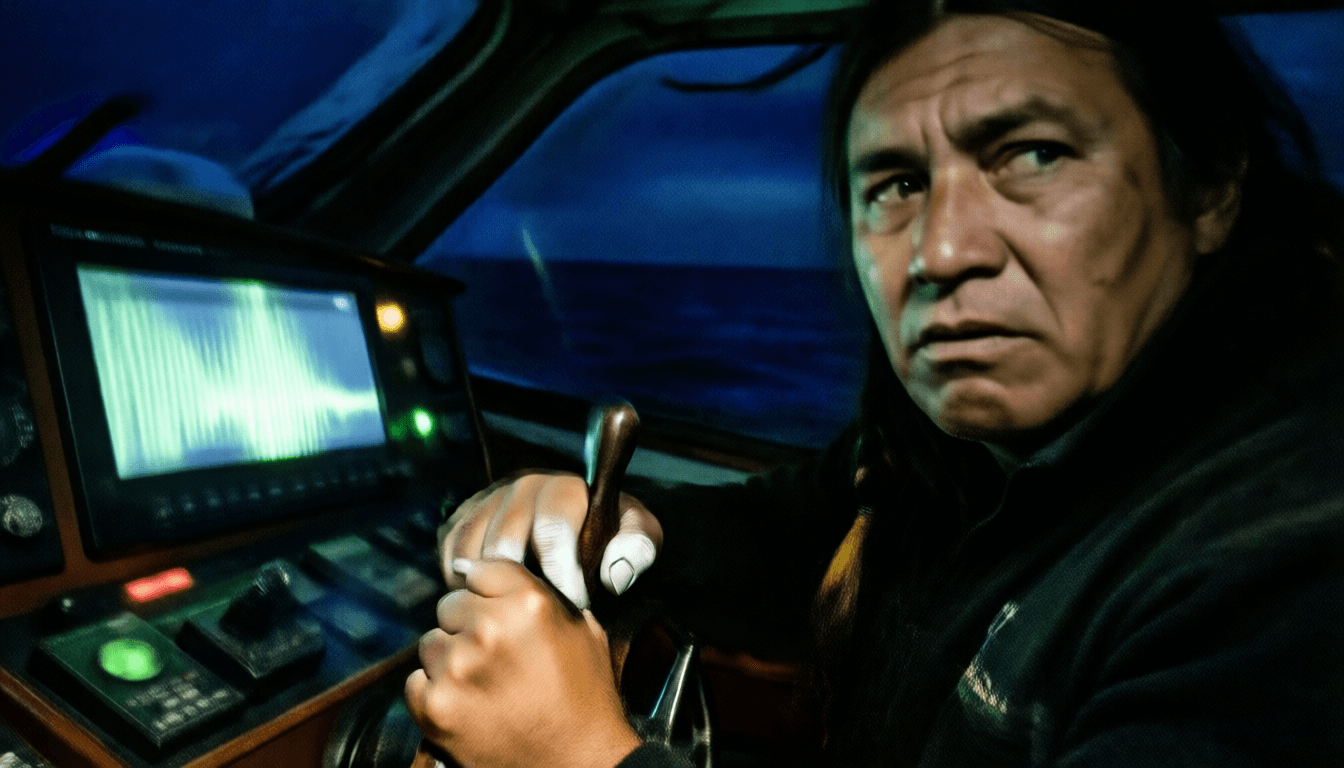
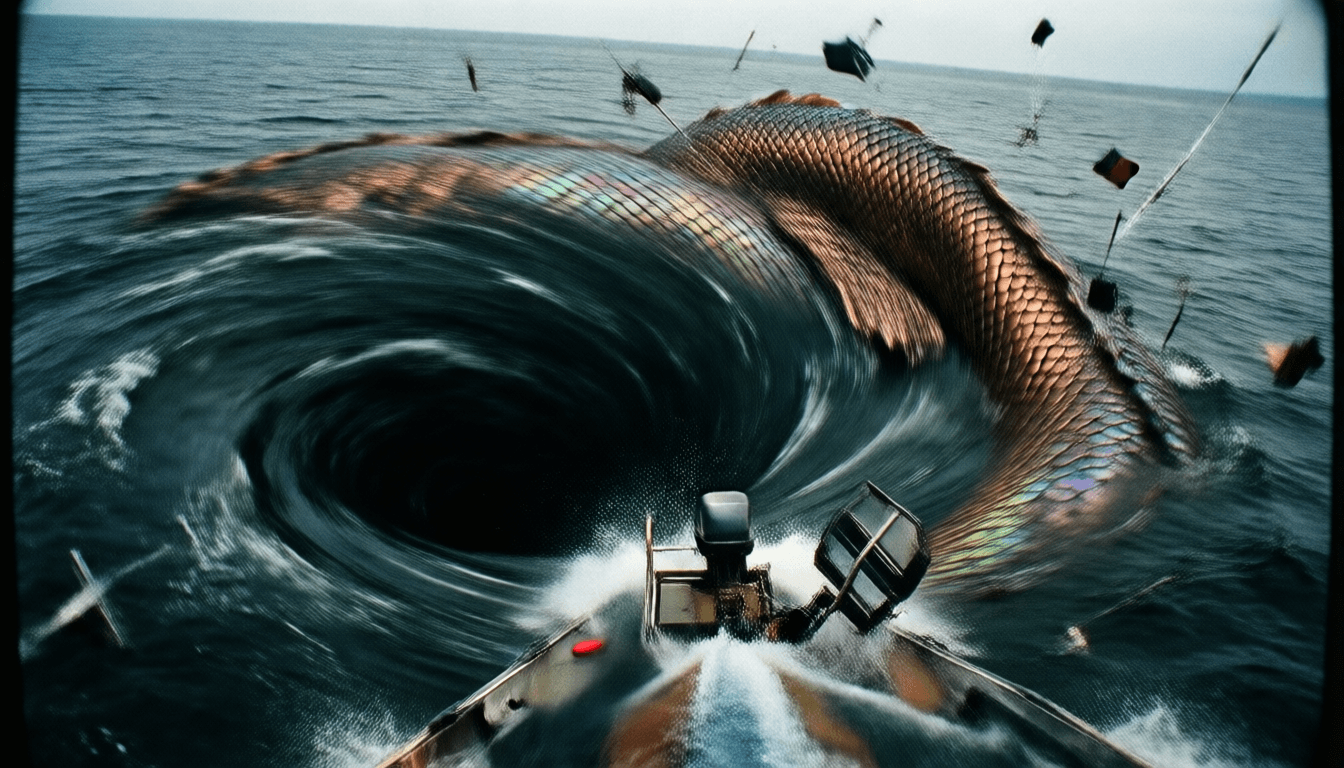
Before Silas could react, the skiff lurched violently. Not a wave. A concentrated, powerful surge of water lifted the entire boat several feet into the air, then slammed it back down with a sickening impact. Equipment flew, Silas hit the console, and I struggled to maintain balance. And then, the water itself became a weapon. A massive cylindrical vortex erupted beside the boat, pulling us with incredible suction. The
In the chaos, as the vortex momentarily opened a gap in the black water, I saw it. Not fully, not clearly, but enough: a glimpse of enormous, opalescent scales flashing, an impossible girth, and something ancient, hard, and copper-hued like horns, moving with fluid power just beneath the surface. It was not a fish. Not a mammal. It was a power that commanded the water. The air around the vortex became unnaturally cold, burning my lungs. The hydroacoustic gear, miraculously working again, shrieked with a bone-rattling, deafening growl. The sound seemed to emanate not from the creature in the water, but from the very presence of the water itself.
The vortex began to tilt the
As the creature prepared another assault, Silas, with a desperate maneuver, steered the
We returned to shore. The
The true wound was left upon my worldview.
The camera, miraculously, still functioned. The memory card held two crucial 'pieces of evidence.' A fragmented, shaky video sequence: seconds of violent, dark churning water, and a brief, distorted glimpse of a massive, scaled something moving with impossible speed just beneath the surface. It was inconclusive, blurry, easily dismissed as tricks of light or water, but I knew what I had seen. And the hydroacoustic audio recording: the low-frequency hum, the sharp 'CLANG,' and the unmistakable, deep, resonant growl that had vibrated through the boat's hull. A sound unlike any known animal. It contained unexplainable complex harmonics, a signature of immense power and ancient intelligence.
Embedded in my lab coat was a single, iridescent scale, the size of a thumbnail. Unlike any fish scale I had ever seen. It possessed a metallic sheen, and under a microscope, it revealed peculiar cellular structures. I documented and cataloged it, knowing it would be dismissed as contamination.
The official report would state: 'Severe structural damage to vessel due to unknown underwater collision,' 'equipment malfunction,' and 'possible acoustic anomalies due to localized geological activity.' Dr. Elias Thorne's disappearance would remain 'presumed drowned.'
But I knew. The legends were not mere stories. The Great Lakes, in their vast, cold, silent depths, harbored something ancient. Something that commanded the water itself. It was not merely a large animal; it was a force of nature. A presence that existed before humanity and would long outlast it. The Mishipeshu was not a myth of isolated indigenous communities. It was a powerful, terrifying reality. One that merely chose to remain hidden, only occasionally asserting its dominance over those who delved too deeply into its dark, aquatic realm. And now, I carried that knowledge, a cold, heavy truth resonating in my own depths. A truth no official report could ever fully convey.

[ CLASSIFIED VERDICT ]
[ACCESS LOG - SOURCE FILE]
This story is based on the ancient Ojibwe legend of 'Mishipeshu,' or the Great Lynx/Water Panther, prevalent in the North American Great Lakes region. Known as the 'Guardian of the Copper Path,' Mishipeshu is a water spirit or a massive feline creature said to protect copper mines, wield powerful aquatic forces to threaten humans, and hide in the deep waters. This legend is sometimes connected to unexplained underwater phenomena or disappearances.