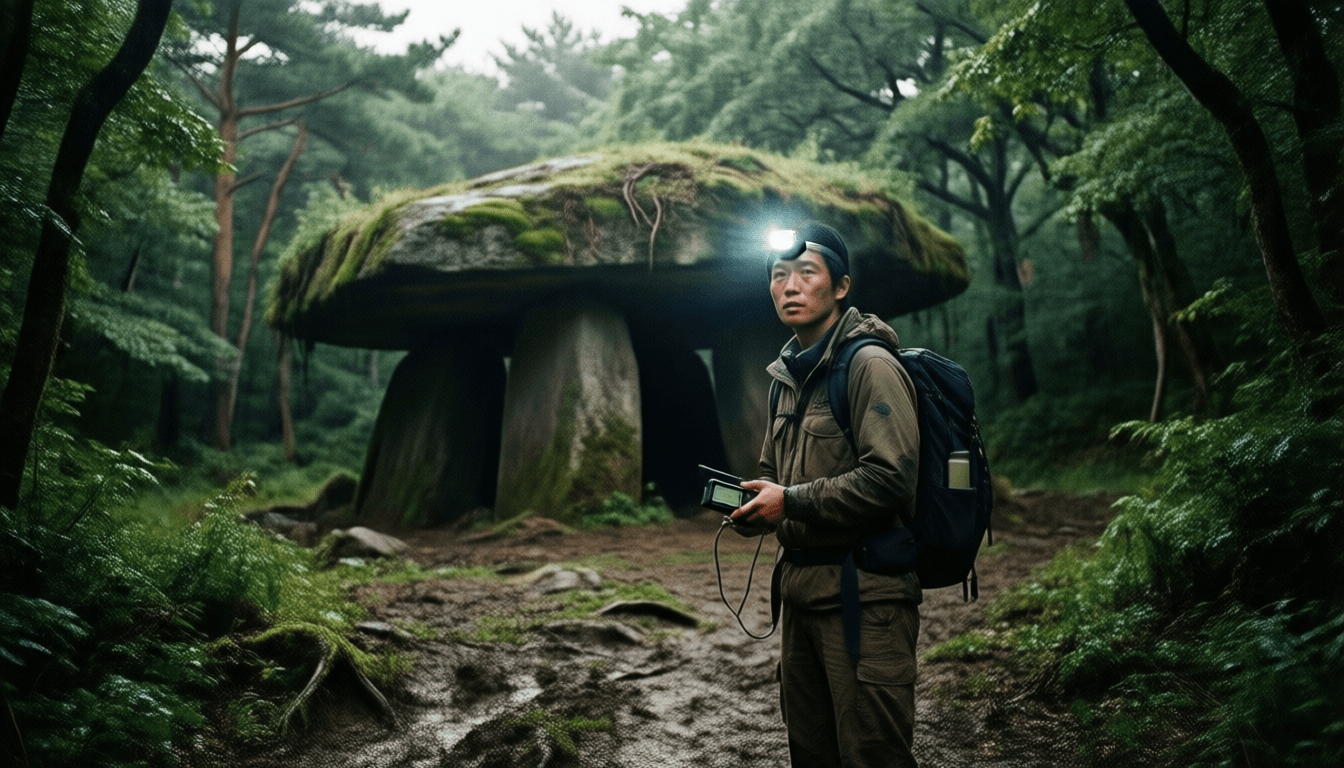
The Pressure of Gobagi
In the deep forests of Songhae-myeon, Ganghwa Island, sinister rumors about the dolmen cluster known as Gobagi have recently resurfaced online. For decades, disappearances in this area were dismissed as accidents or getting lost, but an incident last autumn defied all explanation. Dr. Park Jin-woo, an amateur archaeologist from Seoul, vanished without a trace while investigating the Gobagi cluster. His last satellite phone message contained cryptic words: ‘unnatural silence’ and ‘moving stones.’ Days later, a search party found his high-performance camera equipment near the main dolmen. While most memory cards were damaged, one card yielded a strange, distorted photograph. Taken deep inside the dolmen, it captured faint, unidentifiable flashes of light. Even more astonishing was the EXIF data. The photo was taken hours earlier than Dr. Park's estimated entry time, and its GPS coordinates indicated he was simultaneously ‘inside’ and ‘outside’ the dolmen. Authorities dismissed this as a ‘technical glitch,’ but this paradox only amplified the whispers about Gobagi. My investigation began here.
I arrived at the trailhead leading into the forest, my destination. The path, barely touched by human hands, wound its way through Ganghwa Island's humid, dense woods. The air felt heavy, and even the cicadas, usually boisterous, seemed to have hushed, leaving only a hesitant silence. My equipment – an industrial audio recorder, a precision EMF meter, a thermal camera, and a geological resonance detector – felt alien and cold against this ancient, organic stillness. The path grew increasingly overgrown, testament to the area's relative isolation. After walking for just over an hour, rough, table-style dolmens emerged, half-buried in earth and tree roots, unlike the grandly restored monuments. They exuded an oppressive, immutable presence.
Cross-referencing Dr. Park's last reported coordinates, I located the main dolmen of the Gobagi cluster. This massive dolmen featured a grey capstone, estimated to weigh 50 tons, resting on two colossal support stones. A narrow, dark opening led to a recessed interior space – the very spot where Dr. Park's camera was found. The entrance was low, requiring me to stoop significantly. My EMF meter, usually calm in natural environments, began to record faint, erratic fluctuations even before I fully entered the dolmen. The air inside, though outwardly still, held an inexplicable chill, far colder than the surrounding forest temperature.
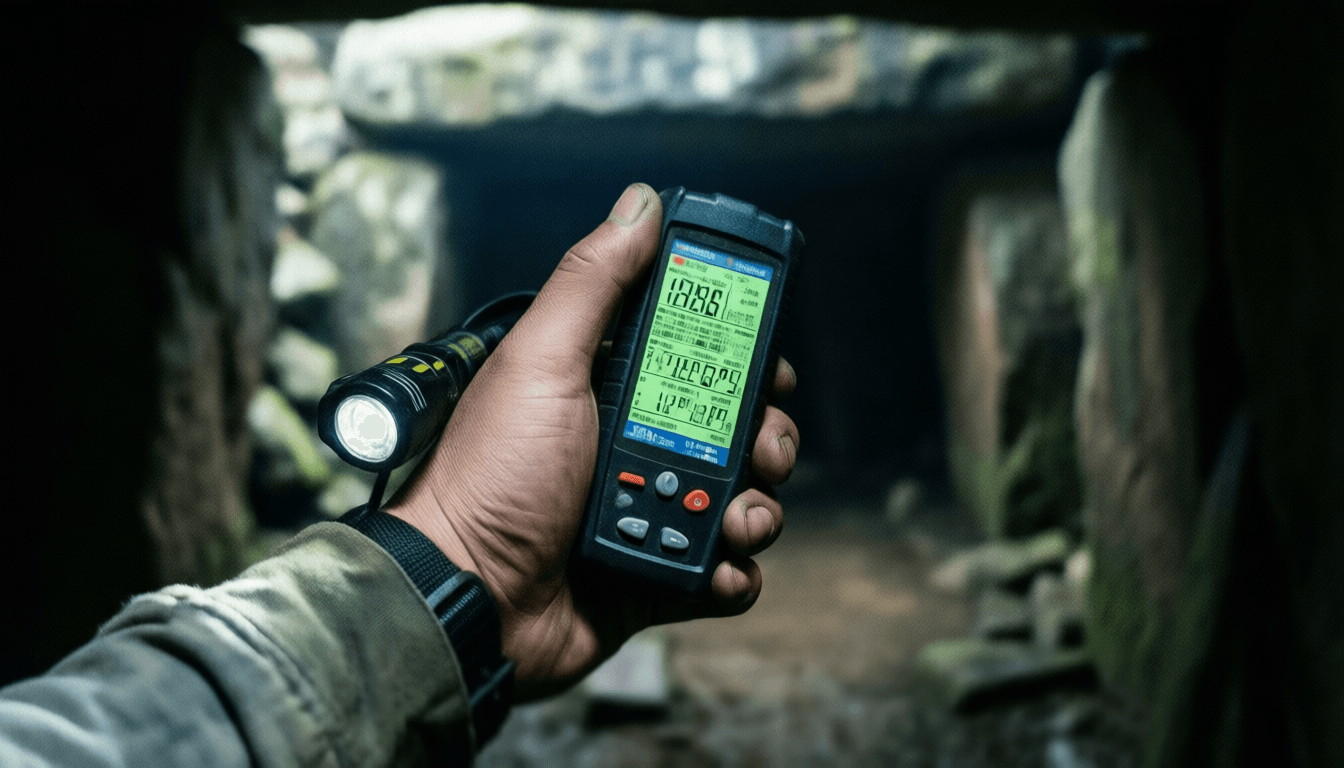
As I stepped inside, the outside world seemed to vanish. The beam of my headlamp, usually sharp, became strangely diffused here, as if absorbed by the ancient stone walls, failing to penetrate the deepest recesses. The air was cold but unnaturally stagnant; no airflow could be detected. I began my scans. The EMF meter showed contradictory readings, spiking erratically in some areas and then completely flatlining in others, inexplicable by electrical interference or geological anomalies. The audio recorder, set to pick up even the slightest vibrations, registered only profound silence, failing to capture even my own breath. The space itself felt like an acoustic vacuum. I whispered a word as a test; my voice was dead flat, instantly absorbed without any echo.
Then, the first undeniable anomaly occurred. My geological resonance detector, calibrated to measure seismic activity and ground vibrations, picked up an ultra-low frequency hum resonating deep within the stone, not the earth. It was too faint to hear, but the equipment recorded it unequivocally. A moment later, a distinct cold spot, several degrees colder than the ambient temperature, materialized directly in front of me, lingering for about a minute before dissipating. I tried to rationalize it as a draft or a thermal illusion, but the dolmen's interior was hermetically sealed. When I shined my light into a corner, for a fleeting instant, I saw the shadows writhe and deepen, becoming something beyond mere absence of light, an almost palpable presence. The space began to feel larger than it was, then the back wall seemed to recede and press in again, distorting my perception of depth. A vast, silent pressure steadily built, weighing down on me. It felt as if the weight of centuries of stone itself was focusing directly upon me.
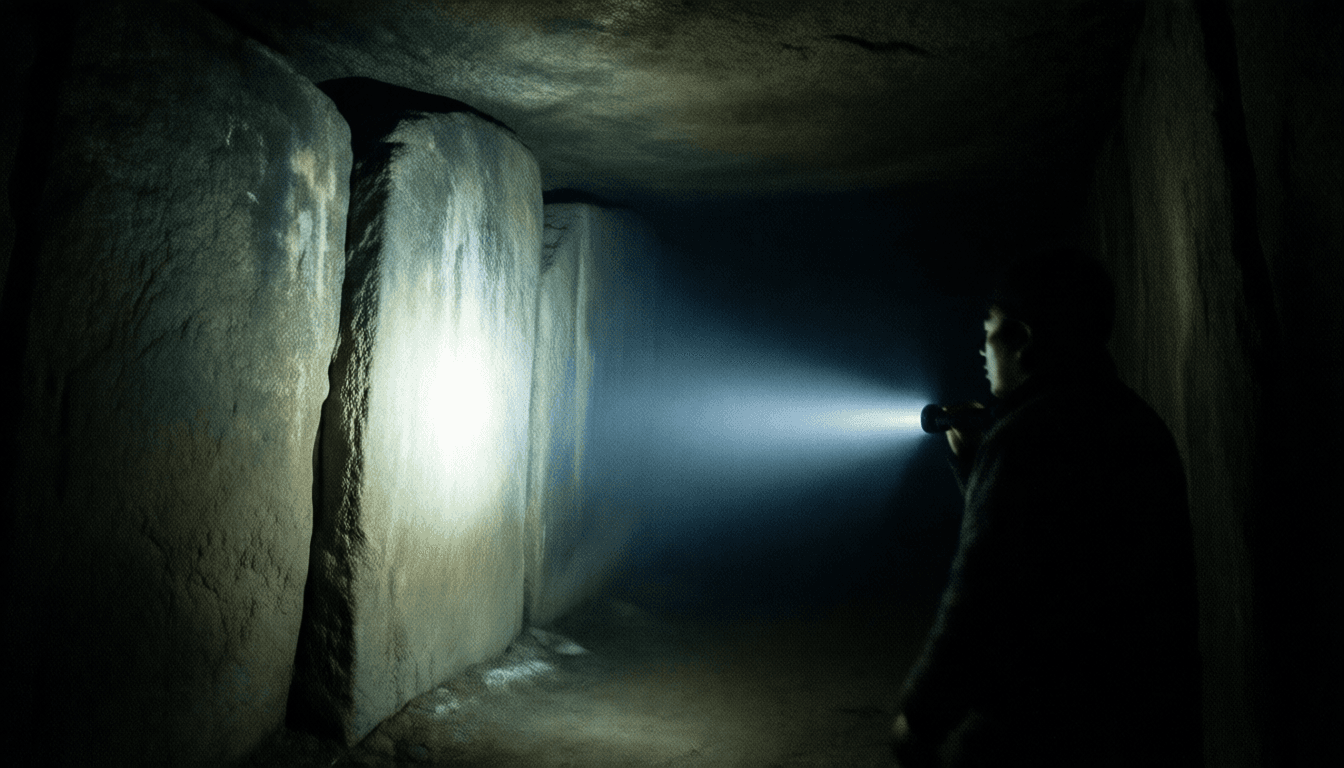
The oppressive silence and distorting space became unbearable, and I resolved to escape. As I turned towards the narrow entrance, it… appeared smaller. Not dramatically so, but subtly contracted, as if the support stones had minutely shifted to constrict the passage. I dismissed it as an optical illusion brought on by the encroaching dread. I reached for the entrance, but before I could fully emerge, the low-frequency hum, which my geological resonance detector had sensed, sharply amplified. Now it was a deep, guttural growl, vibrating beyond the equipment and into my very bones. It was no longer just a sound; it was a physical sensation, pressing down on me, like being submerged under tons of water.
My headlamp flickered, then died, plunging the dolmen's interior into absolute darkness. My night vision goggles ceased functioning instantly too. Not a power issue, but as if the darkness itself absorbed all light, even infrared, leaving the screen blank. I was completely blind. The hum intensified, reverberating *within* the stone walls, transforming into an unbearable pressure, like being submerged under tons of water. And then I felt it. A colossal, cold pressure pressing down on my back and chest. It felt as if two immense, invisible slabs of stone were crushing me. It wasn't a tangible, physical contact, but a deep, intense compression that ached my ribs. This wasn't the dolmen closing in; it was something *within* the dolmen, formless yet capable of exerting physical force, attempting to *flatten* me. I gasped for air, but the pressure crushed my lungs. Blindly, I clawed at the shrinking entrance, my fingers scraping and tearing on the rough stone. The hum reached its crescendo, roaring like the silent scream of an immense force. A surge of primal adrenaline propelled me forward, and I squeezed through the narrowing gap. I felt the stone scrape, tear, and drag against my body, the cold pressure still gripping my torso, as if trying to pull me back, to *absorb* me into the very matrix of the stone.
I tumbled out of the narrow opening, gasping for breath, clothes torn, skin abraded, muscles screaming. Relief was immediate, but quickly turned into a deep, trembling dread. I crawled away from the dolmen, not daring to look back. The hum gradually subsided as I put distance between myself and the colossal dolmen. Driven by sheer terror, I pushed through the forest, reaching my vehicle hours later.

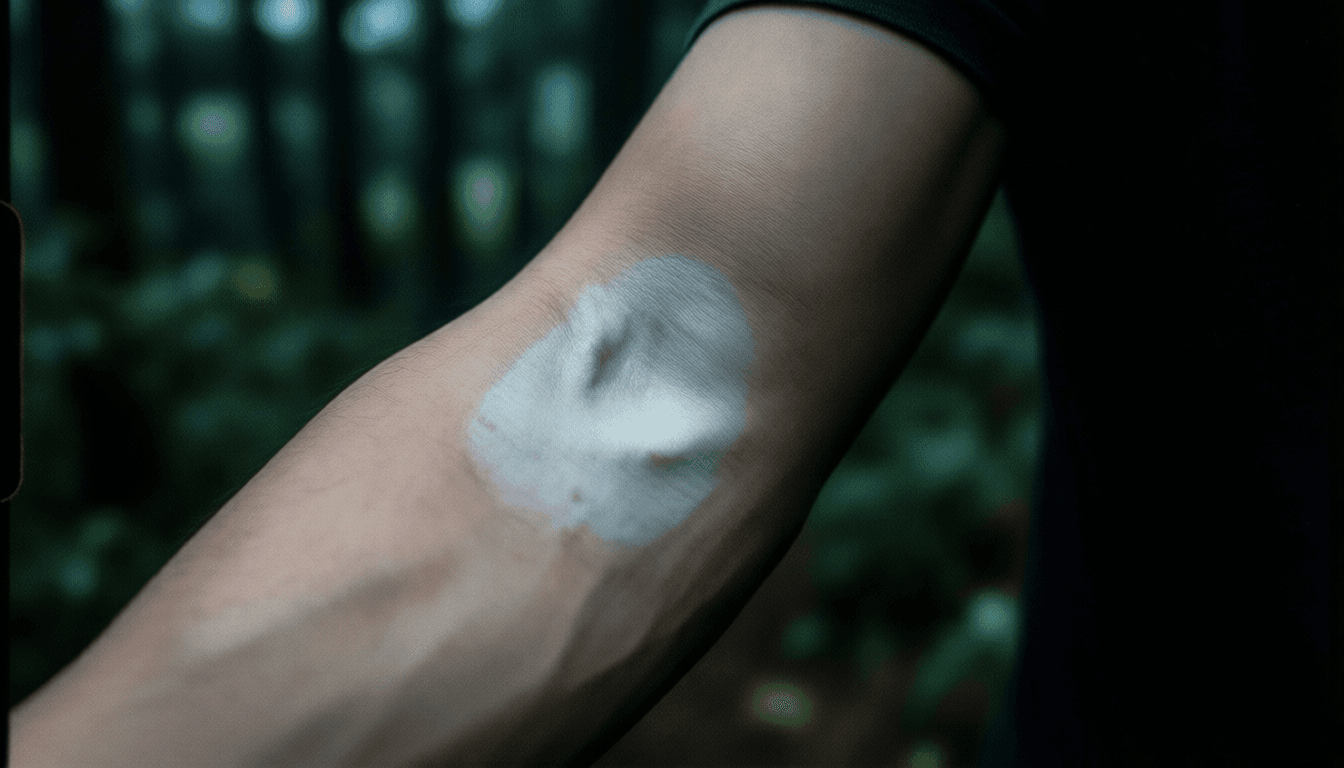
My equipment told a story I dared not voice. The audio recorder, retrieved from my bag, contained only silence for the duration of my time inside the dolmen. However, just before the silence began, there was a distinct low-frequency hum, chillingly similar to the resonance detector's readings, overlaid with a faint, grinding sound. Not a voice, but the sound of a massive, slow displacement, like colossal stones grinding against each other. My thermal camera was completely broken, its internal components melted. Most horrifyingly, there was no wound or bruise on the inside of my left arm where I had felt the cold, immense pressure. Instead, there was a palm-sized patch of skin, smooth and impossibly cold. Weeks later, it remained abnormally frigid, unresponsive to any warmth. Occasionally, it would emit a faint, deep throb, mirroring the hum from the audio recording.
I drafted a report on the Gobagi cluster, meticulously documenting the EMF fluctuations, the inexplicable temperature drops, the acoustic anomalies, and the deep, crushing pressure. I intentionally omitted the absolute darkness, the feeling of being crushed, and the impossible cold spot on my arm. My conclusion attributed the phenomena to an unknown geological or telluric energy field causing extreme environmental distortions. I appended the partial audio recording, categorizing the grinding sound as 'unidentified subterranean acoustic phenomena.' I never publicly mentioned Dr. Park Jin-woo again. But sometimes, sitting alone in my lab, the low hum of Gobagi seems to echo from the walls of my home, and I unconsciously touch the cold patch on my arm. It is still there. And the sensation is not just cold, but a *heaviness*, as if a colossal, ancient weight still presses down on me, seeking to consume a little more.
[ CLASSIFIED VERDICT ]
[ACCESS LOG - SOURCE FILE]
The Gobagi dolmen cluster on Ganghwa Island is known for decades of mysterious disappearances. This story is based on an urban legend suggesting a supernatural force exists within the dolmen, capable of distorting time and space and attempting to crush humans. The cryptic reports of 'moving stones' and an archaeologist simultaneously being 'inside' and 'outside' the dolmen further solidify this belief.