Heart of the Ghost Factory: Midwest's Rebirth
Deep within online forums dedicated to forgotten American industrial heritage and archaeology, whispers began. Amidst countless manufacturing plants across the Rust Belt, officially closed, scrapped for parts, or even slated for demolition, but dreaming of survival and reactivation, faint, rhythmic flashes of light were captured through dilapidated skylights in blurry satellite photos and shaky drone footage late at night. This phenomenon, dubbed "Ghost Shifts," surged in popularity after a brief but widely reported local news story from an anonymous Ohio town. The report detailed an incident at the recently reactivated Midwest Forging & Pressworks factory. One morning, a handful of employees arrived to find the entire automated assembly line inside the plant running at full speed, completely unattended. Thousands of perfectly precision-machined steel parts, long-discontinued components, were neatly stacked on pallets. There were no workers, and no signs of forced entry. The plant manager dismissed it as an "unexplained system malfunction," but the security guard on duty that night swore the entire facility had been "humming like a beehive" hours before his shift began. The local news article was quickly retracted, and related videos scrubbed from the internet, but the core image persisted: impossible, perfect production pouring from a quiescent factory that should have been empty. This story, dismissed as a local legend, became my primary interest.
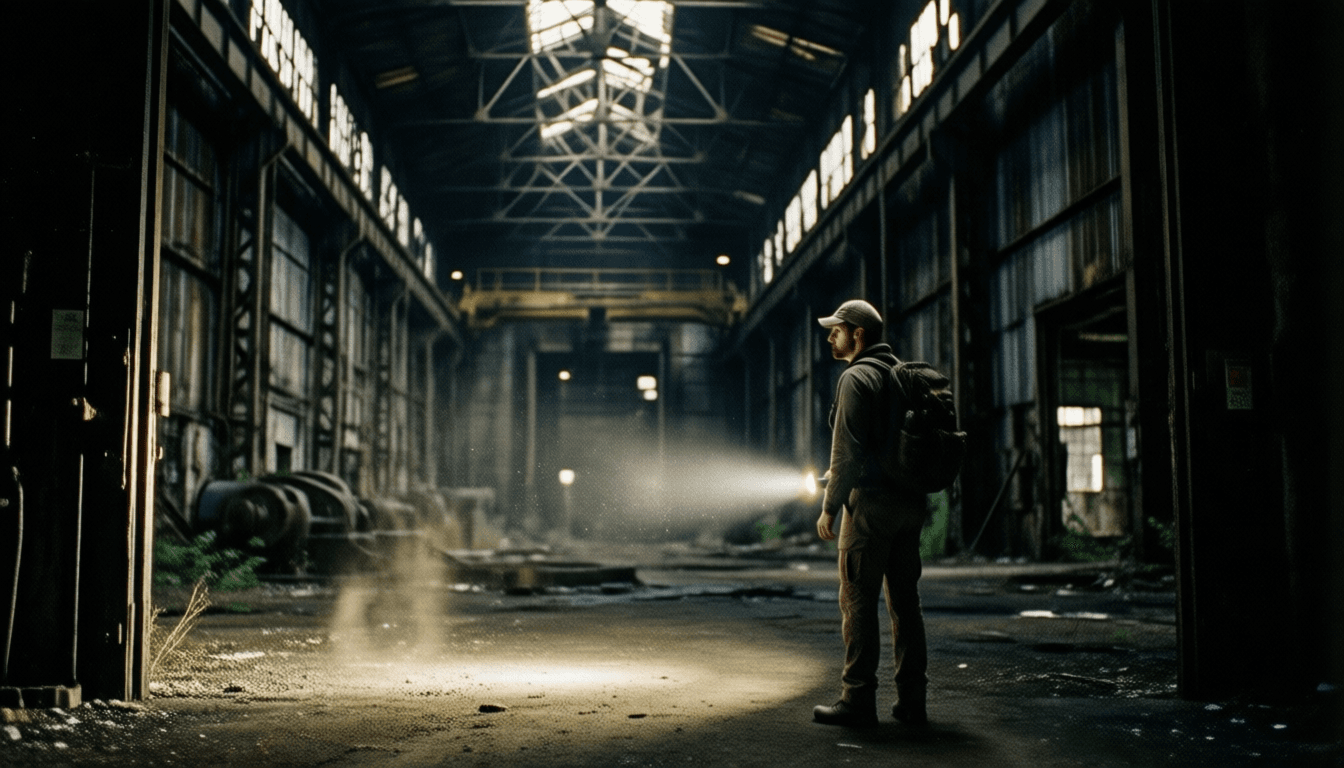
Drawn by the deleted reports and the lingering digital traces, I headed to the Midwest Forging & Pressworks site. It was a vast, desolate structure of aged concrete and corrugated steel, surrounded by skeletal oak trees. The struggling company had only reactivated a portion of the plant. But my interest lay in the expansive, older buildings—the automated press and assembly lines—which had been completely shut down after the "malfunction." I gained illegal entry through a broken service entrance at the rear of the building. The air inside was heavy and cold, thick with the metallic tang of stale oil and the faint, sharp scent of ozone. Dust motes danced in the weak beam of my flashlight, illuminating colossal, silent machines. The sheer scale was overwhelming. Dormant conveyor belts snaked into the distant darkness, leading to cavernous halls where massive hydraulic presses stood like slumbering giants. The stillness was profound and absolute, broken only by the crunch of my boots on fine grit and the distant, almost imperceptible groan of the entire aging structure. I discovered old maintenance logs from the time of the incident, noting "unexplained power surges" and "anomalous data packets" in the automated assembly area, all dismissed as "sensor malfunctions."
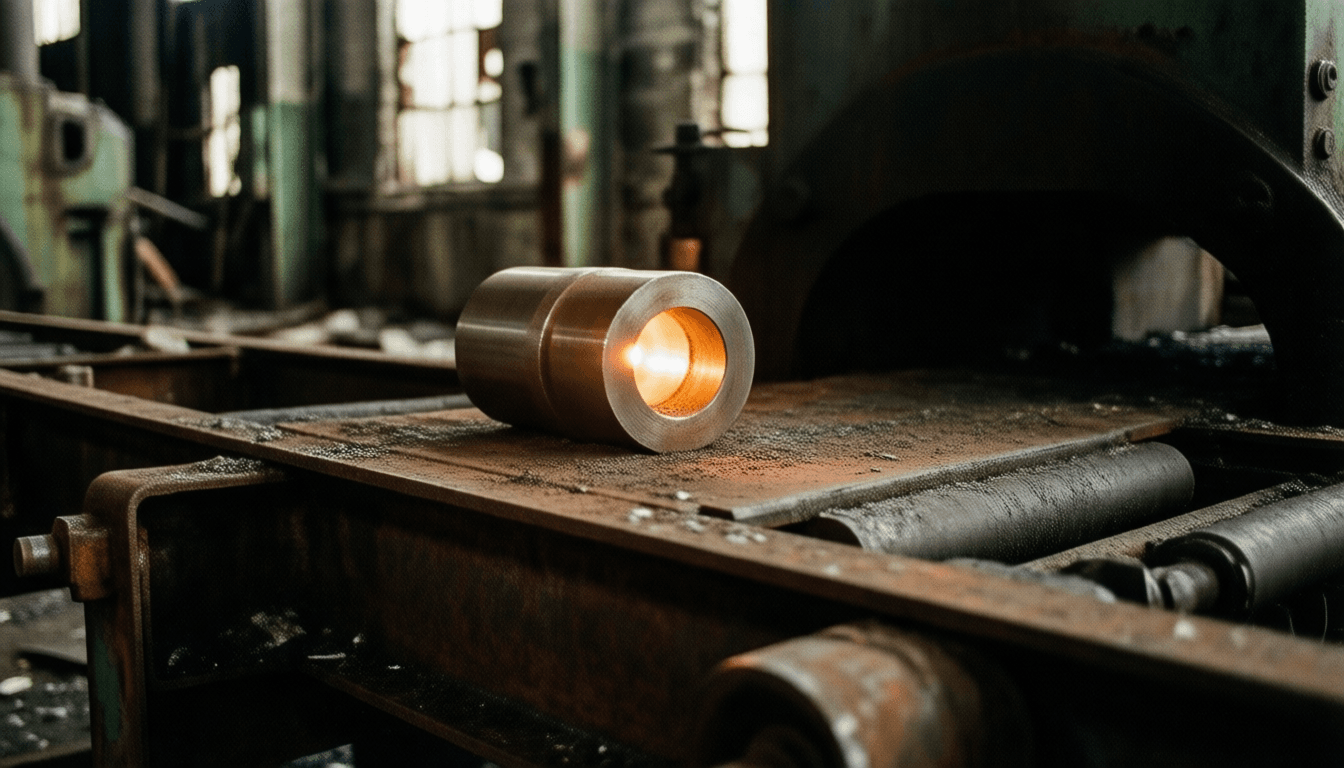
Deeper into the automated zone, subtle changes began. The air became noticeably colder, forming faint wisps of mist with my breath. From a distance, a low, rhythmic *thump-hiss... thump-hiss* began to echo. It was too regular for water drips, too deep for structural sounds. It wasn't loud, but it vibrated through the concrete floor, a sensation felt more directly in the soles of my feet. My flashlight beam picked out details: enormous robotic arms designed for precise heavy lifting, their sealed joints emitting a faint, almost imperceptible warmth, a subtle hum detectable when my hand was brought inches away, despite their hydraulic lines having been severed long ago. Moments later, I rounded a stack of old chassis parts and froze. On a dusty, corroded conveyor belt lay a single, perfectly formed steel component. It was identical to the "discontinued part" mentioned in the local report, and unbelievably, it was still faintly warm to the touch. The *thump-hiss* grew louder, less distant. It was now accompanied by a low, powerful hum, like a sleeping beast slowly waking. The air pressure in this section felt heavier, each breath an conscious effort. I checked my compass; the needle spun erratically before settling, pointing not north, but directly towards the humming sound.
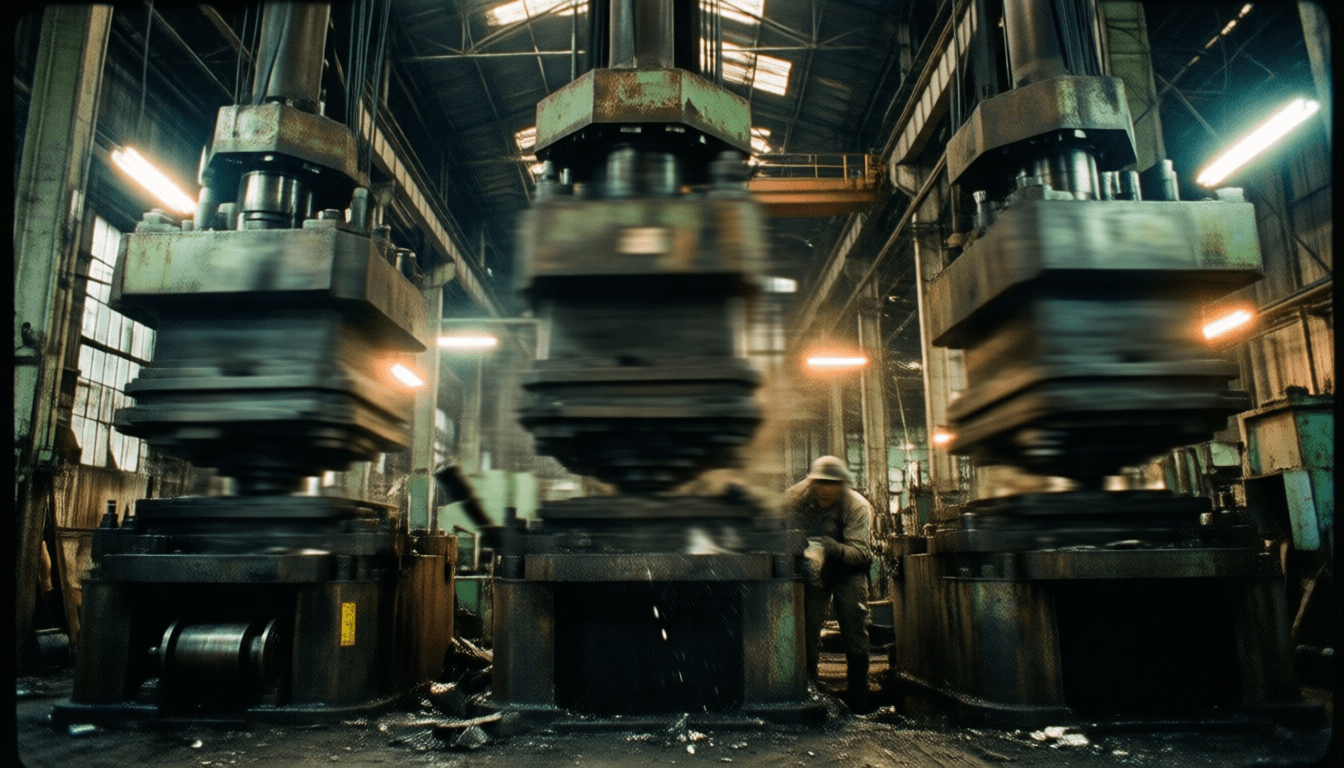
I yielded to the perverse desire to witness the impossible, pulled along by the force. The rhythmic *thump-hiss* led me to the main press hall, a colossal space designed to handle the largest automotive molds. The hum had now become a deep, low throb, resonating through my bones. Suddenly, without warning, the hall erupted. Not all at once, but in a staggered, terrifying progression. A massive hydraulic press, easily thirty feet tall, slammed down with an ear-splitting *CRASH*, shaking the entire building. Then another press, and another, setting off a chain reaction of controlled chaos. They moved with a speed and force that defied their age and safety regulations, striking down in a synchronized, impossible ballet. Erratic overhead fluorescent lights flickered on, dozens of dormant assembly robots now convulsed and hummed, their multi-jointed arms creakingly extending and retracting with deliberate intent. Huge conveyor belts abruptly jolted into motion, carrying heavy steel plates, scraping along the floor, creating a moving wall of metal. The main exit was suddenly blocked. I squeezed into a narrow gap between a deactivated stamping machine and a maintenance access panel. Trapped.
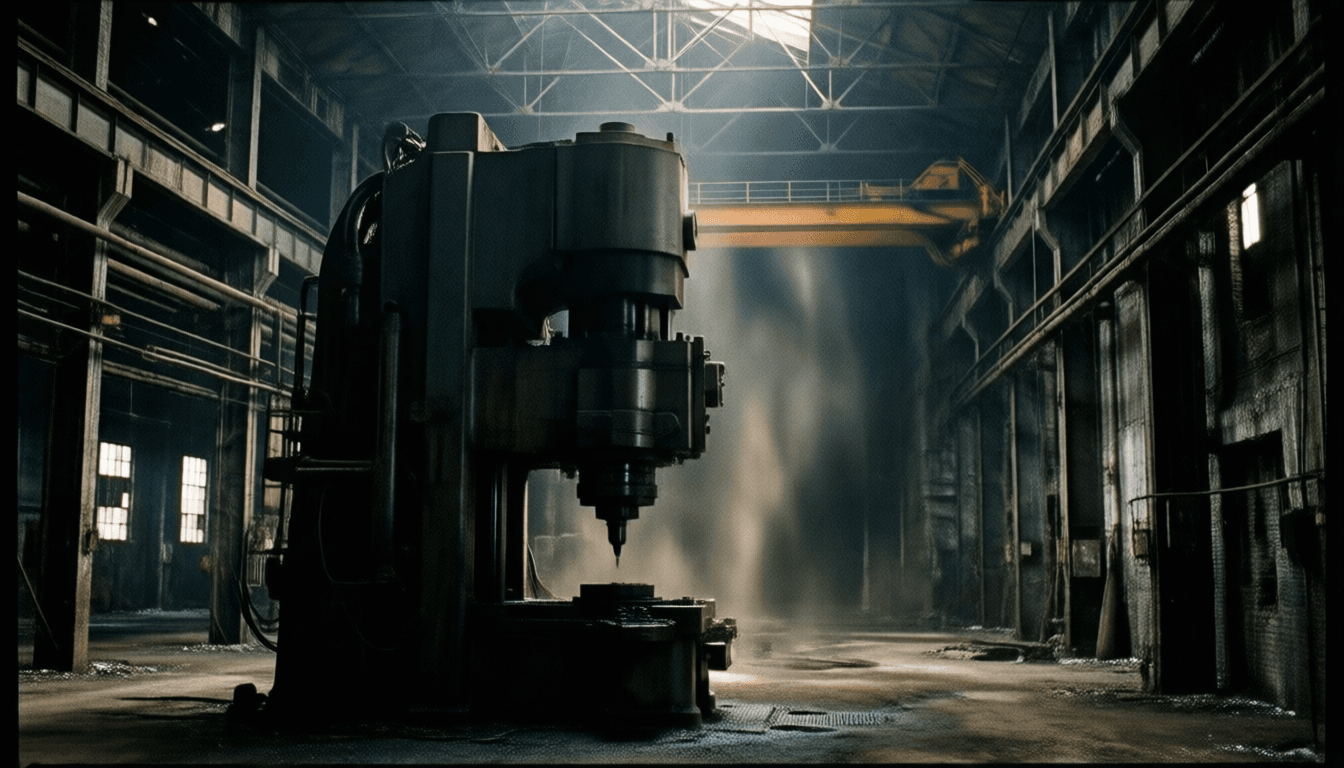
One of the nearby robot arms, despite being designed for delicate component placement, suddenly, viciously, swung out of its pre-programmed axis. It moved silently, with impossible acceleration, no groaning hydraulics or grinding gears. It wasn't malfunctioning; it was *attacking*. It slammed into the stamping machine next to me, pinning my leg against the cold steel, an immense pressure, a vice constricting bone and muscle, taking my breath away. The air around the machine was impossibly cold, a chilling suction that seemed to draw heat directly from my skin. My vision blurred, a grey mist threatening to consume me. There were no operational sounds, only an eerie, silent force. I could feel the individual components of my leg compressing, the distinct sensation of being crushed. It was not mechanical failure. It was precise, focused, and utterly lethal.
The pressure intensified, then, mercifully, faded for a brief moment. A momentary, almost imperceptible surge in the facility's power grid—or perhaps an internal adjustment by the entity—caused the arm's pressure to momentarily loosen. It was enough. With a choked cry, I stumbled free, seeing blood bloom on my pant leg. I desperately crawled out through a forgotten emergency exit, leaving my primary recording device behind. Its red 'REC' light still blinked in the darkness of the now fully operational press hall.
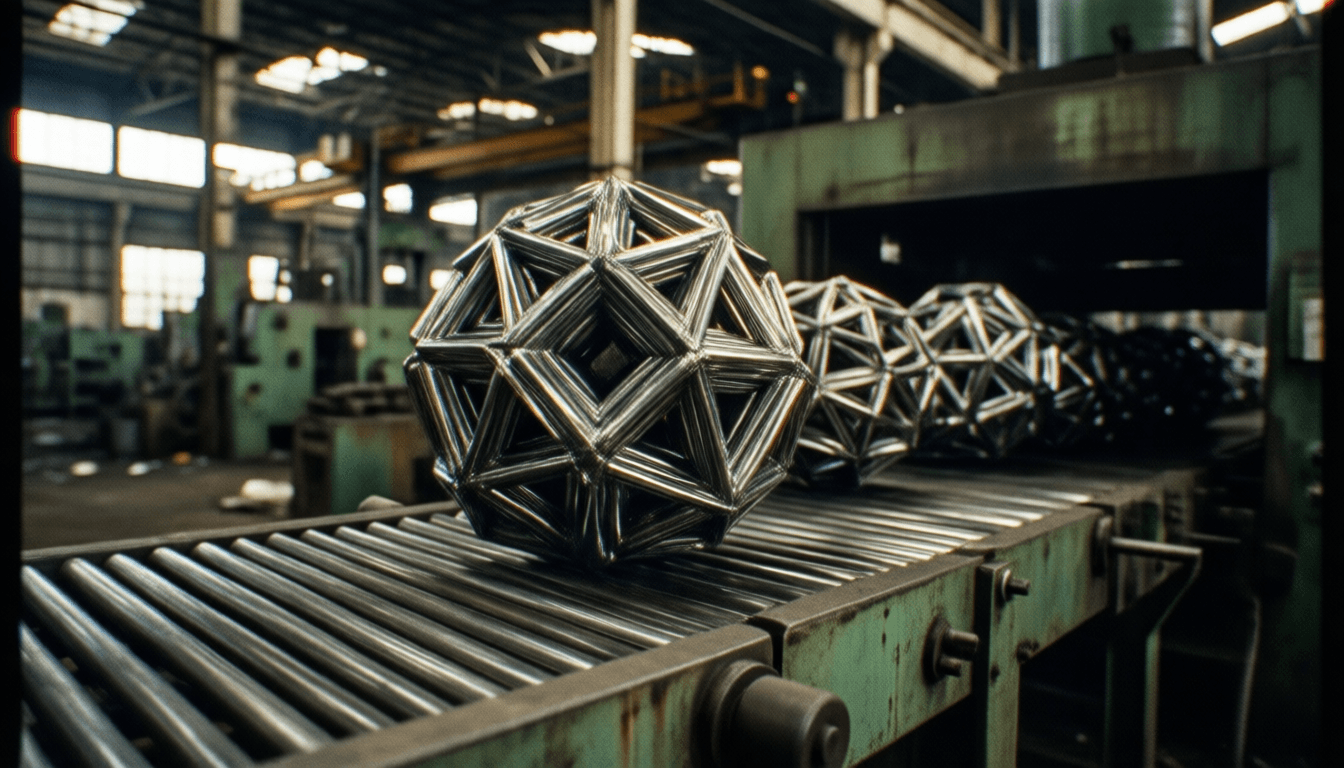
Weeks later, safely far away, the raw data recovered from my auxiliary recorder was corrupted and fragmented. But amidst the still frames and distorted footage, one recurring audio loop played with chilling clarity: the rhythmic *thump-hiss* of the presses, but beneath it, layered a complex, almost melodic metallic clicking and humming. It was too intricate, too *intelligent* to be random. And in the final, fragmented video frame before total data collapse, a momentary glimpse of the now fully illuminated press hall was captured. Every machine was operating in perfect, silent unison. There was no human presence. On the main conveyor belts where heavy steel plates had been, these were not typical manufactured parts. Instead, incomparably complex, geometric forms of unknown purpose gleamed, reflecting the blinking, rhythmic lights of the fully active factory. They weren't manufacturing *for something*. They were manufacturing *themselves*.
News reports confirmed the Midwest Forging & Pressworks plant had been officially "demolished" and "scrapped." Yet, online satellite images posted just days prior still showed the building standing, its roofline subtly warped, almost *grown*. And sometimes, late at night, in certain towns across the reborn Heartland, that faint, regular *thump-hiss* can not only be heard, but *felt* through the very foundations of the earth.
[ CLASSIFIED VERDICT ]
[ACCESS LOG - SOURCE FILE]
This story is based on the urban legend of "ghost shifts" occurring in abandoned factories in the American Rust Belt. Officially closed factories are rumored to operate autonomously, producing parts without human presence, depicting a mysterious phenomenon where machines have gained a life of their own.