The Intelligence of the Current: Fiordland's Water Shadow
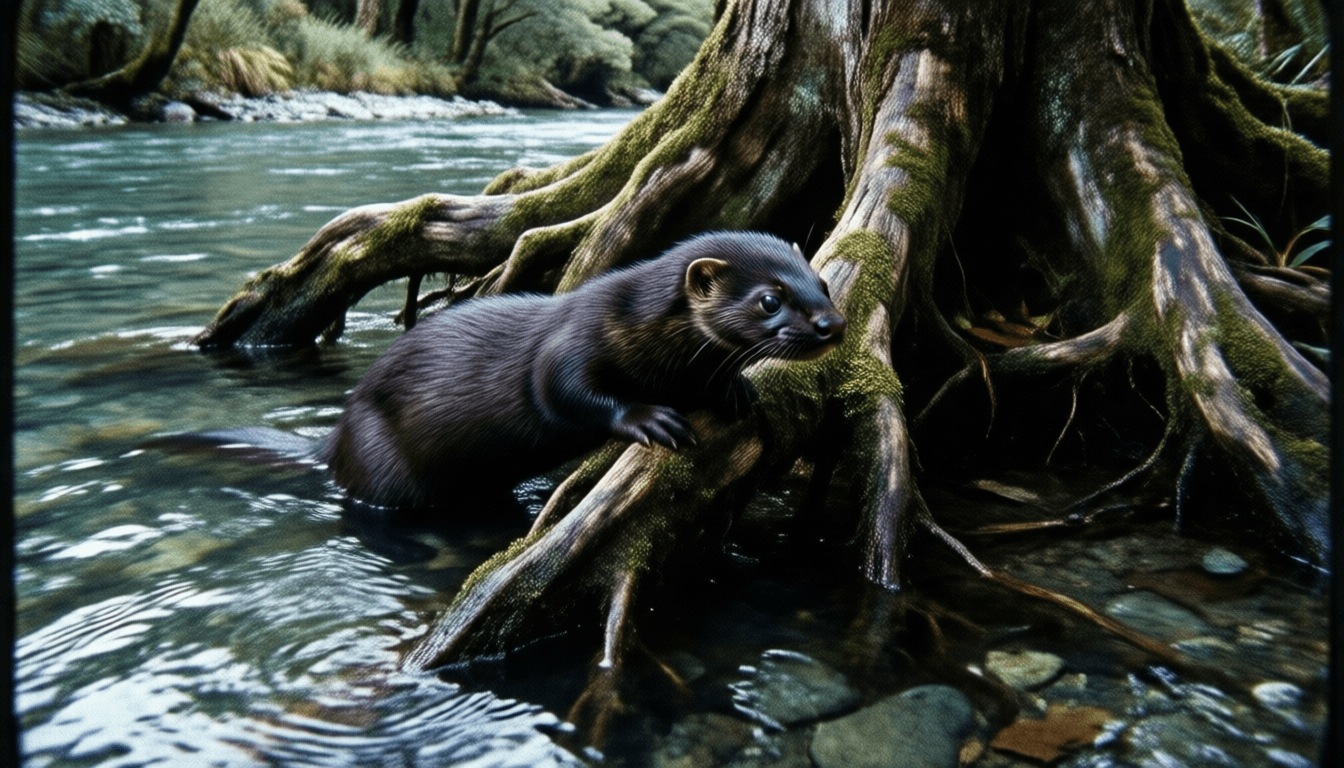
Rumors surrounding a mysterious creature in New Zealand, as always, quietly began in the digital world. Last late autumn, a high-resolution trail camera photo of a riverbed in Fiordland surfaced on an online forum for rare animal enthusiasts. The photo was clear, capturing a sleek, dark form half-hidden by the roots of an old tree near the water's edge. It was much larger than an introduced weasel or stoat, too agile to be a rat, and definitely not a seal. With an elongated body, dark fur, and a flattened head, the creature was disappearing into the water, leaving only faint ripples. This image reignited a decades-old debate about the 'Waitoreke,' an unidentified otter-like animal mentioned in Māori legends and colonial explorers' records.
However, before long, the rumors took a sinister turn. Over the past six months, strange occurrences were repeatedly reported at a remote lodge in northern Fiordland, a day's walk from the location in the photo. Several small, light kayaks or canoes tied to the lakeside jetty were inexplicably capsized, or even dragged miles away and found in small, narrow tributaries. Two disappeared entirely, never to be found again. Local authorities attributed these incidents to flash floods or vandalism, but the lodge owner, a former Department of Conservation employee, quietly spoke to trusted regulars about "something else." He mentioned odd sounds from the water, like grinding stones, and how the normally vibrant sounds of the fiord would sometimes fall into an unnatural silence. Having tracked records of the Waitoreke for years, I sensed all these phenomena converging: strange sightings in photos, inexplicable disappearances, and a disturbing pattern repeating in a specific isolated area. This "something else" demanded closer investigation.
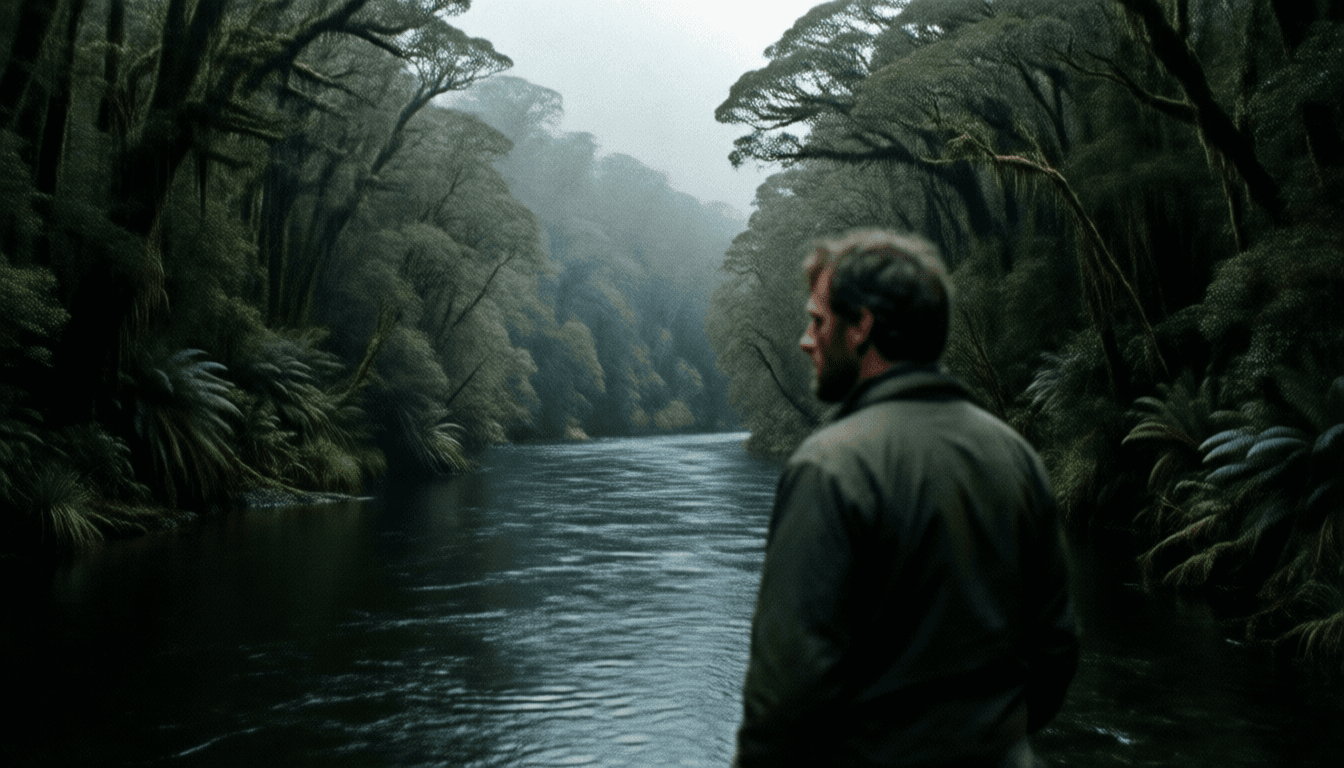
The journey to northern Fiordland was a battle against isolation itself. After being dropped by chartered boat, I had to trek through three hours of densely humid forest. I followed old hunter's trails towards an unnamed river confluence, geotagged from the trail camera photo. The air was heavy with the scent of damp earth, ferns, and decaying wood. My gear was minimal: a sturdy backpack, state-of-the-art audio-visual recording equipment, satellite communication devices, and a small, reinforced inflatable kayak.
Hundreds of meters from the river, overlooking a deep, swirling pool, I stealthily set up camp. The surroundings were breathtakingly beautiful yet oppressively quiet. The usual native bird songs, like the clear call of a bellbird or the metallic notes of a tūī, were only heard intermittently. Instead, the dripping of water from leaves and the low hum of distant insects filled the void. The river, transparent like glacial meltwater, flowed unnaturally still in some sections, while in others, it created sudden, localized turbulence without apparent cause. I strategically placed trail cameras and hydrophones at points with deep water and dense cover. The first few hours passed uneventfully, a testament to the region's rugged and untamed nature. But as twilight enveloped the fiord, the silence deepened, transforming from peaceful to a feeling of being watched.
Subtle anomalies began on the second night. The hydrophones, set to capture the tranquil sounds of the water and unique aquatic calls, picked up a low, rhythmic thumping from the deepest part of the pool. It was a sound with no clear biological or geological explanation, deep and resonant, as if something massive was vibrating beneath the bedrock. On the surface, a peculiar phenomenon was observed: small, circular ripples would form on completely still water, spreading outwards against the weak downstream current, only to disappear as suddenly as they appeared. It was as if something was pushing up from below, or briefly altering the water's surface tension.
I also noticed a change in local wildlife behavior. Normally bold and curious kea parrots were absent. The usually bothersome sandflies were unusually quiet near the river. Once, while scanning the opposite bank with binoculars, the reflection of distant trees in the calm water momentarily stretched and distorted, shimmering like hot air, before returning to normal. The anomaly was fleeting but deeply unsettling. A distinct, musky odor also hung in the air. It wasn't fishy or swampy, but a strange blend of cold, damp stone and iron. It came and went with the vagaries of the wind, strongest over the water.
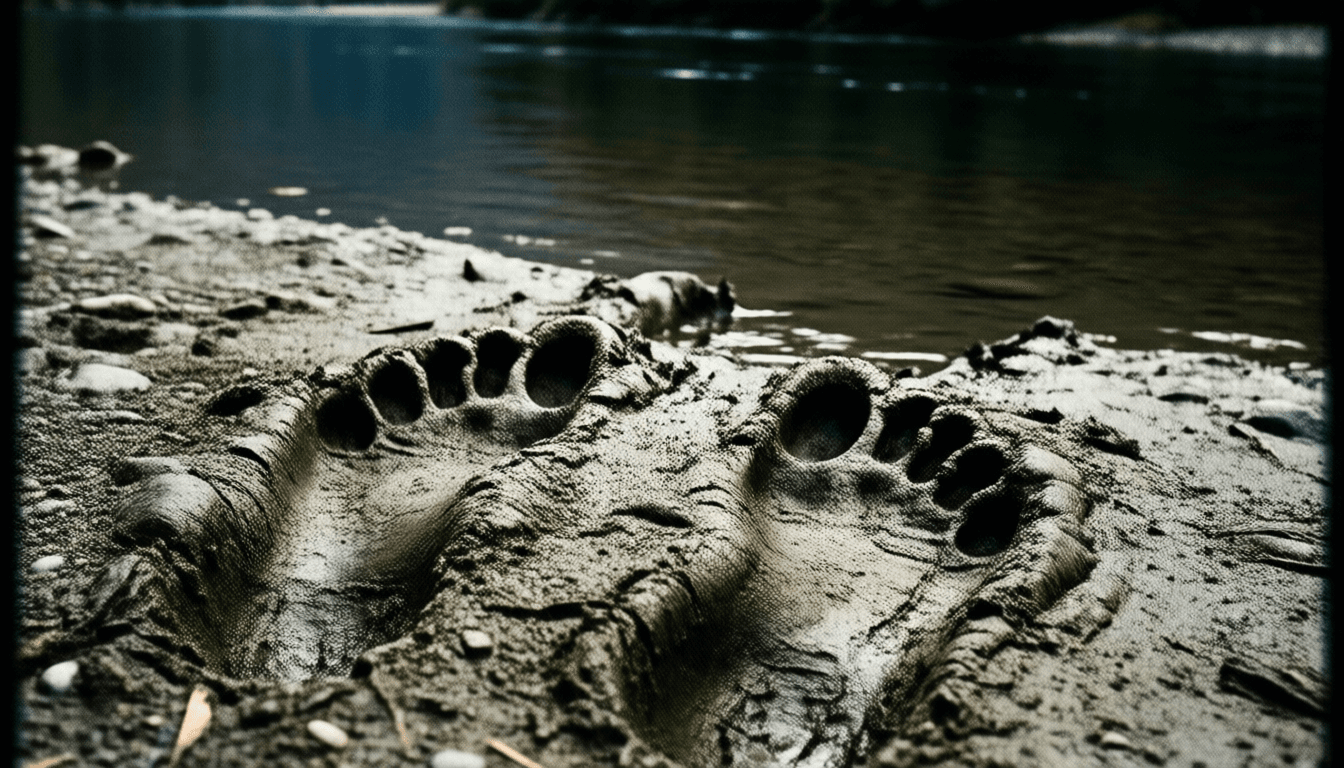
The psychological tension peaked when I discovered footprints. They weren't ordinary otter tracks, nor weasel signs. They were larger, wider, with distinctly splayed toes and clear webbing marks between them. They appeared intermittently along the muddy riverbank, always leading towards the water, and each time ending at a point where they simply vanished into the water without a trace. They were unlike any creature's tracks I had ever classified. One set, in particular, seemed to disappear directly onto the smooth surface of the river. There were no slide marks, no entry splash. It was as if the creature had simply melted into the water. My initial excitement turned into cold dread. This was no ordinary animal.
On the morning of the fourth day, I found fresh traces of the peculiar footprints leading into a narrow gorge where the river seemed to well up directly. The water here was deeper and darker, moving with a deceptively slow but immensely powerful current. I decided to use the inflatable kayak, which I judged best for silent observation. The rhythmic thumping from the hydrophones overnight had been particularly strong from this gorge.
As I paddled upstream, the air grew colder, and the light dimmed. The rhythmic hum intensified, vibrating through the kayak's hull. Rounding a bend, the sight unfolded before me. The surface of a section of the river, about 20 meters wide, was eerily agitated. It wasn't rapids or eddies. An irregular pattern of internal, seething undulations pulsated, resisting the overall downstream flow. It was like a living membrane, throbbing and shifting. As I drew closer, the water around my kayak felt strangely heavy. My paddling strokes became sluggish, as if moving through syrup.
And then, it happened. The entire section of the river's current reversed. It wasn't a small eddy. It was a deliberate, powerful counter-current, dragging my kayak into a colossal, swirling maelstrom, upstream. The air temperature dropped several degrees instantly. The water around me became a tempest, erupting upwards in impossible columns and plunging back down. I paddled with desperate strength, resisting, but my kayak was inevitably pulled towards the center of the vortex.
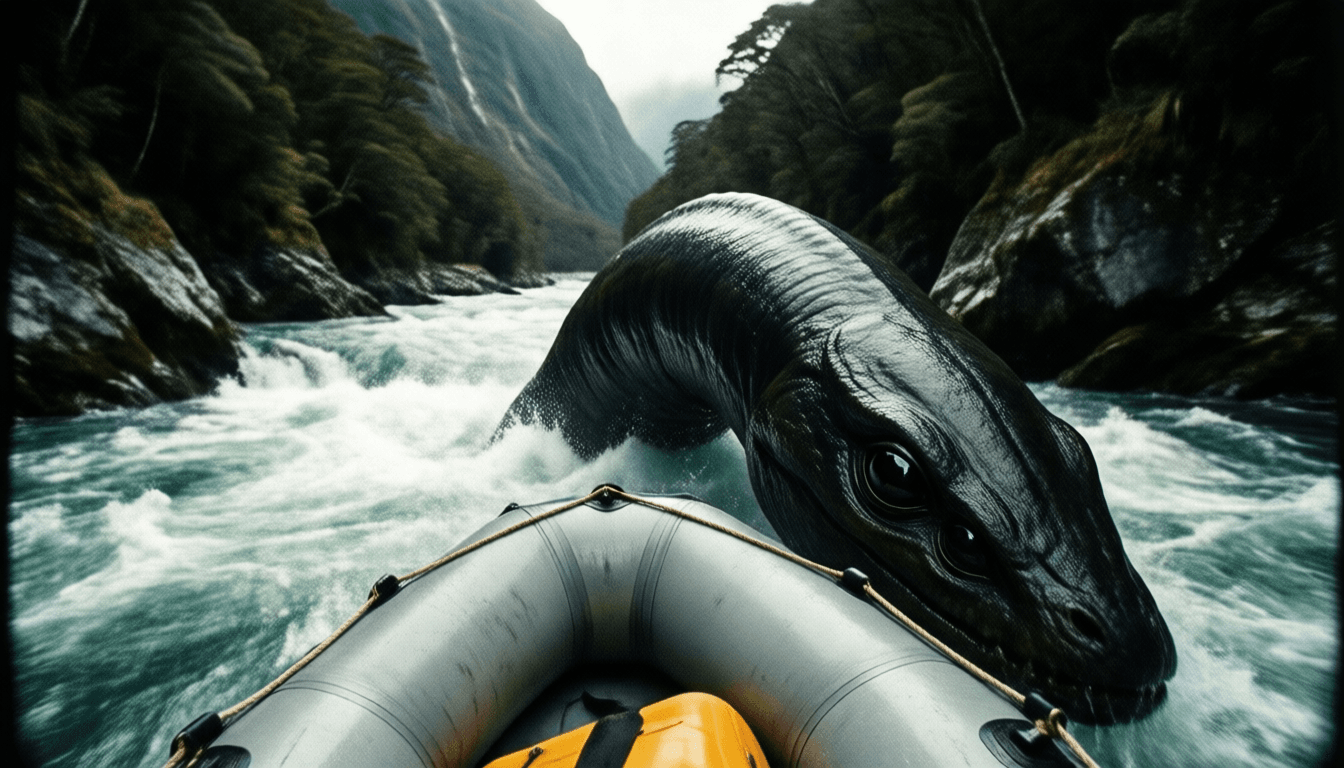
Suddenly, a dark, incredibly dense form surged from the water directly in front of me. It was far larger than what I had seen in the trail camera image, perhaps two meters long. Its broad, flattened head bore eyes that reflected a dull, ancient light, like polished obsidian. Its fur seemed to ripple with the water itself, shedding not a single droplet. It wasn't swimming, but rather gliding with an impossible fluidity, parting the very essence of the churning river. There was no growl, no roar. Only the overwhelming sound of the violently protesting water.
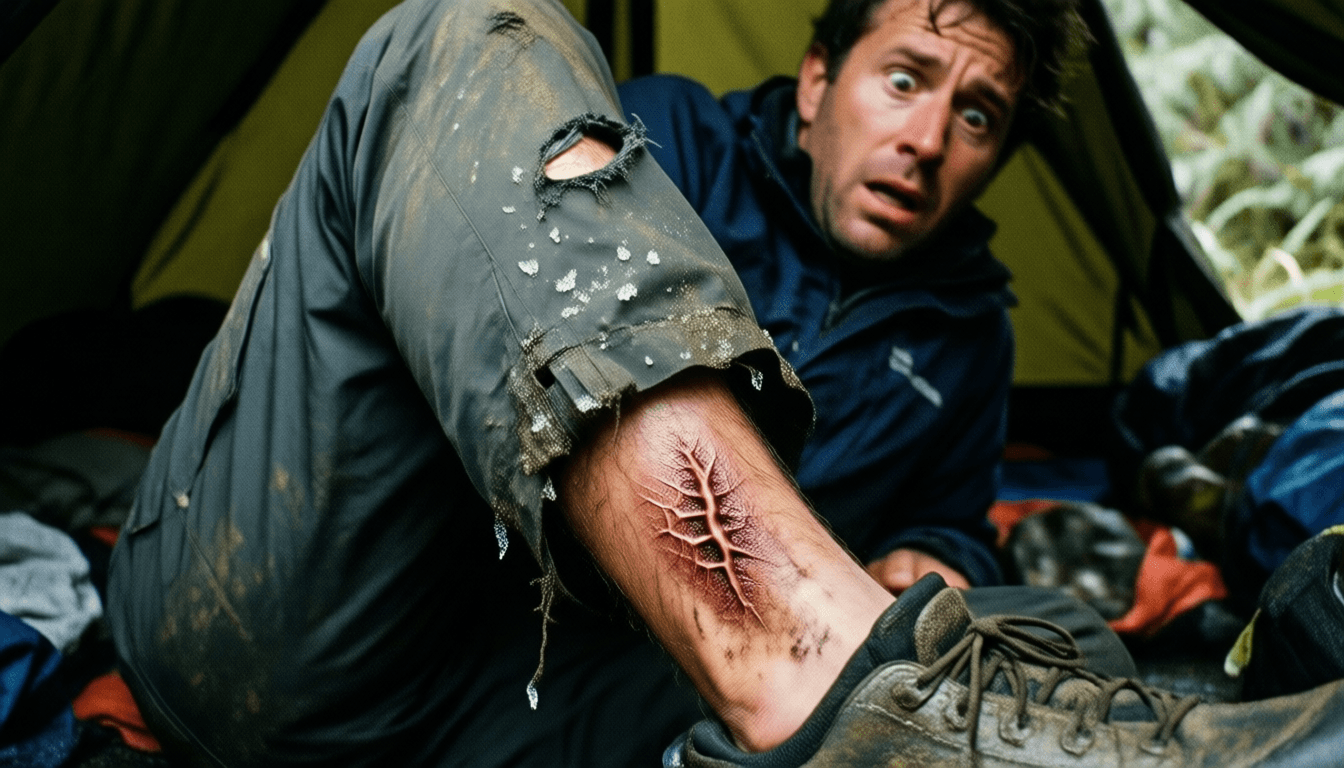
The creature lunged, without baring teeth, with a powerful, overwhelming mass. Its incredibly smooth, cold body slammed against the side of my kayak, pinning it in the churning counter-current. I felt the immense pressure of its flank crushing me, pushing me down into the icy abyss. As the kayak began to buckle, I gasped, struggling. Then, a massive, surprisingly blunt webbed foot shot out from beneath its body and seized my ankle. The grip was like stone, impossibly strong, pulling me down. Water covered my face, a roaring filled my ears, and I felt the deep, chilling cold of the abyss engulfing me. This was not merely a territorial animal. This was something that commanded the current itself. A being woven from the ancient power of the river, pulling me into its embrace. I thrashed and screamed in a cold, pure, unnatural paralysis. My hand closed around a small emergency blade, and with a final surge of adrenaline, I blindly plunged the knife into the solid, unyielding flank that pressed against me. Without a cry, the creature recoiled with an earthquake-like shudder that threatened to tear the kayak apart, releasing its grip ever so slightly. I seized the chance, pulling my screaming ankle free, abandoning my shredded kayak to the creature and its impossible current, and scrambling onto the nearest jagged rock face.
Bleeding, hypothermic, and in deep shock, I made it back to camp. My satellite communicator was destroyed in the struggle – expensive gear sacrificed to the river. The trail cameras were gone, likely washed away or submerged. Only my primary audio recorder, strapped tightly to my chest, survived the ordeal.
The medical report upon my return to civilization noted severe lacerations and contusions consistent with "being swept by a strong current and hitting underwater rocks." The deep, distinct marks on my ankle were attributed to broken branches or unique rock formations. No one questioned my story. Fiordland is a dangerous place.
But I know. The recording on my device was corrupted and filled with static, but one section remained. It played the low, rhythmic thumping, now amplified. And beneath it, a resonant, gargantuan, ancient hum, not from a throat, but from something deep within the water itself. And clinging faintly to the torn fabric of my trousers were tiny, almost crystalline residues. They were cold to the touch, and when dissolved in a single drop of water, they created miniature, perfect vortices that spun against the natural flow before vanishing.
I never returned to Fiordland. But now, whenever I stand by a large body of water—a river, a lake, even the ocean—I feel an unnatural chill, a subtle pull against the current of my very being. The reflections of shadows in deep pools seem deeper, clearer. And sometimes, in the absolute silence of a still night, I hear a faint, almost imperceptible thumping. It's not carried through the air, but vibrates through the earth beneath my feet, reaching out to the water that flows through the world, and the water that flows within me. It wasn't just an animal. It was a fragment of the abyss given form, an intelligence that commanded the water itself. And it remembered.
[ CLASSIFIED VERDICT ]
[ACCESS LOG - SOURCE FILE]
The 'Waitoreke' is a mysterious, unidentified otter-like creature from New Zealand, appearing in Māori legends and early colonial explorers' records, often mistaken for introduced species like bears or stoats. This story delves into the horror surrounding the rumors and strange phenomena linked to this legendary creature, which has been re-examined in the modern digital age.