Echoes of the Dreadful Place
The high-altitude village of Rennes-le-Château, nestled in the Aude department of southern France, has been a hotbed of speculation for the past century. At the heart of this ancient enigma lies Father Bérenger Saunière, who amassed an inexplicable fortune between 1885 and 1917. The funds he used, as a poor priest, to lavishly renovate the old church dedicated to Mary Magdalene and construct his private residence (Villa Bethania and the Magdala Tower) could not be explained by any clerical salary. It is said that he discovered a 'parchment' or 'secret' during the church's renovation, which became the source of his sudden wealth.
However, beyond theories of treasure and speculative genealogies, a less sensational but more chilling detail persists in local legend: the atmosphere of the church itself. Father Saunière’s redesign leaned more towards the bizarre than the pious. Above the entrance, a stone statue of the demon Asmodeus (traditionally known as a guardian of secrets and treasures) greets visitors. And directly above this menacing figure, inscribed on the lintel, is the Latin inscription: "Terribilis est locus iste" – "This place is dreadful."
Elderly locals, in particular, whisper about a subtle, heavy silence in the air since Father Saunière’s extensive work. They say that it wasn't wealth, but a silence that seemed to absorb all sound, that settled over the church. Saunière himself reportedly became increasingly reclusive, possessed, and driven not by greed but by an unexplainable, urgent compulsion. Our investigation began by looking beyond gold, to explore the true nature of this 'dreadful place' that consumed Saunière.
My arrival in Rennes-le-Château was in an unusually cold October. Perched on a rocky promontory, the village felt ancient and isolated. The wind, which often sweeps through the foothills of the Pyrenees, was eerily absent. In stark contrast to the ordinary hum of rural life, an oppressive stillness hung in the air.
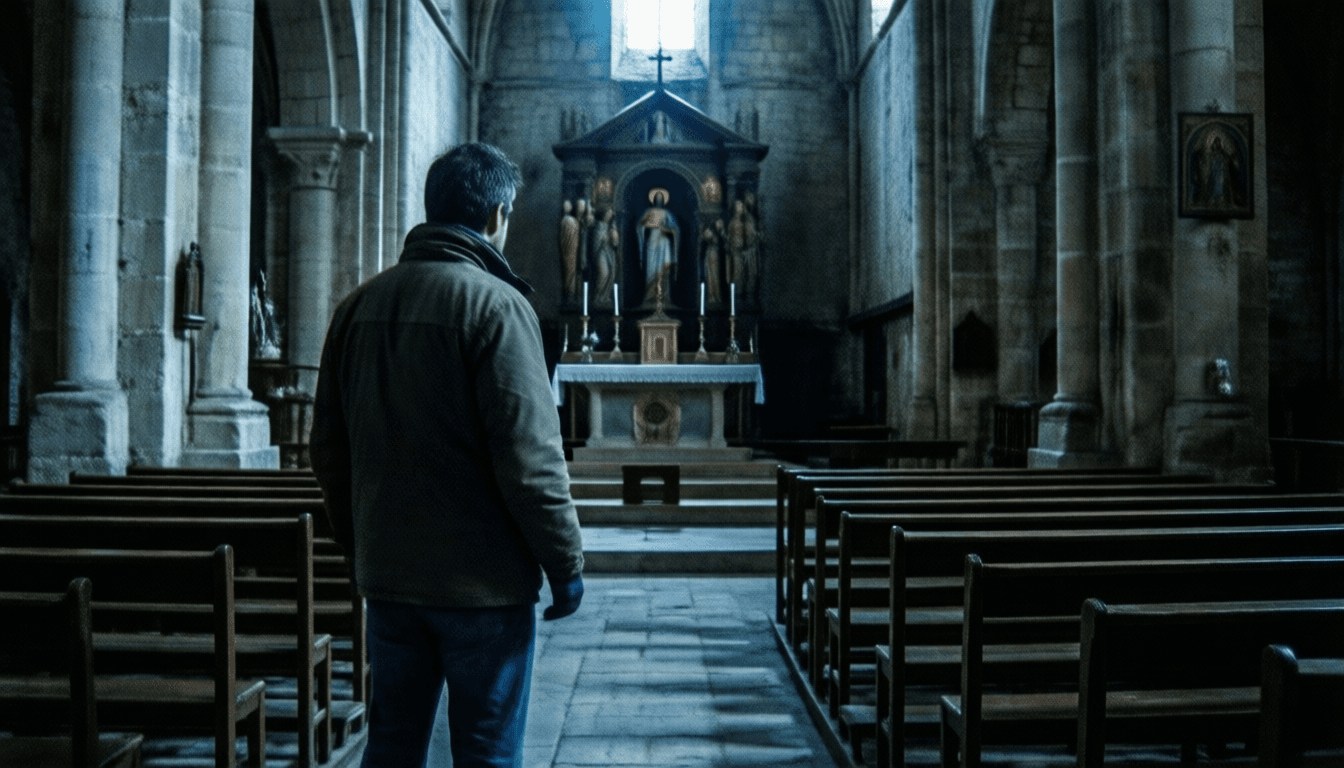
My first destination was the Church of Mary Magdalene. The thick wooden doors, flanked by the grinning Asmodeus statues, felt cold beneath my gloved hand. Above, the carved words 'Terribilis est locus iste' seemed to resonate with a low, almost infrasonic hum. Inside, the church was colder than the outside air. Saunière's peculiar decorative elements were immediately striking: a chilling Stations of the Cross where demonic figures appeared in one scene, an odd holy water font supported by four demonic gargoyles. But the most astonishing thing was the pervasive silence. My footsteps on the stone floor produced no echo. The reverberation commonly heard in a stone church was simply... absent. It was as if the air itself absorbed sound, creating a vacuum.
From the church, I moved to Saunière's private estate, Villa Bethania, and his study tower, the Magdala Tower. The gardens were overgrown, the villa closed. The Magdala Tower stood like a sentinel, a circular stone tower connected by a precarious walkway. Saunière spent his later years here, in this isolated retreat, poring over ancient documents and texts. The air around the tower was even heavier, colder, and stiller than inside the church.
Access to the interior of the Magdala Tower was difficult, but I managed to gain entry through local contacts. The spiral stone staircase was narrow and worn. As I ascended, the silence deepened. My own breathing seemed unnaturally loud, yet the space itself seemed to actively suppress any external noise. Dust motes, caught in the faint light filtering through narrow windows, hung perfectly still, undisturbed by any natural air currents.
Inside Saunière's study, the air was thick, almost viscous. The sheer volume of ancient manuscripts, many on obscure theological and alchemical subjects, was overwhelming. My recorder picked up nothing but static. I whispered, then spoke in a normal voice, but the sound was almost instantly absorbed, dying on my lips. It was a suffocating acoustic vacuum.
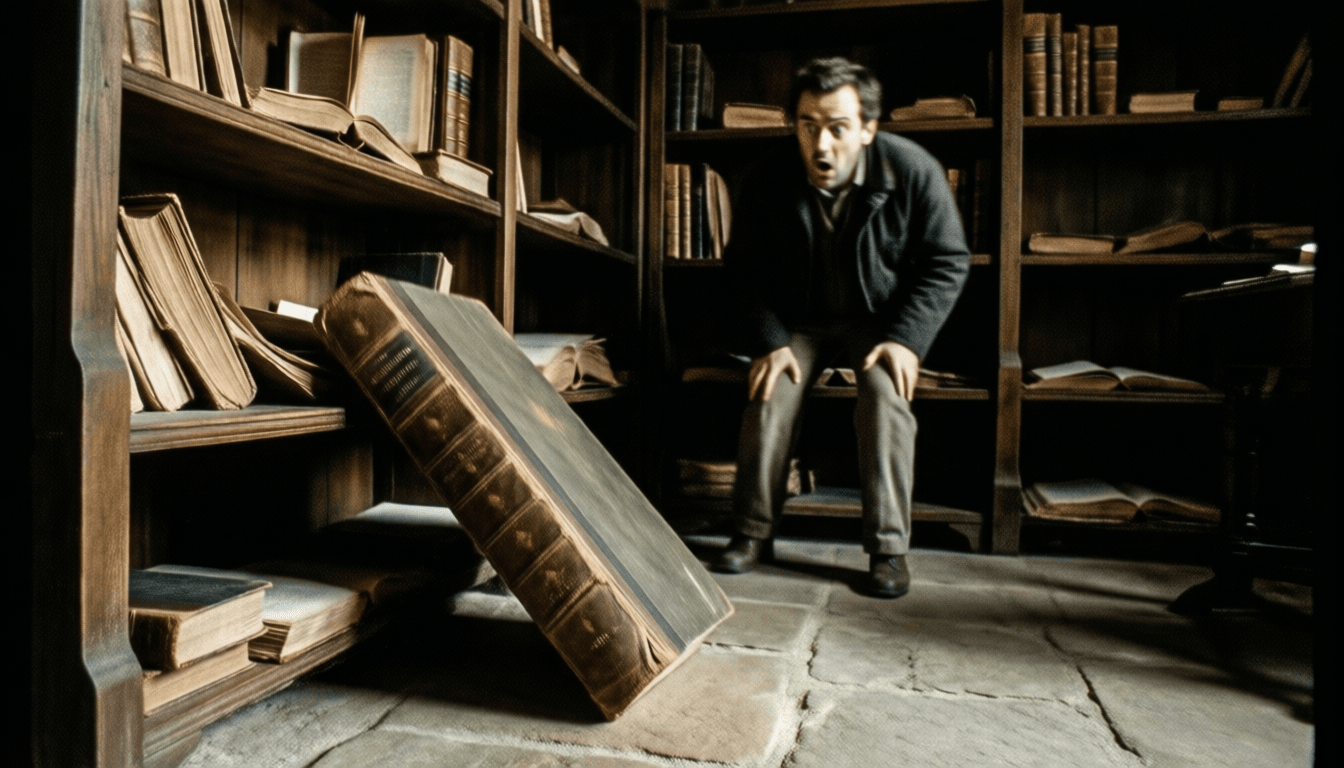
As I began to examine Saunière’s personal effects – an old desk, unmarked ledgers – a faint, metallic scent began to pervade the air. It was fleeting but distinct, like a mix of ozone and damp earth. I paused, listening. Nothing. Only the deep, dead silence. Then, a heavy book on medieval cartography slowly slid from a shelf at the edge of my vision. It fell not with a crash, but a soft, almost cushioned 'thump,' as if the air itself had slowed its descent. I inhaled sharply, frozen. The book lay open, revealing an intricately drawn map of a forgotten European region, far from Rennes-le-Château, as I would later discover.
I was in Saunière’s private study at the very top of the Magdala Tower. The room was small, circular, dominated by a heavy wooden table and a single unlit oil lamp. Moonlight filtered through a narrow arched window, casting long, distorted shadows. I was meticulously cataloging the remaining documents, including a well-worn, heavily annotated prayer book Saunière frequently referenced.
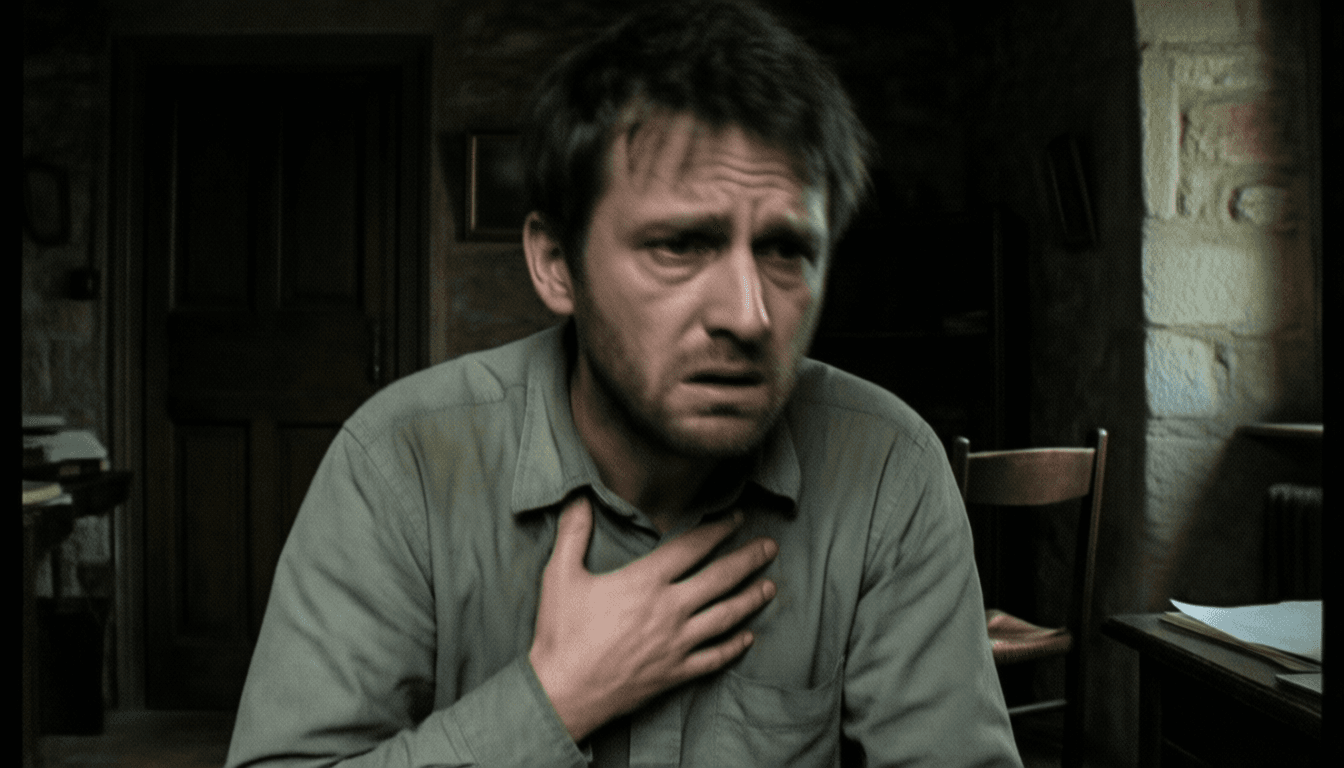
As I carefully turned a page, the air in the room suddenly shifted. It wasn't a draft. It was an instantaneous, profound increase in atmospheric density. My ears popped, and the room became overwhelmingly heavy, as if it had plunged rapidly into deep water. Breathing became a conscious, strenuous effort. My chest tightened, and a dull ache spread across my ribs. The metallic scent intensified, now pungent and nauseating.
And then, from somewhere deep within the stone of the tower, the sound began. It wasn't a whisper, nor a groan. It was a resonant hum, a vibration that echoed not in my ears, but *through my bones*. It was as if the entire structure, the ground beneath my feet, and the very air around me were humming with a colossal, silent force. The inscription 'Terribilis est locus iste' reverberated in my mind, the Latin words now manifesting as a physical sensation.
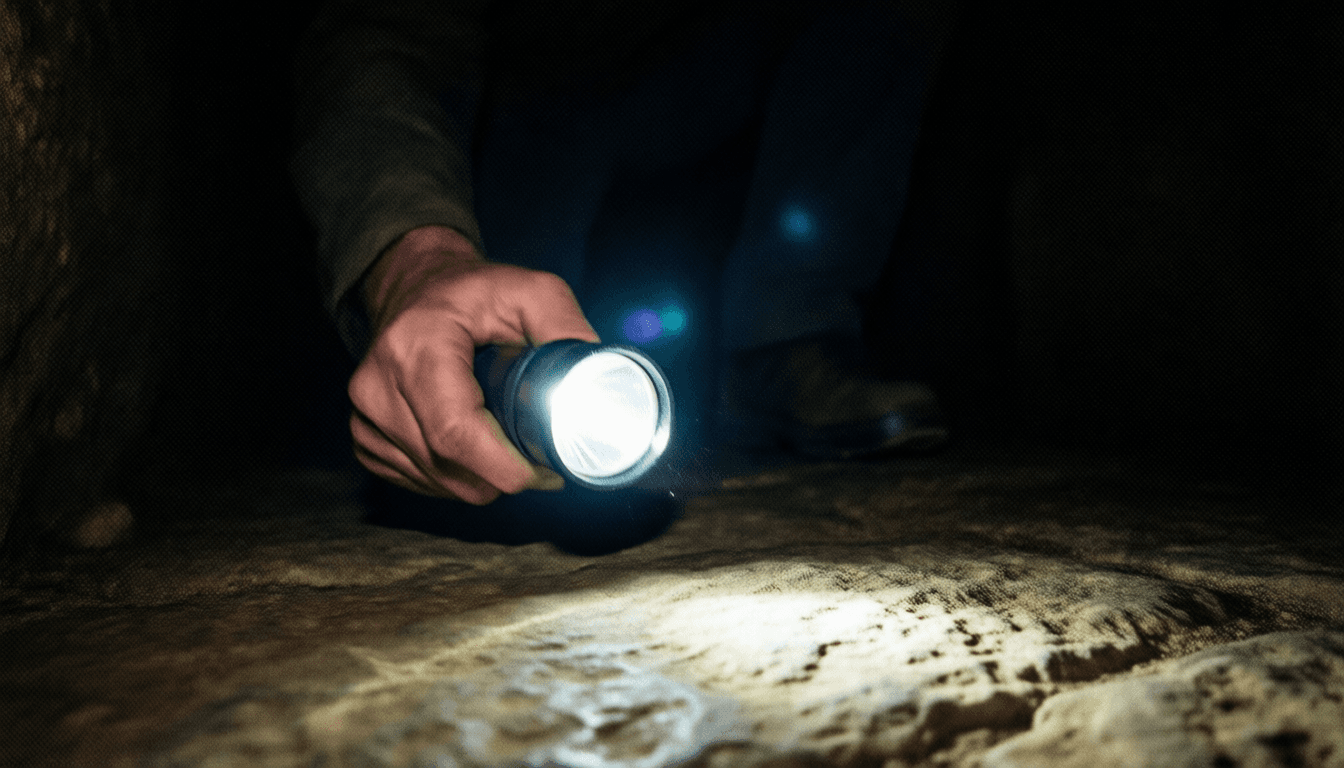
The pressure intensified. I felt myself being pushed downwards, my knees buckling. An invisible, crushing weight pressed down on my shoulders and back, constantly forcing me towards the floor. My muscles trembled, unable to resist. The flashlight I held flickered violently. Its beam danced erratically along the walls before abruptly clicking off, plunging the room into absolute darkness.
I was pinned, unable to move or properly breathe. The resonant hum grew more intense, vibrating through my skull, causing a sickening dizziness. It was the physical manifestation of an irrational, consuming dread. I felt a coldness spread through my limbs, seeping inwards. There was an undeniable sensation of being *drawn in* or *drained*. My vision began to narrow, the edges blurring. It was as if my very consciousness was being absorbed by the suffocating weight and bone-deep vibrations. This was no spirit or phantom. It was the raw, pure *place* itself, acting. It was the crushing reality of 'Terribilis est locus iste.'
I have no memory of how I escaped the Magdala Tower. Fragments remain: a desperate scramble down the winding stairs, the sudden feel of the cool, light air outside the tower, collapsing onto the dew-soaked grass. Locals found me hours later, attributing my state to fatigue and the thin mountain air. I offered no other explanation.
Back in my study, far from Rennes-le-Château, I am now plagued by a persistent, subtle ringing in my ears during particularly quiet moments. Enclosed spaces now induce a deep, almost paralyzing anxiety. But it is the less tangible effects that truly remain.
Revisiting Saunière’s fragmented journal, which I had once dismissed as the ramblings of a man under immense pressure, I found a passage I had overlooked: *'What was unearthed was not treasure, but a boundary. And the price was not wealth… but attention. It listens. It waits. And it tastes fear.'* I understand now. Saunière’s 'wealth' was merely a desperate attempt to suppress, to distract from, to build a defense against its true secret.
And sometimes, when the room is quiet and the lights are dim, I can still hear it. Not an external sound, but a deep, resonant hum that seems to echo from deep within my bones. A subtle, almost imperceptible pressure in my chest. It is the echo of 'Terribilis est locus iste,' now a permanent resonance within me. I did not fully escape the tower. I brought a piece of that dreadful place home. And I know with chilling certainty: it is still listening. And waiting.
[ CLASSIFIED VERDICT ]
[ACCESS LOG - SOURCE FILE]
In the small village of Rennes-le-Château in southern France, a mystery surrounds Father Bérenger Saunière, who amassed sudden wealth in the late 19th century. A poor priest, he lavishly renovated an old church and built a manor, during which he reportedly discovered a 'secret' or 'parchment'. The source of his wealth, linked to treasure, ancient knowledge, or other mysteries, has inspired numerous urban legends and novels.