Breath of the Abyss: Mystery of the Blue Hole
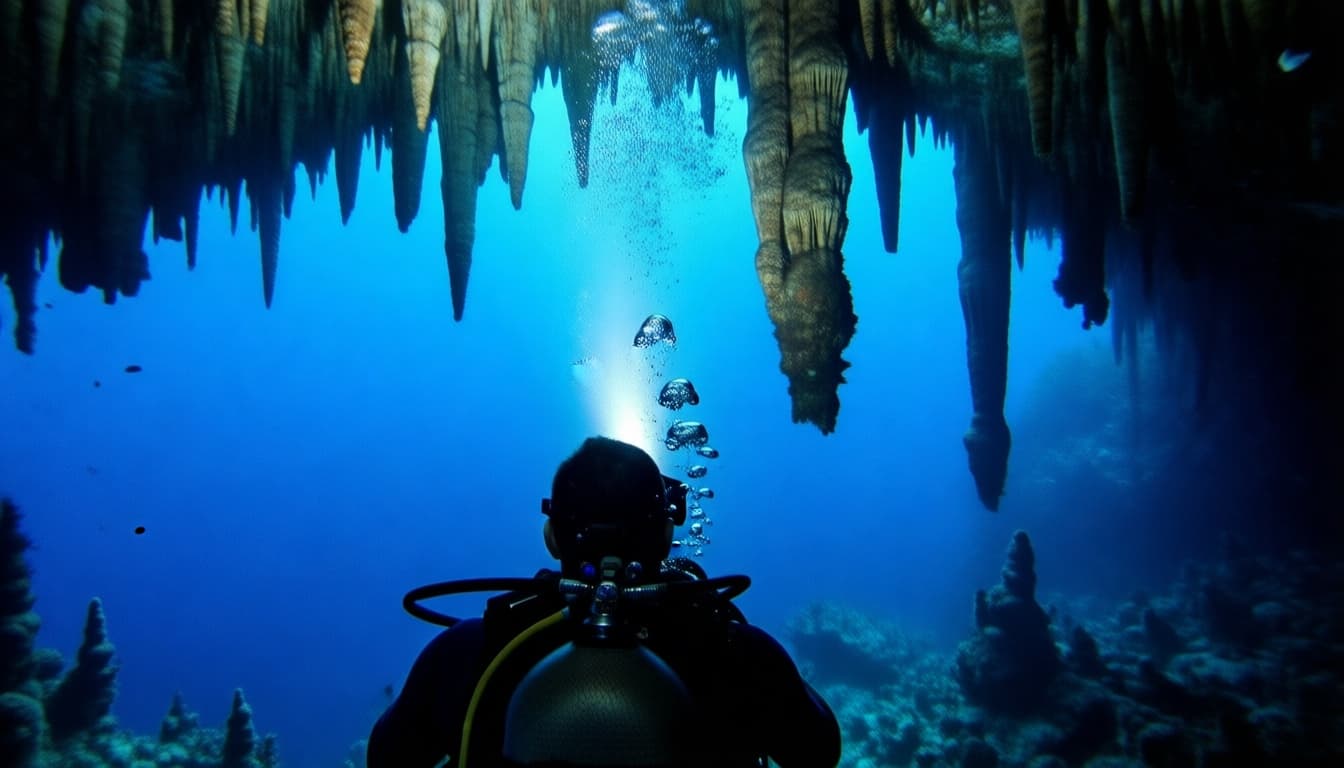
The Great Blue Hole, a massive marine sinkhole situated off the coast of Belize, is a natural wonder known globally for its geological grandeur and unique diving environment. Over 300 meters wide and more than 125 meters deep, this abyss is filled with ancient stalactite formations. However, beyond official diving records and tourist brochures, a persistent whisper circulates among deep technical divers. It’s not about common hazards like nitrogen narcosis or equipment failure. Rather, it concerns specific, anomalous reports consistently emerging from expeditions venturing below 90 meters.
On technical diver online forums like “DeepDescent,” threads repeatedly surface about localized current reversals—water flows that defy predictable thermocline and halocline dynamics, especially pronounced near 100 meters. These reports often coincide with sudden, disorienting forces—a “pull” or a “sonic implosion”—followed immediately by critical equipment malfunctions: inexplicable air loss, light failure, or complete communication blackouts. One archived discussion recounts how a diver, “AzureAbyss_78,” reported a sudden, powerful “suck” from an unknown source, moments before their triple-redundant rebreather system simultaneously signaled critical oxygen levels and scrubber failure, necessitating an emergency ascent that resulted in severe decompression sickness and permanent neurological damage. These are not isolated incidents; they are too consistent, too specific, to be dismissed as mere coincidence or diver error, forming a pattern of a deeper, stranger truth hidden within the heart of the Blue Hole.
Dr. Aris Thorn, a marine geophysicist and accomplished trimix technical diver, dismissed the “DeepDescent” posts as anecdotal sensationalism. His purpose was scientific: to retrieve undisturbed core samples from a nearly unreachable deep shelf at approximately 115 meters, searching for extremophiles and ancient climate indicators. His gear was state-of-the-art: a closed-circuit rebreather, multiple redundant gas sources, high-intensity primary and backup lights, and sophisticated environmental sensors for temperature, salinity, and current velocity.
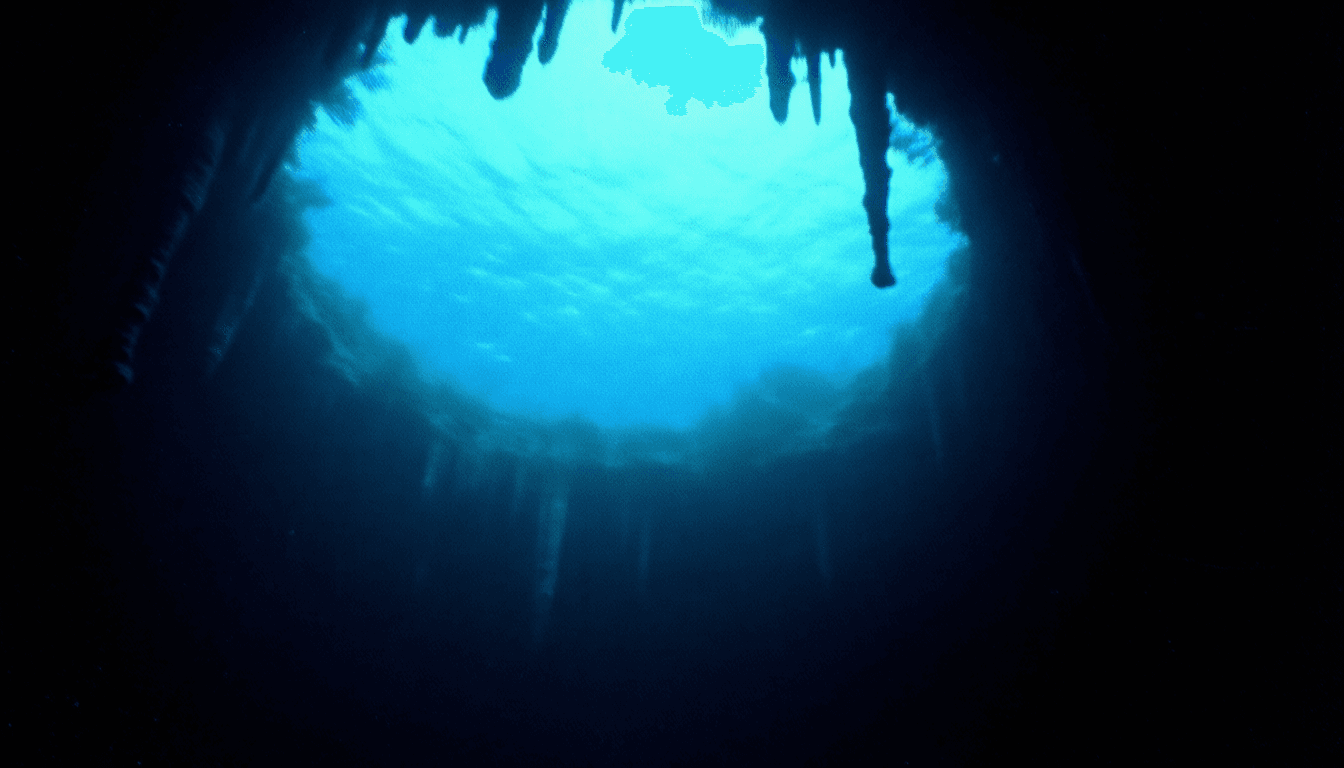
His descent began. The first few meters were textbook. Vibrant coral gave way to the first halocline where fresh and saltwater layers met, blurring visibility distinctly. Below 30 meters, light diminished rapidly, bathing the circular maw in an eerie blue, then darkness. Aris meticulously logged his progress, observing the increasing pressure, the slight chill of thermoclines, and the impressive ancient stalactites looming like an inverted cathedral. The low hum of his rebreather and the occasional click of his camera were the only sounds. The water was perfectly still; a controlled descent into predictable geological wonder continued.
At approximately 95 meters, the first anomaly was detected. Aris’s current sensor, designed to measure minute gradients, showed a faint, localized current pulling against his planned trajectory. Not dangerously strong, but directional and persistent—a subtle, almost imperceptible nudge that required more frequent fin adjustments than anticipated. His powerful 20,000-lumen primary light seemed to struggle. The water column before him wasn't simply dark; it felt denser, absorbing light unnaturally, creating pockets of absolute, impenetrable blackness that seemed to move and pulse at the periphery of his vision.
He checked his instruments. The temperature sensor registered a localized drop of several degrees, significantly colder than the surrounding water, which then fluctuated wildly before returning to normal. Sound also changed. The distant, faint hum of the support boat's generator, a comforting constant transmitted through the water, became erratic. For seconds, it was completely absorbed, gone, only to return with delayed, stretched echoes, as if struggling through a viscous medium. Aris assumed interference, adjusted his comms, but only static followed by silence. He attributed it to extreme depth, checked essential systems—all indicators remained green. Yet, an irrational unease began to seep in.
Aris reached the 115-meter shelf. As he stabilized his position and prepared to deploy the core drill, the subtle current intensified. It was no longer a gentle nudge; a sudden, violent localized surge of water slammed into him, pulling him sideways, downwards, and upwards in rapid, disorienting succession. His buoyancy compensator fought against forces that defied engineering. This was no natural current; it was a sudden, impossible manipulation of the water itself.
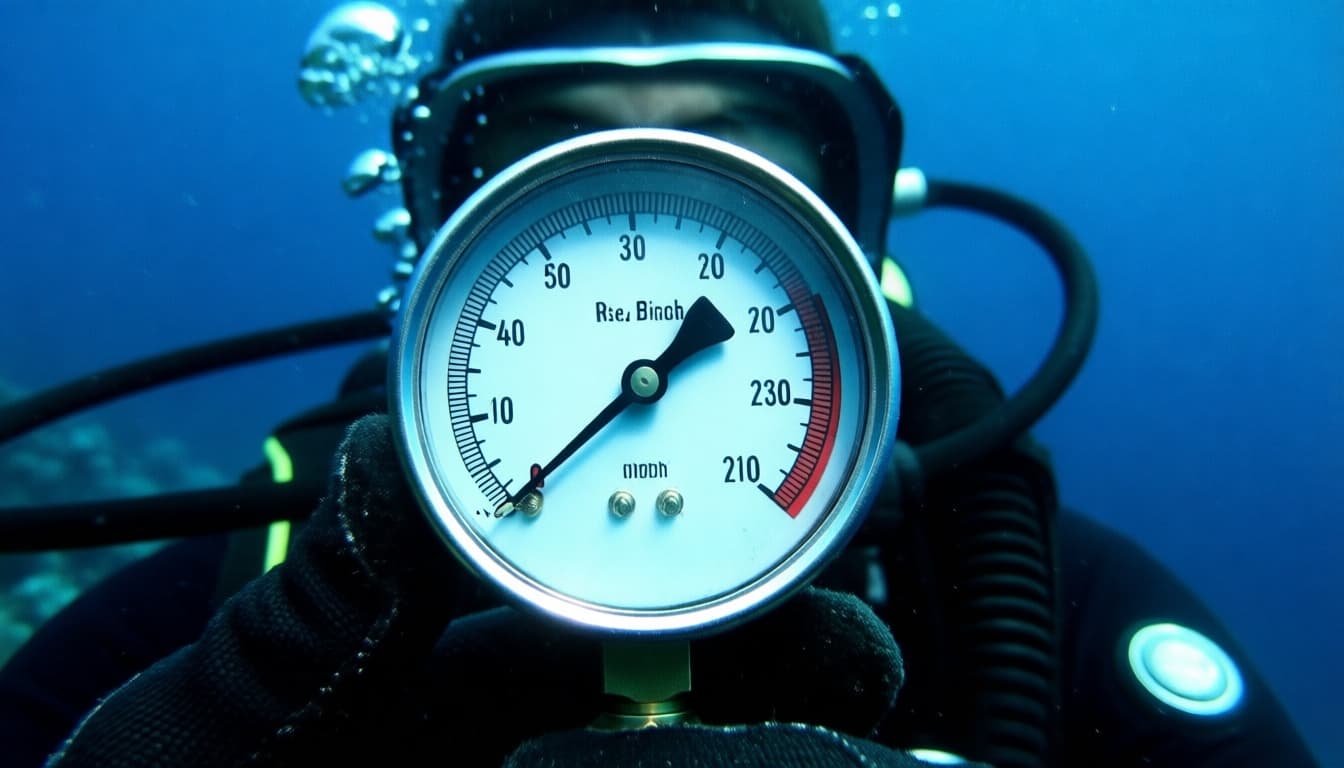
His powerful primary light flickered. Not malfunctioning, but as if the photons themselves were being actively consumed by the darkness. Then, all his lights failed, one by one. He fumbled for his backup—a primitive but reliable dive light that barely cut a narrow beam through the suffocating, inky blackness. A sharp, grinding sound, like stone tearing, amplified through the water, momentarily paralyzing him, only to be replaced by an absolute, breathtaking silence.
He checked his rebreather’s primary tank. The pressure gauge spun wildly, then dropped to critical levels with terrifying speed, as if the air was being actively sucked directly from the cylinder. He switched to his bailout tank, but within seconds, that gauge too began to plummet. Suddenly, an immense pressure squeezed his chest, as if a giant hand had gripped him. He was pinned against an ancient stalactite wall, his mask partially dislodged. Through the distorted underwater visibility, a shape—not organic, not solid, but an absence, a void that rippled the water around it—streaked across his peripheral vision and was gone.
Panic seized him. He jettisoned all unnecessary weight, risking severe decompression sickness. As he attempted an emergency ascent, the water became a sentient enemy. It fought him, pulling him back, trying to trap him in narrow, chimney-like crevices of limestone. He felt powerful pressure waves, localized turbulence, and momentary vacuums that threatened to tear his gear off. “It” was actively pursuing him. Not with speed, but by maliciously manipulating the water, creating invisible, suffocating currents designed to drag him back into the absolute darkness. He thrashed and fought his way upwards, gasping for the surface. A final, immense surge tried to pull him down as he passed 50 meters. He barely broke the surface, out of air, barely conscious, with a damaged rebreather and a body screaming in agony.
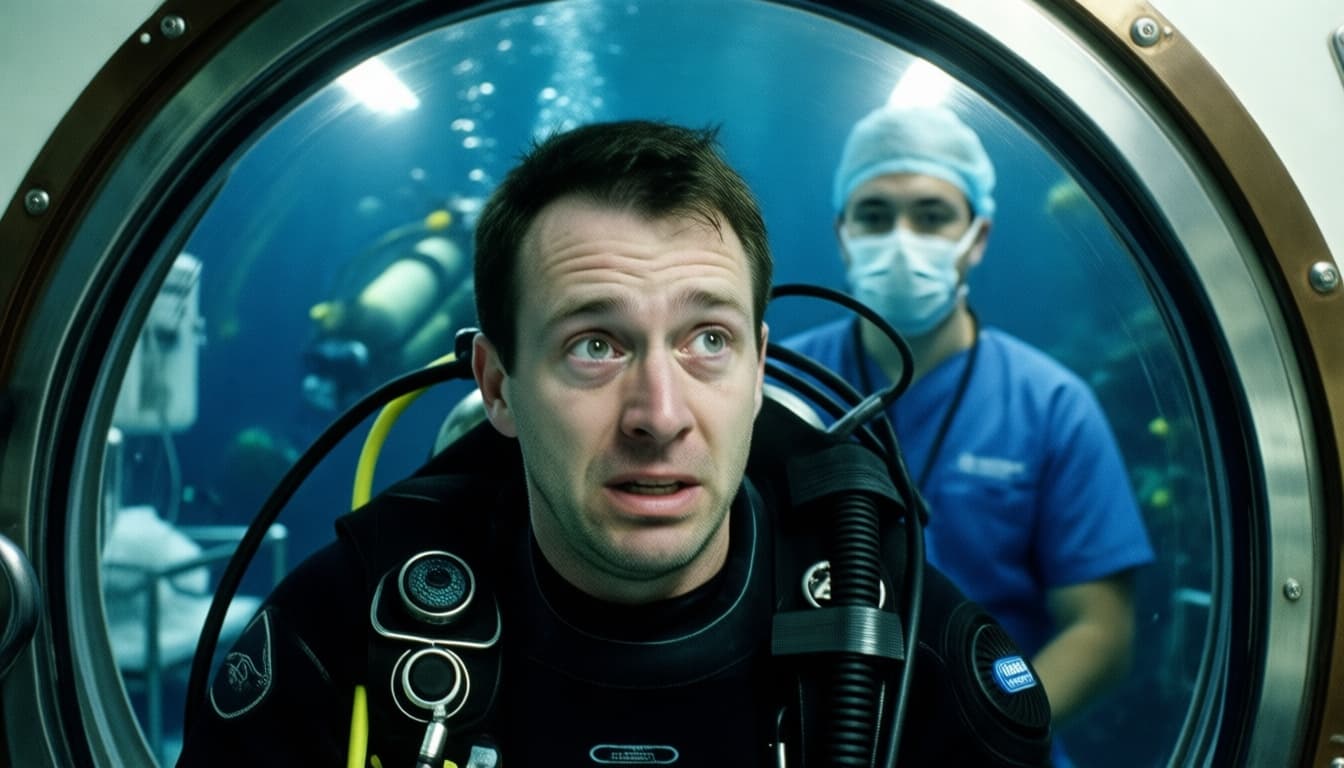
Aris was pulled from the water, suffering from severe decompression sickness, ruptured eardrums, and hypothermia. Weeks were spent in a hyperbaric chamber, a painful recovery to regain his physical health. But his mind remained trapped at 115 meters.
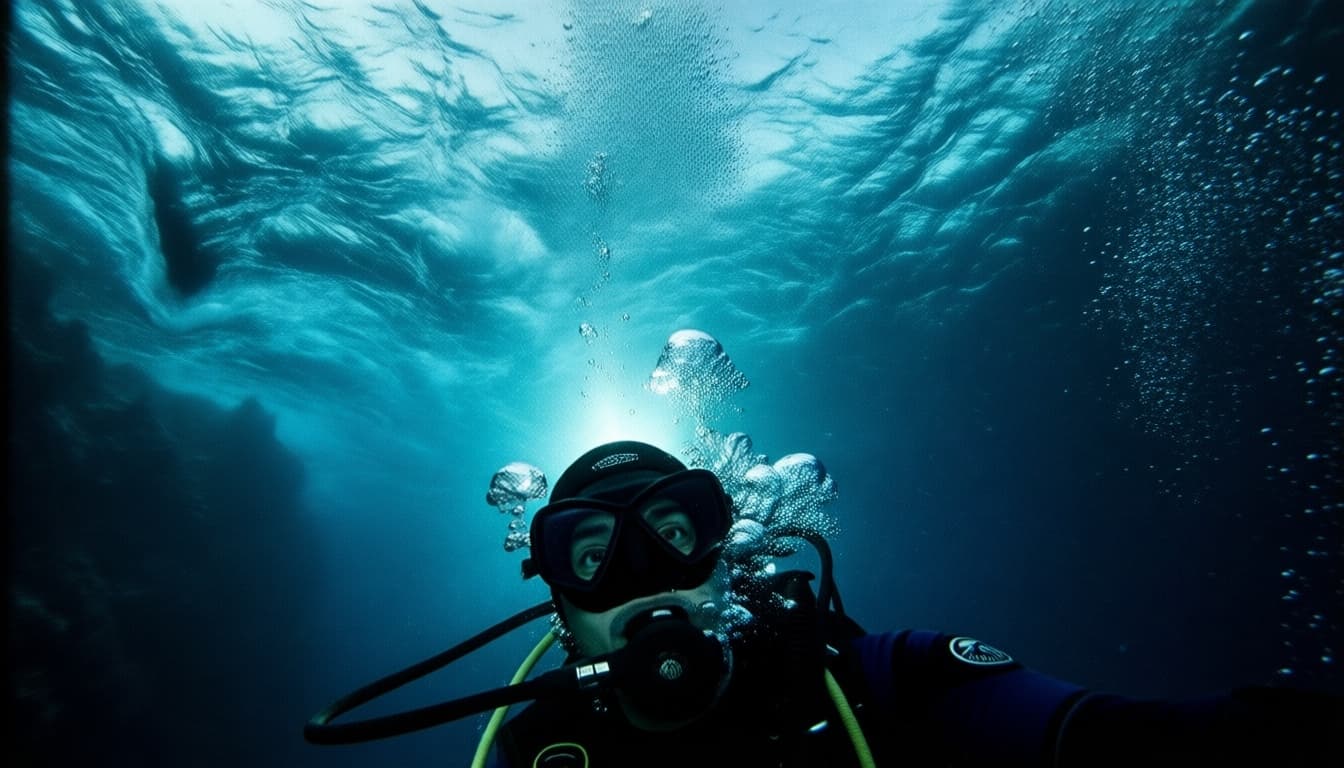
His equipment was recovered. The primary rebreather’s regulator was inexplicably failed—or rather, forced open, venting all its air. More chillingly, the gauge on his untouched, sealed pony bottle (a completely independent emergency air supply) also registered critically low pressure, as if it too had been siphoned. His dive computer showed impossible pressure fluctuations and depth readings during the critical moments, defying known physics. Miraculously, his core samples were sterile, uniform, and devoid of any expected extremophile activity—as if sterilized by an unknown force.
He tried to rationalize it: equipment failure, pressure-induced hallucinations, severe narcosis. But the uniform emptying of even his redundant air supply, the impossible computer data, and the physical damage to robust equipment defied all logical explanation. When he cautiously mentioned the anomalous currents and “it” to the rescue team, their faces hardened. Local divers and fishermen, having heard rumors of his near-fatal encounter, avoided his gaze. Some muttered about “the heart of the Blue Hole” or “the ancient darkness,” offering no explanations, only a chilling, knowing silence that spoke volumes.
Medically permanently retired from deep diving, Aris spent years poring over geological charts, ancient marine records, and obscure local legends. He found fragmented mentions in colonial records of inexplicable “vortices” and “calm spots that swallowed ships” occurring near the Blue Hole—records always attributed to navigation errors or bad weather. Whenever he saw vivid documentaries about the Blue Hole’s marine life or adventurers plunging into its depths, a cold dread settled in his chest. He knew. He knew what waited below 110 meters, in the absolute darkness. He doesn't speak of it directly, but occasionally posts anonymous warnings on deep-diving forums about “localized current anomalies” or “unpredictable pressure drops,” cautioning against descending below a certain depth. His warnings are always dismissed as the ramblings of an unverified, traumatized diver. He knew. And he knew they wouldn't understand until they too were pulled into that suffocating, unnatural silence.
[ CLASSIFIED VERDICT ]
[ACCESS LOG - SOURCE FILE]
Whispers circulate that the deep parts of the Blue Hole harbor more than just geological wonders. Unexplained water currents and equipment failures consistently occur, almost as if an unknown entity is trying to pull intruders deeper into its domain, defying scientific explanation. This reflects an ancient fear of unseen forces in the deep sea that can swallow divers whole.