Bloodless Wound: Shadow of the Barranca
In October 2023, strange rumors began to circulate in a remote village near Talpa de Allende, Jalisco, Mexico, within the Sierra Madre Occidental. Events initially dismissed as the work of coyotes or pumas grew increasingly frequent at specific ranches, particularly 'Rancho del Sol,' operated by the Vargas family. With strikingly subtle and ominous commonalities, distinctly different from typical predatory behavior, local social media and anonymous forums were gripped by fear. Most photos that spread with the rumors were rough and blurry, yet a peculiar chill emanated from them.
Though now deleted from most public platforms, one crucial image preserved in the archives depicted a young kid goat lying peacefully in its pen. Its eyes were wide and unfocused, with no external trauma. Crucially, there were three or more perfectly circular holes, the size of coins, punctured on its neck and flank. While its internal organs appeared intact externally, tissue sample analysis, privately conducted by an independent veterinarian, was shocking. The animal was in a state of 'complete exsanguination,' with over 80% blood volume reduction, yet there was not a single splash or pool of blood on the surrounding ground. No signs of struggle, no footprints other than the farmer's. This pattern appeared with chilling consistency at several ranches in the area over three weeks, prompting the archive's anomaly detection algorithm to activate a 'Chupacabra' classification, signaling a severe divergence from known natural phenomena.
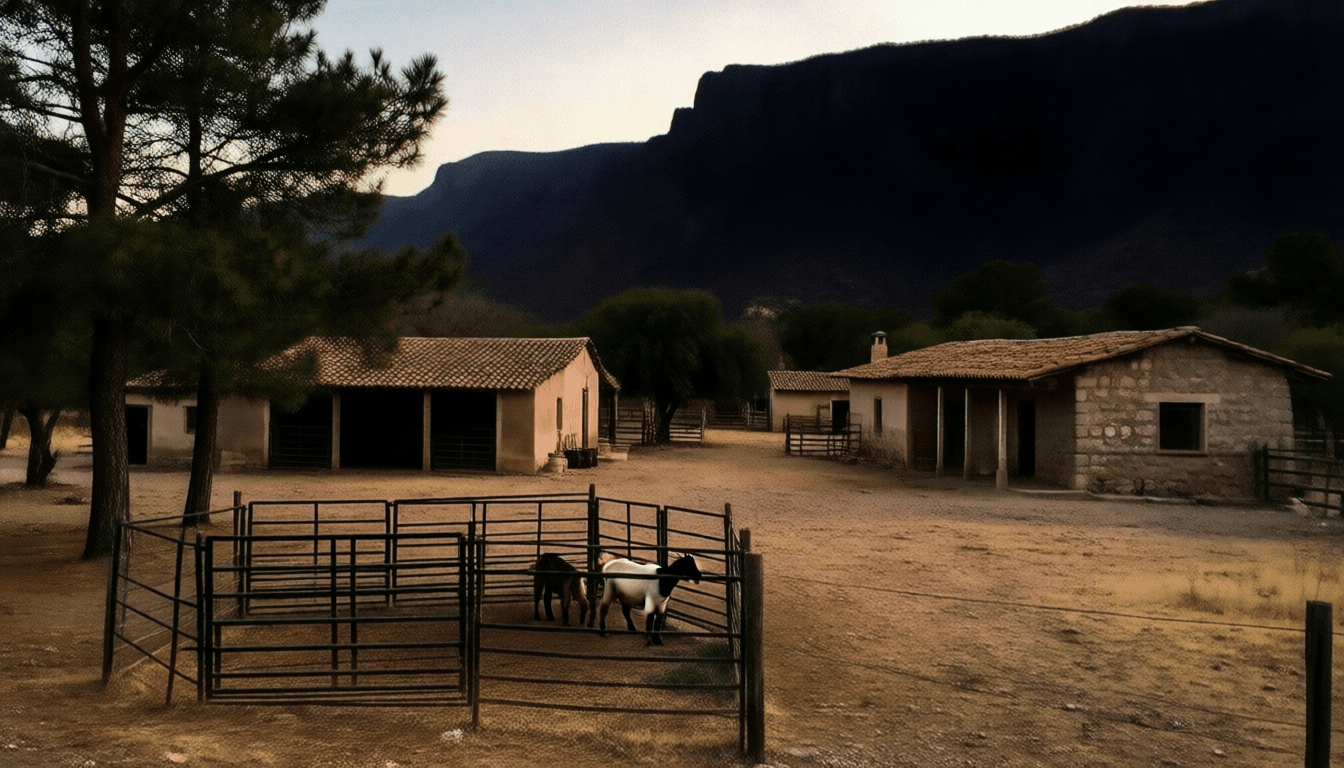
Upon arriving at Rancho del Sol, Don Emilio Vargas greeted me with a weary face, his skepticism having crumbled under the relentless losses. The heavy scent of pine and dry earth hung in the air, occasionally mixed with a subtle metallic hint. The goat pen was silent. The usual bleating was absent. Don Emilio led me to a small enclosure behind the barn where two young goats had been found that morning.
The scene was precisely as described in the reports. Two small carcasses bore identical punctures, perfectly devoid of blood within the clean pen. I scanned the ground with a portable spectrometer. No traces of blood. No external biological matter. The earth was hard-packed clay, undisturbed. Only the small hoofprints of the goats were identifiable. I deployed specialized atmospheric sensors to log ambient humidity, temperature, and any abnormal gas traces, but nothing immediately stood out.
Explaining the incidents, Don Emilio pointed towards a narrow, overgrown barranca (canyon) leading deeper into the forest along the ranch boundary. "It comes from there," he stated matter-of-factly. "Always from that barranca. There are old caves. No one goes up there anymore." My primary objective became clear: to trace the entry point leading into the barranca. I prepared for a solo reconnaissance, focusing on quiet movement and remote data collection, while setting up a network of motion-activated cameras and acoustic sensors around the ranch perimeter.
The barranca was a labyrinth of steep rock faces, dense vegetation, and debris from past landslides. Sunlight barely filtered through the canopy, creating an oppressive gloom. The air grew progressively colder and humid, carrying the scent of wet earth and decaying leaves. I moved cautiously, checking my GPS and environmental sensors. The deeper I ventured, the more pronounced the environmental anomalies became.
First, it was the sound. The typical sounds of the forest – insects, distant birds, rustling leaves – gradually diminished. In less than thirty minutes, they ceased almost entirely. The silence was profound and unnatural. Even my careful footsteps seemed amplified, yet their echoes were strangely muffled, as if the air itself absorbed sound. Acoustic sensors recorded an extreme broadband noise reduction.
Next came visual disturbances. Shadows, cast by the shifting, filtered light, seemed to momentarily possess independent movement at the edge of my vision. Unlike leaves swaying in the wind, these were subtle, angular motions, too fast to properly register. Thermal cameras occasionally picked up small, localized, transient cold spots moving against natural heat flows.
As I approached a natural fissure in the rock face, partially obscured by thorny vines—a potential cave entrance—I detected a faint, acrid smell. It was subtle, almost metallic, reminiscent of ozone or highly concentrated ammonia, clinging to the humid air. Atmospheric sensors showed a slight but consistent spike in unidentified compounds.
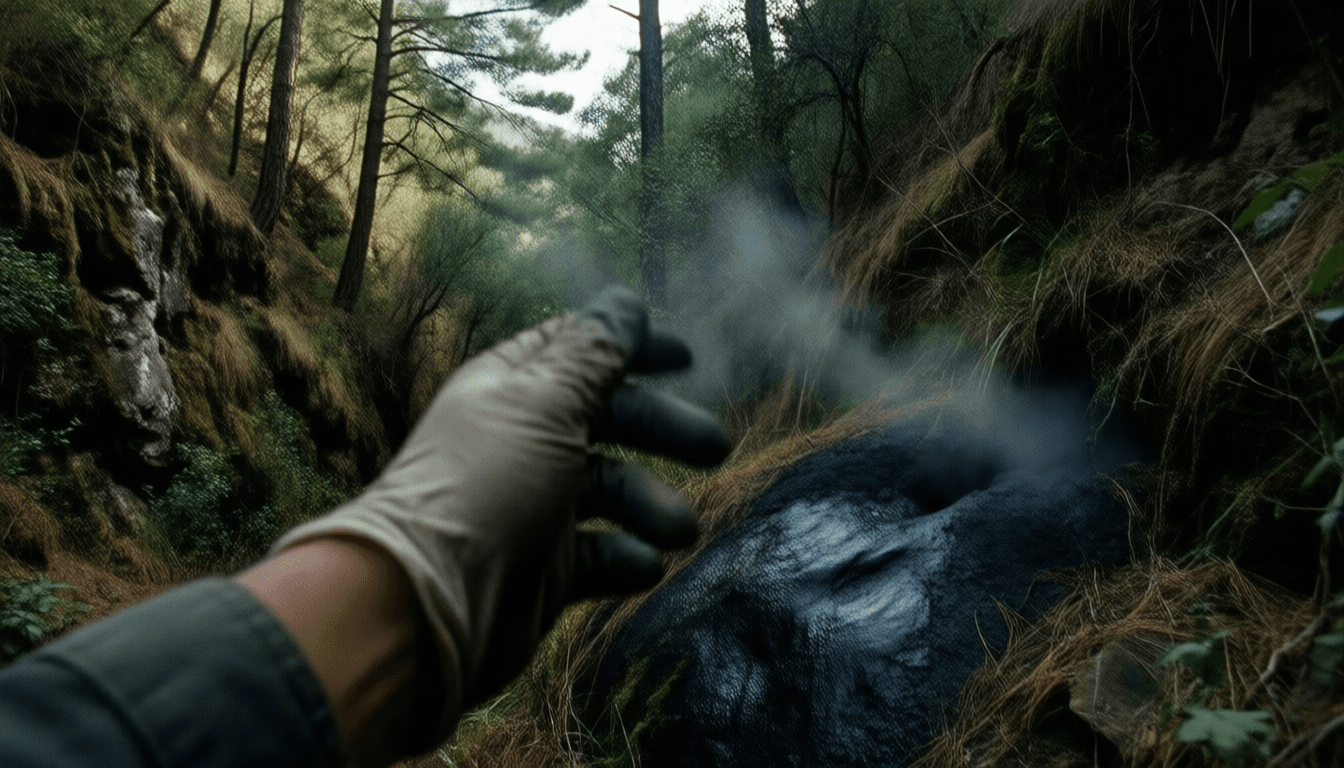
I knelt to examine a smooth, darkened patch of rock near the fissure. It appeared polished, almost vitrified, in a way not explainable by natural erosion. As I reached out, a single dry leaf, caught in a tiny eddy of air, slowly drifted upward a full foot against gravity before suddenly dropping. The moment was brief, but undeniably clear. My rational mind struggled to reconcile it. The hairs on my arms prickled. The profound silence of the barranca no longer felt merely unsettling but actively malevolent, pressing down.
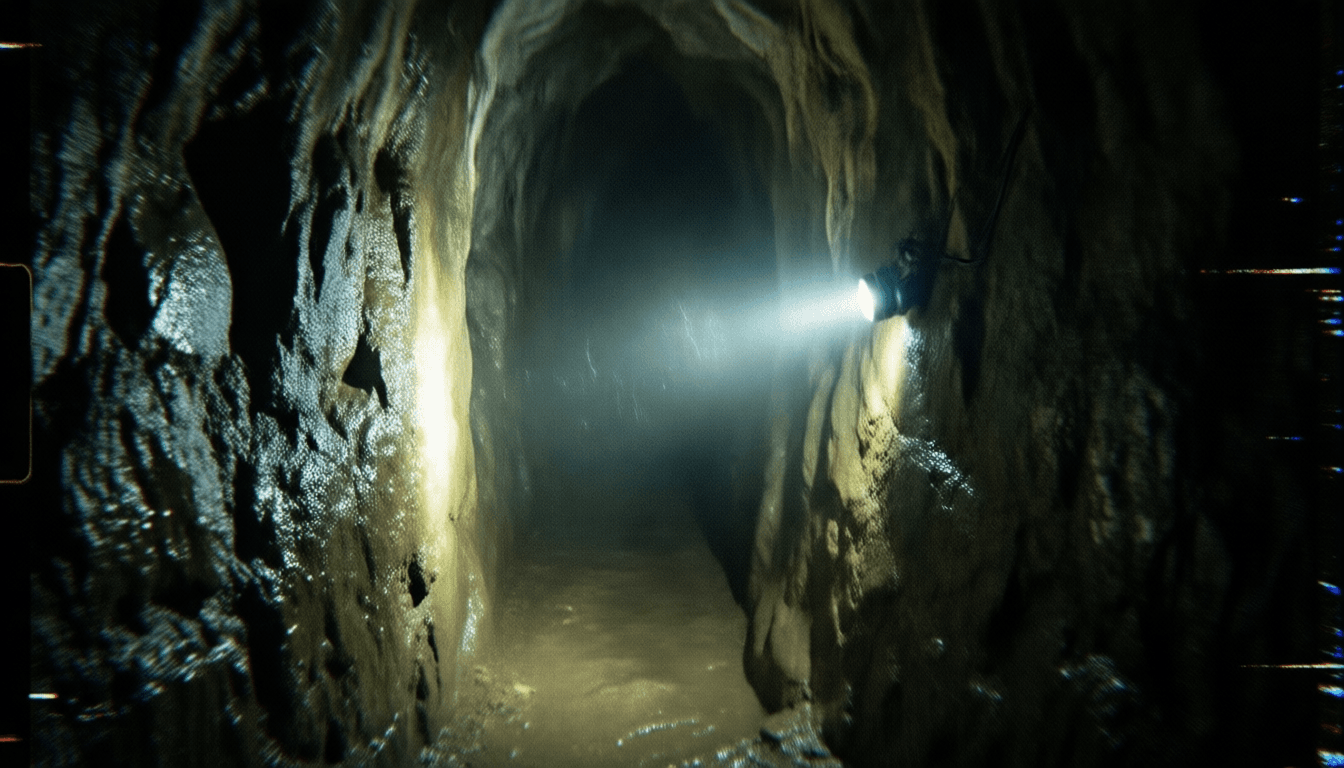
I decided to explore the fissure. It led into a narrow, winding passage, growing progressively tighter and darker. My headlamp cut through the gloom, revealing damp, rough-hewn stone walls. The ozone scent intensified. I sent a miniature drone ahead to scout. For a moment, its quiet hum was the only sound. Suddenly, the drone's feed flickered and died. The ensuing burst of static painfully rattled my comms unit, then it too fell silent. A critical power failure indicated its battery had completely discharged to zero in less than a second.
A deep, guttural sound, neither animal nor human, resonated throughout the constricted passage. It wasn't a growl; it was a physical vibration, a resonant pressure that seemed to emanate from everywhere at once, making the air thrum against my eardrums. The barometric pressure dropped sharply, making my breathing shallow and ragged, as if a physical weight pressed down on my chest.
Suddenly, a sharp crack echoed from behind. A large section of previously stable rock detached from the passage ceiling and fell with unnatural speed. It wasn't a collapse; it was an impact directed. I instinctively lunged forward, narrowly escaping being crushed, but the fallen rock created an impassable barrier behind me. Trapped.
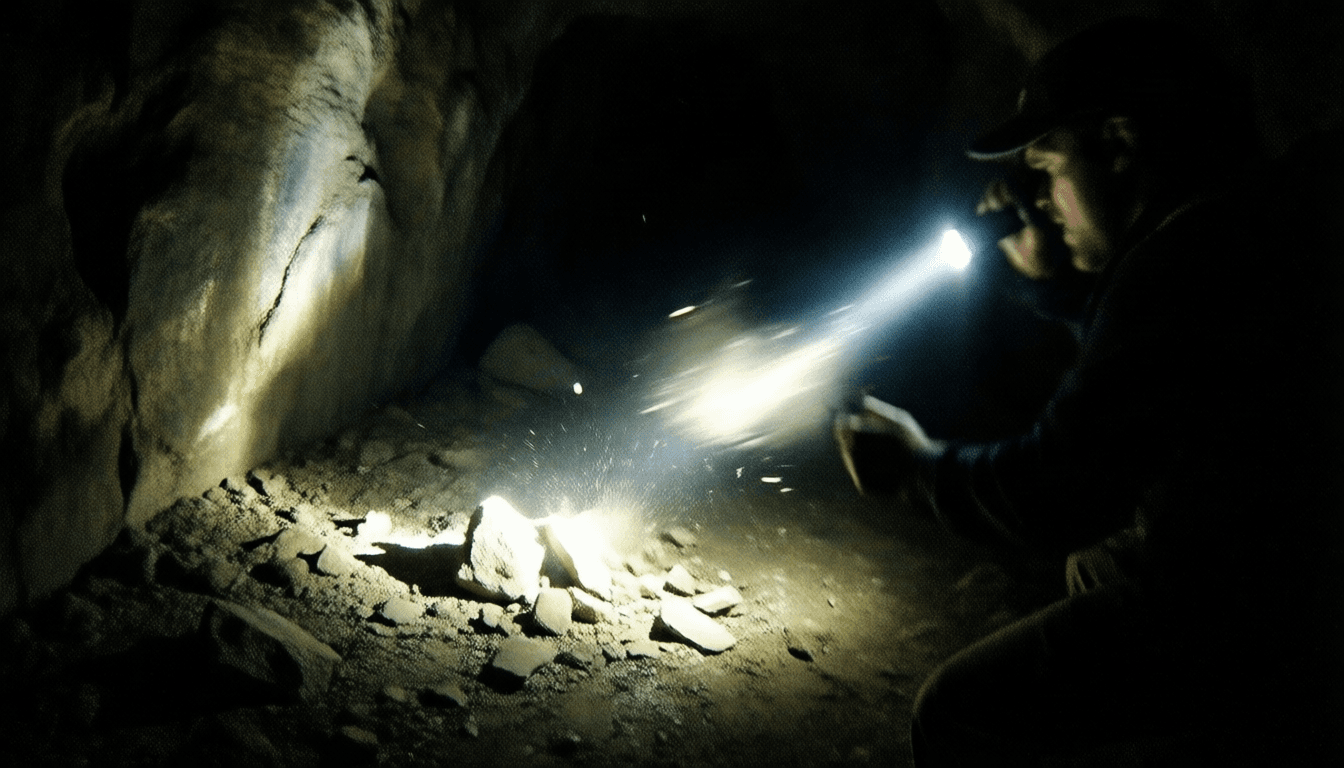
A cold, sharp terror threatened to overwhelm my training. The guttural resonance intensified, shifting in pitch. I scrambled forward desperately, my headlamp wildly swinging, searching for an exit. Ahead, the passage opened into a slightly larger chamber. As I entered, a heavy stone, the size of a human head, struck the wall beside me with immense force, sending shards scattering. The stone had clearly been hurled from deep within the chamber, yet nothing was visible. Only absolute darkness beyond the reach of my headlamp, and an overwhelming physical presence that seemed to displace the very air.
Suddenly, a searing, needle-like pain flared in my right shoulder. I cried out, stumbling. A momentary intense pressure registered on my back. Cold, incredibly strong, like a skeletal hand. The fabric of my jacket tore. I thrashed violently, swinging my arms, but met only empty air. The pressure vanished, but the pain continued to spread. I backed away, pressing myself against the rough wall. My heart pounded erratically.
Then, a fleeting impression: a rapid, angular distortion within the absolute blackness beyond the light. A blurred shape of something incredibly fast, small, and moving low to the ground. It vanished as quickly as it appeared, leaving only the oppressive weight in the air, the guttural echo, and the burning pain in my shoulder. I heard it move. Not walking, but a chittering, chitinous sound, like something scuttling over stone, echoing from multiple directions. The passage ahead, though narrow, showed a faint glimmer of natural light. Adrenaline surged, and ignoring the pain, I half-crawled, half-stumbled through the chamber, desperate to escape the suffocating presence.
An hour later, disoriented and battered, I emerged from the earth. Not through the fissure I had entered, but a completely different, unseen crevice that opened high on a sheer rock face overlooking the barranca. The setting sun felt blindingly harsh on my skin. My breath hitched. Ignoring the scrapes and bruises, I scrambled down the cliff face and reached my vehicle.
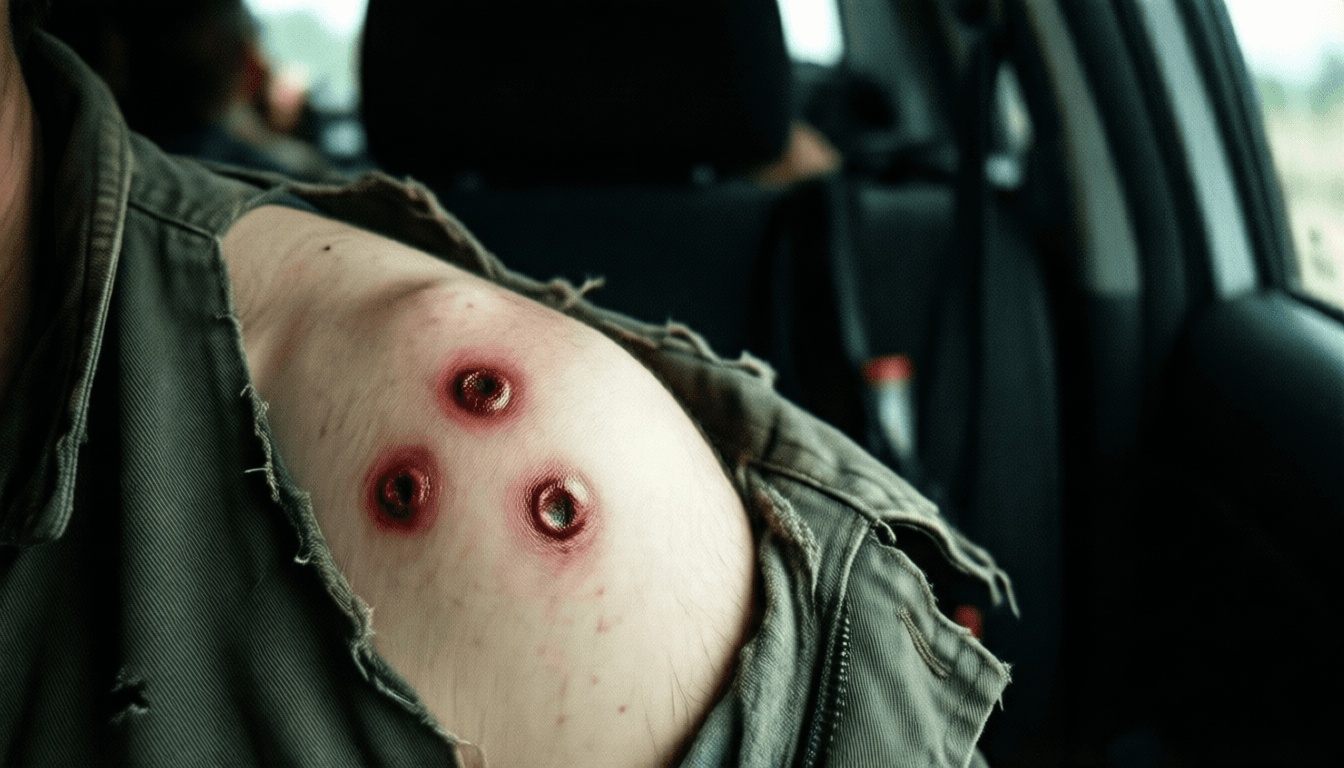
Inside the truck, I fumbled for my emergency kit. My right shoulder ached with a persistent, spreading chill. Peeling back my torn jacket and shirt revealed the injury. It wasn't a tear or a cut. Three small, deep, perfectly circular punctures were clearly visible, arranged in a triangular pattern. No blood welled, and the skin around the edges was already pale and waxy-white. It was bizarrely bloodless, just like the livestock. The faint, acrid smell lingered on my torn jacket.
My comms unit was a useless brick. The casing was partially warped and melted, despite no direct exposure to flame. The shattered remains of the drone, recovered later, showed its memory card had completely melted into an unidentifiable lump of plastic and metal.
As I drove away from Rancho del Sol, the winding mountain road seemed endless. The sun dipped below the peaks, casting long, unsettling shadows. I kept checking my rearview mirror. My rational mind, the very foundation of the archive, struggled to classify these events. There were no direct answers. No clear identification.
But there was evidence. The precise punctures on my shoulder, identical to those on Don Vargas's goats, felt cold to the touch. The faint metallic taste lingering in my mouth, the dry, rough feeling in my throat. I ran a gloved finger over the puncture marks, feeling the strange, bloodless texture of my skin. With a bone-chilling certainty, I knew why the livestock's blood had been drained. And I knew that some phenomena defied all classification and explanation; they merely existed. Now, I carried a piece of that existence, a quiet, irrefutable trace. A reminder that some truths are not meant to be fully understood, only survived. The archivist was now a subject, and the archive, a testament to the inexplicable, had gained a new and deeply unsettling entry.
[ CLASSIFIED VERDICT ]
[ACCESS LOG - SOURCE FILE]
The Chupacabra, a legendary creature from Mexico, meaning 'goat-sucker,' refers to an unknown entity that drains the blood of livestock. This story is inspired by a bizarre pattern of killings characterized by small, circular punctures on the bodies of ranch animals, particularly goats, with their blood completely missing. The narrative explores an unknown presence, similar to the Chupacabra, terrorizing a remote Mexican village, and a chilling encounter with an investigator attempting to uncover its true nature.