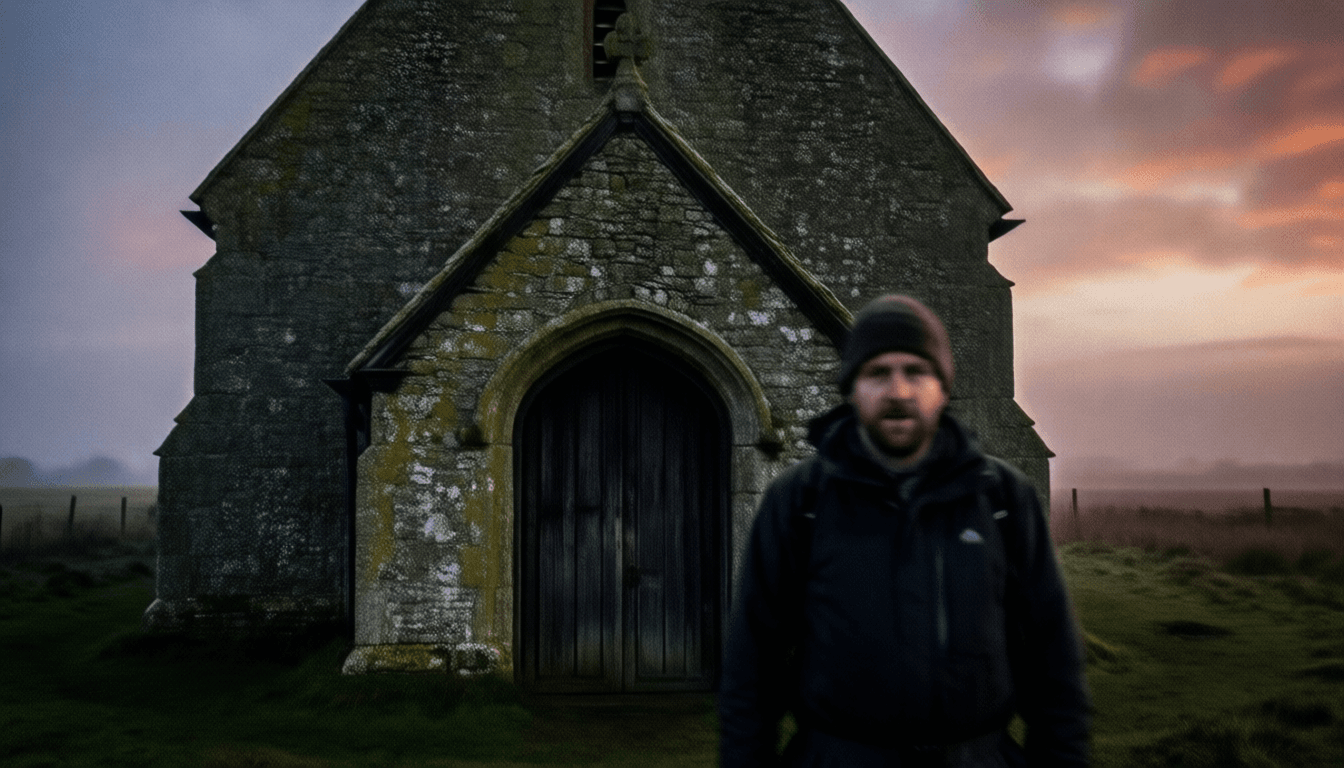
Black Shuck: Marks of Silence
Rumors etched into East Anglia for centuries grew more chilling on August 4, 1577, with events at Bungay and Blythburgh churches. Records clearly state that amidst a thunderous storm, a "hound of hell" appeared, leaving scorched marks on church doors and claiming lives. Contemporary print, 'A Straunge and Terrible Wunder,' described the beast as "like a great dog, and black of colour," with "eyes burning like fire." This incident is no mere myth. Church records and the distinct burn marks still visible on the north door of Holy Trinity Church in Blythburgh attest to its reality. Recently, online forums for history and mystery in Suffolk and Norfolk have seen a surge in sightings related to this legend. Commuters on isolated stretches of the A12 road reported seeing "unnatural shadows," while those walking coastal paths experienced sudden silence and profound unease before witnessing a "massive black shape" vanish into the marsh fog. A common thread in these encounters is a preceding sour, metallic smell. Reports were particularly frequent around 'St. Jude's Marsh Church,' a crumbling medieval church accessible only by a winding track across saline flats, about 10 miles from Blythburgh. Locals called it "where silence breeds." My mission was to meticulously document these claims, find logical connections between history, folklore, and modern sightings, and objectively verify or refute the phenomenon.
I arrived at St. Jude's Marsh Church as dusk fell, the wind-battered trees and leaning gravestones casting long, skeletal shadows. The air was thick with the smell of brine and damp earth. The faint roar of the North Sea in the distance was the only persistent sound in an unnaturally silent landscape. The church stood in stark silhouette against a bruised sky, its flint walls mottled with moss, its ancient oak door dark and weathered. My equipment was standard: a high-resolution camera, a directional microphone, GPS, thermal imager, field notes, and a high-intensity flashlight. All systematic and scientific.
Initial investigation of the church's exterior yielded little. The ground around the church was a mix of compacted mud and coarse grass, making clear footprint identification difficult. I examined the main oak door. Centuries of weather had rendered the wood dark and dense. There were no distinct scorch marks like those in Blythburgh, but a section near the lower hinge showed an unusually deep discoloration. It was like a stain embedded in the grain, almost charcoal-like, yet smooth to the touch and too symmetrical for natural decay. I recorded it as an "unexplained anomaly."
As I moved through the leaning graveyard, documenting inscriptions, the sky deepened to a bruised purple. The thick, clinging marsh fog, characteristic of these coastal wetlands, began to roll in rapidly from the east, erasing the horizon and swallowing even the distant roar of the sea. The abstract sense of isolation solidified into a tangible presence. My observation window was closing. It was time to execute the main objective: survey the church interior and immediate surrounding area in controlled, low-light conditions.
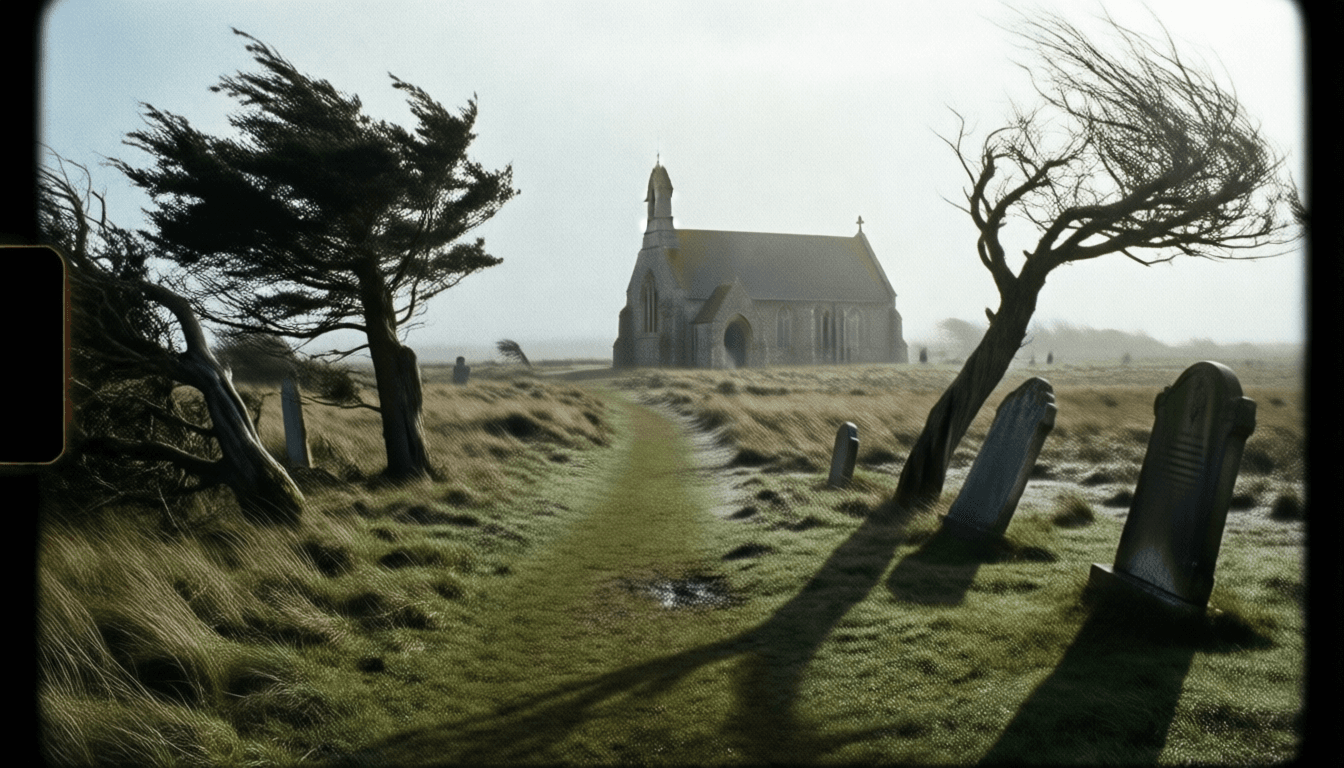
The fog had become an impenetrable wall. The world beyond my flashlight beam ceased to exist. The first anomaly was the sound. Everything—the constant wind, the distant sea, the faint cry of gulls—everything vanished. A deep, absolute silence pressed in from all sides. My own breathing sounded impossibly loud, and my footsteps on the damp ground seemed amplified. I noted this, specifically mentioning the absence of ambient marsh sounds. And the smell. A faint, acrid odor, like burning rubber and wet ash, occasionally swirled around me.
I tested the acoustics near the church wall, simply calling out "Hello?" The sound wasn't absorbed by the fog; it was utterly devoured. There was no echo. Beyond a meter or two from my mouth, the sound waves simply seemed not to exist. My rational mind struggled to explain it—the dense fog must be absorbing sound. Yet, the completeness of this silence defied conventional physics.
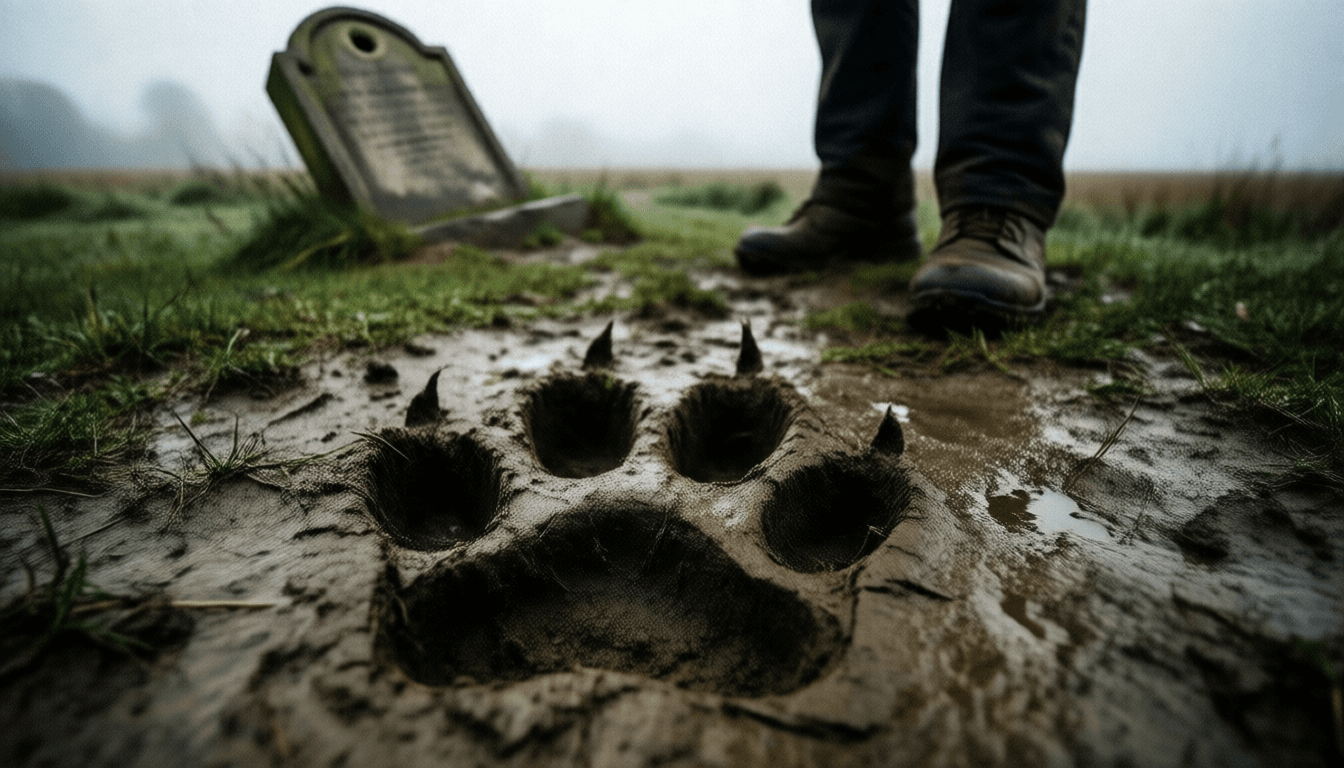
And the ground. Near an old gravestone, specifically where the soil was damp, I saw it. A single, enormous paw print. Far larger than any known dog, unmistakably canine, yet unnaturally deep, as if seared into the earth. There was no disturbed earth around it, no other prints. It was isolated. I knelt, raising my camera. As I focused, a cold, intense dread crawled up my spine. When I looked up again, the print was gone. Completely. The earth was smooth, untroubled. My hand, reaching to touch the spot, registered a sudden, sharp, localized drop in temperature. My thermal imager confirmed the spot was 10 degrees colder than its surroundings, and even as I watched, the temperature anomaly was fading. Rational explanation ceased. Fear began.
A presence. Not just a chill in the air, but a weight. A pressure behind my eyes. I gripped my flashlight tighter. Its beam now struggled, barely piercing the oppressive, solid darkness of the fog.
As I moved towards the church entrance, my nerves frayed, the ancient oak door, propped open with a stone, slammed shut with an explosive force. The church's stone walls seemed to shudder. There was no wind, no external force to account for it. A deep, resonant thud vibrated through the ground. My heart pounded.
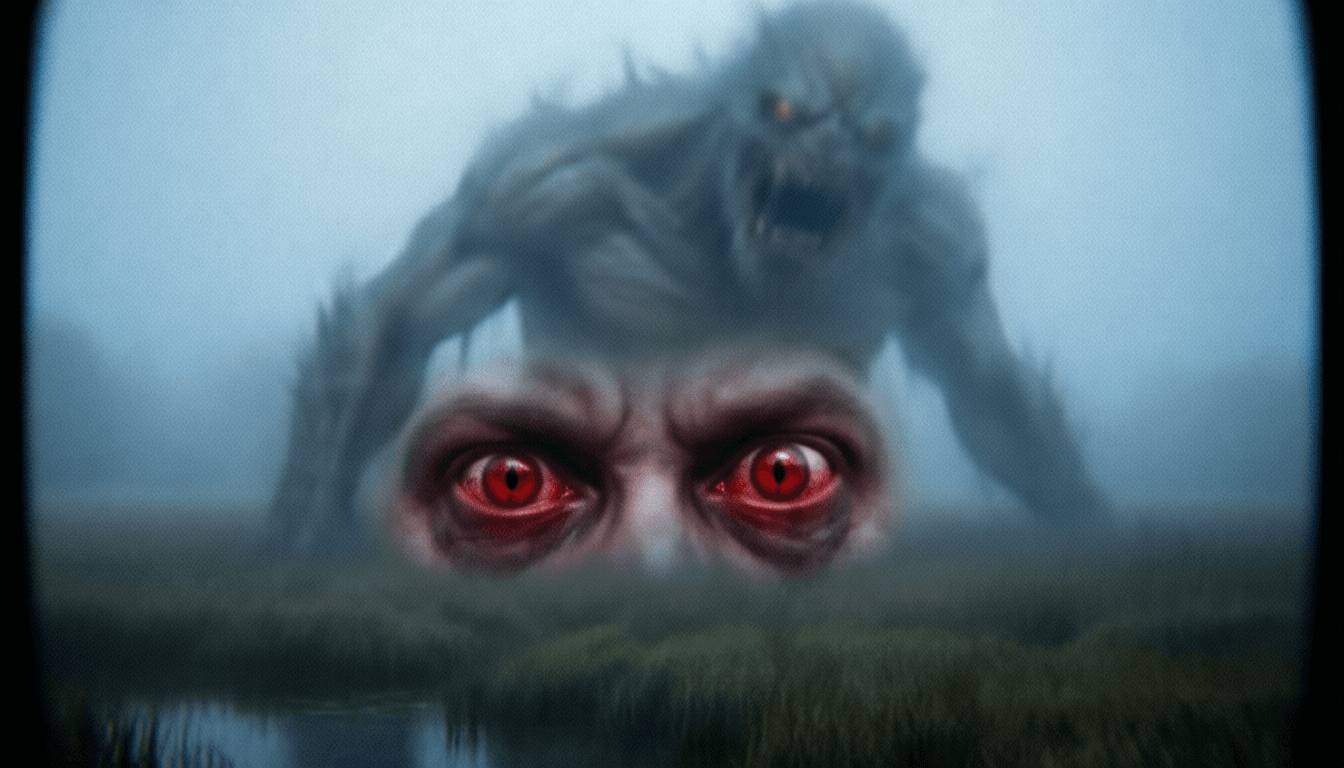
Within the impenetrable grey wall of fog, two intense, burning pinpricks of blood-red light materialized. They floated lower than a man's chest, hovering perfectly still for an eerie moment before beginning to move. No body was visible. Only the infernal glow of the eyes. A low, incredibly deep growl vibrated, not just in the air, but within my own chest cavity, resonating through the swirling mist. The air around me instantly turned frigid, stealing my breath.
I stumbled backwards, frantically sweeping my flashlight beam through the fog, searching for an exit, but the eyes moved faster than I could turn. Always at the edge of my vision, closing the circle. Trapped. I tried to run towards the graveyard boundary wall, tripping over an unseen gravestone. The presence anticipated my movements, cutting off escape routes.
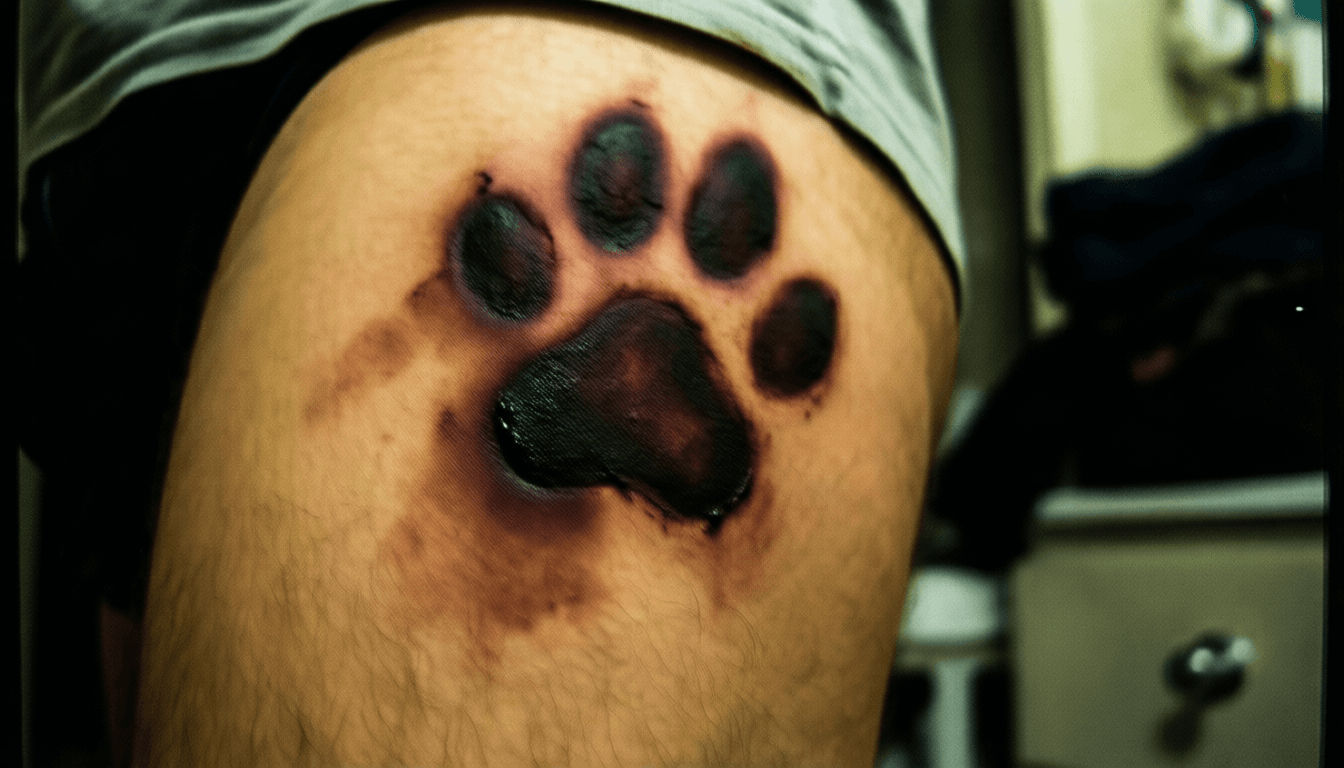
Then, it revealed itself. Not a shadow. An impossibly vast shape, glimpsed in fleeting moments within the swirling mist. Defying the visual limitations of the fog, it appeared and vanished in cohesive forms—a colossal, jet-black entity. It moved with unnatural speed. Perfectly silent, without the rustle of fur or the sound of footsteps. As I desperately scrambled over the low, crumbling wall, a huge, fur-covered paw materialized directly onto my left upper thigh from within the mist.
There was no impact sound. Only an immediate, searing pain. Like an incandescent brand pressed into flesh. The sensation wasn't mere heat, but a deep, penetrating burn that paralyzed the muscle. I screamed, lost my balance, and dropped the flashlight, tumbling into darkness. I landed hard, the pain incandescent. The two blood-red eyes were inches from my face, boring into me. The growl was no longer in the air; it was a deep, guttural vibration echoing within my skull, threatening to shatter my consciousness. I froze, utterly helpless, waiting for the final, destructive blow. For what felt like an eerie eternity, I was simply prey.
Then, a sudden, almost imperceptible shift in pressure. A faint, distant wail. Perhaps a coastal foghorn, or something else entirely. It pierced the silence for a fleeting moment. It was enough. The intensity of the eyes wavered. Driven by an instinctual surge of adrenaline, I dragged my injured leg, scrambling backwards. I blindly crawled through a gap in the wall, half-expecting the searing paw to follow. But it didn't. I was outside the immediate perimeter of the church. The fog was still dense, but somehow less oppressive, less absolute. I ran blindly. The searing pain was a constant companion, propelling me through marsh grass and into my car. My equipment was abandoned.
The drive back was a blur, an instinctual flight. My leg throbbed with a pain beyond mere injury. Back in civilization, under bright lights, the extent of the damage became chillingly clear. Where the creature's paw had touched, there was no mere abrasion or bruise. A distinct, deep burn mark, dark and cauterized, seared into my flesh in the shape of a large paw print. It never properly healed, remaining perpetually inflamed, a constant, low, aching reminder.
I never returned to St. Jude's Marsh Church. I couldn't. But I did notify local authorities about my abandoned equipment. A more thorough search at dawn, with more personnel, yielded nothing. The church door was open. All my precision recording equipment—camera, external audio recorder, field notes—had vanished without a trace. No footprints were found. No signs of struggle. Just a desolate, windswept church.
Only one piece of evidence survived. My small, auxiliary audio recorder, usually kept in my coat's inner pocket, was still there. I had forgotten it was even on. When I played it back days later, amidst the static and my progressively frantic breathing, a low, cut-off growl was unmistakably clear. And for seven seconds, a deep, absolute silence, devoid even of the recorder's usual white noise. Then, my pained whimpers and the rustle of marsh grass as I fled. The burn on my thigh throbbed. A cold echo of that primal silence.
I no longer investigate Black Shuck. I merely document the ceaseless reports, archiving them as a clear warning to others. I understand now. Some things are not mere folklore or whispers in the dark. Some things simply *are*, permanently etching their indelible marks upon the landscape, upon history, and upon the very flesh of those who dare to seek them. The gates of St. Jude's Marsh Church, they say, remain fickle. Sometimes inexplicably closed, sometimes wide open to the vast, silent salt marshes, waiting for the next curious soul.
[ CLASSIFIED VERDICT ]
[ACCESS LOG - SOURCE FILE]
The legend of 'Black Shuck' has been passed down in East Anglia for centuries, famously linked to an incident in 1577 at the churches of Bungay and Blythburgh, where it claimed lives. This story is based on the ancient English urban legend of a massive black dog with fiery eyes that harms people and leaves scorched marks. Sightings continue to be reported in Suffolk and Norfolk, intensifying the fear of this legend's actual existence.