The Whistle That Rips the Night
The so-called 'rumors' exist everywhere. But sometimes, what seems like a fleeting story isn't just that; subtle traces embedded in digital spaces reveal a chilling reality. This was the case with a story that began in a closed Facebook group for residents of Tres Hermanas, a small, sun-baked town deep in the Rio Grande Valley. A post by a user named 'Desert_Hawk' was simple: "Another one's gone. Juanita's Siamese cat. That's the third one this week from the south end. No footprints, no trace. Just... gone." Below it, 'Old Man Sanchez', with an old cowboy photo as his profile, replied: "It ain't coyotes, friend. Don't you hear that whistle? Sounds like a baby calling, but it's no baby. The Lechuza is back."
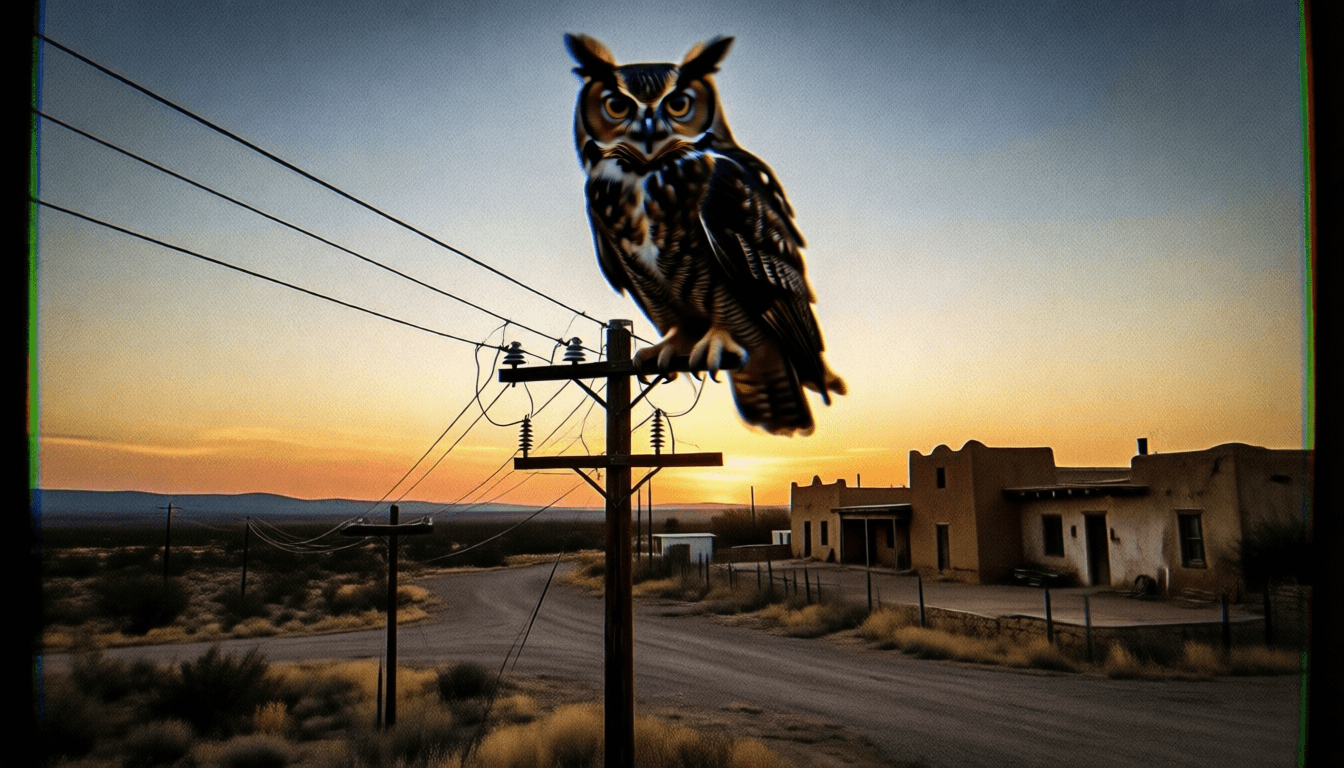
A post like this would normally be dismissed as a common superstition. However, a few hours later, 'Desert_Hawk' posted an update. Attached was a heavily pixelated, blurry photo, seemingly taken with a shaky smartphone from afar. Against the setting sun, the silhouette of a utility pole was visible, and perched on the highest power line was a bird. But the bird's proportions were grotesquely distorted. It was incredibly large, its head broad and flat, and its body seemed excessively heavy for a bird of prey. The caption was succinct: "After Mr. Sanchez's warning, I grabbed my phone and took this in low light. This *thing*. Look. Silent as death."
As a chronicler of mysterious phenomena, the consistent testimonies about the 'whistling sound,' the disappearance of specific animals, and that chilling, blurry image suggested to me that this was no mere folk tale. It felt like a recorded, escalating threat. Direct observation was necessary.
I arrived in Tres Hermanas as the scorching afternoon sun slowly began to dip below the horizon. The town was exactly as it appeared in the photo: cracked adobe walls, wind-carved arid scrubland, and a silence that felt less like an absence of noise and more like a heavy, invisible blanket. My sedan kicked up red dust on the unpaved road that led to dried-up pecan orchards and the dry creek where the animal disappearances were concentrated.
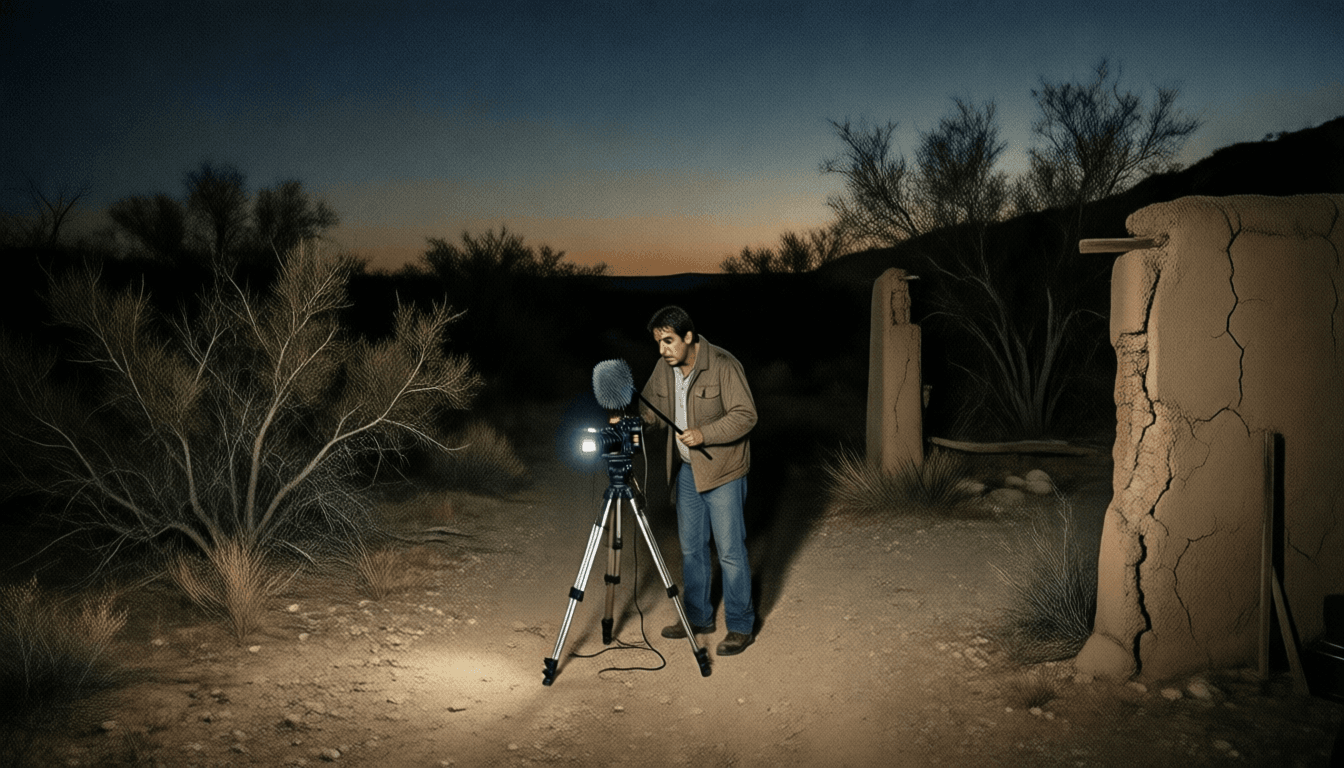
I cautiously parked the car and set up my equipment: a parabolic microphone aimed at the creosote bushes, a low-light camera fixed on a tripod, and even seismic sensors driven into the parched earth. The air was abnormally still. Not even the usual evening chorus of crickets or the rustling of leaves, which typically adorned the desert evenings, could be heard. Even the distant hum of border patrol helicopters seemed to vanish early, swallowed by the overwhelming silence. I surveyed the surroundings. The ground was too neat. No coyote tracks, no signs of struggle. The silence felt not passive, but actively enforced.
As twilight deepened into a star-studded night, the absolute stillness persisted. My operational equipment recorded only an oppressive void. I adjusted the parabolic microphone, scanning the area. Nothing. Then, I heard it. A faint, sharp, melodic whistle, so pure and sustained that it couldn't be human, nor could any animal mimic it. It seemed to float, coming from everywhere at once, then moving behind me, then in front again. It was like ventriloquism performed by the air itself.
I turned on my thermal camera. The screen showed not only the ambient desert temperature but also pockets of unexplainable absolute zero moving erratically. Cold spots moving without a heat source. I performed an echo test. I clapped sharply. The sound resonated, but the returning echo was strange. It didn't reflect from the nearby mesa or the old orchard walls; instead, it came back at angles defying the terrain, too flat and fast, as if mocking me right by my ear.
Further down the dry creek, I saw a cracked concrete culvert and a shallow pool of stagnant water beneath a rusted pipe. A single drop of condensation fell. As it hit the water's surface, ripples formed, subtly flowing *inwards* towards the point of impact before spreading outwards like an abnormally fast pulse. Moments later, the surface of the water shimmered, and a thin, black vapor briefly rose, swirling like smoke before dissipating. The whistling grew stronger. It was closer now, acquiring a complex, almost melodic quality. It transformed from a child's mournful cry into a deep, hooting laughter that resonated deep in my chest. It was a physical pressure.

The whistling reached its peak. In the narrow, winding passage of the dry creek, multiple cries, seemingly disembodied, converged and pressed in on me. My sensors spiked erratically. Suddenly, a localized, suffocating gust of wind erupted from the mouth of the creek, swirling dust and sand. It blinded me and disoriented me. It was not a natural wind. It was a concentrated force, temporarily sealing the passage with a wall of choking debris, blocking my primary escape route.
Within the swirling chaos, a colossal shadow took form. It was the owl from the photo. But incomparably massive. Its wingspan must have been easily six meters. It didn't fly. It hung suspended in the impossible wind, moving silently like a thought, defying logic with its speed. Eyes glowing with a cold, internal light stared at me. Its almost featherless, unnervingly flat and broad face was contorted into what looked like an eternal, silent scream.
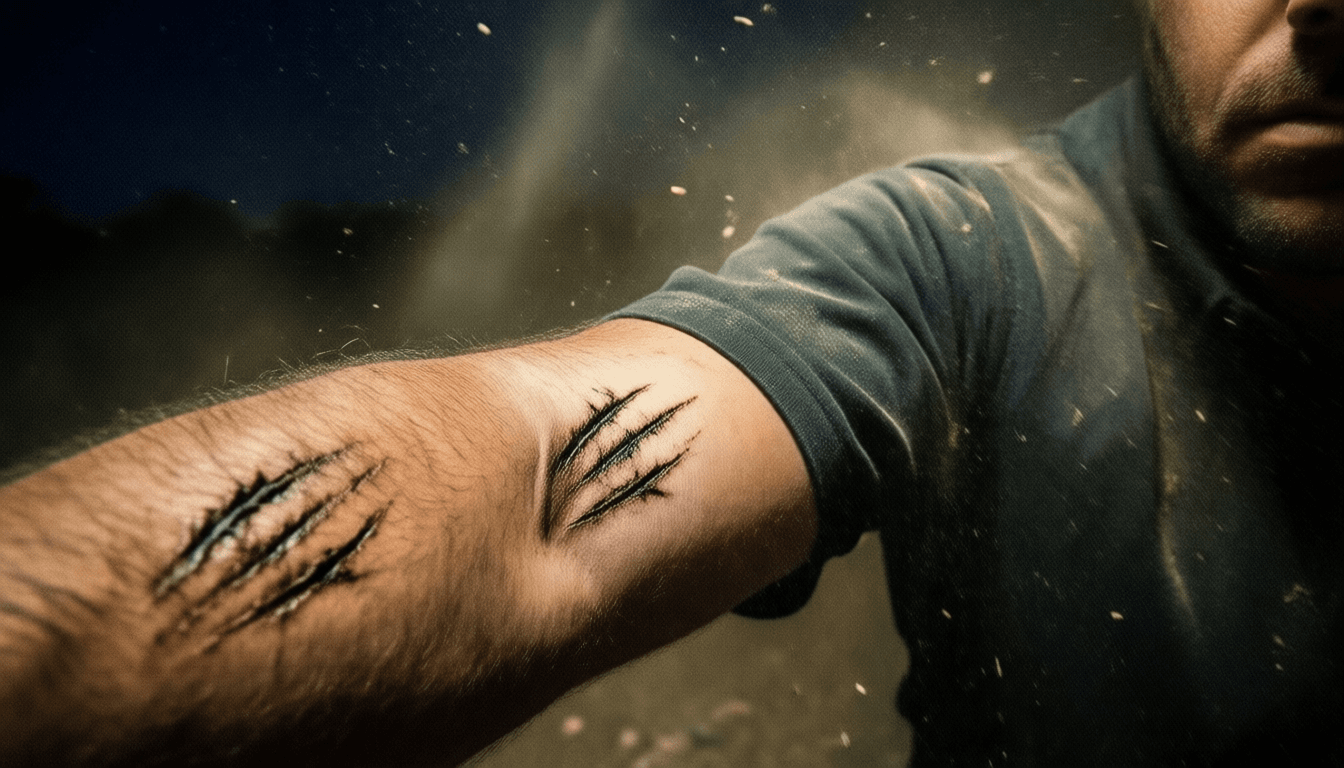
It hovered in the storm, defying gravity, then lunged. The whistling, now ringing in my skull, became a deafening cacophony, while externally, the desert was plunged into an absolute, sickening silence, absorbing all other sounds. The Lechuza swooped. Its incredibly long, thick talons were not those of a bird, but like scaled, bony human fingers. It raked my left arm and shoulder. The pain was like burning cold fire, but it wasn't a cut. It felt as if my flesh was *being torn away*, drying and desiccating. I stumbled, falling into a shallow, hidden depression. The Lechuza hovered directly above me, its head tilted, its flat, human-like face inches from mine, breathing a cold, dry, wind-like breath onto my face. It let out a single, sharp *human* scream. Not an avian sound, but one filled with pure malice, designed to paralyze.
Desperately, I shined my high-intensity tactical flashlight directly into its glowing, malevolent eyes. The abnormally bright light seemed to *hurt* it. The Lechuza recoiled with an inhuman hiss, momentarily disoriented. Gaining those precious seconds, I blindly scrambled through a narrow, thorn-choked passage. Feeling the pressure of its cold, silent presence behind me, I gasped and burst out into the open scrubland. My arm was screaming.
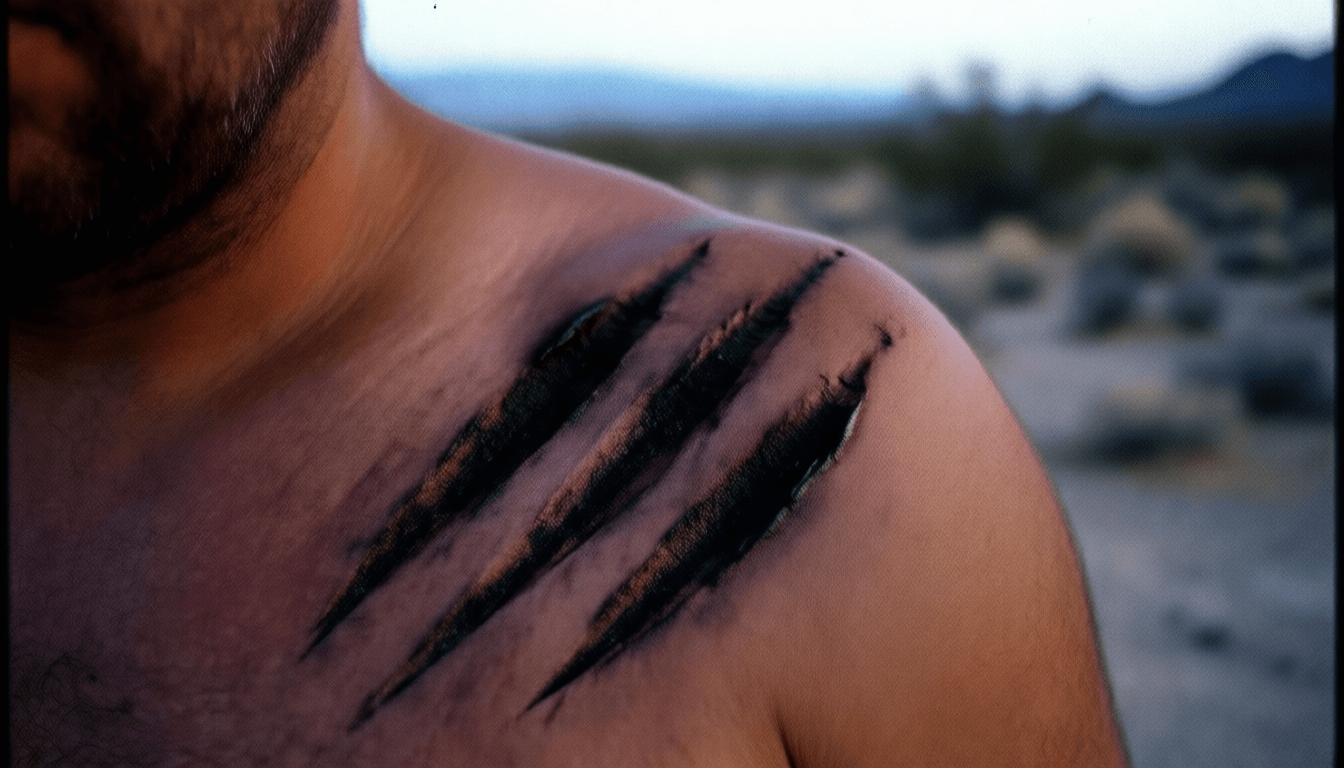
My arm wasn't bleeding. But the skin where the talons had touched had blackened and dried, as if supernaturally aged. Three incredibly large claw marks were permanently etched onto my shoulder. They throbbed with a deep, bone-chilling pain that no amount of treatment ever made disappear.
Now, in my city thousands of kilometers away, I perceive silence differently. It is no longer the absence of noise, but a presence—a heavy, suffocating blanket that sometimes descends, pressing down on all ambient sounds. When it does, I instinctively brace for the whistle. And the whistle returns, unannounced. Not from outside, but an echoing phantom within my mind. Sometimes it's the cry of a sad child, other times a mocking laugh. It is always accompanied by the sensation of an invisible cold spot passing right through me.
Weeks later, reviewing the files I had recorded in Tres Hermanas, I discovered something chilling. On one audio track, just before the attack, there was a faint, distorted recording that the parabolic microphone had not picked up. It sounded like slow, deliberate wingbeats, followed by a human-like, almost breathy whisper: "You... saw."
One night, looking out my city apartment window, far from the natural habitat of large owls, I saw it. Not its full form. An unnaturally large shadow silently swept across the moon, momentarily casting a perfect black silhouette on the concrete of the opposite building. In that fleeting moment, as it passed, I saw it. Two cold, unblinking eyes glowing faintly in the retreating darkness, staring at me, before vanishing completely. The whistling began. Faintly but distinctly, just outside my window. I didn't move. I didn't even breathe. I just stared at the window, knowing it had followed me.
[ CLASSIFIED VERDICT ]
[ACCESS LOG - SOURCE FILE]
This story is based on 'Lechuza', an urban legend from Mexico and the southwestern United States. Lechuza is a witch said to transform into a giant owl or a human-owl hybrid, known for luring and harming people or animals with its distinctive whistle or cry. It is believed that misfortune befalls those who encounter it.