The Black Heart of Lake Champlain
'RESTRICTED - Marine Incident Review, 2017-2023' was a file leaked via an anonymous dark web upload rather than official channels. It briefly shook various cryptid forums before being swiftly censored and removed. The file detailed deep-sea sonar anomaly patterns recorded by private and commercial vessels in unidentified depths of the main channel of Lake Champlain, approximately 12 miles south of Burlington, Vermont. These 'anomalies' were described in chillingly precise technical language; they were not characteristic signals of fish schools or the chaotic echoes of debris. Instead, they registered as consistent masses hundreds of feet in extent, exhibiting impossible acceleration and deceleration at temperatures that would render any known cold-blooded creature inert.
What elevated this report beyond mere curiosity was the accompanying data. During the same six-year period, five solo-operated fishing or recreational vessels vanished without a trace in the vicinity of these sonar recording zones. In three cases, emergency beacons briefly activated before falling silent, their last recorded positions directly above the anomaly zones. The most disturbing record concerned the small reinforced fiberglass boat 'MV Osprey,' found capsized a week after its disappearance. The boat's hull, particularly on the lower starboard side, bore a series of parallel markings too wide and deep to be propeller strikes or ice damage, inconsistent with any known collision. Furthermore, the recovered, waterlogged sonar equipment was irreparable but had captured one final frame just before its demise. That frame depicted an impossibly massive, indistinct form ascending vertically from directly beneath the vessel at approximately 120 knots per second. The report concluded with an urgent plea for further, confidential investigation into 'unexplained hydrodynamic phenomena.' That was enough.
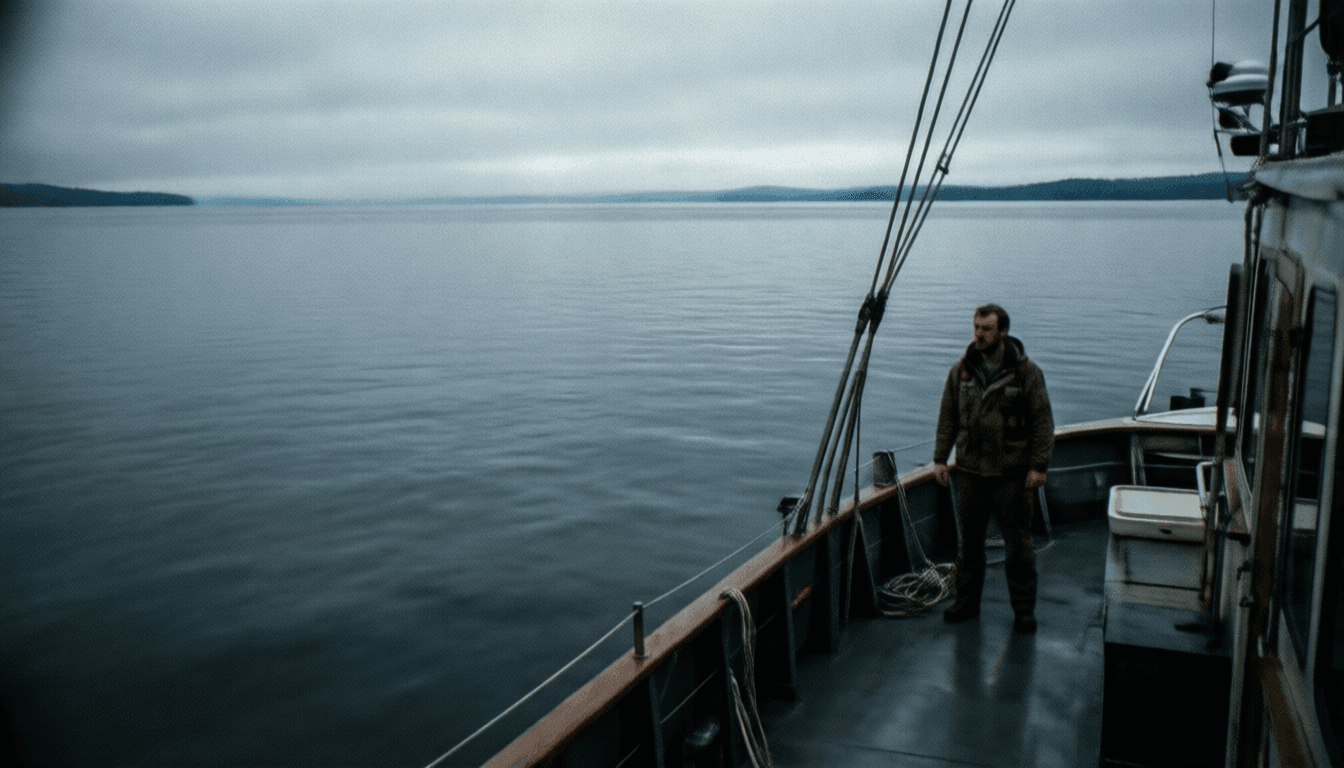
My research vessel, the 'Nautilus,' cut a precise course toward the coordinates specified in the leaked report. It was armed with manual hydrophones, a multi-frequency sonar array, and a deep-deployable remotely operated vehicle (ROV). The air was still, and the surface of Lake Champlain lay flat like a lead-gray mirror under a low sky. The sheer scale of this colossal lake, over a hundred miles long and hundreds of feet deep in places, felt overwhelming. It was a cold, indifferent freshwater inland sea.
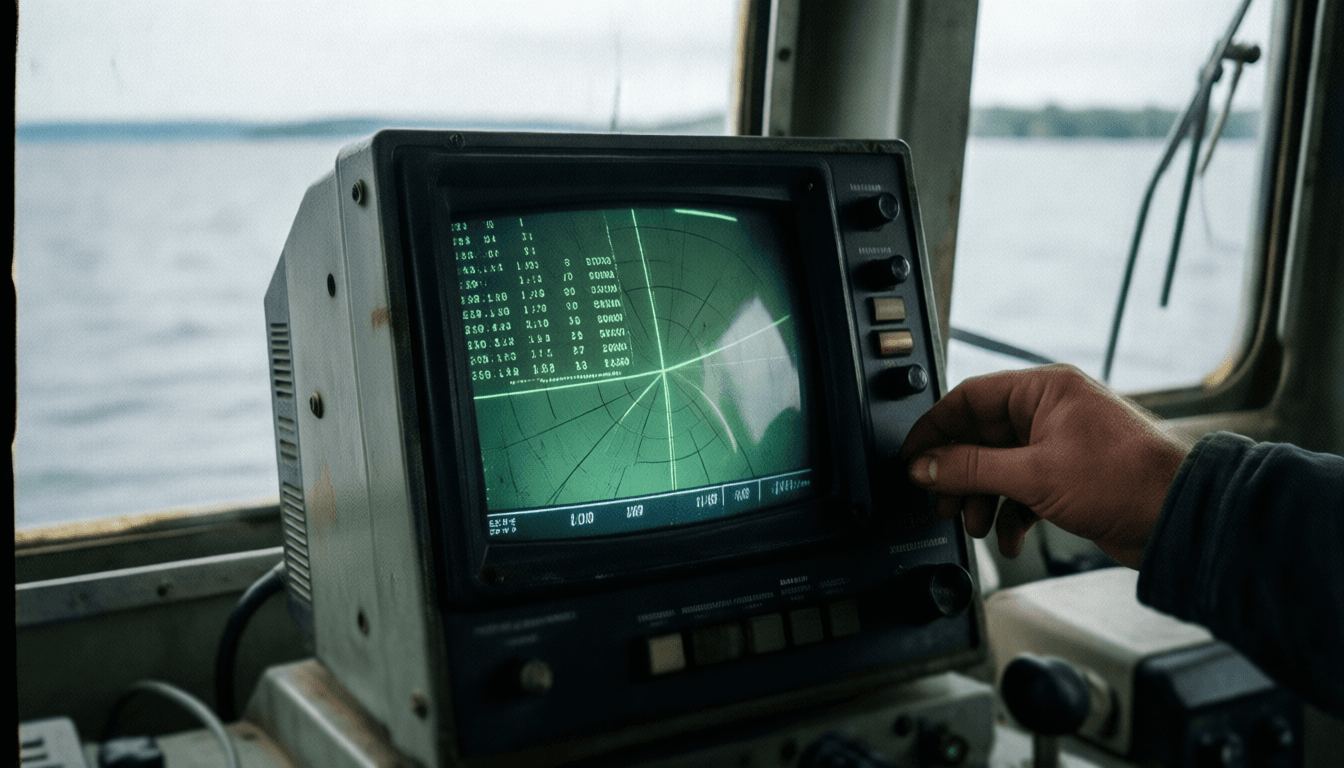
As we approached the designated trench, the sonar began its rhythmic ping. The depth sounder plummeted from 150 feet to 300, then 400, finally settling at an abyss of 450 feet—far deeper than most of the lake. Initial readings were mundane: thermoclines, scattered fish, gentle lakebed slopes. My focus was purely scientific, a systematic search for physical evidence. The air was cool, carrying the faint, clean scent of vast water. But subtle shifts were already occurring. The characteristic sounds of the lake—the distant cries of gulls, the gentle lapping of waves against the hull—gradually diminished, seemingly consumed by an unnatural silence emanating from the immense body of water.
Within the first hour, the first anomaly was detected. Not by sonar, but by the hydrophones. Incredibly low-frequency pulses, almost infrasonic, resonated through the deep. Too regular to be seismic, too powerful to be biological, too profound to be mechanical. It was less a sound and more a 'pressure' felt in the chest. Adjusting filters confirmed frequencies well outside the range of most aquatic life. Then, a sudden localized temperature drop registered on the forward sensors—an almost 5-degree Fahrenheit plummet in a concentrated area directly beneath the vessel, vanishing as quickly as it appeared.
Minutes later, a momentary contact flickered on the main sonar array, set for deep-sea exploration. A colossal signature, roughly 200 feet in length, appeared at 380 feet, moved at impossible speed for a few seconds, then vanished as if absorbed by the water. Too fast, too large, too amorphous. I double-checked the equipment and ran diagnostics; all readings were normal. A profound unease settled. The previously placid lake surface now developed subtle, unstable currents, seemingly drawing us gently to starboard despite a complete absence of wind. It was as if the lake itself were breathing, and we were caught in its exhalation. The silence intensified, becoming absolute and suffocating. Even the hum of the boat's engine seemed absorbed, leaving only the soft whine of electronics and the persistent low thrum from the hydrophones. I revisited the 'MV Osprey' report, particularly its descriptions of 'unnatural mass displacement' and the peculiar hull markings, with new, chilling reverence.
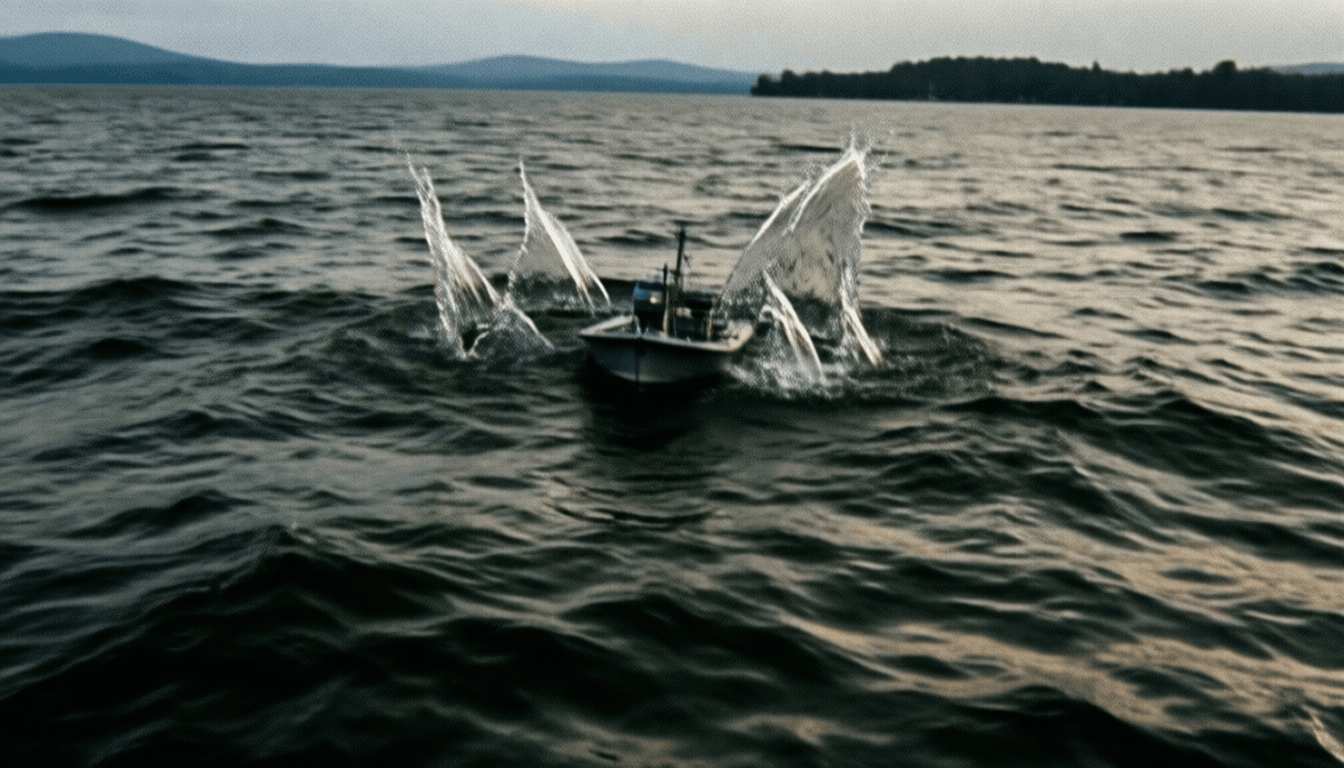
The hydrophones screamed. No longer a low-frequency thrum, it was a painful, high-pitched shriek that vibrated beyond my ears and into my teeth, feeling less like an auditory input and more like a physical force tearing through my very viscera. Simultaneously, the sonar screen erupted. Not a single target, but a chaotic swirl of contact points, too numerous to be solid, yet too powerful to be mere interference. The 'Nautilus' suddenly listed heavily to port. A colossal, unseen force struck us from below. Not a collision with a solid object, but rather thousands of gallons of water erupting upwards, as if the lakebed itself had vented directly beneath our hull.
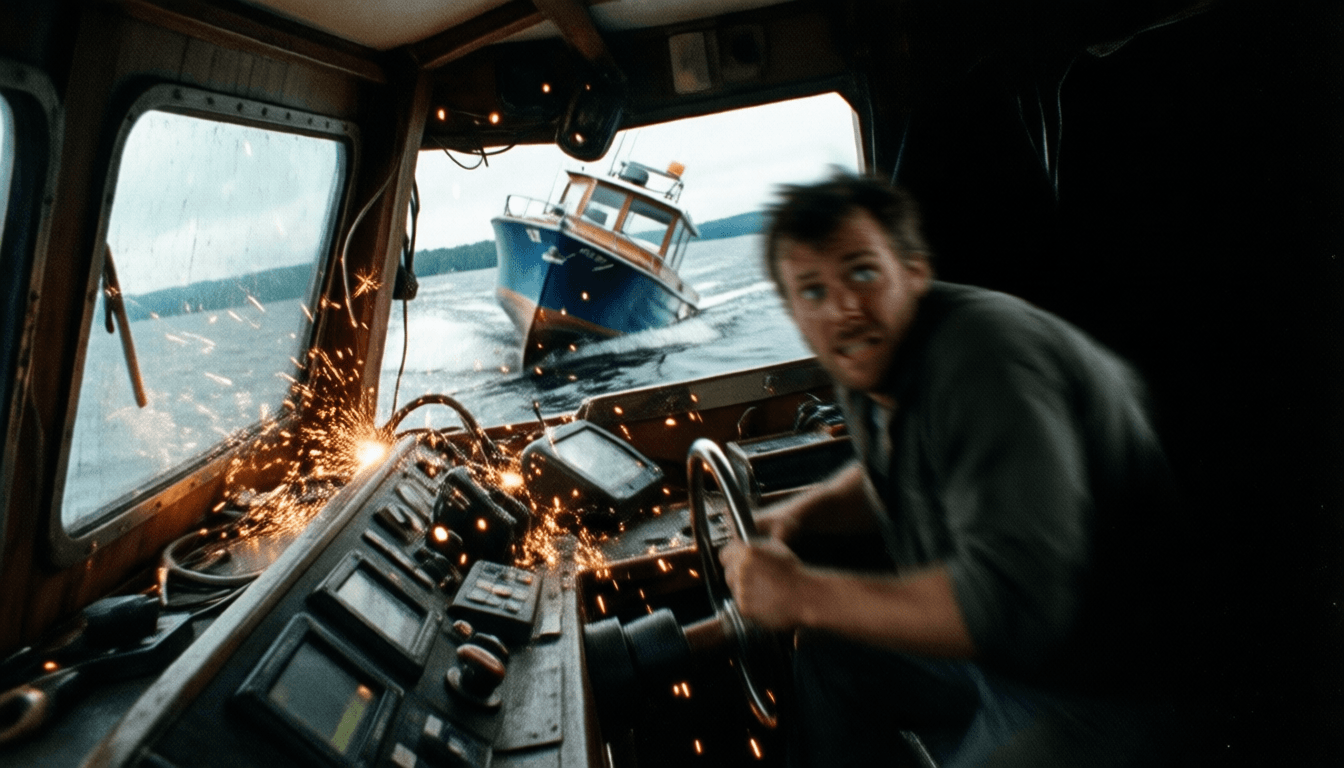
I was thrown against the cockpit, sparks flying from equipment around me. The main engine sputtered and died. We were adrift. The lake surface around us was no longer flat. Incredibly sharp peaks of water rose and fell, swirling in patterns that defied hydrodynamics, despite a complete absence of wind. The boat, caught in an unseen vortex, was inexorably drawn towards the deepest part of the trench. The water, previously gray, seemed to have turned a dense, absolute black just below the surface, reflecting no light whatsoever.
Then, there was movement. Not a breach of the water, nor a fin, but a colossal, indistinct shadow, appearing to 'swell' from the depths, preceding the black water. It was impossibly vast, moving with a liquid smoothness that belied its scale. It passed directly beneath the hull, its unseen bulk shaking and pitching the boat violently. A terrible, eerie pressure applied to the starboard side, the fiberglass groaning under a force that should have instantly fractured it. It felt less like being crushed by a creature and more like being squeezed by the very mass of the deep, the water offering no give. My hand instinctively fumbled for the emergency restart switch, my fingers scrambling on cold metal. The pressure intensified, the hull groaned louder, and water began seeping through compromised seams. My vision blurred from the impact, the impossible shriek's afterimage ringing in my ears. The 'Nautilus' was being dragged sideways, helplessly trapped, pulled down into the absolute blackness below. I felt a cold, slick, immense surface brush against the exterior of the hull, vibrating with unseen energy. It was moving with intent, and we were either an irritating obstruction in its path, or perhaps, something to be absorbed.
With a final, desperate surge of strength, I slammed the restart switch. The engine sputtered, then caught, roaring to life. The sudden vibration and change in propeller cavitation seemed to break the entity's hold. The eerie pressure released, and the boat lurched violently, free from the unseen grip. I didn't know where I was going, but I jammed the throttle forward, intent only on escaping that immediate, terrifying presence.
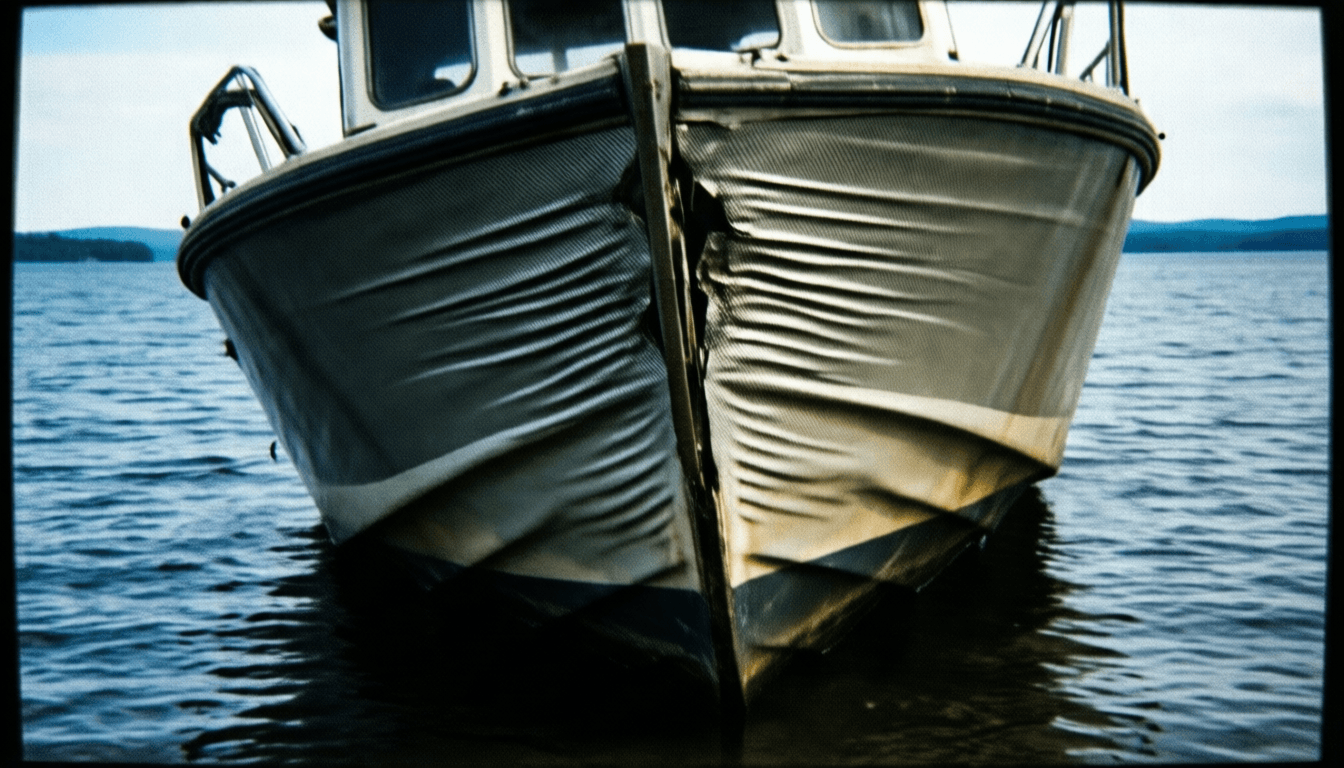
I didn't stop until the Vermont coastline was a faint line on the horizon. The lake was once again calm, serene, and infinitely deceptive. The 'Nautilus' was a wreck. Its hull bore deep, wide markings etched into the reinforced fiberglass, precisely matching the descriptions in the 'MV Osprey' report—now an undeniable reality. Several hydrophones had melted, their transducers fused like slag. The main sonar display was shattered, but miraculously, its internal memory had saved the last few seconds. Not a solid creature, but a colossal, shape-shifting, morphing energy signature, almost ghostly, one that distorted rather than cleanly reflected sonar waves. It was the signature of something that defied not just known biology, but perhaps the very physics of material existence.
My body, too, was evidence of the encounter. Severe bruising, hypothermia, but beyond that, a persistent tinnitus mimicking the creature's scream, and a deep, lasting disorientation that made it hard to focus on anything concrete. My bones ached with the memory of that pressure, and my skin still felt the phantom coldness of that vast, slick surface.
I never filed an official report. What could I say? That Champy wasn't a plesiosaur, but something far older, far more alien, capable of manipulating water itself and bending its physical laws at will? That it wasn't just a cryptid, but a conscious, domain-governing force that understood the deep in ways we never could, reacting to intrusion with overwhelming, silent fury? The evidence lay in the damaged hull, the distorted sonar readings, and the deep, existential dread that now turned the endless expanse of Lake Champlain not into a body of water, but a vast, living, malevolent eye. I knew with absolute certainty. We had not encountered an unknown animal. We had disturbed the primordial, terrifying intelligence of the deep, and for a brief, horrifying moment, it had asserted its dominion. And then it had let us go. For now.
[ CLASSIFIED VERDICT ]
[ACCESS LOG - SOURCE FILE]
This story is based on the urban legend of 'Champy,' the legendary cryptid believed to inhabit Lake Champlain in Vermont, USA. Often described as a long-necked aquatic reptile, sightings of this creature have been shared among locals and tourists for generations. This narrative reinterprets the Champy legend into a far more profound and menacing entity – not merely an animal, but a deep-sea intelligence, escalating the horror to an existential level.