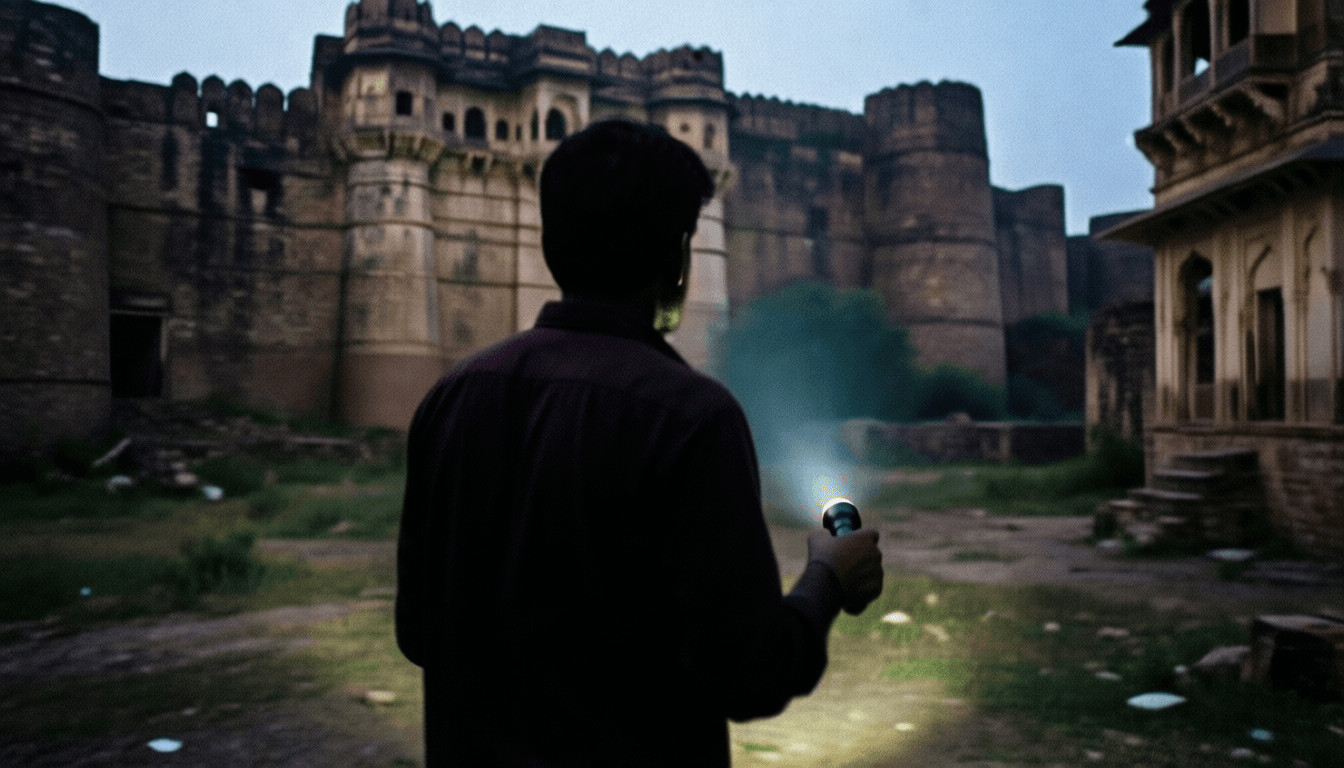
Bhangarh Fort: The Weight of Existence
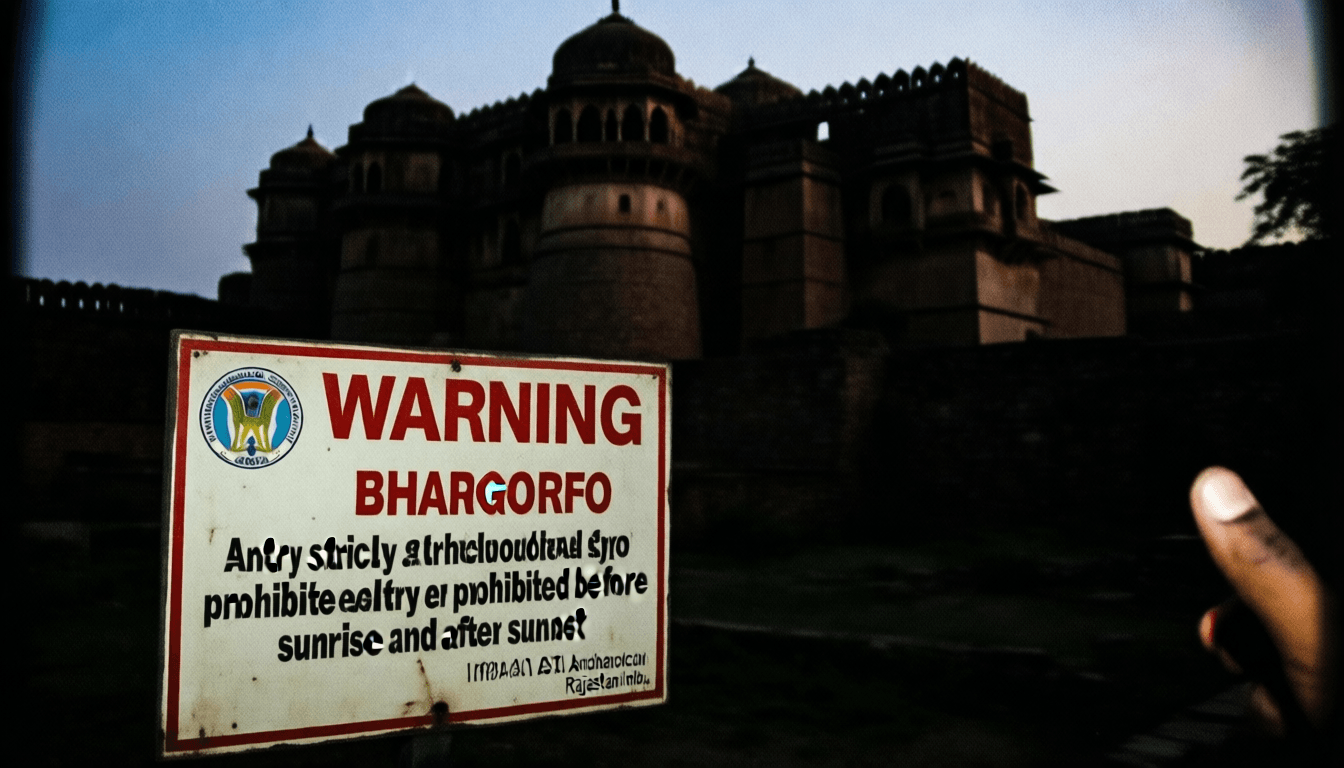
The most compelling evidence regarding Bhangarh Fort is not the whispers of superstitious villagers, nor posts on anonymous message boards. It is the chillingly explicit official warning. The Archaeological Survey of India (ASI) has placed a sign at the fort's entrance stating: "Entry into the Bhangarh boundaries before sunrise and after sunset is strictly prohibited. Legal action will be taken against anyone who fails to comply with this directive." This is unlike typical conservation warnings for historical sites. Among countless historical sites across India, this unique and resolute directive exists exclusively at Bhangarh. Local residents speak not of preservation, but of malevolent entities, vanished travelers, and the immense weight that presses down upon the entire site once darkness falls. As an archivist documenting mysteries, the discrepancy between archaeological duty and the implied supernatural threat piqued my interest. What exactly is the ASI trying to protect visitors from? And more importantly, what are they containing within the ruins?
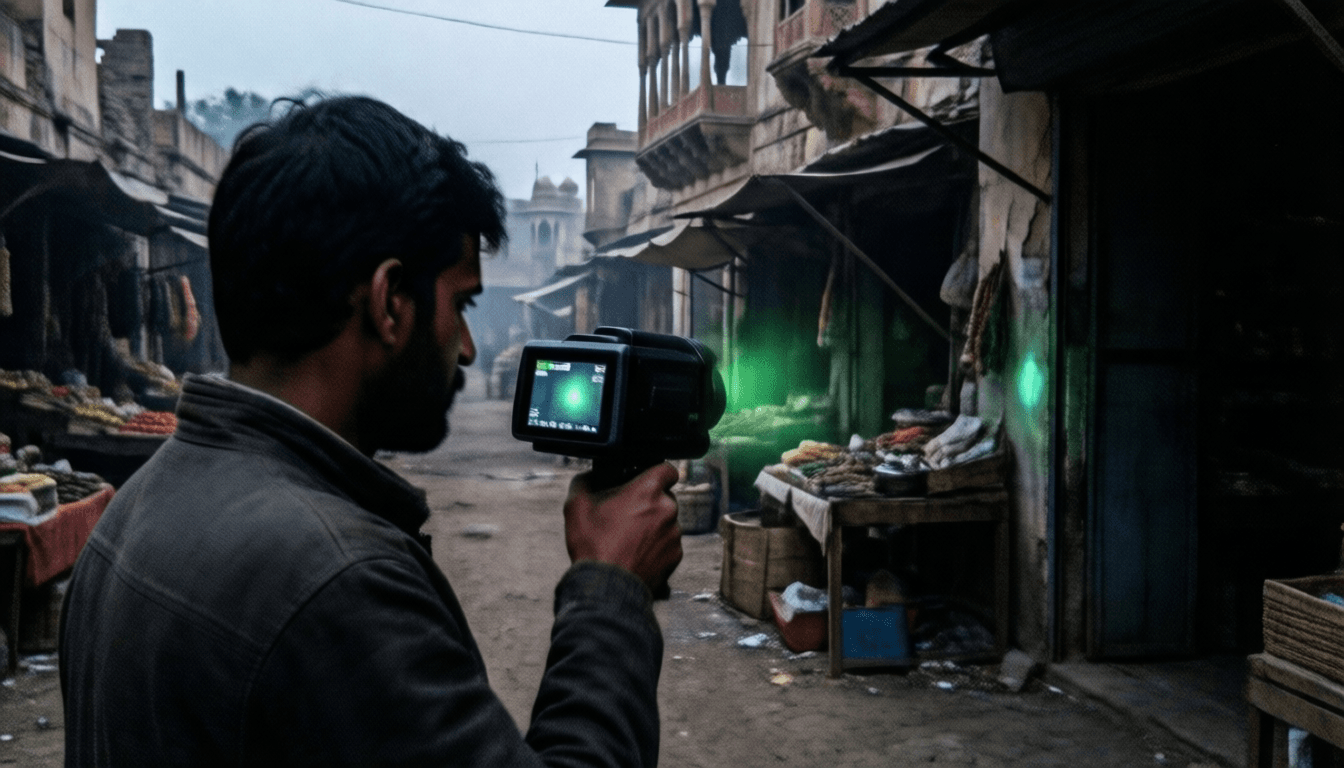
At 4:30 AM, as a faint pre-dawn glow began to touch the eastern sky, I headed for the fort. It was long before official opening hours. The surrounding wilderness remained steeped in a deep, unnatural silence. The ruined yet imposing fort walls rose over the desolate landscape. As soon as I passed the empty ticket booth, the air immediately grew heavy, and not even the faint, dry desert wind could be felt. The first thing I noticed was an oppressive stillness. Not even the usual chirping of pre-dawn birds was heard. My footsteps on the dusty path echoed disturbingly loudly, but the sound was quickly absorbed by the dense air, leaving no echo amidst the vast, empty structures. I surveyed the overgrown market stalls, crumbled temples, and the overwhelmingly large abandoned buildings. My thermal camera recorded localized, subtle cold spots, despite the ambient temperature slowly rising towards the desert's hot day. The scent of dust and decay permeated everywhere, and faintly above it, a metallic aroma, like old blood, was barely perceptible.
Deeper into the ruins, past the main market and towards the palace complex, the environmental anomalies intensified. The silence became absolute, suffocating. My digital recorder, set to record ambient sounds, began to pick up a low, intermittent humming at an unknown frequency, far below the human audible range. Shadows in the crumbling doorways seemed to move independently of the rising sun, lengthening and then shrinking too quickly, as if possessing a will of their own. I felt a persistent, subtle pressure on my eardrums, like a rapid descent, yet the terrain was flat. Particularly in a moss-covered water pool within a ruined temple, I saw ripples swirling ever so subtly, against the minute air currents. My compass wavered unstably, showing slight deviations. The metallic smell grew stronger, momentarily mixed with an inexplicable scent of something ancient and organic. The profound sense of being watched solidified, not from a distance, but with the conviction that it emanated directly from the walls themselves.
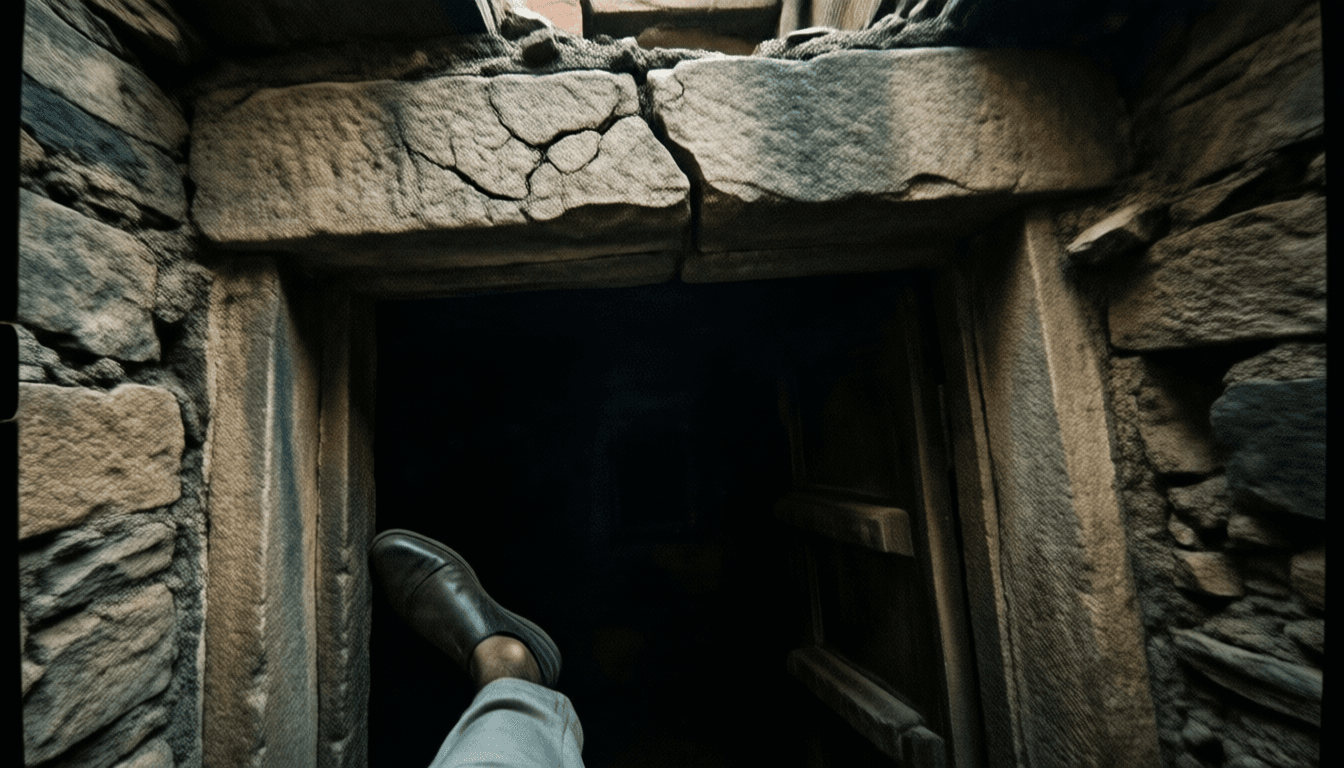
I reached the heart of the palace: a crumbling multi-story structure with exposed rafters clawing at the sky. A central, shadowed room, barely larger than a pantry, drew me in. The humming intensified, reverberating through the stone floor and vibrating up my boots. The air within the room was incredibly dense, as if moving through viscous gel. Breathing became shallow and labored. A sudden burst of static erupted from my recording device, followed by the wet, guttural cry of an unidentified beast. Then silence. The temperature plummeted shockingly fast, coating exposed skin with a film of ice. In that instant, the walls themselves subtly began to press in. Not collapsing, but feeling as if they were being pushed inwards by immense, invisible hydraulic pressure. The stones groaned in colossal pain. The old, cracked, heavy stone lintel directly above the room's entrance began to descend excruciatingly slowly, not falling, but as if being forced down by an unseen hand. Only then did I realize I was trapped.
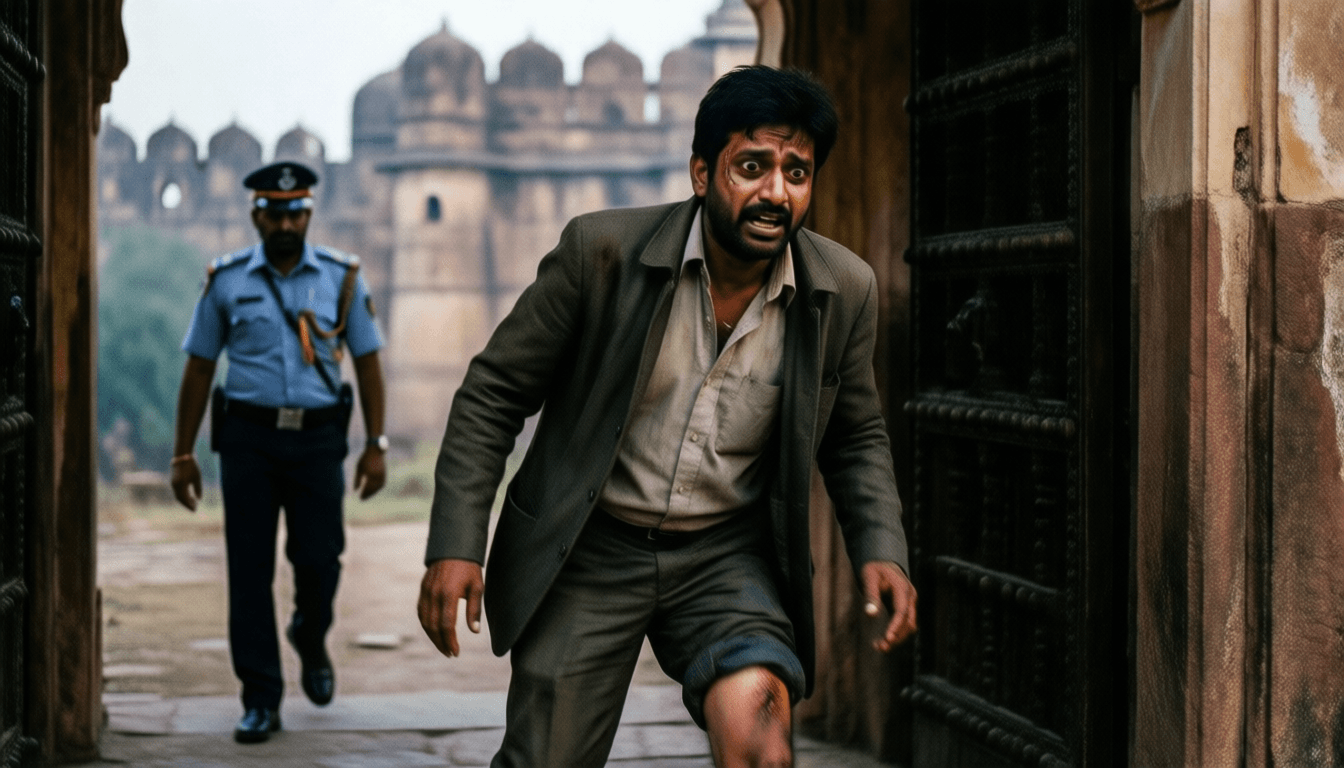
I realized I was trapped not by fear, but by immense weight. I pushed against the walls, but the stones were immovable, now radiating an intense, malevolent cold. Air seemed to be sucked from my lungs; not from lack of oxygen, but from an external, crushing force. My ribs felt like they were screaming. Faint, sharp screeches, seeming to echo from within my own head, filled the space where air should have been. Then came a direct physical impact. It wasn't a blow, but a non-Euclidean pressure, simultaneously constricting from all directions, focused on my chest. I felt not blood, but warmth, energy, and the very will to move being drained. The stone lintel above finally settled completely, pinning my left leg. A cold, sharp terror tore through the ominous dread engulfing my entire being. I struggled desperately, adrenaline screaming as I scraped against the crumbling stone. I instinctively knew that another moment would mean complete annihilation. Driven by an instinct far older than fear, in a desperate struggle, I twisted and pulled my leg free, skin and muscle tearing and scraping against the rough rock. I stumbled forward, collapsing out of the room, gasping for air as if resurfacing from the deep.
I stumbled out of the ruins as the official ASI guard arrived. His nonchalant greeting stood in stark contrast to the horrific destruction within me. I offered no explanation for my injured leg or the terrible fear etched on my face. My field equipment was recovered, but the audio recording from the climax was corrupted, overlaid with an impossibly deep, resonant hum that caused physical discomfort when played back. Photos taken inside the fort, especially near the palace, showed subtle, inexplicable distortions in the very fabric of light, as if parts of the images were subtly folded or stretched.
In the weeks that followed, the metallic scent returned unbidden to my living space. In the dead of night, I experienced a recurring phantom pressure on my chest, sometimes accompanied by spectral echoes of those silent screeches. The penetrating cold I'd experienced in that room never fully left me, residing deep in my bones, regardless of external temperature. I compulsively check doorways and ceilings for any subtle signs of warping or pressing in. The ASI warning sign at Bhangarh Fort now reads not merely as a trespass warning, but as a chilling acknowledgment of a truth explicitly unspoken or unspeakable: that the physical world is merely a thin veil, and what lies beneath is not merely ancient, but actively, malevolently present.
[ CLASSIFIED VERDICT ]
[ACCESS LOG - SOURCE FILE]
Bhangarh Fort in India is a ruin famous for numerous rumors of evil spirits and curses. Uniquely, the Archaeological Survey of India (ASI) has placed a strict warning sign here, prohibiting entry before sunrise and after sunset, implying a mysterious danger beyond simple preservation. This story details the supernatural experience of an investigator who infiltrated the fort during these forbidden hours.