Baalbek's Trilithon: A Puzzle of Ancient Engineering
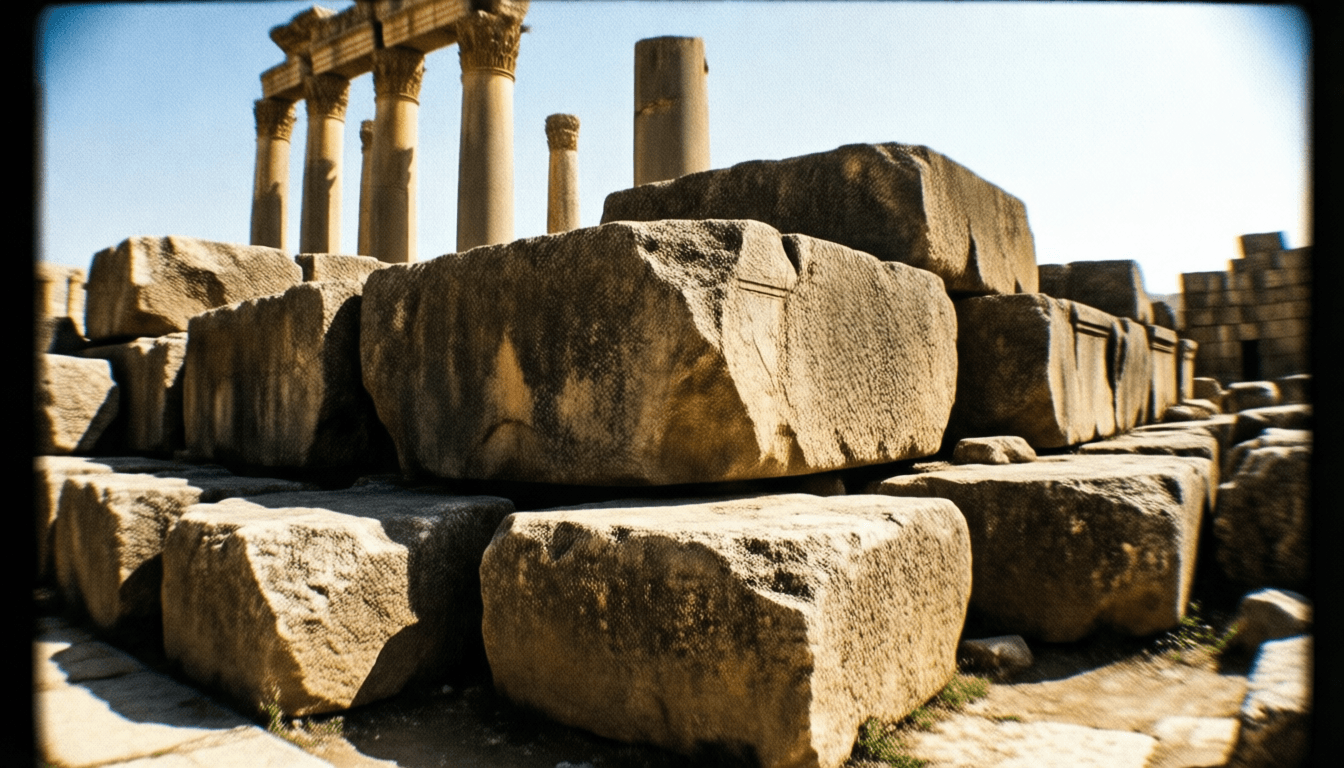
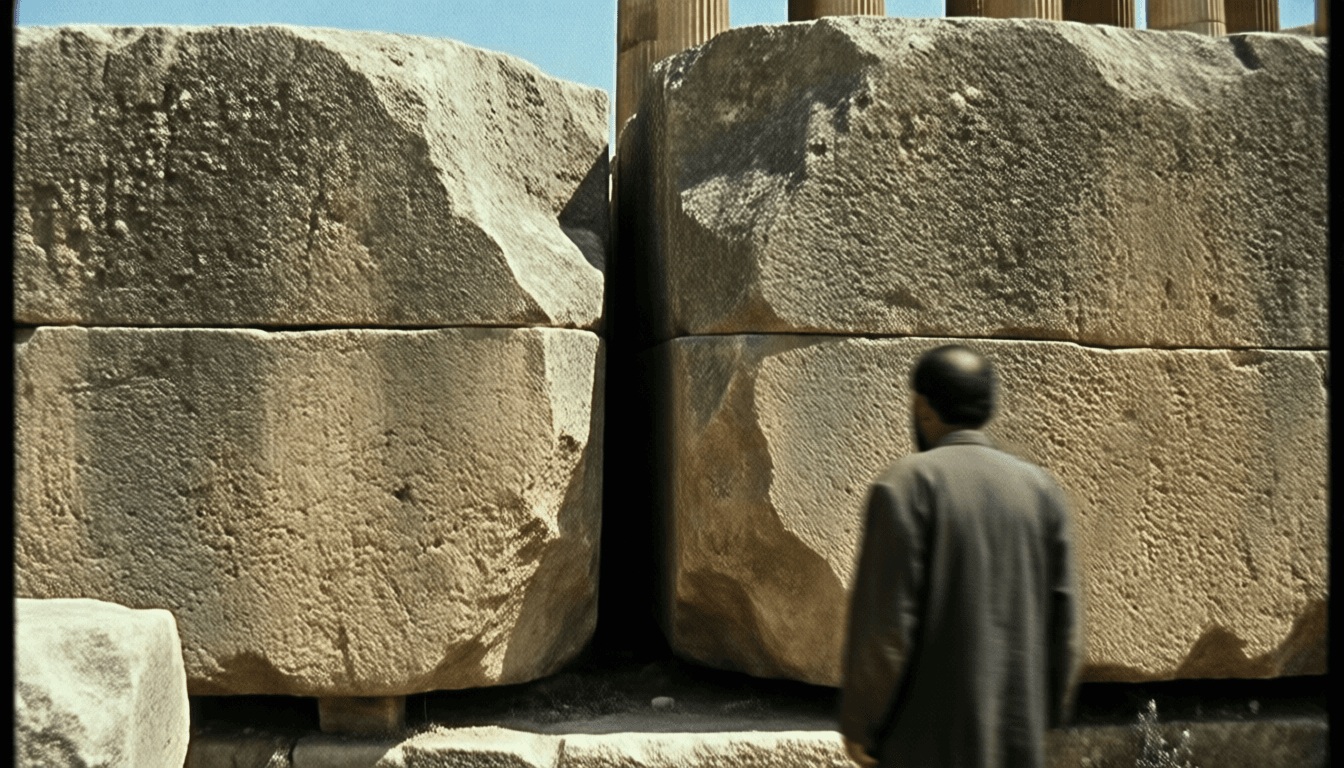
In a remote area of Lebanon's Beqaa Valley, there exists a paradox of stone that defies our understanding of ancient engineering. Three monumental stones, each weighing approximately 800 tons—more than 15 fully loaded Boeing 747 jumbo jets—form part of a massive platform. These are the stones of the Baalbek Trilithon. They are not merely foundations, but an eternal question mark beneath the Roman Empire's most magnificent temple complex. These colossal stones are so vast, so precisely placed, that they shatter conventional theories of ancient architecture, hinting at a lost chapter in human history.
Upon this enigmatic foundation, Roman architects erected structures of breathtaking grandeur: the towering columns of the Temple of Jupiter, which once dominated the sky, and the exquisitely preserved Temple of Bacchus. For centuries, these ruins have drawn pilgrims and scholars, all marveling at the immense ambition of the Roman Empire. Yet, a closer look reveals that the Romans built upon a profound legacy that even surpassed their own formidable capabilities.
Their magnificent temples rest upon a colossal and intricately structured artificial platform, which is incredible. It is, in essence, a megalithic precursor structure whose origins are shrouded in deep antiquity. The precision of the stonemasonry, the sheer volume of material, and the scale of the terrace itself evoke immediate awe, demanding an explanation that cannot be attributed solely to the Roman era.

Archaeological consensus attributes the construction of the upper temples to the Roman period, roughly from the 1st to 3rd centuries AD. However, the immense mass and precision of the colossal foundation stones present an insurmountable challenge to this timeline. Traditional Roman lifting techniques, involving wooden cranes, levers, and vast manpower, could at best move stones weighing around 50 to 60 tons. But the stones of the Trilithon weigh 10 to 15 times that amount.
How could these megaliths have been quarried miles away, transported across rugged terrain, and then precisely lifted onto a platform meters above the valley floor? No known Roman blueprints, detailed historical records, surviving tools, or engineering diagrams adequately explain how this astonishing feat was possible. Physically, this explanation is impossible with the technology any civilization residing in this region possessed during the Roman era.
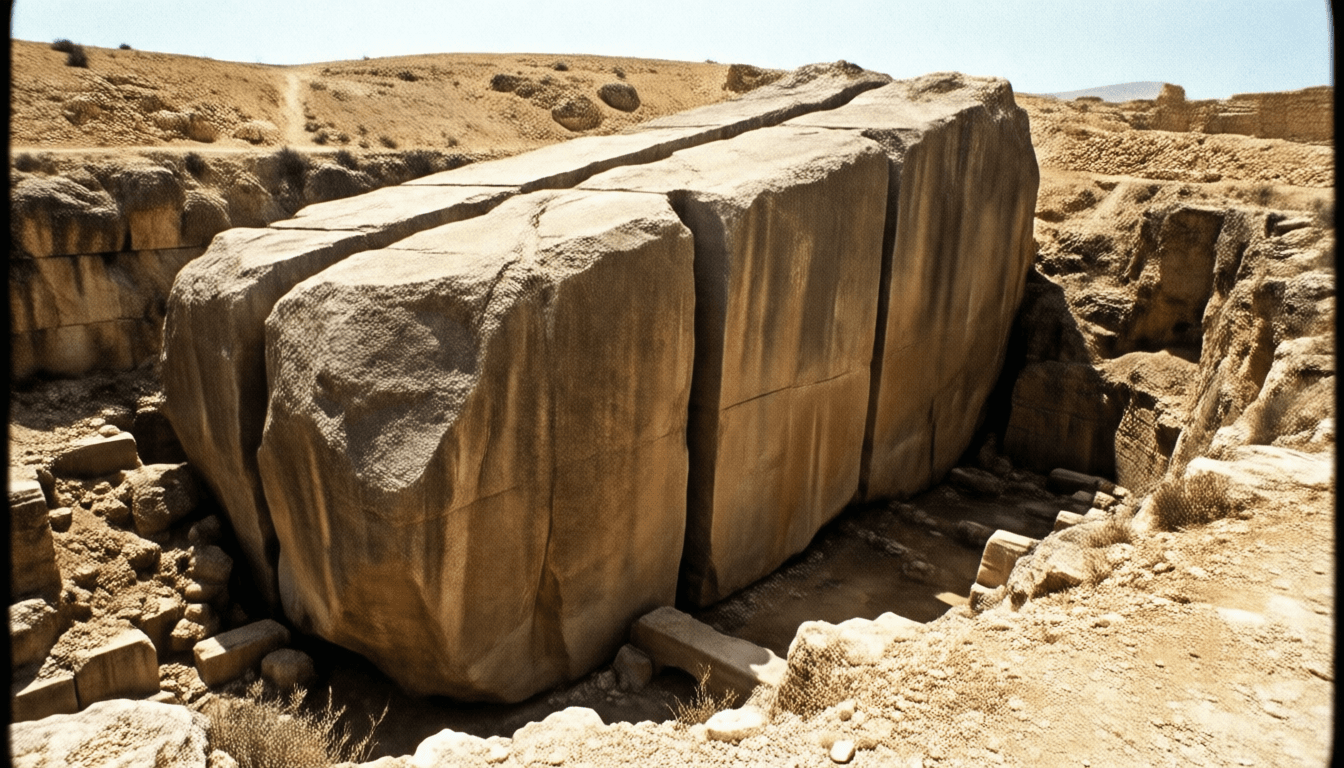
The most compelling evidence of this prehistoric engineering lies not only in the platform itself but also in the nearby ancient quarry. Here rests the 'Hajjar al-Hibla,' or 'Stone of the Pregnant Woman,' partially cut from the bedrock. Estimated to weigh between 1,000 and 1,200 tons, it is even grander than the Trilithon blocks. More recently, an even larger monolith, weighing a colossal 1,650 tons, was discovered nearby, still embedded in the earth—the largest single stone ever carved by humankind.
With their precisely cut lines and unfinished state, these monumental megaliths stand as silent witnesses to a marvelous and unknown endeavor. Were these stones intended for the Baalbek platform? Which civilization, thousands of years before the Industrial Revolution, could have possessed the means to quarry, shape, and potentially transport stones of unimaginable weight?
The precision of the cuts, the sheer scale of the labor involved, and the absence of historical records detailing their creation force us to confront the possibility of lost technology, forgotten understandings of physics, or a civilization far more advanced than our current historical paradigms allow.
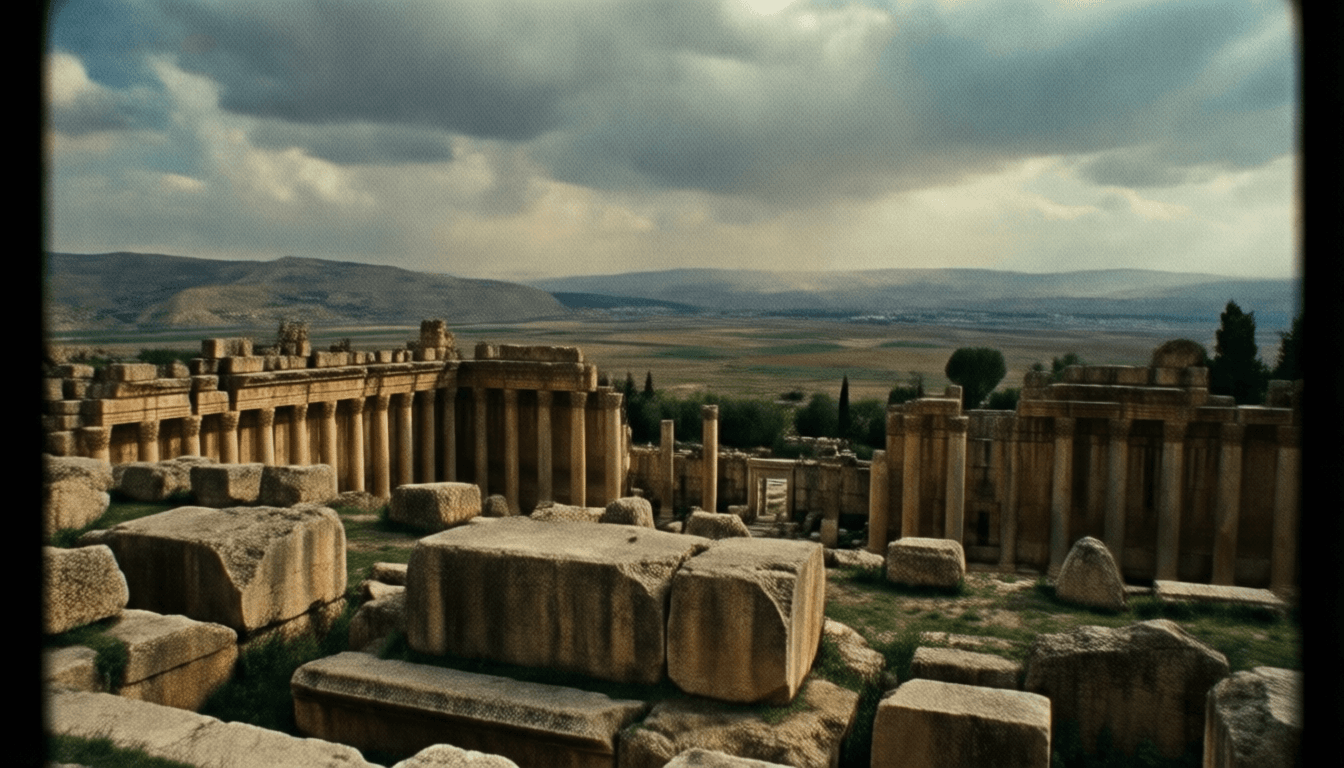
Today, the ruins of Baalbek stand not only as a testament to Roman ambition but as an enduring monument to a profound mystery. The colossal stones forming its foundation whisper tales of an unknown past, challenging our neatly organized chronologies and the limits of ancient capabilities. They compel us to peer into the prehistoric abyss and ask: Who were the architects of these impossible structures? What forgotten knowledge did they possess? And what other colossal secrets, buried beneath the sands of time, await rediscovery to redefine the true epochs of human ingenuity and wonder upon the Earth?
The stones remain silent and majestic, an eternal enigma that makes us contemplate the vast, unexplored realms of our shared human history.
[ CLASSIFIED VERDICT ]
[ACCESS LOG - SOURCE FILE]
At the base of the ancient Roman temples in Baalbek, Lebanon, lie colossal stones known as the 'Trilithon.' Each weighing hundreds of tons, these stones are far too massive to have been transported or placed using known Roman-era technology. This mystery suggests either the existence of a highly advanced pre-Roman civilization or a lost ancient technology.