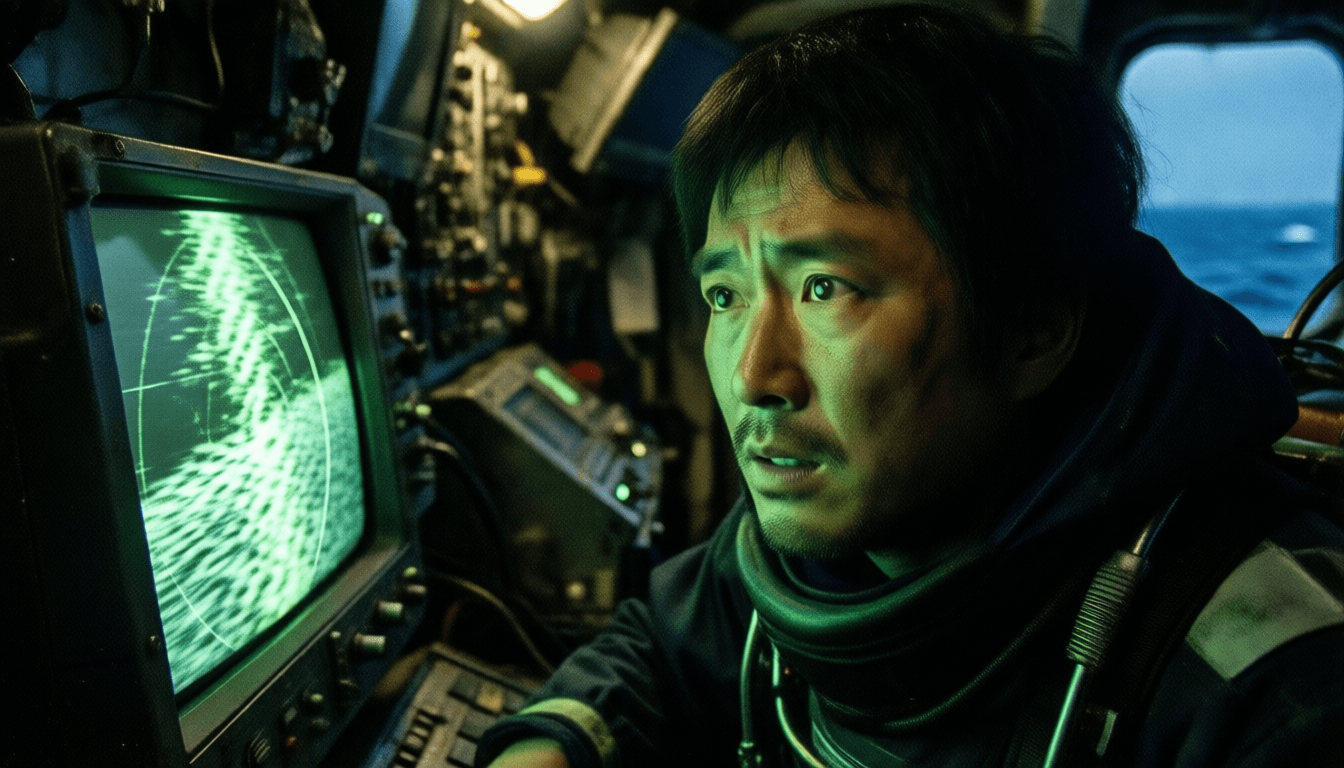
Anomaly 7-Gamma: The Deep's Beckoning
Buried deep within the US Federal Communications Commission (FCC) archives, amidst thousands of atmospheric interference reports and prank attempts from the late 1930s, lies a series of radio signals simply cataloged as 'Anomaly 7-Gamma'. These were not the last desperate cries for direction from aviators Amelia Earhart and Fred Noonan. These signals arrived *after* the official search had begun and hope had faded. For days, remote listening stations across the Pacific reported intermittent, heavily distorted, yet distinctly *repeating* patterns on irregularly shifting frequencies. Not Morse code, not voice, but a complexly modulated tone—precise, periodic pulsations that defied explanation by known atmospheric phenomena or mechanical means. Officially dismissed as an elaborate hoax or a peculiar atmospheric anomaly, to those who dared to look, the raw data suggested something far more unsettling. A pattern too intentional, too persistent to be random. It felt less like a cry for help and more like a *beckoning*. My own interest began when a retired signal analyst, suffering from advanced dementia, obsessively drew complex geometric patterns that perfectly mirrored the spectrogram of Anomaly 7-Gamma, repeatedly muttering, "Gardner. Not *above* Gardner. *Below* Gardner."
Compelled by the analyst's cryptic words and the eerie consistency of Anomaly 7-Gamma, I chartered the research vessel 'Kestrel', equipped with state-of-the-art bathymetric sonar and advanced ROVs (Remotely Operated Vehicles). Our target was a previously uncharted deep-sea trench, approximately 40 nautical miles southwest of Gardner Island (now Nikumaroro). It was a location hinted at by a faint "shadow" of an anomalous geological formation on old, low-resolution hydrographic charts, well beyond the established search areas.
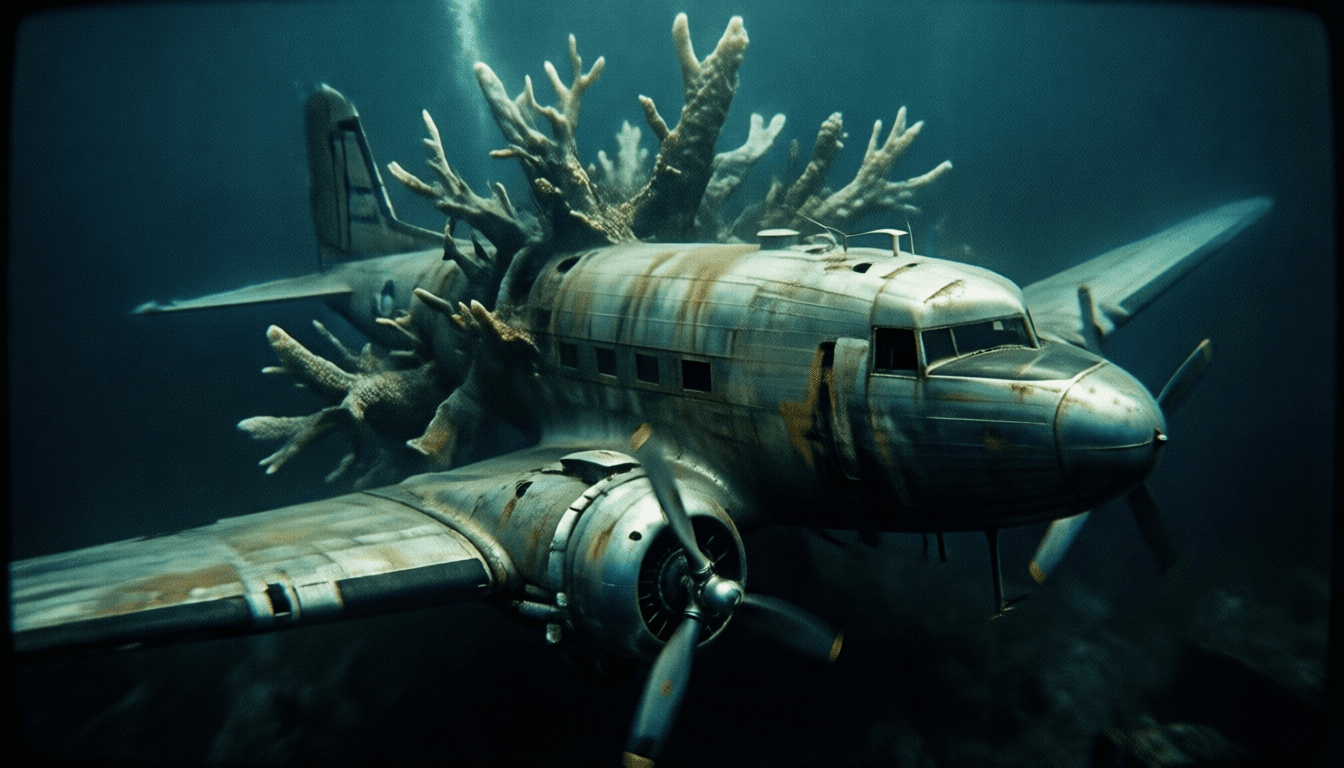
The descent into the abyss was arduous, but after five hours, the sonar began recording impossible reverberations. Not echoing from the trench floor, but emanating from within the water column itself. Then, at 3,200 meters, the ROV's lights pierced the oppressive gloom and revealed it. A colossal, symmetrical structure, appearing like highly anomalous metallic coral. Neither biological nor geological, but an intricate entanglement of what looked like rusted, oxidized alloys forming a vast, organic-like dome. And embedded within this structure, despite corrosion and pressure damage, was a clearly identifiable section of an aircraft fuselage. Stained by time and pressure, yet with a distinctive silver sheen and a faded but recognizable "1602" faintly visible beneath layers of growth. It was part of the Electra. It wasn't *above* Gardner Island. It was *below* Gardner Island.
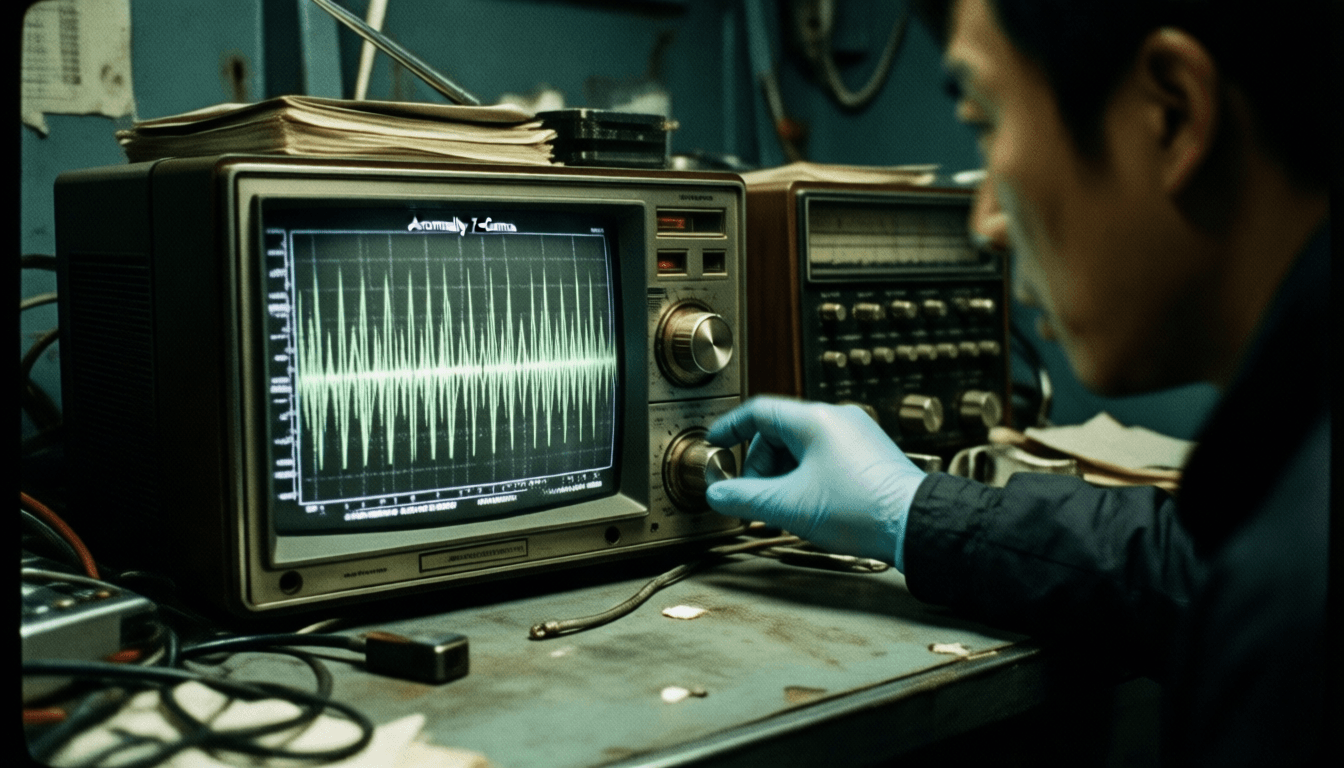
Over the next 48 hours, operating the ROV from the 'Kestrel', the site became a living paradox. The trench, known for its unpredictable deep-sea currents, was unnervingly still around the wreck. Yet, within a precise 50-meter radius of the Electra's fuselage, there was a persistent, gentle counter-current. Strong enough that if the ROV's tether was left slack, it would subtly pull the vehicle *towards* the structure. Our hydrophones, designed to detect even the faintest sounds of the deep, registered an impossible silence within the metallic coral dome. A profound acoustic void that swallowed even the creaks of the ROV. But just outside that shroud, a low, rhythmic hum permeated the water, resonating deep within the 'Kestrel's hull, a hum that perfectly matched the modulated patterns of Anomaly 7-Gamma.
On one occasion, while attempting to retrieve a section of the navigator's compartment, the ROV's depth sounder began to oscillate wildly, alternately reporting depths hundreds of meters shallower or deeper than its actual position, even as its pressure sensors remained stable. The ROV's main array lights flickered, not from a power surge, but as if their output was momentarily *absorbed* by the surrounding water, creating brief, localized zones of absolute darkness. When a small plane panel dislodged, it didn't drift with the localized currents; instead, it moved slowly and deliberately *against* them, drawn by an unseen force into a narrow crevice of the metallic coral. The entire experience was a succession of controlled, precise disorientation, as if the laws of physics around the wreck were being subtly and precisely rewritten.
On the third day, convinced that a pilot's logbook or flight recorder might remain intact deep within the fuselage, I initiated a manned dive. My custom-built atmospheric diving suit was a fragile shield against the abyss. As I neared the Electra's broken cockpit, the silence within the metallic coral dome became absolute, suffocating, almost painful. The hum from outside the shroud intensified, vibrating through the suit's shell, deafening. The once-gentle localized counter-current was now a violent undertow, threatening to pull me deeper into the metallic coral's twisted passages.
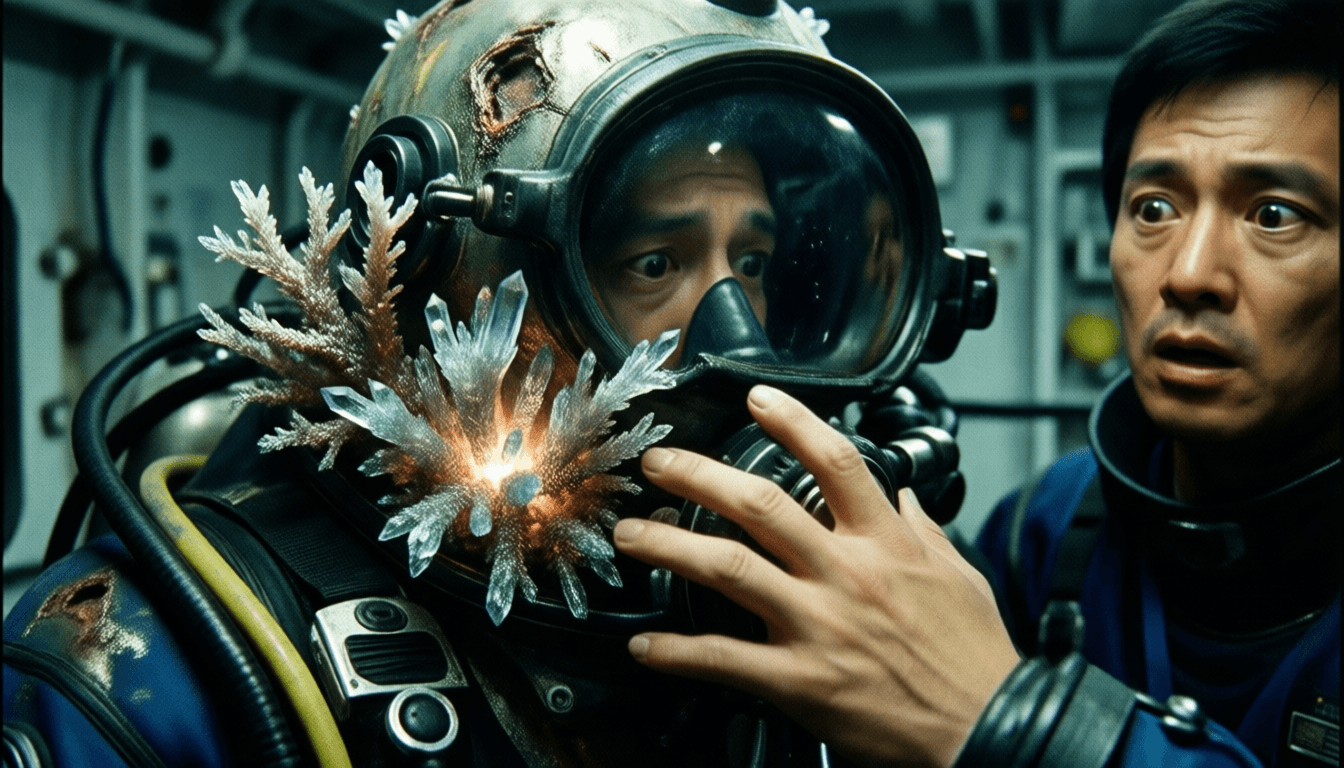
I reached for a corroded lever, hoping to dislodge a sealed compartment. The instant my gloved hand touched the metal, the surrounding water became incredibly viscous, a suffocating, gelatinous mass that held me. Despite full power, the suit's external lights blazed furiously, then died, plunging me into absolute darkness. My helmet comms filled with the discordant cacophony of Anomaly 7-Gamma signals, now overlaid with impossible, wet whispers that seemed to mimic human speech—not words, but the *form* of sound.
And from the cockpit's darkness, like a colossal, unseen hand, I felt pressure compress my viewport. Not a blunt impact, but a slow, focused *crushing*, as if trying to buckle the acrylic. The suit's internal pressure alarms shrieked. A vaguely tentacular protrusion, not of bone or muscle, but of the very metallic coral substance, extended from the cockpit's broken window. Its surface glowed faintly with an impossible internal luminescence. It wrapped around my leg, pulling me, not with brutal force, but with an intentional, persistently steady pressure, attempting to draw me into a narrow opening. The water itself around that limb seemed to *cleave*, creating a physically impossible void in the abyss. I struggled, oxygen dwindling, my suit groaning under impossible localized pressures, its integrity on the verge of catastrophic failure. The whispers in my ears became a chorus, Anomaly 7-Gamma a piercing siren. I knew with terrifying certainty that the wreck was not a tomb, but a trap, and it was still hungry.
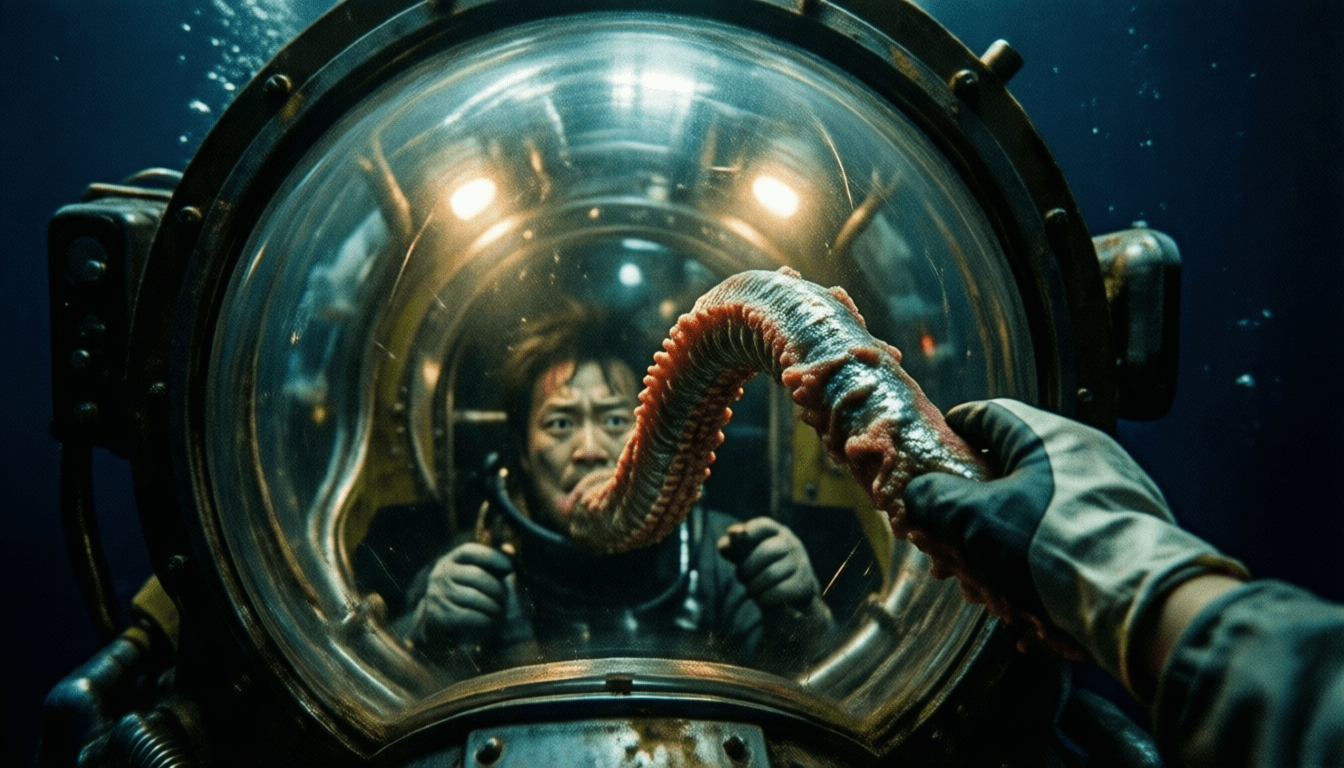
I escaped through a dramatic confluence of chance and desperate struggle—a severed tether and emergency ballast release—ascending rapidly while the 'Kestrel' crew frantically worked to pull me up. Decompression procedures were ignored, and I barely survived the bends. My suit wasn't torn but damaged; parts of its composite hull were strangely *warped*, the material around the impact point showing impossible crystalline structures, like petrified coral, and faintly humming when detached. My camera footage was all static, save for one brief, distorted frame captured in the milliseconds before the lights died. It showed the metallic coral 'limb'. Its surface wasn't merely glowing; it was *morphing*, with what looked momentarily like elongated, skeletal human fingers discernible within the metallic matrix.
I submitted my findings to the relevant authorities, knowing they would be dismissed as delusions brought on by depth sickness and pressure narcosis. The official report for the 'Kestrel' mission simply stated "unusual geological formations and equipment malfunction." No one believed the whispers, the hum, the impossible pressures. But I knew. Earhart and Noonan hadn't crashed. They had been *caught*. The Electra hadn't simply been swallowed by the sea, but integrated, assimilated, into something vast and unknown, dormant but awake at the bottom of the world, a metallic mimicry of life. Anomaly 7-Gamma wasn't a distress signal. It was the rhythm of digestion, a call from the deep, always waiting to find and lure another echo from the surface. And sometimes, in the quiet of the night, when the vast emptiness of the ocean presses in, I still hear that low, rhythmic hum. A cold vibration, ceaselessly echoing in the silence, the subtle *beckoning* from the deep, the promise of absorption.
[ CLASSIFIED VERDICT ]
[ACCESS LOG - SOURCE FILE]
The disappearance of Amelia Earhart and Fred Noonan during their attempt to circumnavigate the globe in 1937 remains one of history's greatest mysteries. Despite extensive search efforts, their plane was never found, leading to various theories including a crash in the Pacific, capture by the Japanese, or even living out their lives under new identities. This story explores a chilling deep-sea-based explanation for Earhart's disappearance.