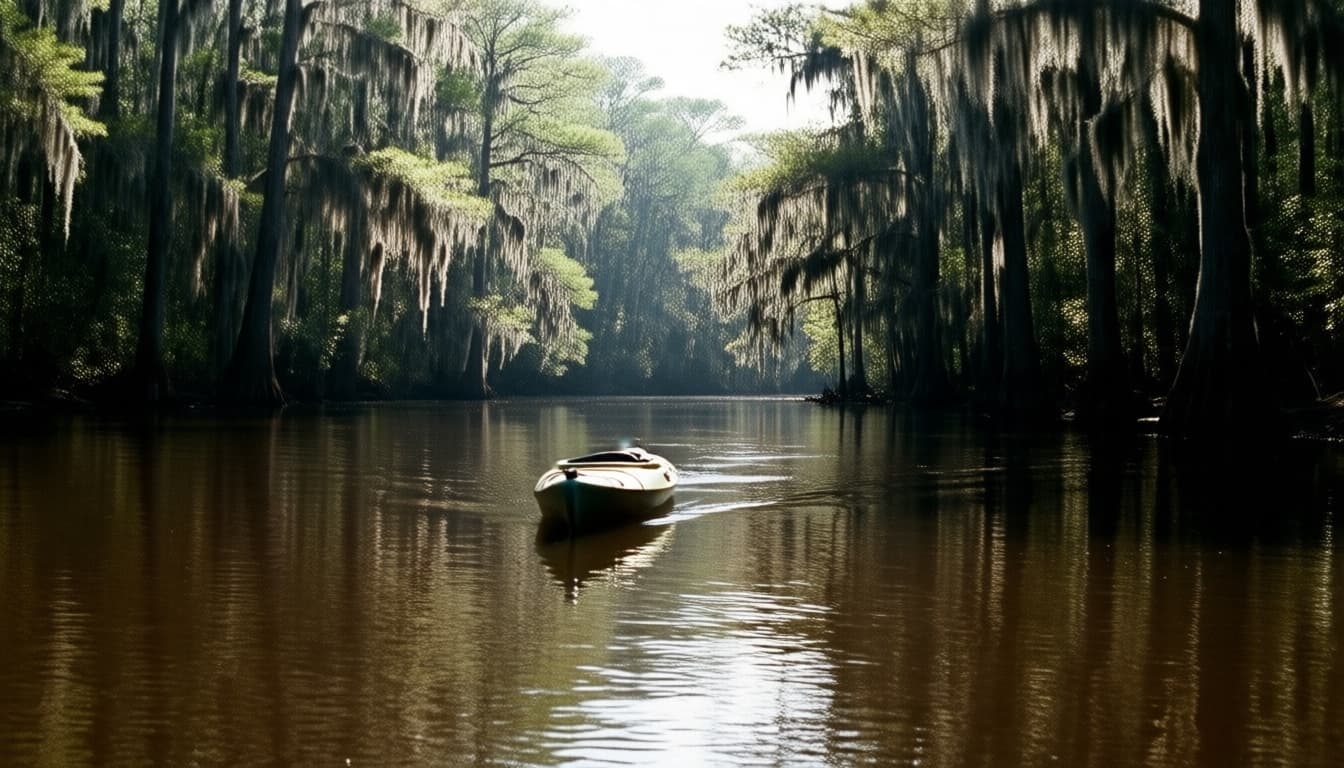
Altamaha's Hidden Predator
In early 2023, rumors quickly spread about strange sonar readings picked up during an environmental survey conducted by the Georgia Department of Natural Resources (DNR) in a deep bend of the Altamaha River near Darien. Official reports quietly noted an "unidentifiable, abnormally large biomass, estimated to be 18-25 feet in length, exhibiting unusual movement patterns unlike those of fish." It wasn't a shark or an alligator. A DNR spokesperson later dismissed it as equipment malfunction or a large school of fish, but the sonar signature—a clear, elongated shape with a detectable 'neck' and 'back'—chillingly aligned with local legends of the "Altamaha-ha," passed down for hundreds of years. The creature was often described as a smooth-skinned, sturgeon-like aquatic beast. The unusual silence from local officials and the congruence of the sonar outline with 19th-century sketches caught my attention. This wasn't merely folklore; it was a shadow of something real in the deep.
At dawn, I headed to the Altamaha River. The air was thick with humidity, heavy with the scent of lush cypress forests and damp earth. The river was wide, yet surprisingly shallow in parts, leading to deeper channels fringed by trees draped with Spanish moss. Equipped with a silent electric kayak, a high-resolution portable sonar, and low-light camera gear, I pushed toward the coordinates where the DNR anomaly had been reported.
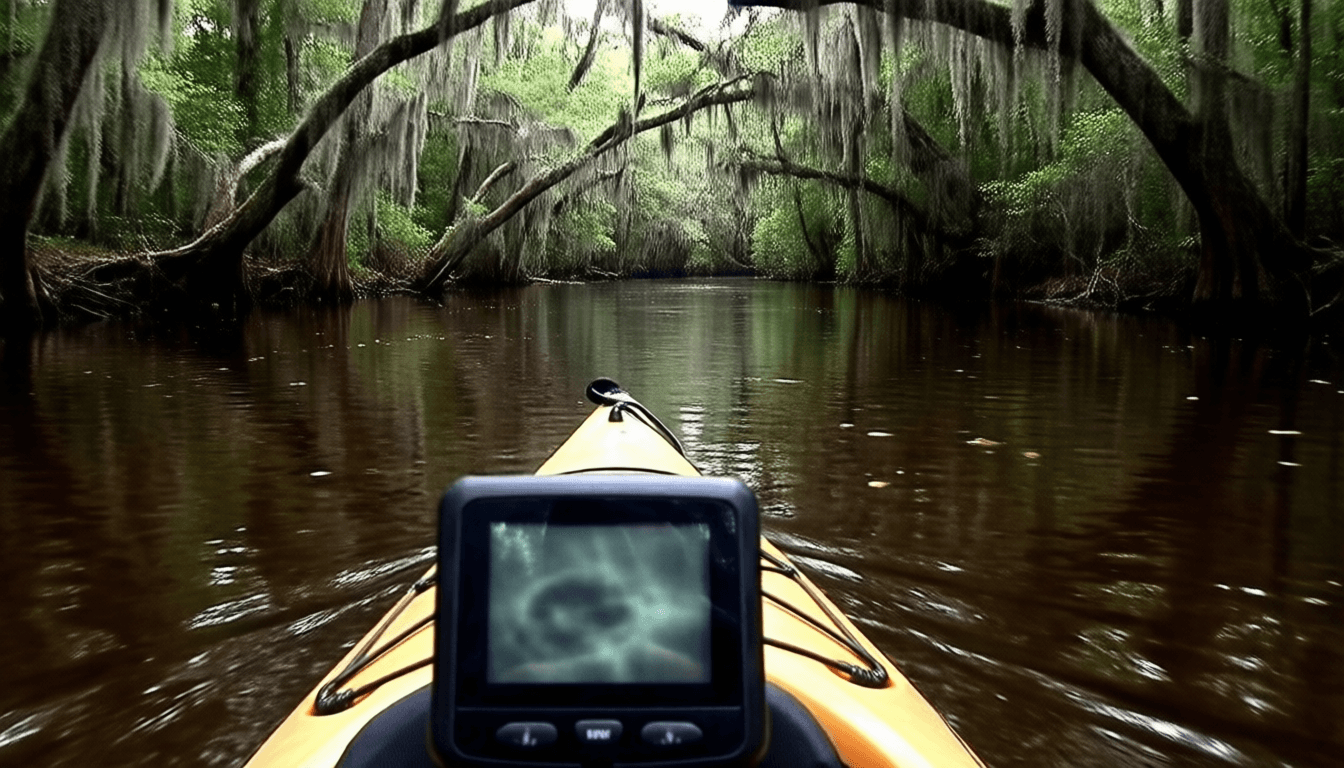
An overwhelming stillness fell as I entered the river. Normally, sunrise would bring a vibrant chorus of birds, but only faint, distant chirps were heard. The water was an opaque, dark brown, reflecting the dense canopy like an obsidian mirror. Visibility extended no more than a few inches. The sheer scale of the wilderness slowly asserted its presence. My sonar initially registered only familiar catfish, schools of freshwater fish, small and predictable dots.
As I paddled deeper into the designated bend, a distinct change in the environment was palpable. The smooth, consistent downstream flow began to subtly shift, creating inexplicable small whirlpools around my kayak, unnaturally pushing against my silent propulsion. A faint, almost imperceptible low-frequency hum began to resonate through the kayak's fiberglass hull. It wasn't a sound heard by the ear but a vibration felt in the chest, a deep pulsation echoing from the depths of the water. My usually reliable portable sonar started displaying intermittent phantom signals. Huge, amorphous shapes briefly appeared beneath the kayak, then vanished without a trace, far larger than any known species, leaving only static.
Despite the hot sun, the air in certain localized zones became noticeably colder. The river surface in some areas was unnaturally calm, glass-flat. In others, the water was flowing, yet remained unnaturally still, creating a disturbing visual paradox. Even the faint bird calls had completely vanished, and a deep, almost painful silence pressed in from all sides, amplifying the internal humming sensation. I had a clear, undeniable feeling of being observed from beneath the opaque surface.
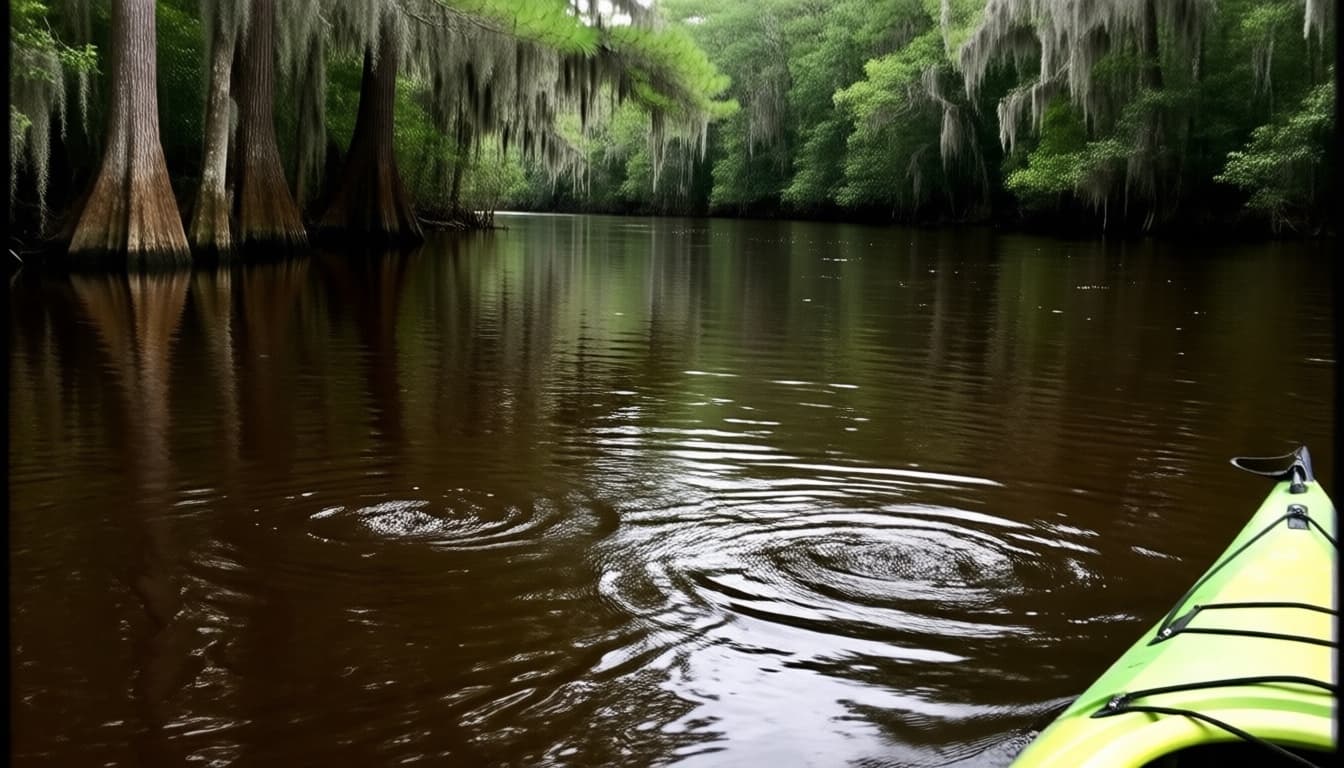
The hum intensified, becoming a violent vibration that rattled my teeth. The water around the kayak began to churn without any visible cause. No wind, no boat wake—these were localized vortices originating from below. The small vessel no longer responded to my paddling. Slowly, irresistibly, it began to spin in increasingly tight circles. The river's current was erratic, but now an impossible force seemed to be pulling downward, as if trying to drag the kayak beneath the surface. The frantically blinking sonar screen displayed one last impossible image: directly beneath me, a colossal black mass dwarfing the kayak, its outline perfectly matching the original DNR anomaly. Then, the screen went black.
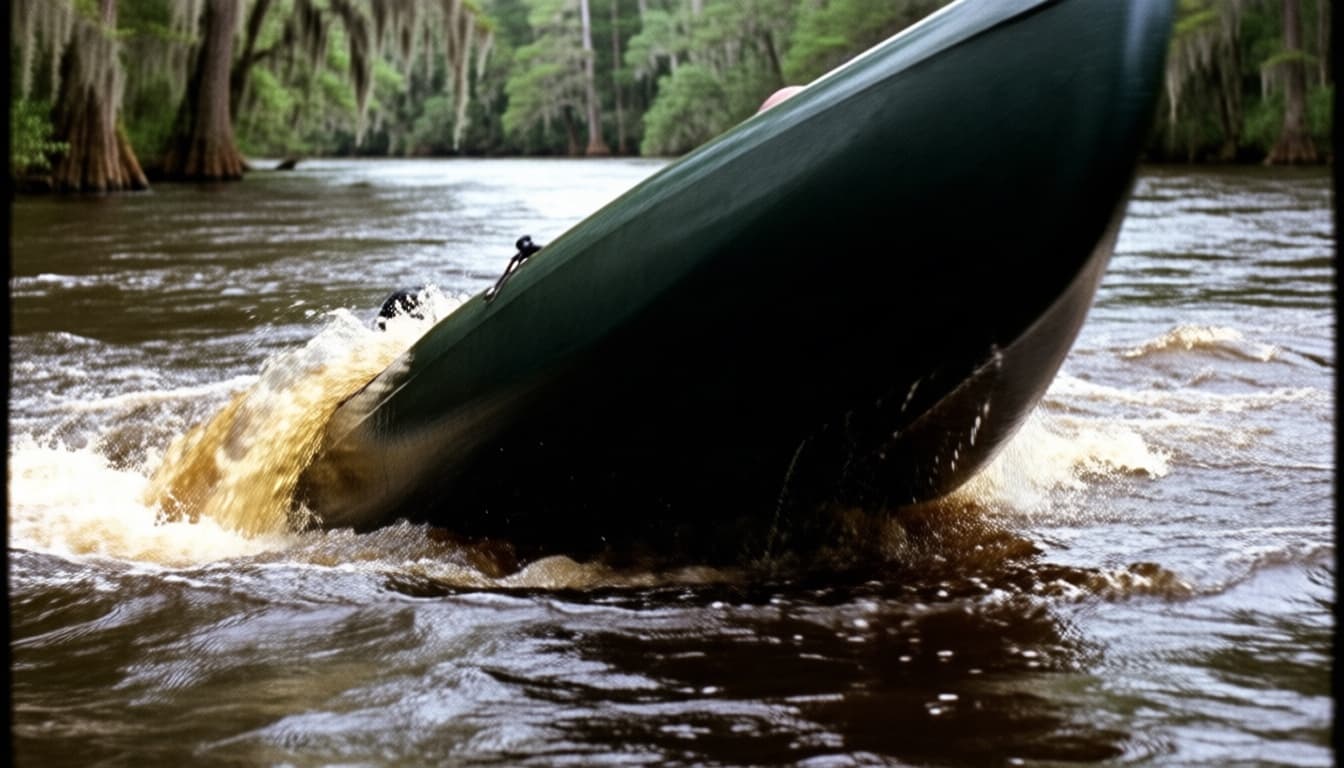
A massive, unseen force struck the bottom of the kayak. There was no splintering wood or tearing metal, just a sickeningly soft impact, followed by the sensation of a huge, cold, smooth surface scraping along the length of the hull. The kayak flipped with startling speed, and I was thrown into the icy, opaque water. Disoriented, I struggled to surface, fighting against an unnatural, localized downdraft that seemed to grip me. For a brief moment, gasping for air as I barely broke the surface, I saw it: not the entire creature, but a piece of vast, dark skin, impossibly smooth like polished stone, a curved expanse of impossible scale, rolling just beneath the surface before disappearing back into the depths. Its sheer mass was overwhelming. It was like a living submarine. The current then grew stronger, pulling me further into the deeper center of the bend, into the heart of the vortex. I thrashed wildly, desperately reaching for the distant riverbank. I wasn't fighting the water; I was fighting a calculated, deliberate pull.
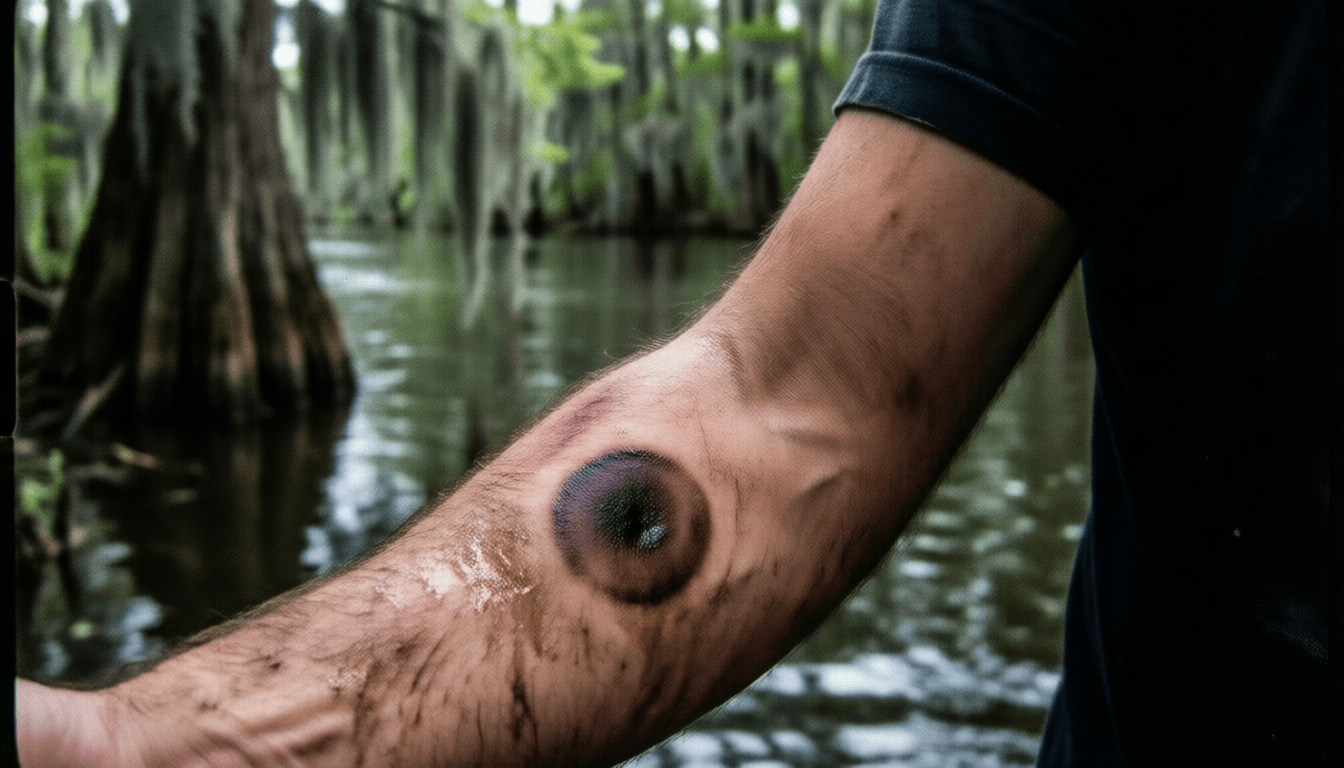
Barely clutching a cluster of exposed cypress roots, I dragged myself onto the muddy riverbank, bruised and gasping. My kayak, camera, sonar, even my paddle—all my equipment was gone, swallowed by the Altamaha. The river's deep stillness returned, a stark and eerie contrast to the minutes of chaos that had just transpired. Aside from the scratches and bruises from the riverbank, on my wet clothes, specifically on my arms where water contact was heaviest, I discovered a thin, almost translucent film. Odorless and slippery, it completely evaporated within minutes of touching dry land, leaving no trace for analysis. On my forearm, where I felt the impact most directly, an odd, deeply impressed bruise had formed—not a contusion from blunt force trauma, but a perfectly smooth, dark circle, like a massive suction mark. It remained for weeks.
No physical evidence remained to back my story. The Altamaha River was now not merely a geographical feature in my mind but a living entity. Its dark waters concealed an ancient, territorial intelligence. The sonar anomaly wasn't a malfunction; it was a portrait. And the hum wasn't just a sound; it was the pulse of a predator, a vibration now resonating within my bones. The profound silence after the encounter wasn't an absence; it was the sound of a satisfied ancient being returning to its undisturbed lair, having issued a quiet, deadly warning. The Altamaha-ha didn't merely exist; it reigned, and my brief, terrifying intrusion was a warning of its absolute dominion over its murky depths. I no longer doubt the whispers. I now hear them in the echoing silence of the deep.
[ CLASSIFIED VERDICT ]
[ACCESS LOG - SOURCE FILE]
The Altamaha-ha (Altie), rumored to inhabit the Altamaha River in Georgia, is a legendary aquatic creature passed down through local residents for hundreds of years. Often described as resembling a sturgeon with a long, smooth body, sightings and accounts of this unknown creature persist to this day.