The Harvest of Alamogordo's Singing Sands
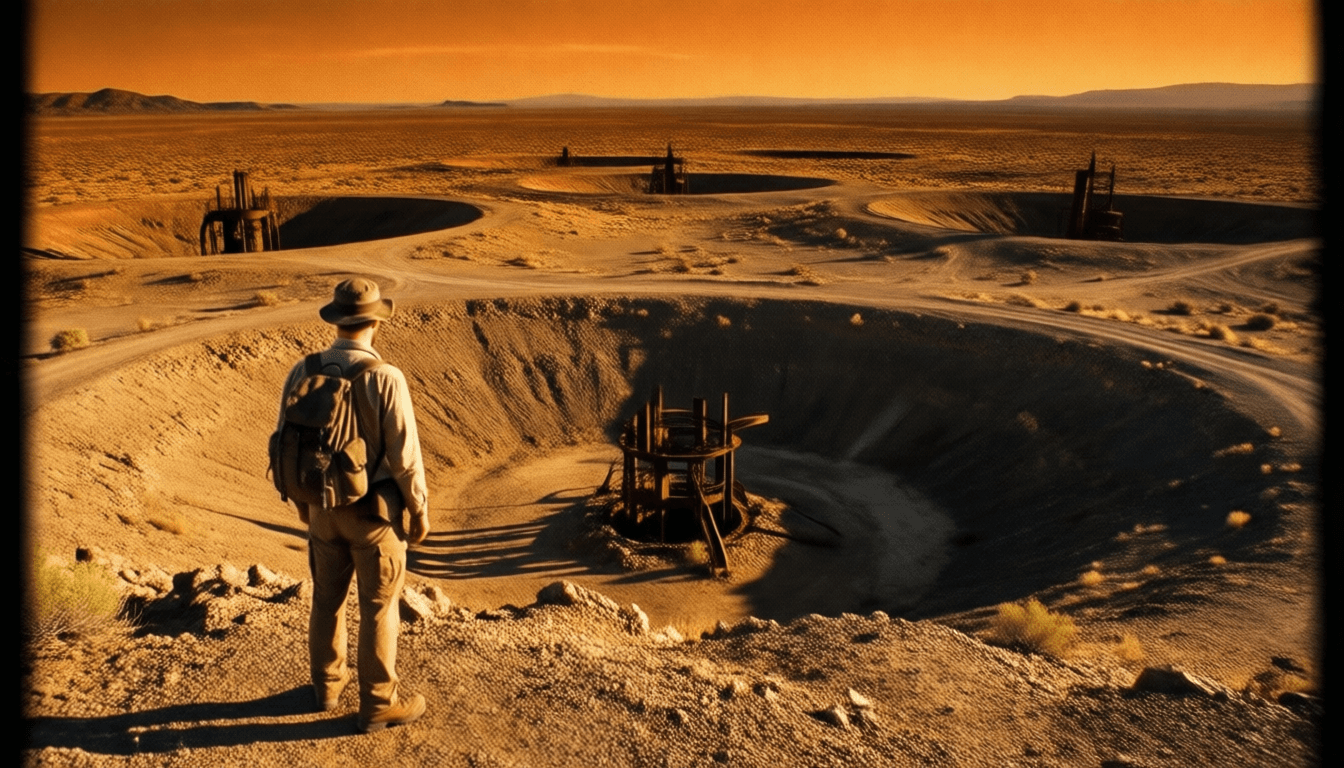
For years, whispers of "Alamogordo's Singing Sands" circulated in isolated corners of the internet, particularly in archive forums for amateur metallurgists and fringe astrobiologists. This was distinct from the well-known sands of White Sands National Park. This was further west of the Trinity site, in a much more remote, uncharted stretch of the Chihuahuan Desert. Initial claims by prospectors of sand humming without wind, and leaving behind a fine metallic residue, were all dismissed. Then began the persistent, unsubstantiated rumors of localized magnetic anomalies in the area, rendering compasses useless and inexplicably draining vehicle batteries. But what truly lent weight to the legend was the rediscovery of a few faded, almost unreadable local newspaper clippings from the late 1950s. These reported the brief, mysterious presence of a "private geophysical survey company" operating in the area under the vague federal permit of "anomalous material recovery." The company vanished as quickly as it appeared, leaving no public record of what they sought or found. The only physical remnants were grainy aerial photographs, recently unearthed and circulating online, showing impossibly regular circular depressions etched into the desert floor, and a blurry vertical structure at the center of each. Coordinates were shared, then swiftly flagged and deleted by unknown entities, only to resurface on encrypted message boards. The legend posits that these depressions are not natural, but "harvesting devices" for something profoundly extraterrestrial, something still lying beneath the sun-baked surface of the desert.
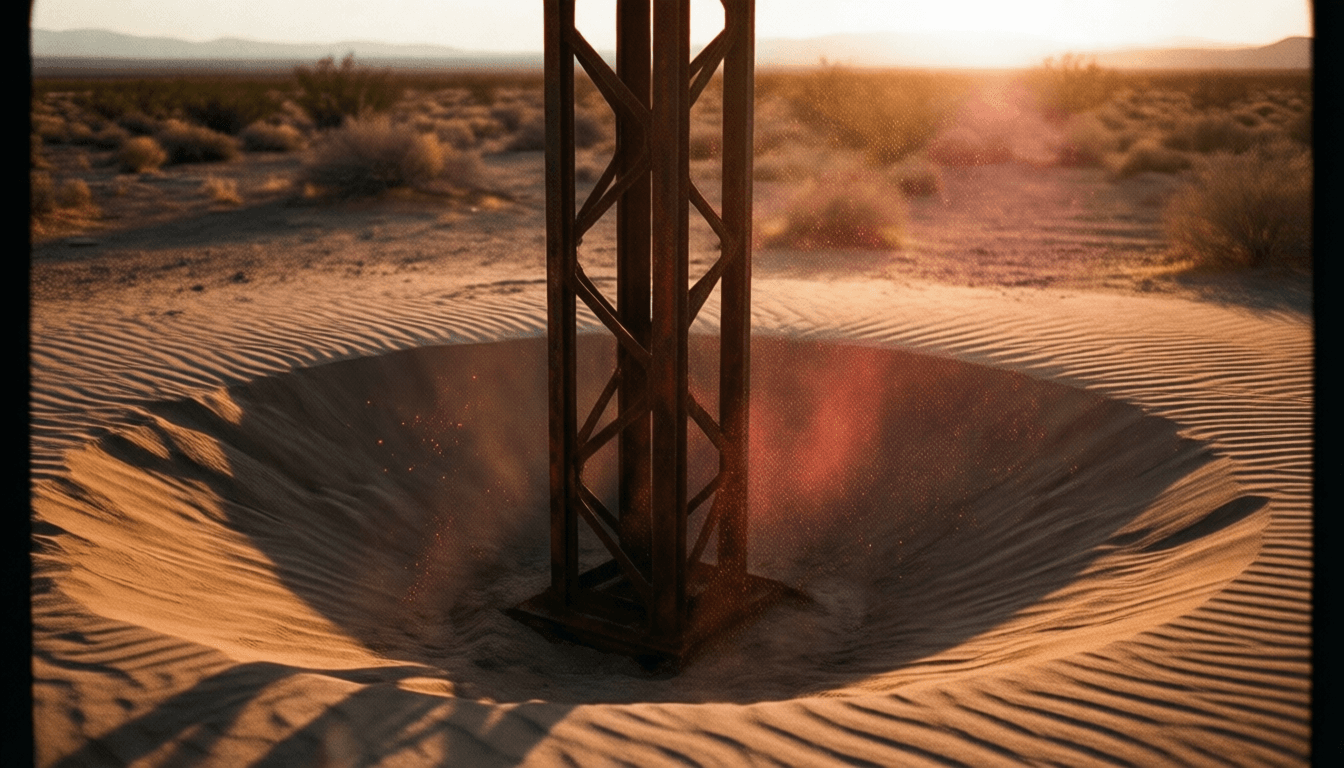
Following the most persistent and verifiable leaked coordinates, my borrowed 4x4 came to a halt in a desolate stretch of the Chihuahuan Desert, miles from any paved road. Immediate, absolute silence fell, broken only by the static of an old satellite phone. The heat was ferocious, scorching the air into a shimmering haze. Ahead, barely discernible beyond the mirage, were the depressions from the aerial photographs. Six shallow, wide craters, roughly fifty feet in diameter, formed an irregular cluster. From the dead center of each rose a skeletal structure of rusted rebar and corroded steel, approximately ten feet high. Too crude for communication antennas, too delicate for oil rigs, they angled downwards, as if piercing the earth. Near the largest depression lay the faint remains of a hastily abandoned camp: rusted utensils, a sun-bleached, tattered tent, and a single, intact but heavily oxidized metal toolbox containing nothing but a broken Geiger counter and a few oddly shaped copper coils. The ground here was different from the surrounding desert. The sand was finer, almost powdery, with an unusual reddish tint in places, and felt more compacted underfoot. There was no wind, yet a faint, almost imperceptible ripple coursed across the sandy surface of one of the depressions, as if something moved just beneath.
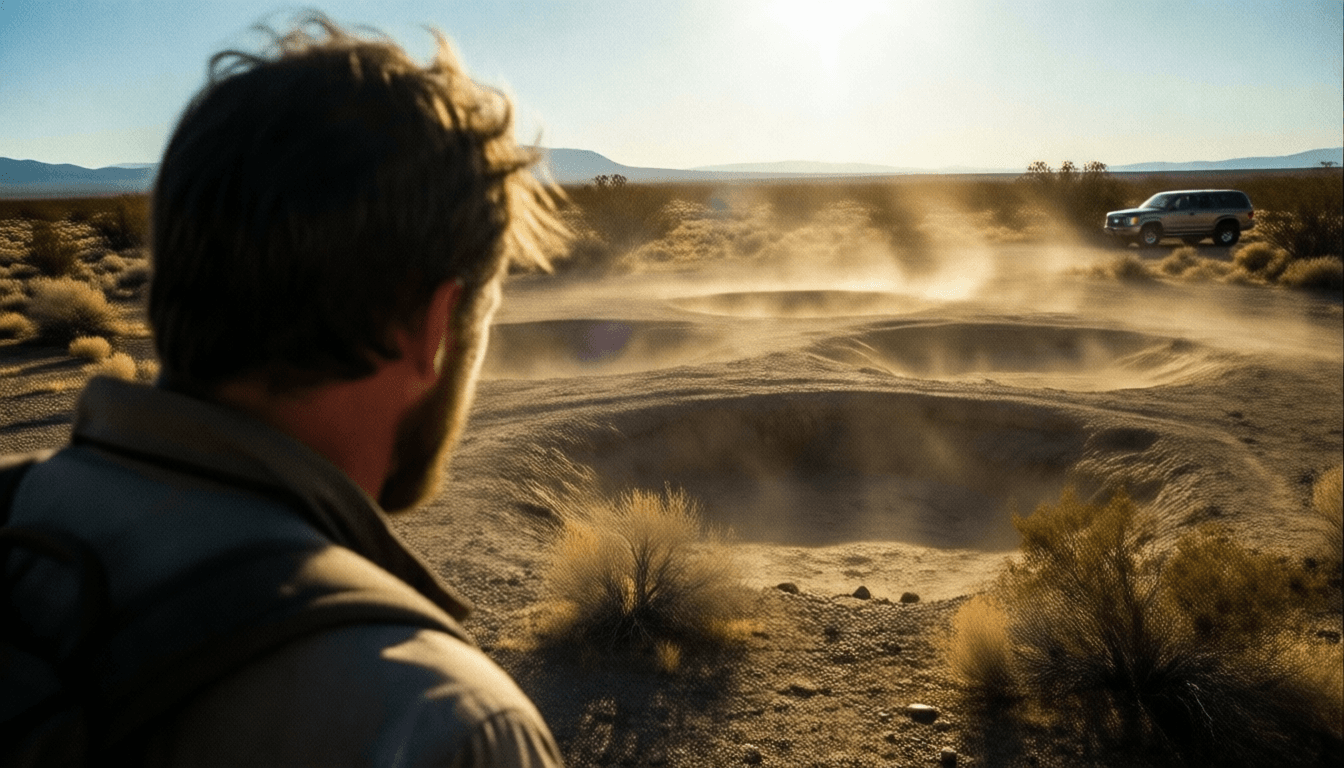
As the sun began its slow descent, painting the western sky in burning hues, the silence deepened into an unbearable pressure. My own breathing felt unnaturally loud, yet almost immediately dissipated, swallowed by the still air. The faint rippling in the sand within the depressions grew more pronounced, expanding in concentric circles despite the absolute absence of wind. My previously reliable digital compass spun wildly before locking onto a meaningless direction. Electronics began to fail. The satellite phone emitted a high-pitched whine before going dead. A low, sustained hum began, not audible to the ears, but felt deep in the chest—a profound, resonant vibration that caused a dull ache behind the eyes. It was too regular, too intentional to be a natural phenomenon. A faint metallic shimmer began in the fine, reddish-tinted sand. It rose like heat haze, yet moved against any air current. Individual particles of this strange dust became visible, suspended in the air, occasionally coalescing into faintly luminous lines, seeming to follow an invisible path directly towards the rusted skeletal structures in the center. The air around these structures was abnormally cold, a stark contrast to the desert's searing heat, piercing the skin and seemingly drawing warmth from my body. I began to feel an increasingly unpleasant sense of being watched—not by animal or human, but by the desert itself, the sand, the shimmering dust.
The hum amplified into a painful, skull-shaking vibration. The air around me grew impossibly cold, my breath misting, my skin tingling. The shimmering dust, previously scattered, coalesced with terrifying speed and purpose. Not like air, but like a heavy, viscous fluid, it rose in dark, coiling waves, forming silent walls that blocked every avenue of escape. The ground beneath my feet began to sink—slowly at first, then rapidly, a localized gravitational anomaly pulling me deeper into the largest central depression. The rusted skeletal structures at its heart began to glow with a faint, internal crimson light, pulsing in sync with the agonizing hum. The dust was now a dense, suffocating cloud of metallic particulates, pressing in from all sides. It felt impossibly heavy, like tiny lead pellets, yet clung to skin, clothes, and hair with an alien tenacity. It invaded nostrils, mouth, and eyes, creating a deafening internal static hiss that drowned out all other senses. The weight was immense, overwhelming. It was as if the desert itself was reclaiming me, or integrating me into its strange, vibrant process. I struggled, gasping for air, muscles seizing as a profound coldness permeated my very bones. The crimson light from the "harvesters" intensified, synchronizing with the overwhelming internal static, pulling the dust and my struggling form deeper into the heart of the anomaly. I wasn't merely being buried. I was being absorbed.
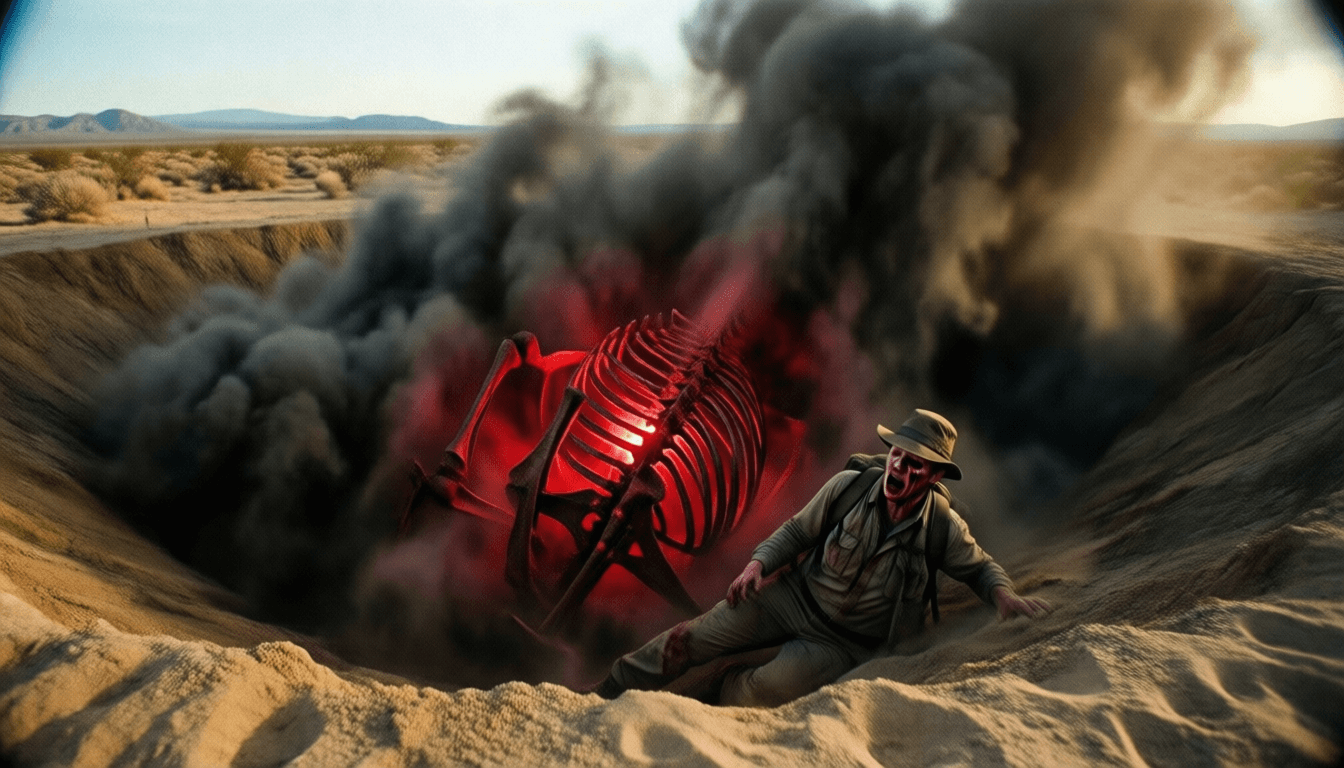
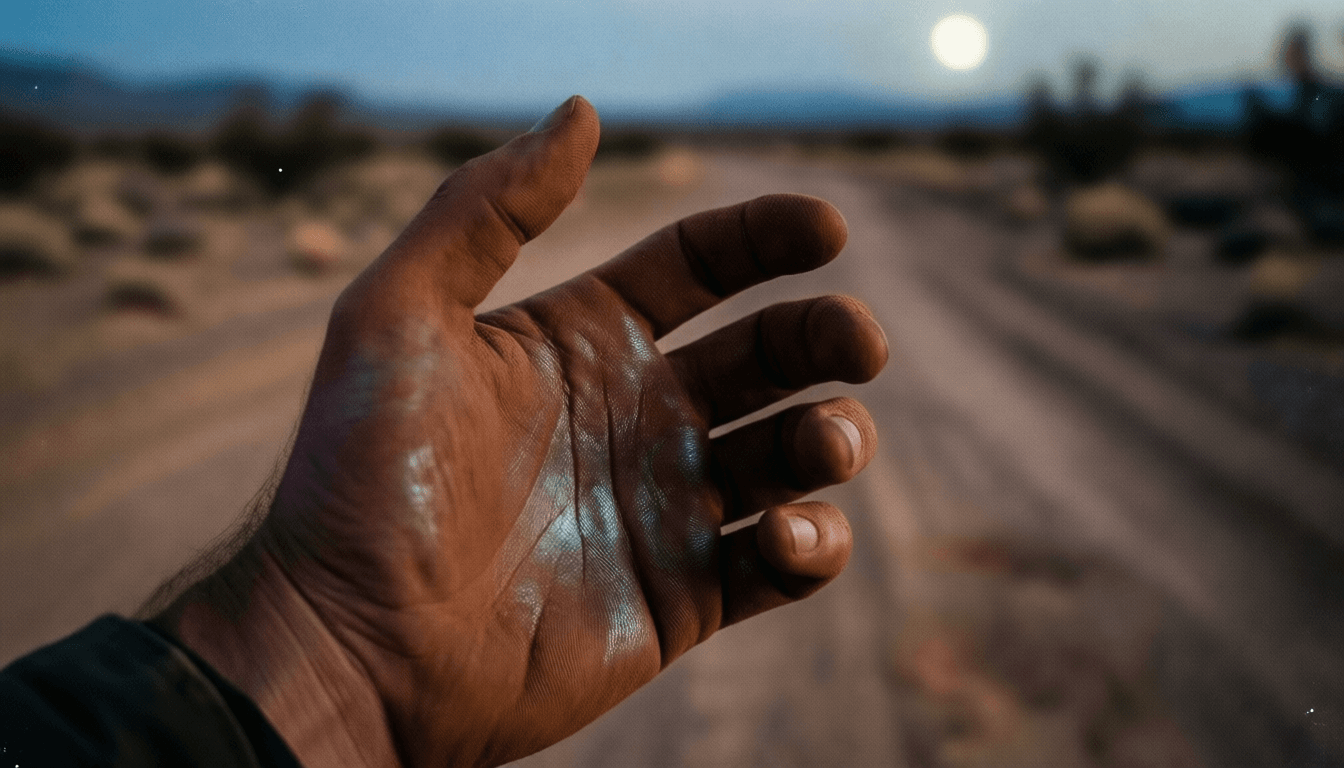
In a desperate, final surge of adrenaline, half-buried and disoriented, I managed to claw my way out, just past the boundary of the main depression. As soon as contact with the active zone broke, the dust, as if drawn by an invisible tide, flowed back into the sand with incredible speed, leaving a distinct, clean impression on the desert. The hum abruptly ceased. The crimson light from the "harvesters" vanished, and the desolate landscape settled back into a deep, chilling silence under the rising moonlight. I collapsed, gasping and trembling. A phantom static hiss still hummed behind my eyes. I looked at my hands, covered in reddish-brown dust. But beneath it, on my skin, a faint metallic sheen now seemed to sparkle. An impossible coldness still lingered in my bones. Miles away, having returned to the truck purely on instinct, the digital compass on the passenger seat was still spinning wildly, even far from the "harvesters." Weeks later, back in civilization, that low, persistent hum remained deep within my skull—a ghostly echo of the desert's song. Sometimes, when a dust particle caught the light just right, it seemed to align with my gaze, or perhaps, respond to my very presence. The true horror wasn't what I had seen, but what I had unconsciously absorbed. The Chihuahuan Desert wasn't just holding dust. It was harvesting it. And now, perhaps, a fragment of that harvest resided within me, subtly altering me, waiting for its true purpose to manifest. Silence, after all, is the loudest noise.
[ CLASSIFIED VERDICT ]
[ACCESS LOG - SOURCE FILE]
This story begins with internet whispers about "Alamogordo's Singing Sands" in the Chihuahuan Desert, near Alamogordo, where sand hums without wind. This sand is said to leave metallic residue and cause magnetic anomalies, linked to a mysterious 1950s company and the remnants of extraterrestrial "harvesting devices."