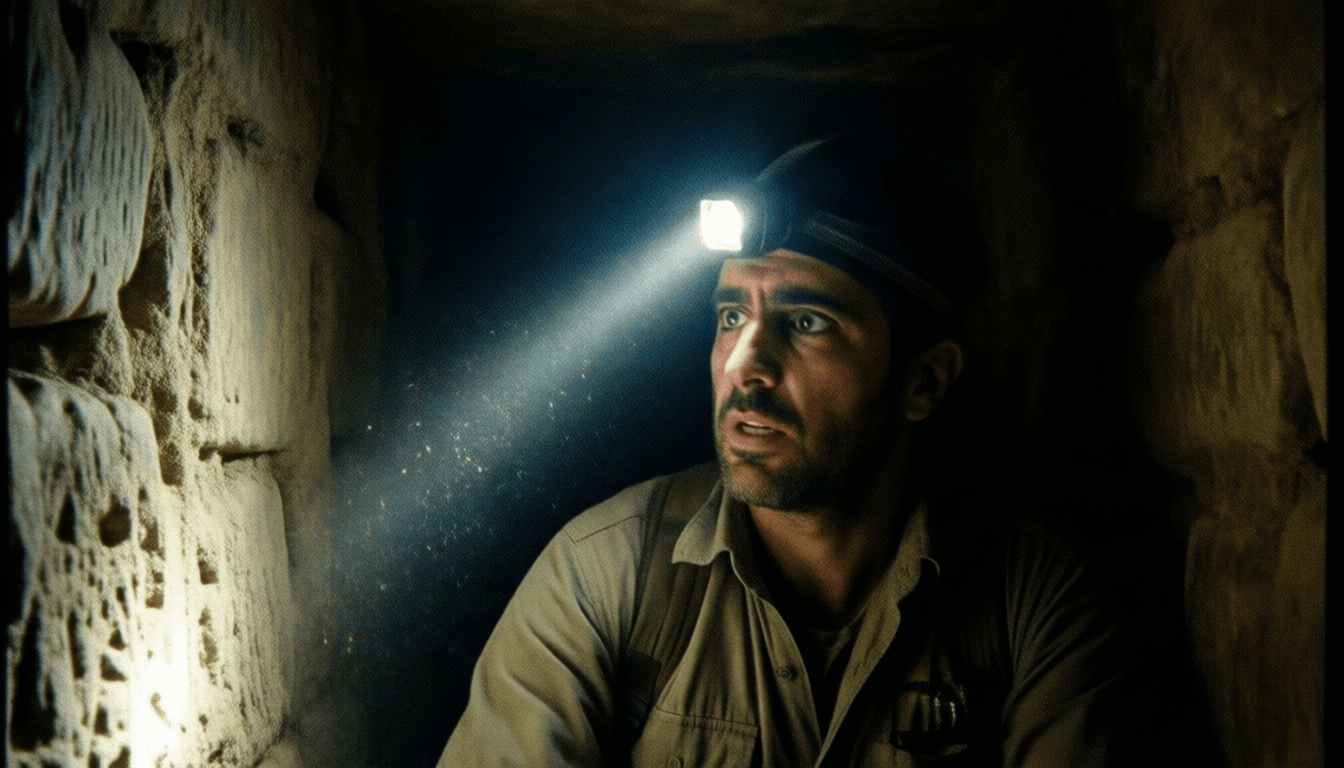
Abyss of Ancient Silence: The Pyramid's Absence
The 2017 announcement by the ScanPyramids project regarding the discovery of a 'Big Void' inside the Great Pyramid of Giza simultaneously sparked scientific interest and a predictable wave of speculation. This 30-meter-long, massive unknown space, located above the Grand Gallery, was detected using non-invasive cosmic-ray muon measurements. While official statements adopted a cautious stance, interpreting it as either a buffer space or an unknown architectural technique, a pervasive whisper had existed for decades among certain historical researchers and long-term archaeological staff, even before the muon detectors were deployed. It wasn't merely a story of an empty space, but of an 'Absence.' Rumors spoke of localized atmospheric pressure anomalies, places where sound wasn't just echoed but swallowed, and where the air itself felt strangely wrong. Often dismissed as 'pyramid fever' or hallucinations, these anecdotal reports included unexplained nausea, disorientation, and even claims of basic electronic equipment temporarily failing in certain unconfirmed areas within the structure. My interest was now less in the confirmed existence of the void itself, and more in the persistently unsettling descriptions of its effects, passed down through generations by those who had dedicated their lives to the tomb of King Khufu.
Our team secured highly restricted permits under the guise of conducting supplementary research on micro-seismic activity within the pyramid. This was a cover that granted us access to less frequented passages near the Grand Gallery. Our true objective was to deploy specialized atmospheric sensors, designed to detect subtle pressure fluctuations and anomalous acoustic dampening beyond the known void boundaries, thereby tracing the reality behind the old whispers. The interior of the pyramid was always filled with dust and ancient silence. A profound stillness that pressed down on the ears. The immense weight of the colossal stones above felt like a physical pressure. As we delved deeper, past the Queen's Chamber, the stifling heat fluctuated irregularly, not as a constant gradient, but like sudden, appearing and disappearing pockets of cold. My colleagues focused on the green glow of their monitors, concentrating on sensor readings, but I was attuned to the subtle environmental shifts. The echo of our footsteps, which should have been sharp and immediate, began to subtly deviate. One moment it stretched too long, the next it was abruptly muffled, as if the stone itself was absorbing the energy unevenly.
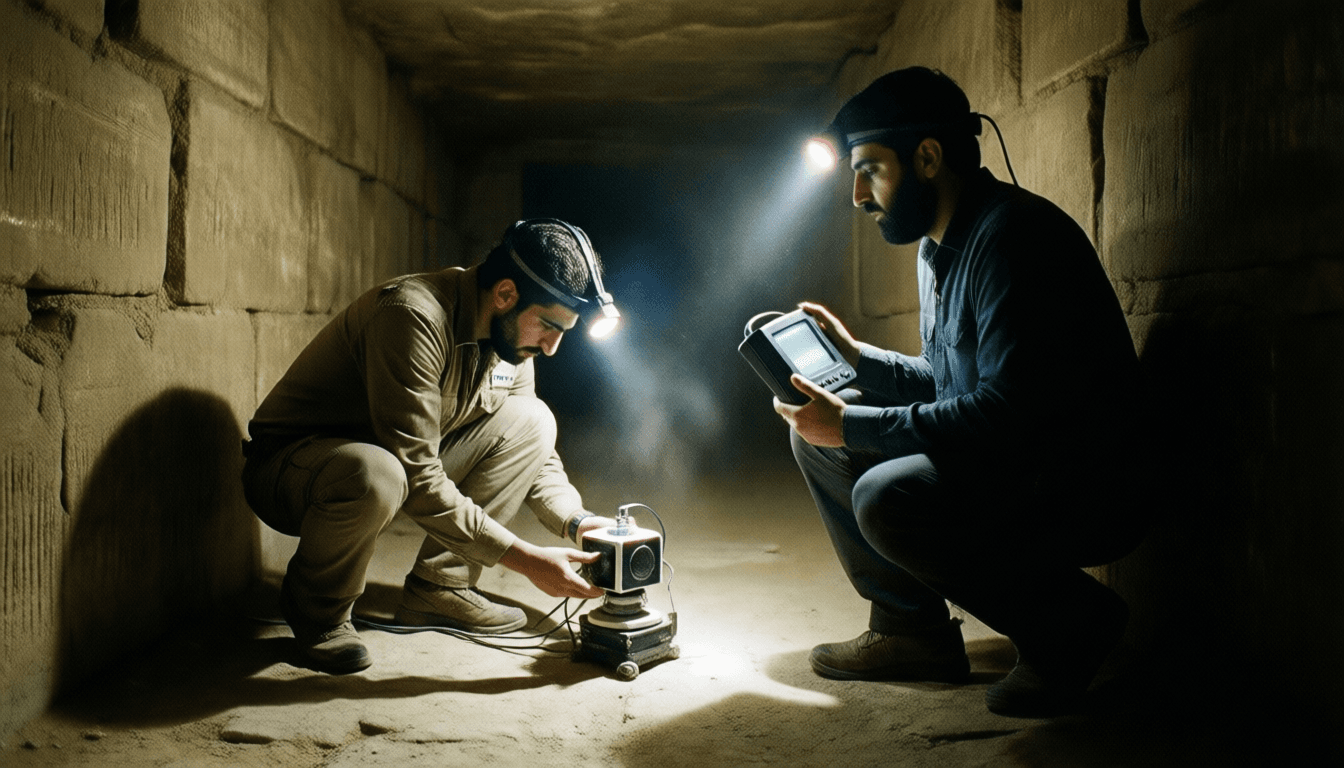
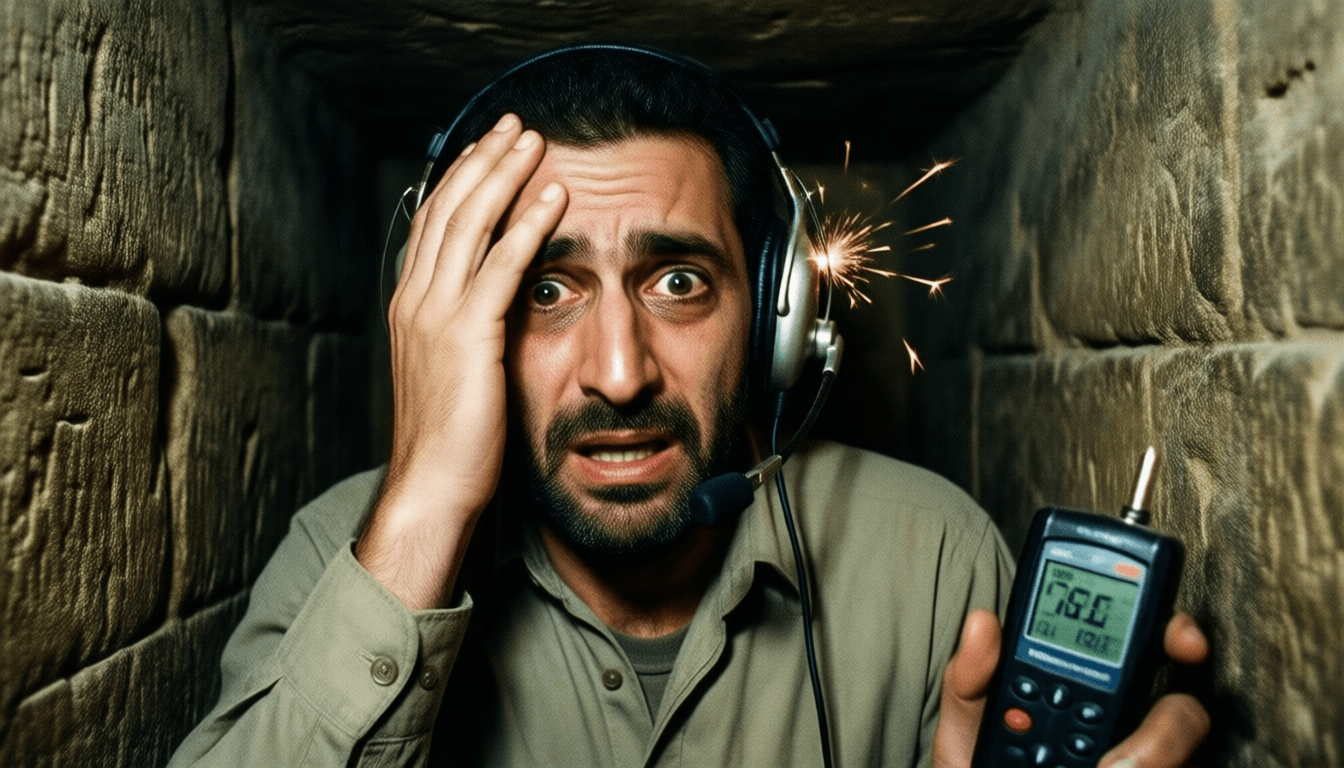
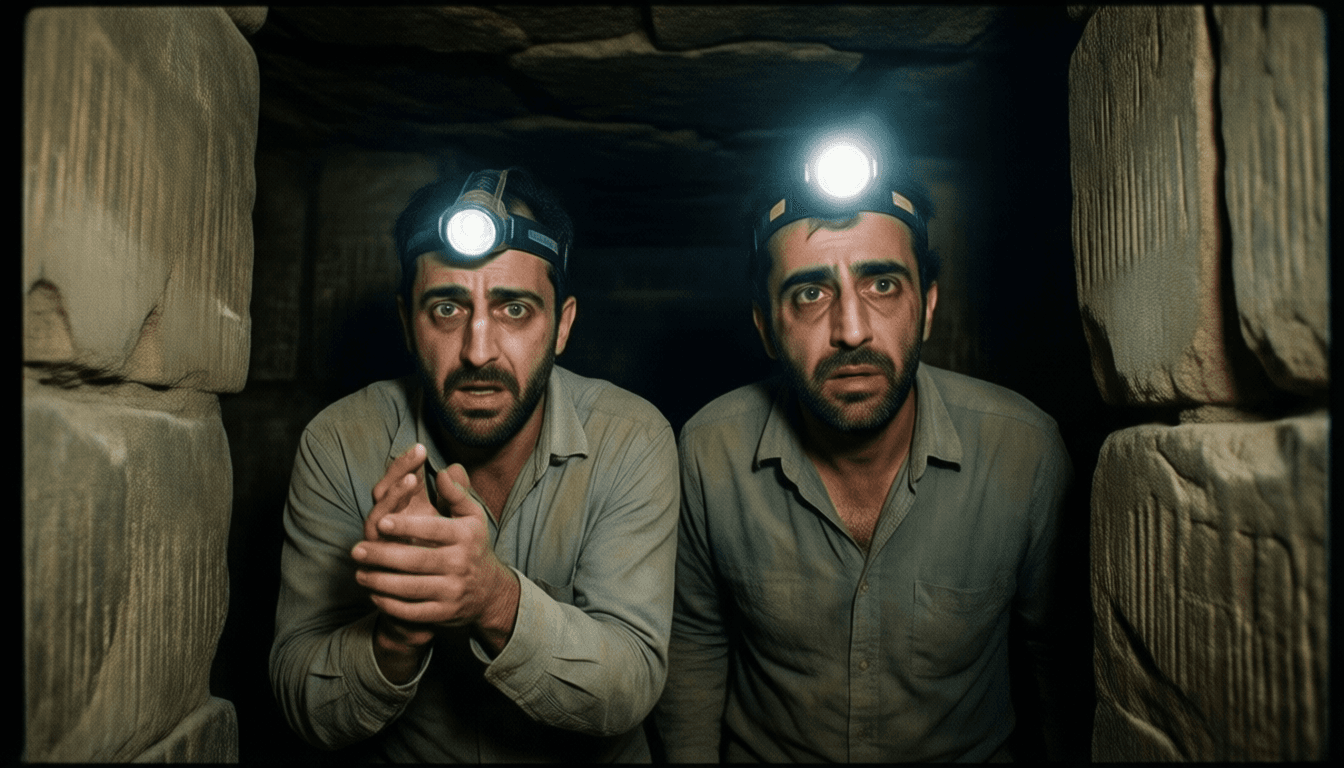
The anomalies intensified as we approached the coordinates identified by my past data, just a few meters from the muon-detected void. My usually clear communication gear crackled with static before cutting out completely. The small LED of the barometer in my hand flickered erratically, unable to stabilize its readings. The air grew perceptibly denser, making breathing feel laborious, like sucking water through a straw, yet the humidity sensor registered no significant change. And then, the sound vanished. It was an almost perfect, unnatural silence. The hum of ventilation units, the distant chatter of other team members, even the rustle of my own clothing, seemed to be actively suppressed. It was as if the air itself had turned into a sound-absorbing gel. Pressure in my ears became intense, akin to a rapid ascent or descent without actual altitude change. My head spun with a subtle, internal disorientation, not from motion. It was as if the physics of this space were gently but firmly warping. Dr. Al-Mansour, my colleague, looked up from his console, his face pale beneath his headlamp. "Acoustic dampening is... more severe than anything we've measured. And localized atmospheric pressure is... behaving like localized pockets of vacuum and compression simultaneously."
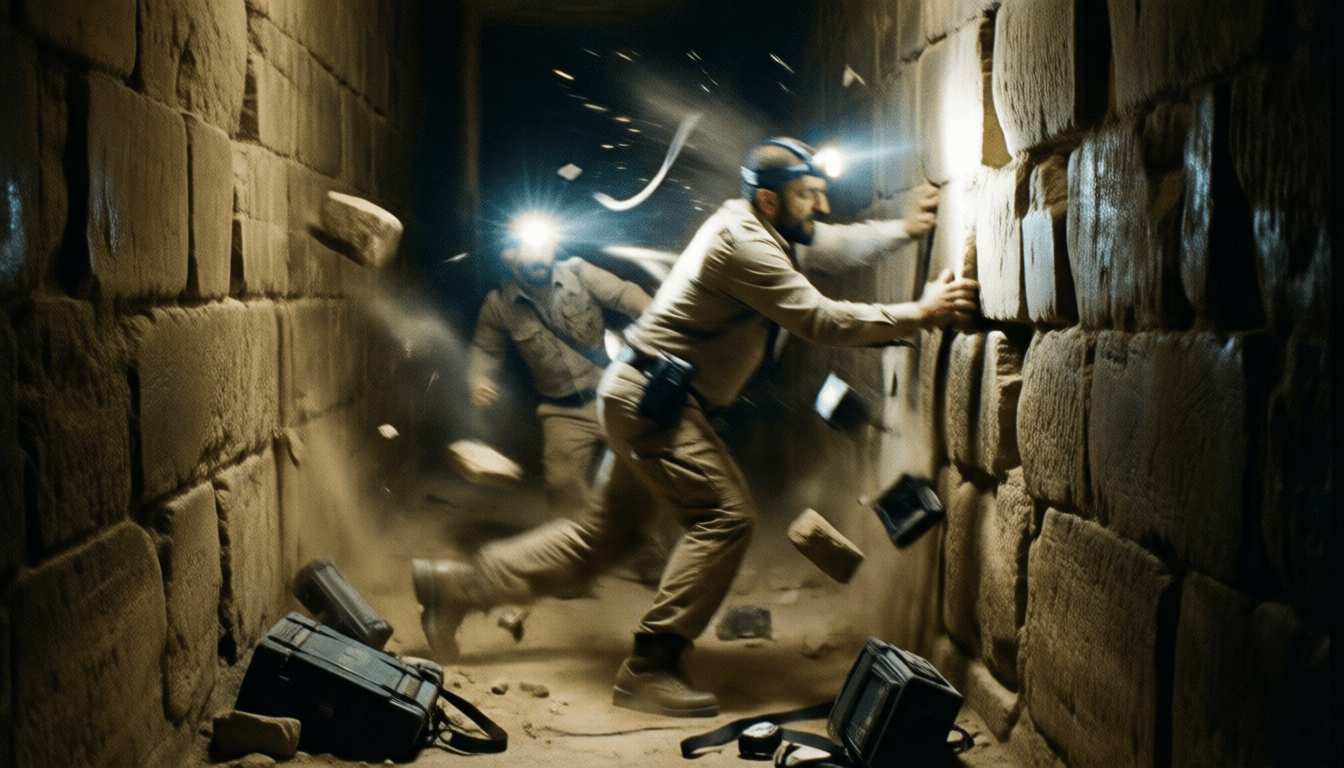
We had pushed too close. A subtle, low-frequency hum, felt more through bone conduction than perceived audibly, began to vibrate through the stone floor. It grew stronger, becoming an overwhelming tremor that rattled our teeth. Then, the air *moved*. Not a draft, but an invisible, colossal *breath* slammed into us, throwing Dr. Al-Mansour against the passage wall, his console scattering. My breath was stolen. The dense air was suddenly replaced by a localized area of near-vacuum. My ears popped violently, eardrums ringing, and a sharp pain shot through my sinuses. I gasped, but there was nothing to catch in the suddenly rarefied air.
The ambient temperature plummeted instantaneously, and despite the inherent warmth of the pyramid, I could see my breath fogging in the beam of my headlamp. The structure itself seemed to groan. It was a deep, resonant sound, too massive to be merely architectural. It wasn't an echo; it was the pyramid itself responding. The pressure returned, crushing me, pushing me down. I felt an eerie, physical *pull*, as if an unseen current was trying to drag me deeper, into the stone, into the *absence* beyond. I struggled, gripping the rough wall, my fingers barely catching on the ancient, uneven stone blocks. My headlamp's beam began to distort, its light subtly bending, failing to travel in a straight line. Dr. Al-Mansour's choked sobs could be heard as he, too, was caught in that invisible wave. It wasn't any physical entity. I realized in that moment that it was the *place itself*, actively rejecting us, pulling us, attempting to reclaim its undisturbed void. With a last surge of desperate adrenaline, I broke free from the invisible pull, scrambling back towards the relative normalcy of the main passage. The air still carried the lingering scent of ozone and something unutterably cold.
We emerged, pale and shaken. The ringing in our ears defied any known medical explanation. Dr. Al-Mansour had a deep bruise where he hit the wall, but more unsettling was the persistent, almost imperceptible tremor running through his left hand, later diagnosed as a neurological anomaly due to "extreme localized barometric trauma." My hearing was permanently altered; certain frequency bands were gone, creating strange 'blind spots' in my auditory perception. Our atmospheric sensors failed, their internal components inexplicably melted. However, the final, corrupted data logs showed pressure differentials so extreme that they recorded short, sharp drops into negative sound pressure values, something our equipment was not designed to measure. We submitted an official report citing equipment malfunction and environmental stress, omitting the precise nature of the phenomena. I often unconsciously place a hand on my chest, searching for that phantom vibration, an internal, gentle hum that only I can feel, resonating with the very stone of the pyramid. It is a constant reminder that some voids are not merely empty spaces, but actively reject presence, guarding their secrets with a silent, overwhelming force. And late at night, I wonder if the pyramid merely let us go, or if it briefly opened its door to show us its truth, then closed it again, knowing that a piece of its impossible void would forever reside within us.
[ CLASSIFIED VERDICT ]
[ACCESS LOG - SOURCE FILE]
This story is based on the real announcement in 2017 by the ScanPyramids project of the discovery of a 'Big Void' inside the Great Pyramid of Giza. It builds upon an urban legend that, decades before this void's official confirmation, rumors circulated among archaeologists about strange phenomena within the pyramid, including unexplained atmospheric pressure anomalies, sounds being swallowed, nausea, and electronic equipment malfunctions.