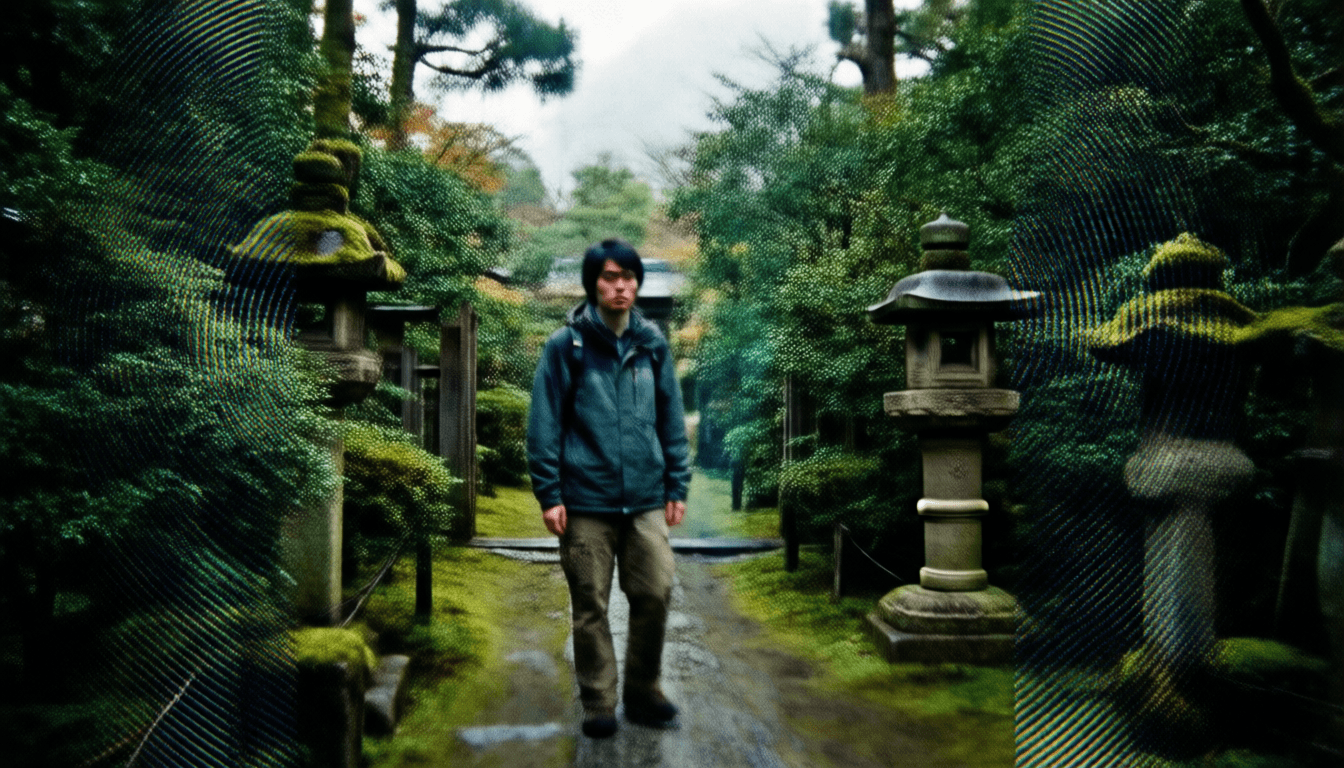
The Garden That Steals Time
The story, as always, began in disparate places. A Reddit thread from a little-known imperial garden in Kyoto, where someone reported feeling an "odd presence." Old tourist blogs describing sudden, intense déjà vu or an inexplicable sense of melancholy near a specific pavilion. And, most recently, the rediscovery of a 1970s academic paper, quickly retracted and dismissed as pseudoscience, discussing "localized spatiotemporal anomalies" at certain feng shui points around Kyoto. The common motif running through these scattered accounts was a sense of time stretching, compressing, or subtly repeating, coupled with strong, intrusive sensory impressions: a faint charcoal scent from long-vanished braziers, laughter from an unknown era, fleeting images of unfamiliar faces reflected in ponds. Crucially, there were persistent online claims of a tourist's camera, regardless of shutter speed, capturing a shadowy figure in 19th-century kimono in one frame, only for it to vanish in the next. Dismissed as optical illusions or psychological quirks, these incidents hinted at something far more deliberate and sinister. Rumors coalesced into a myth of the "Time Gardeners," a cryptic ancient collective said to have cultivated these gardens not merely for aesthetics, but to preserve—or even cultivate—memories within the flow of time. My objective was to uncover the factual basis behind these persistent distortions.
I focused on a lesser-known annex of Ryoan-ji, a private moss garden mentioned in the retracted paper as one of the "active sites." After arduous negotiations, I gained access under the pretense of documenting ancient irrigation techniques. Inside the garden walls, the air immediately felt different. Perhaps heavier than the bustling city outside, or simply more still. Thick, ancient moss absorbed sound, creating an almost oppressive, unnatural quiet. The humidity was deep and clinging, carrying a faint, metallic scent like ozone after a storm, coupled with the earthy smell of decaying leaves. I began my systematic survey, logging environmental data: ambient temperature, humidity, sound pressure levels. There was a subtle inconsistency even in the light itself; not a uniform diffusion, but rather clumps of shadow that appeared deeper, more opaque, as if absorbing light rather than merely blocking it. My sensitive audio recorder picked up a barely perceptible, low hum, vibrating at irregular frequencies, not attributable to cicadas or distant traffic.
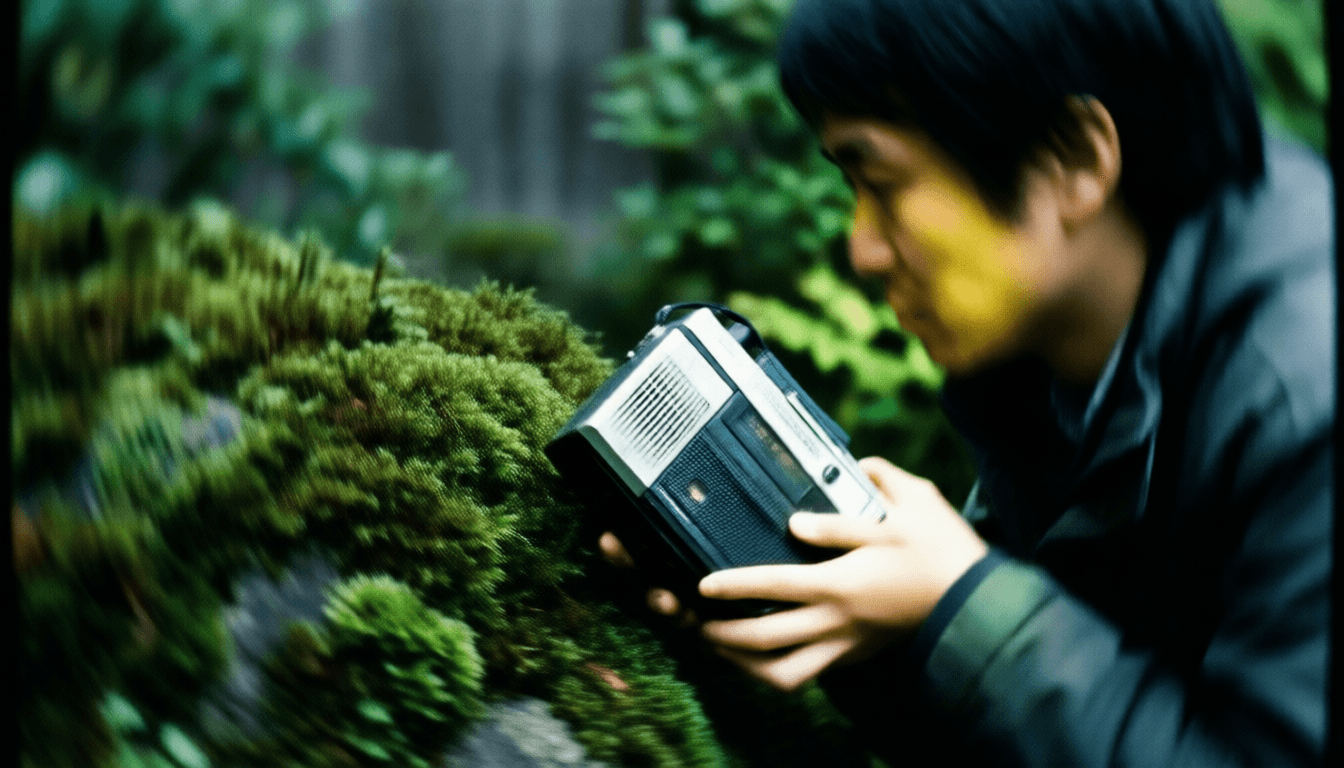
The anomalies began subtly. Water droplets clinging to bamboo leaves, observed through my camera's macro lens, seemed to hang for too long before falling, then abruptly slowed, then accelerated. My careful footsteps on the damp path produced echoes that returned noticeably *before* the sound should have traveled, as if I was hearing the memory of the sound, not its direct emission. Deeper in, near an arrangement of ancient, weathered stones, the silence intensified, becoming a physical presence. My internal clock, usually precise, began to falter. Minutes seemed to compress into seconds, then stretch into long intervals. I saw my breath momentarily condense in the warm, humid air—a phenomenon consistent with sudden, localized drops in temperature. Then, a powerful, fleeting scent of sweet plum blossoms, an aroma of midsummer, washed over me in the middle of autumn. This olfactory memory of a spring day, out of place, was vivid and profoundly disorienting. It felt not merely like an echo, but an active replay of a past sensory experience. Goosebumps pricked my skin. The overwhelming sensation of being observed came not from a physical presence, but from the accumulated density of unseen, unheard moments.

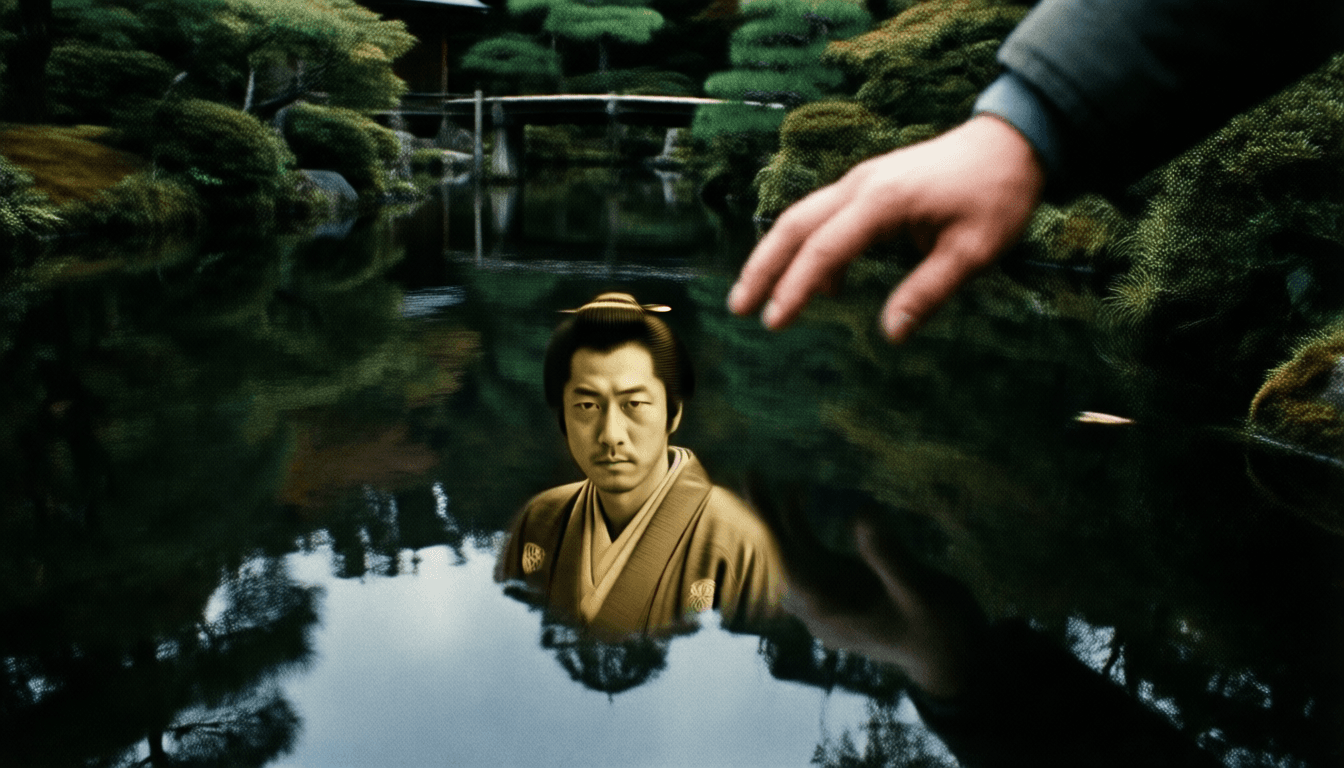
I reached a small, circular pond. Its surface was perfectly still, reflecting the dense canopy above. Despite the humidity, the air around it was impossibly cold. My reflection in the water wavered. Not from ripples, but from an internal fluctuation, causing my image to briefly vanish, replaced by the faint, sepia-toned face of an unfamiliar man in ancient robes, before returning. It was a direct projection, a fragment of memory. As I extended my hand to touch the water, the surface resisted, feeling not liquid but like a viscous, transparent membrane. A sudden, powerful sense of dislocation washed over me. The surrounding garden blurred. Not visually, but *temporally*. The moss beneath my feet felt simultaneously soft and hard, its texture constantly shifting. I tried to pull my hand back, but it felt as though it was being stretched outward, not by force, but by a subtle temporal drag. The low hum I had been recording intensified, turning into a painful pressure behind my eyes. My own memories began to surface, uninvited. They came vividly, then fractured, then repeated. Childhood moments, recent conversations, the faces of loved ones—they flashed by rapidly, overlaid with impressions that were not my own: the heat of a distant forge, the texture of rough silk, the peculiar cadence of ancient Japanese speech. It was as if the "temporal field" was actively drawing sustenance. It sought to *integrate* my present, my memories, into its cultivated archive. I was being unstitched, piece by piece, from my own timeline. A deep hollowness began to form behind my eyes. Primal terror seized me. With a desperate scream, I wrenched myself free violently. A searing pain, a profound emptiness where my being had been, a sense that I had left a part of myself there, or perhaps had it taken, flashed through me. The resistance snapped, and I was thrown clear of the pond's perimeter, landing on the damp earth.
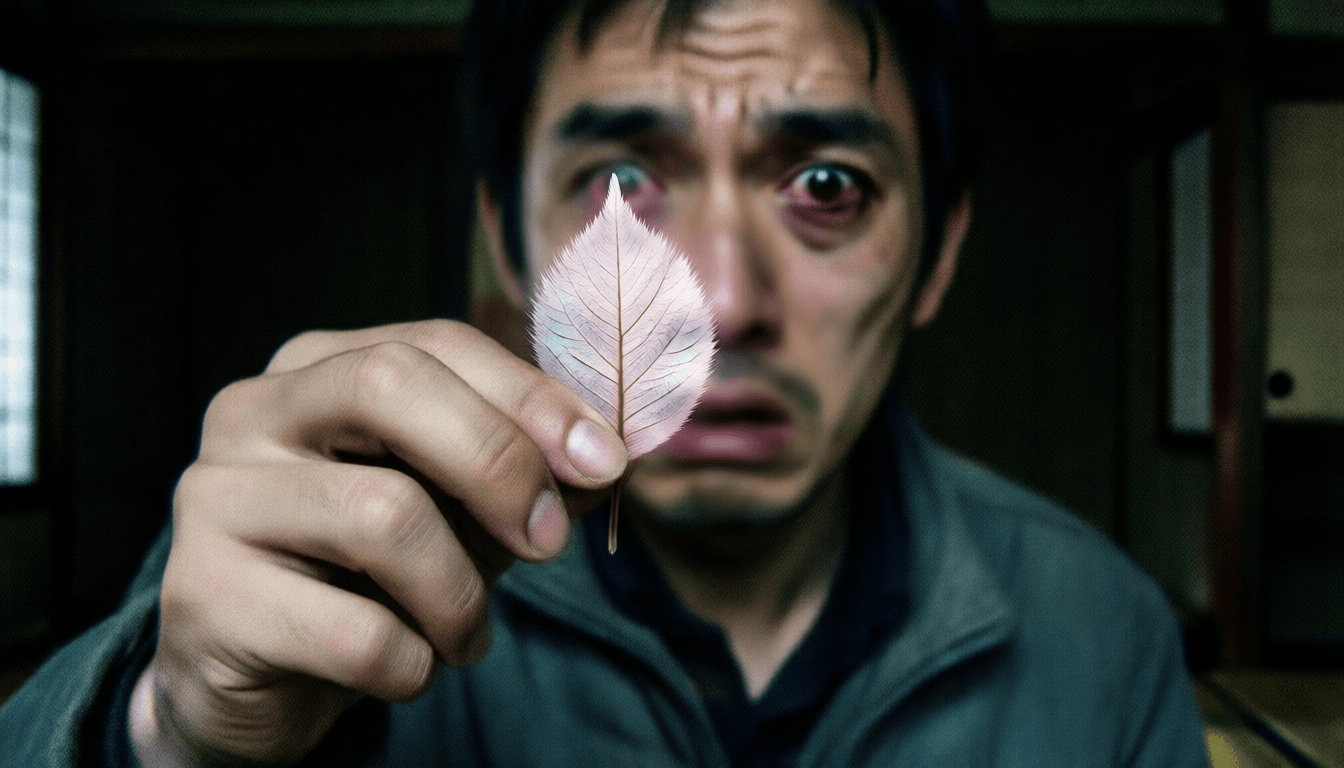
I escaped the garden, disoriented and physically aching. The memory of the cold pond remained, a burning brand. My body was intact, yet something was irrevocably altered. The pervasive silence of the garden seemed to have followed me. The sounds of the city now seemed slightly dulled, delayed, as if my auditory perception was permanently a fraction of a second out of sync. I meticulously checked my personal belongings. In a pocket I hadn't used, a single cherry blossom petal rustled faintly, perfectly preserved and faintly glowing, months after the season had passed. Deeper still, my memories were undeniably present, but sometimes… they felt borrowed. I recalled conversations I'd never had, experienced sensations that didn't belong to me. The earthy smell of a specific incense, the crisp texture of old parchment, and the fleeting ancestral faces in a crowded mirror. My dreams were no longer my own; they were fragmented, chaotic mosaics of other people's pasts, a constant, low hum of cultivated human experience. If the Time Gardeners existed, they had done something chillingly effective. And I understood now that the garden was not merely preserving moments, but *harvesting* them. An eternal, silent archive, and I was merely a transient, discordant entry in its ever-expanding ledger of time. The hum never left me.
[ CLASSIFIED VERDICT ]
[ACCESS LOG - SOURCE FILE]
This story is based on an urban legend about 'Time Gardeners,' an ancient group said to manipulate time and harvest memories in a hidden Kyoto garden. Those who enter this garden are said to experience strange phenomena, including spatiotemporal distortions, the erosion of their own memories, and the overlaying of past sensory experiences.