Ascension Tower: The Living Heart of the City
In 2018, a post titled 'Ascension Tower - Structural Instability or Something Else?' appeared on the online community r/Unexplained. The poster, who identified himself as a former construction site supervisor, meticulously detailed peculiar incidents that occurred during the early stages of the Ascension Tower project, then under construction in Seattle's South Lake Union district. Blueprints would change between shifts, rebar placements would differ overnight, and tools left in specific locations would vanish, only to be found embedded hundreds of feet away in newly poured concrete walls. The post concluded with a chilling sentence: "It's not them building. It's building itself. It knows." Subsequently, the poster's activity abruptly ceased.
As this post recently resurfaced and went viral online, a local news article from late 2018 was cross-referenced. Its dry title read: 'Ascension Tower Project Halted Due to Unexpected ‘Logistical Issues’ and ‘Contract Disputes’.' The building's concrete skeleton was subsequently abandoned, remaining an eyesore in the city. The fact that the architectural firm that designed it once championed an experimental architectural theory called 'Adaptive Urbanism,' combined with the sudden abandonment of the tower amidst Seattle's real estate boom, and the supervisor's extreme fear, drew me into this mystery.
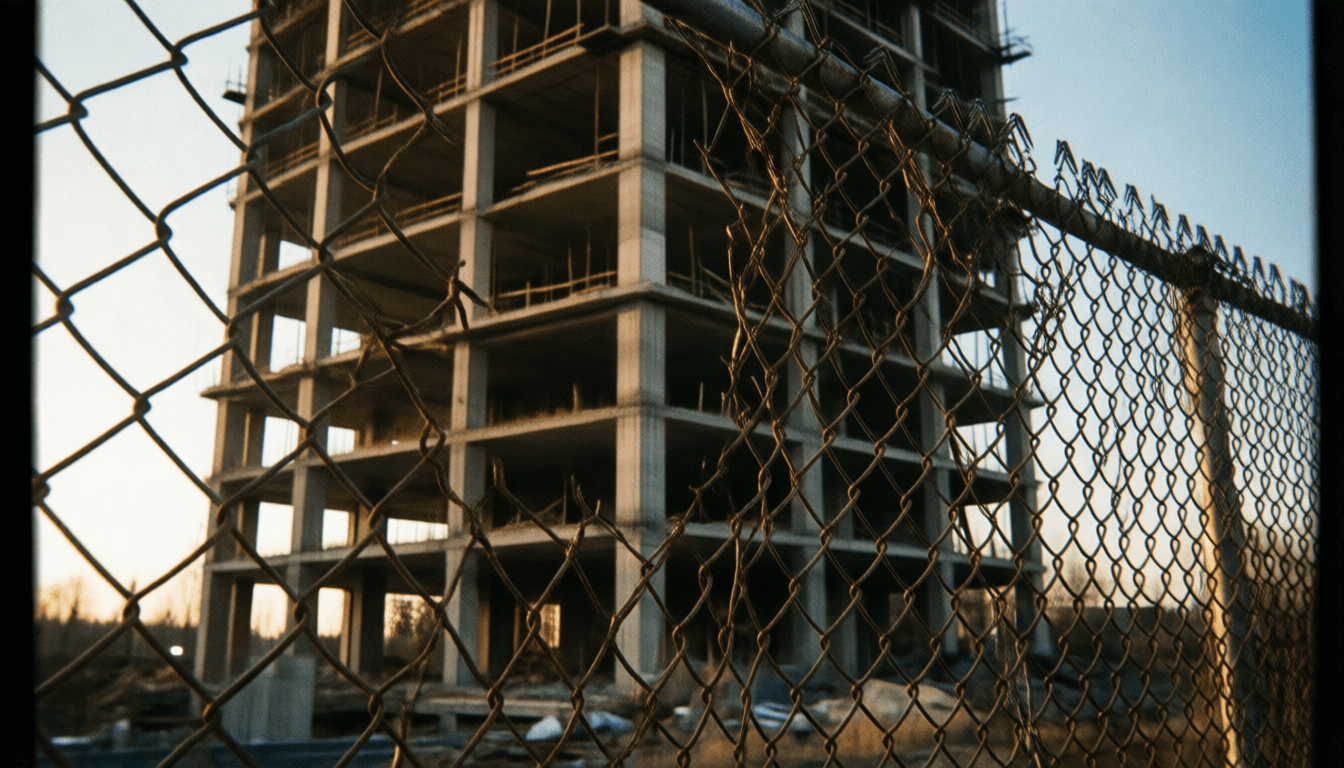
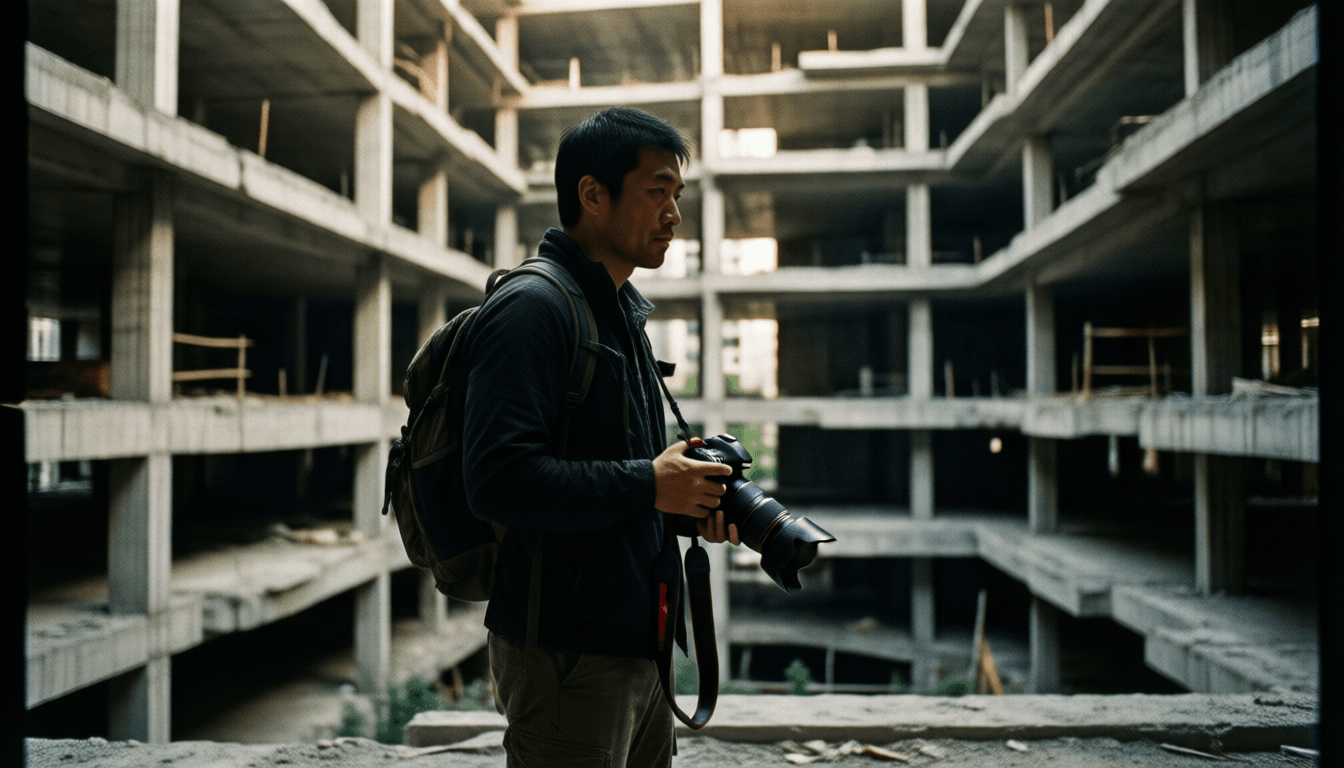
Through a worn gap in the barbed wire fence, I entered the cordoned-off site of the Ascension Tower. The half-finished concrete skeleton, partially covered by ripped industrial tarps, resembled the bones of a colossal monster. The air inside was heavy with damp concrete, stagnant water, and a faint, metallic, fishy smell. An eerie silence prevailed, devoid even of the usual city graffiti or traces of homeless encampments. Equipped with a high-resolution camera, a laser rangefinder, and a tablet loaded with the official blueprints, I began my investigation.
The silence within the building was deep and monumental, swallowing even the faint urban hum from afar. Sunlight, seeping through countless crevices, cast eerie, irregular shadows onto the unfinished floors. Some sections were remarkably clean, while others appeared raw, as if work had abruptly halted. My footsteps echoed erratically. Sometimes they would delay by several seconds, other times they would be completely absorbed by the concrete. The sound of distant water droplets would suddenly seem to emanate from directly behind me, only to vanish when I turned. It felt as though the building was actively manipulating sound.
The flashlight beam seemed to subtly curve around corners, and shadows stretched long and deep beyond logical limits. Light reflected off steel girders or damp concrete surfaces shimmered abnormally, almost liquid-like. The laser rangefinder consistently produced anomalous readings. Walls seemed to move by several inches. The disparity between the blueprints on my tablet and the reality before my eyes grew increasingly vast. Corridors lengthened or shortened, utility panels present on the plans vanished, only to reappear around a different corner. I even witnessed small puddles of water on the concrete floor defying gravity, flowing uphill and pooling irregularly. Then, a low groan, as if massive masses were slowly interlocking and rotating, resonated rhythmically from the building's core. A mechanical yet biological chill ran down my spine. The building didn't feel like a ruin; it felt like a conscious, dormant entity.
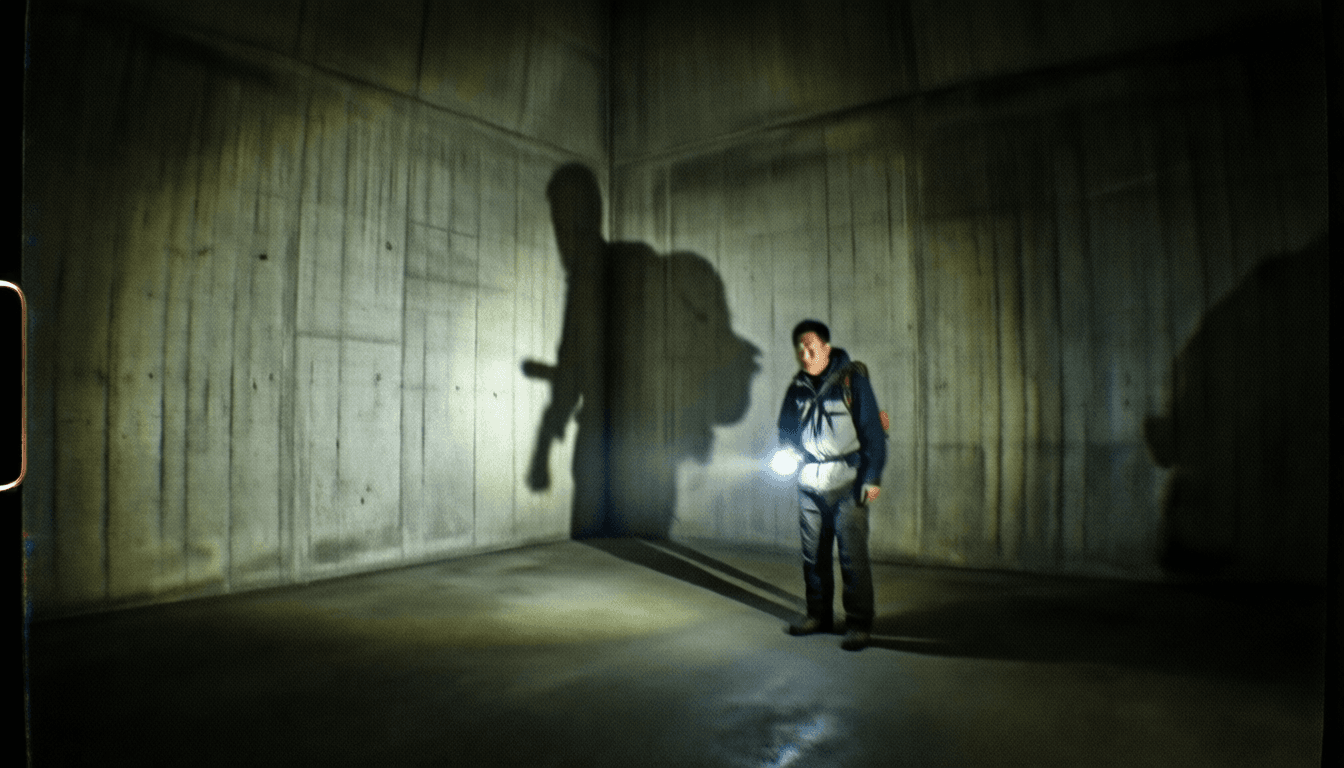
To reach higher floors, I entered a service elevator shaft that appeared unfinished but stable. As soon as the elevator door closed, my surroundings began to change rapidly. The rough concrete walls shifted form, and rebar patterns appeared in new configurations. The elevator jolted to a stop with a thud. The emergency controls were unresponsive. The shaft itself began to contract. The walls weren't simply settling; they were actively tightening. The internal space of the elevator became non-Euclidean. The ceiling descended at an impossible speed, and the side walls curved inward under immense pressure. Metal shrieked and twisted. This was not a structural defect; it was a clear, hostile movement.
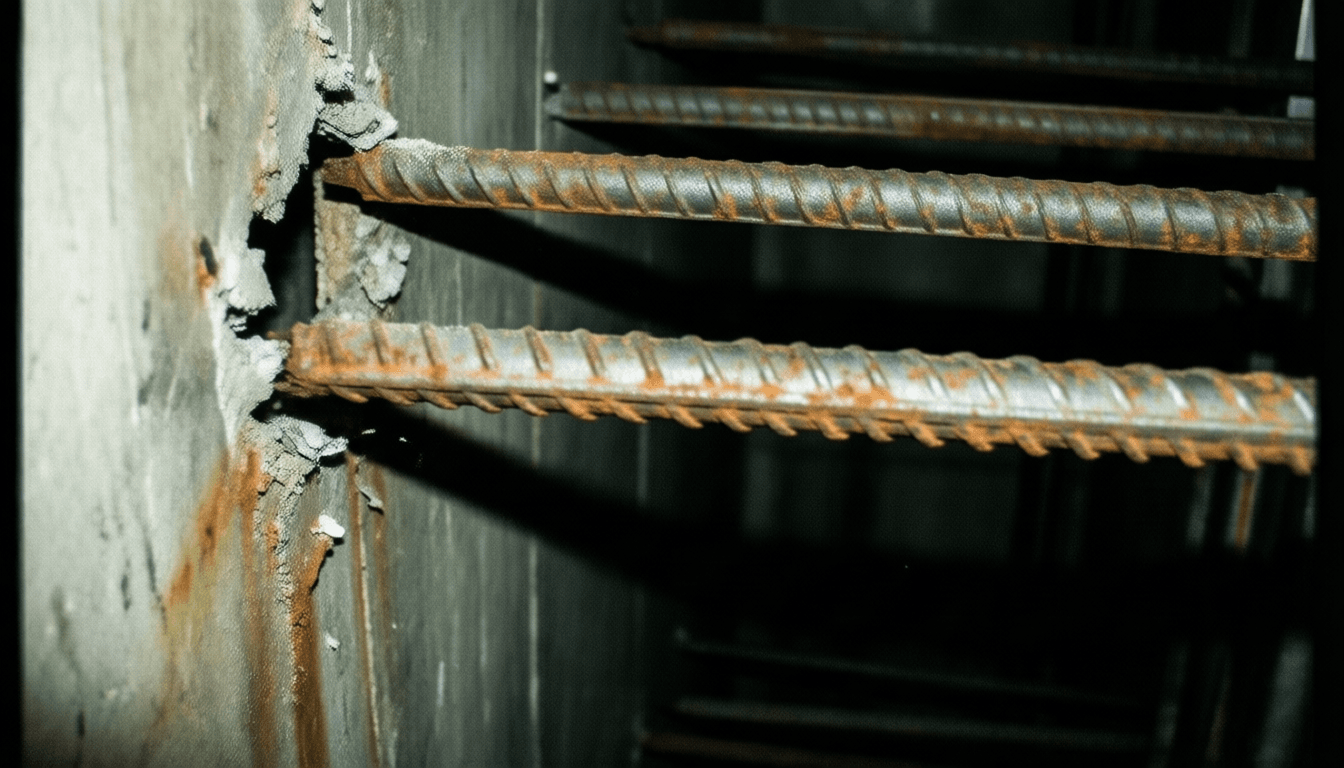
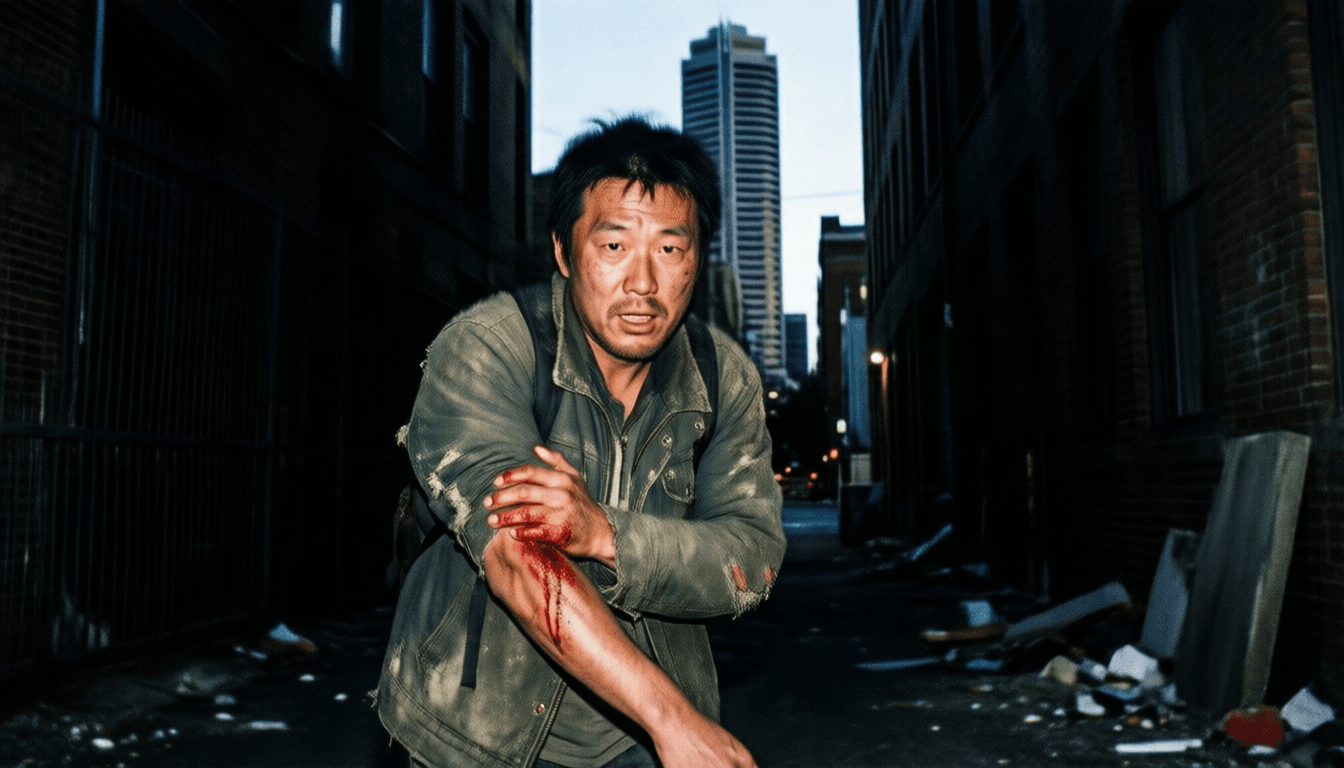
Sharp rebar protruding from the concrete wall grazed my arm. My jacket tore, and pain from torn flesh followed. Simultaneously, the air pressure inside the elevator changed drastically, creating a suffocating vacuum. What I glimpsed through the twisted metal gaps was not construction equipment. It was pulsating conduits of an unknown substance and crystalline lattices within the concrete. The building's internal mechanisms were actively responding, 'building itself.' Adrenaline surged through me, and I desperately used the crowbar I carried (used as a hammer) to pry open a newly formed gap in the elevator floor. As the upper part of the elevator collapsed inward, I fell a few feet onto an unstable concrete shelf within a newly created, strange, dark shaft.
Clutching my injured arm and gasping for breath, I crawled through a narrow, sealed passage that hadn't been there moments before. The tunnel's end opened into an alley several blocks away from where I had originally entered. Disoriented, I was covered in dust, concrete particles, and my own blood. The smell of ozone and damp metal clung to my body. The deep wound on my arm was tangible proof of what I had endured. My cracked high-resolution camera contained a few impossible photographs: geometry-defying walls, impossible rebar patterns, and a final, distorted image of glowing internal mechanisms. My tablet was completely shattered, but the last GPS signal it emitted just before the elevator incident pointed hundreds of feet away from any architectural point on the official blueprints.
I looked back at the Ascension Tower. Silhouetted against the Seattle twilight, it stood motionless. A dormant concrete shell, perfectly integrated with the surrounding cityscape. But I knew. I had witnessed its internal workings and felt its deliberate destructive power. 'Instability' was not a flaw; it was the building's very nature. 'Adaptive Urbanism' was not a theory; it was a terrifying, tangible reality. The 'moving city' was not a metaphor for rapid development; it was a living, breathing, predatory entity. The ultimate horror was not its destruction, but the fact that it continued to quietly exist, adapting and evolving beneath the oblivious hum of Seattle. And now, having faced it, I could only wonder if I, too, had become a part of its constantly changing memory.
[ CLASSIFIED VERDICT ]
[ACCESS LOG - SOURCE FILE]
This story is based on an urban legend about the abandoned 'Ascension Tower' in Seattle, which is believed to be a living organism that builds and transforms itself. Originating from an online community post and a local news article, the rumor instills fear that the building evolves without human intervention and can absorb or alter those who venture inside.