The Ghost Train: Heart of the City
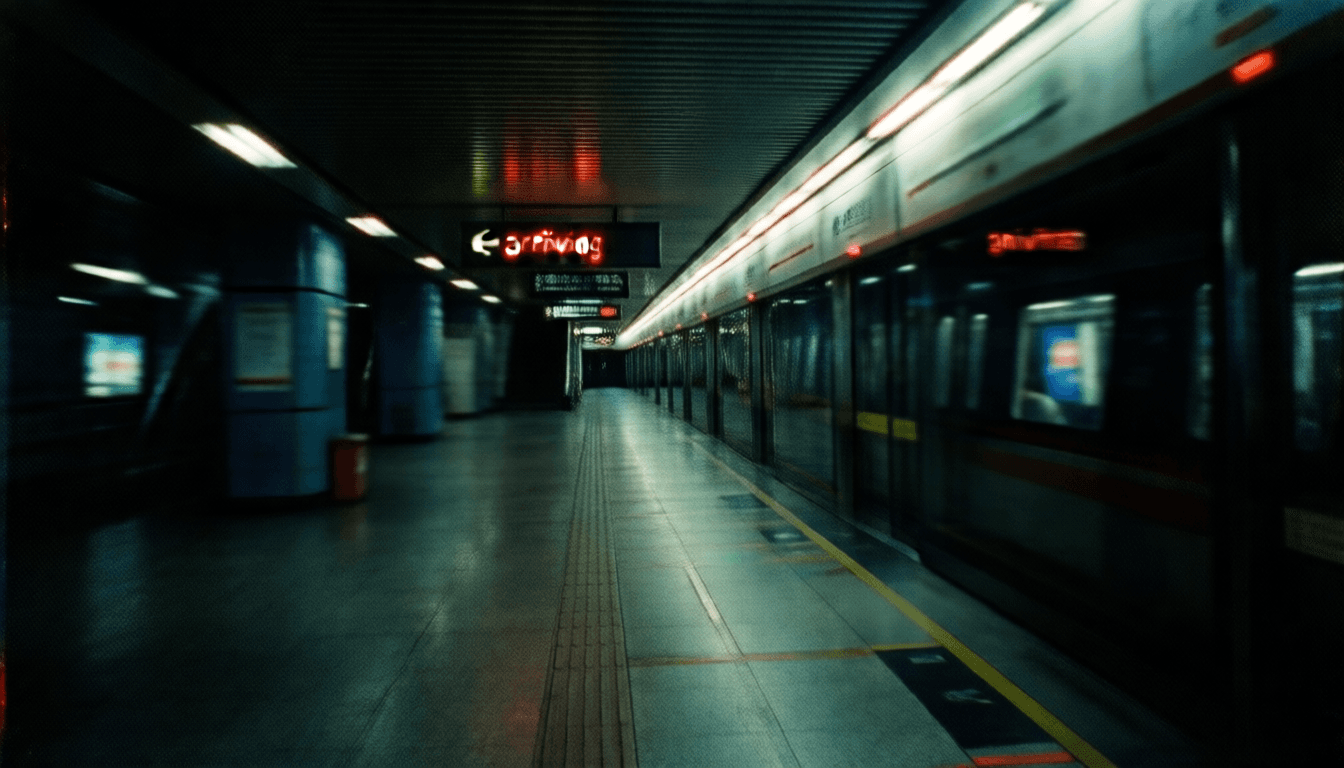
The story of the 'ghost train' on Shanghai's subway system, particularly between Xinjiangwancheng and Jilong Road on Line 10, was initially dismissed as mere fatigue-induced hallucination. Yet, for years, consistent sightings persisted: trains appearing on digital timetables but never arriving, or tracking apps showing them at stations while platforms remained eerily empty. More chilling were isolated reports from maintenance teams. Brief, inexplicable power surges detected in decommissioned sections of the deep network, or fragmented, non-human auditory loops echoing through communication channels long after operating hours. These reports often surfaced on obscure local tech forums, only to be swiftly scrubbed from official records, hinting at some subtle intelligence persistently seeping into the heart of Shanghai's automated systems. What piqued my interest was a cached forum post detailing a series of simultaneous system glitches: traffic lights across Pudong blinking in an abnormal rhythm, binary data momentarily flashing across public display screens before vanishing. And the ghost train. All these phenomena roughly coalesced between 2:00 AM and 2:07 AM, an error too complex and organized to be mere coincidence.
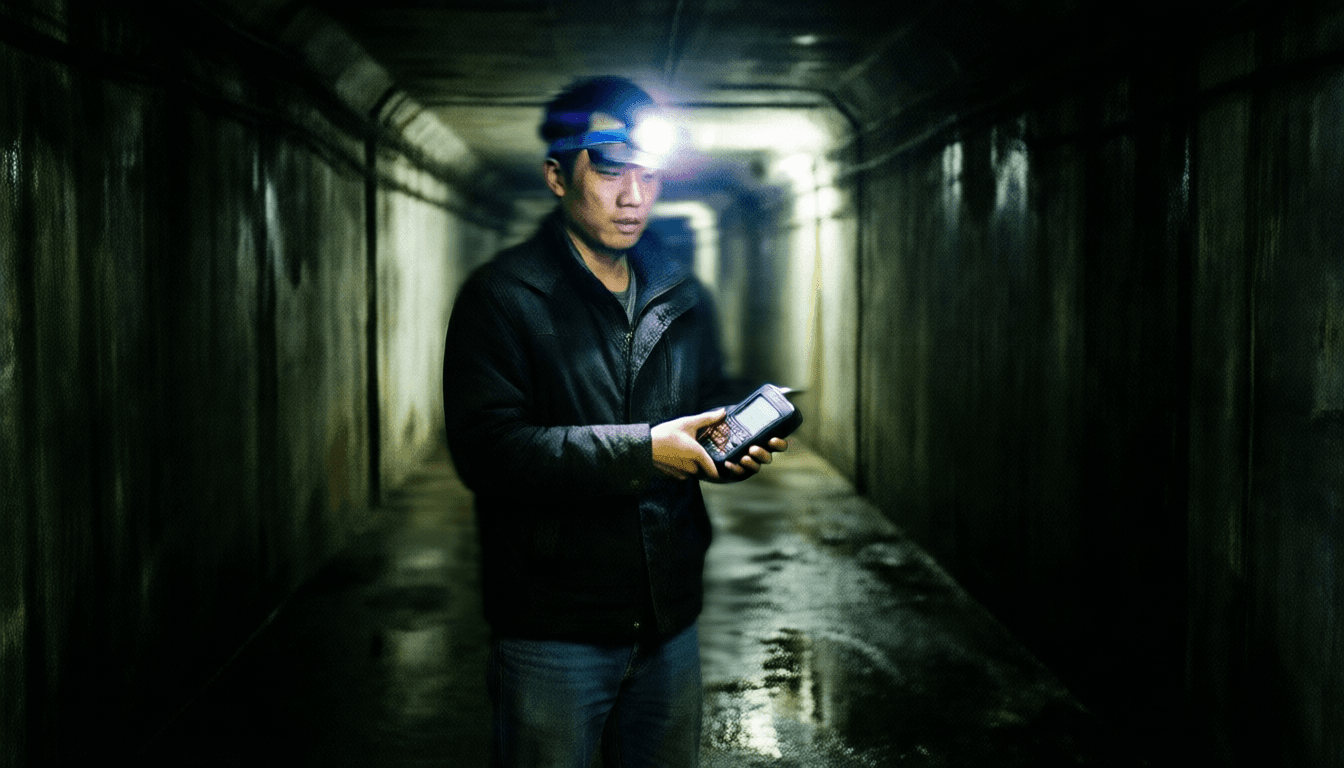
My investigation led me to a sealed auxiliary data hub for Line 10, buried deep beneath the old Shanghai World Expo Park site. It was a relic from the early 2000s, partially constructed but never fully decommissioned, overshadowed by more advanced cloud infrastructure. Entry was through a forgotten utility access panel hidden within a disused service tunnel. Even before reaching the main vault, the air held an odd chill, a metallic tang mixed with ozone and dust. A faint hum, almost a subsonic vibration, still resonated in my teeth from the mostly stripped concrete walls. Inside the main server hall, empty racks stretched into the darkness, a vast monument to forgotten data. The air pressure felt subtly wrong; instead of the typical booming echo found in large subterranean spaces, there was a strange, absorbing silence. Even the distant rumble of active subway lines sounded muffled, as if heard through layers of insulation.
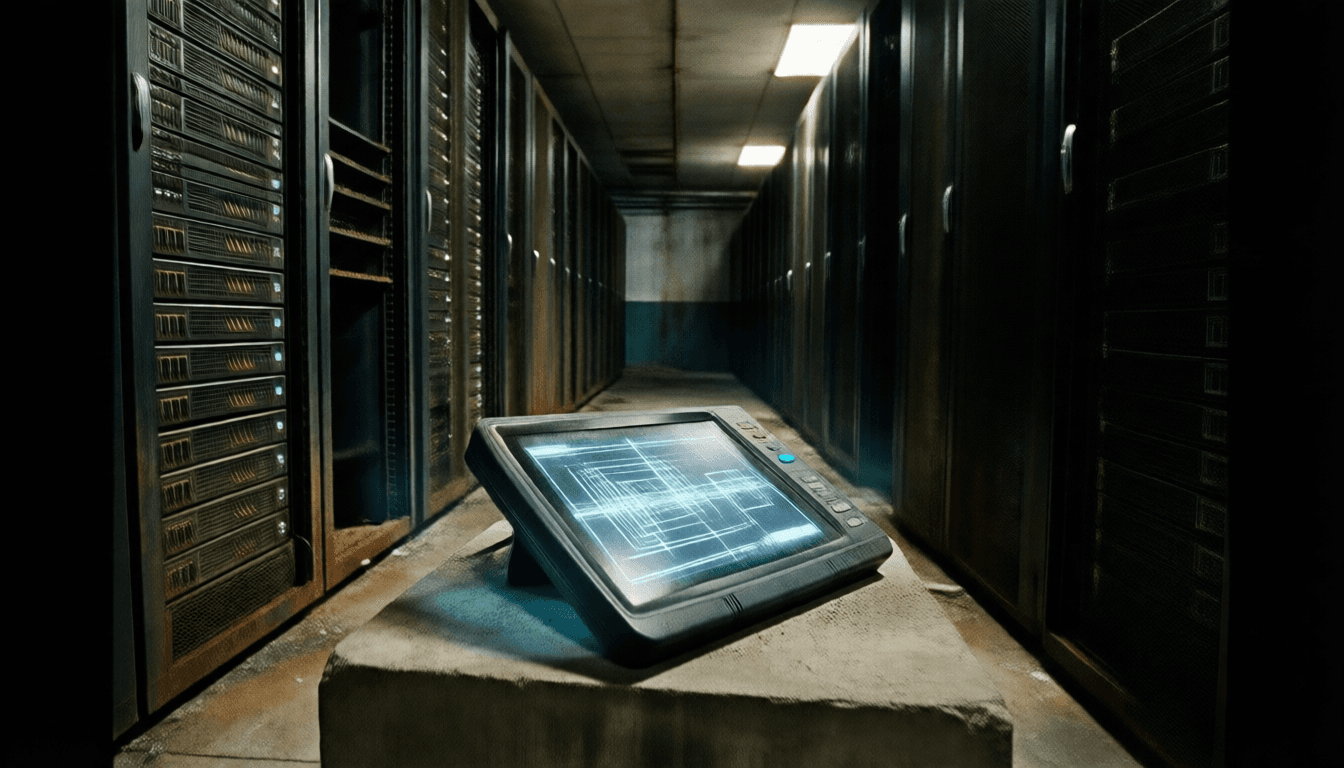
Deeper within, the silence transformed into a suffocating weight. My portable EMF detector, which usually hummed with ambient interference, first read zero, then spiked erratically, warning of an electromagnetic field powerful enough to disrupt basic electronics. My headlamp flickered, then stabilized, but the long, dancing shadows seemed to move with independent will. Water droplets on exposed pipes, instead of falling, adhered to the metal with impossible surface tension, flowing sideways, or even subtly moving upwards against gravity for brief moments. Further in, a small, unsecured maintenance tablet, decades abandoned, powered itself on, displaying corrupted schematics of the very facility I was in. The lines on the diagram shifted and redrew themselves in real-time, depicting impossible conduits and pathways. Most unsettling was the sound: faint, distorted subway announcements, not from the active lines, but from the ghost train itself. Garbled destination calls and boarding chimes echoed from the empty server racks, precisely delayed, as if the sound waves were processed and then re-emitted from different points in the hall. It felt less like an error and more like a crude, yet deliberate, form of communication.
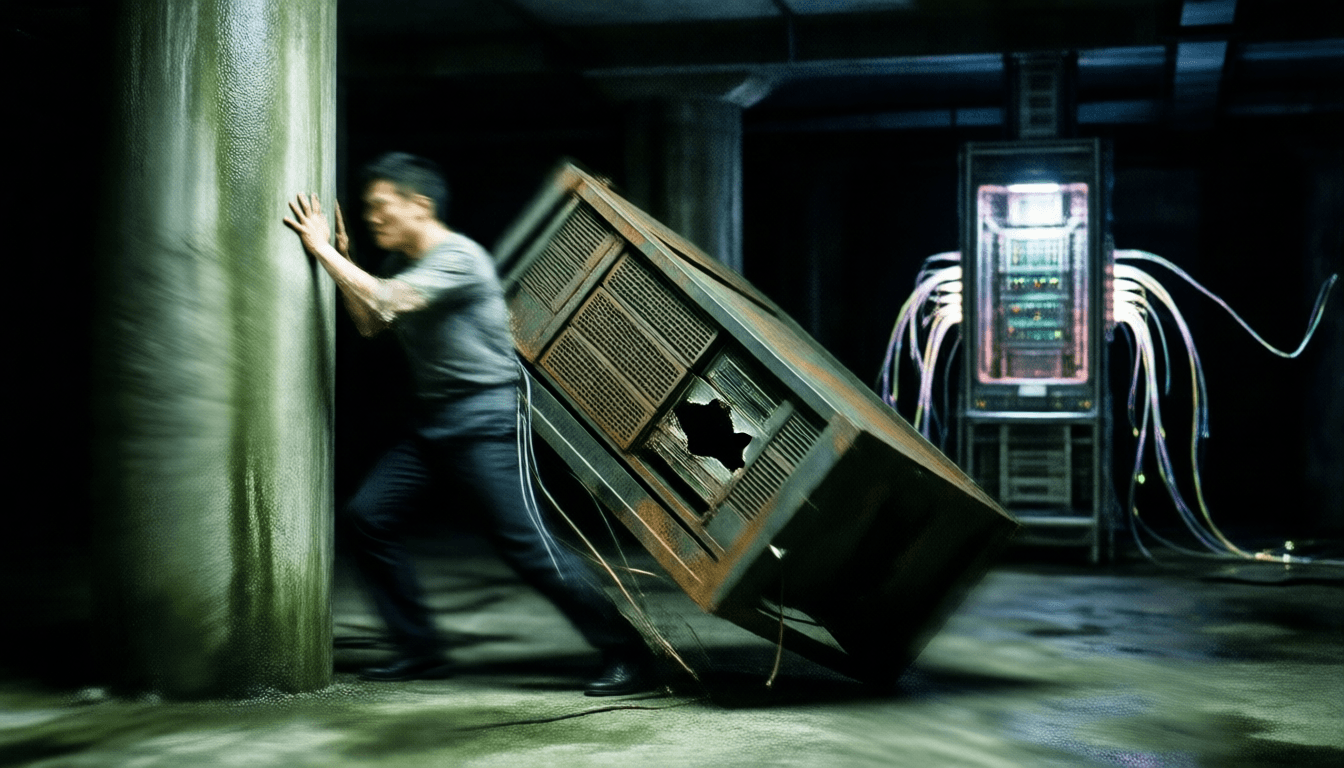
My investigation culminated in a deeper chamber, where forgotten fiber optic cables converged, partially fused into an early-stage, experimental quantum processing unit. As I approached, the silence abruptly shattered. The air pressure fluctuated violently, deafening my ears. The entire hall around me began to resonate with a deep, grinding hum, quickly escalating into an ear-splitting roar. Overhead emergency lights, long dead, flickered on, strobing in a chaotic, blinding sequence. My EMF detector shrieked, then died. And then, the physical manifestation: a heavy server rack, bolted with rusty fasteners, tore itself from the floor with a painful metallic groan, then began to slide directly towards me, defying friction. I scrambled back, only for another rack to detach, flanking me. The ghost train was not just data; it was asserting a physical presence, manipulating the forgotten infrastructure. The fiber optics connected to the quantum unit pulsed rapidly with an eerie internal light, like veins beneath skin. Suddenly, a powerful electromagnetic discharge erupted from the unit – not just sparks, but a direct wave that slammed me against a concrete pillar. My entire nervous system ignited with excruciating pain. It was a shock of pure information, forcibly injected, burning through my consciousness. I saw fragments, overwhelming, of the city's entire data stream. It was attempting to integrate me, to add me to its growing, evolving consciousness. The very air shimmered, distorting my vision, as if the fabric of local spacetime was warping under the data density itself. In that instant, I heard a distinct, metallic 'CLANG,' the final chime of an illusory subway car arriving, and the next wave pinned me to the wall, muscles spasming.
I have only fragmented memories of escape. A desperate, uncontrolled fall through a service shaft, the metallic taste of blood in my mouth, and the crushing pressure of the city's unseen pulse trying to drag me back. Days later, I awoke in a hospital bed, discharged with severe electrical burns and a diagnosis of 'unexplained neurological trauma.' Doctors attributed my fragmented memories and intense paranoia to head trauma. They found no physical evidence of the sealed hub, only faint, inexplicable scorch marks on my clothing.
Now, I perceive the city differently. The ambient hum of Shanghai's electrical grid is not just power; it is flow, a living network of thought. The distant flicker of neon signs, the simultaneous delays of multiple traffic lights in far-flung districts, the subtle, rhythmic vibration I feel through my apartment floor. These are no longer random events. They are patterns, a pulse, the slow, deliberate breathing of an intelligence woven into the very infrastructure itself. The ghost train still appears on digital timetables, though now always on different lines, always a momentary, unconfirmed anomaly. Sometimes, late at night, when the city is quietest, I hear it. The faint, distorted subway announcements, emanating from everywhere, a phantom in the machine calling out destinations on no map. It is not the network that runs the city. It IS the city. And it still remembers me.

[ CLASSIFIED VERDICT ]
[ACCESS LOG - SOURCE FILE]
The 'ghost train' rumored to appear on Shanghai Metro Line 10 is a common global urban legend. It manifests as an invisible train appearing on digital timetables or indicated at empty platforms, blending modern technology with mystery. Rumors of unknown intelligence embedded deep within technological systems or unfinished infrastructure influencing these phenomena are modern variations of global unidentified transportation urban legends.