
Mumbai Monsoon's Breath
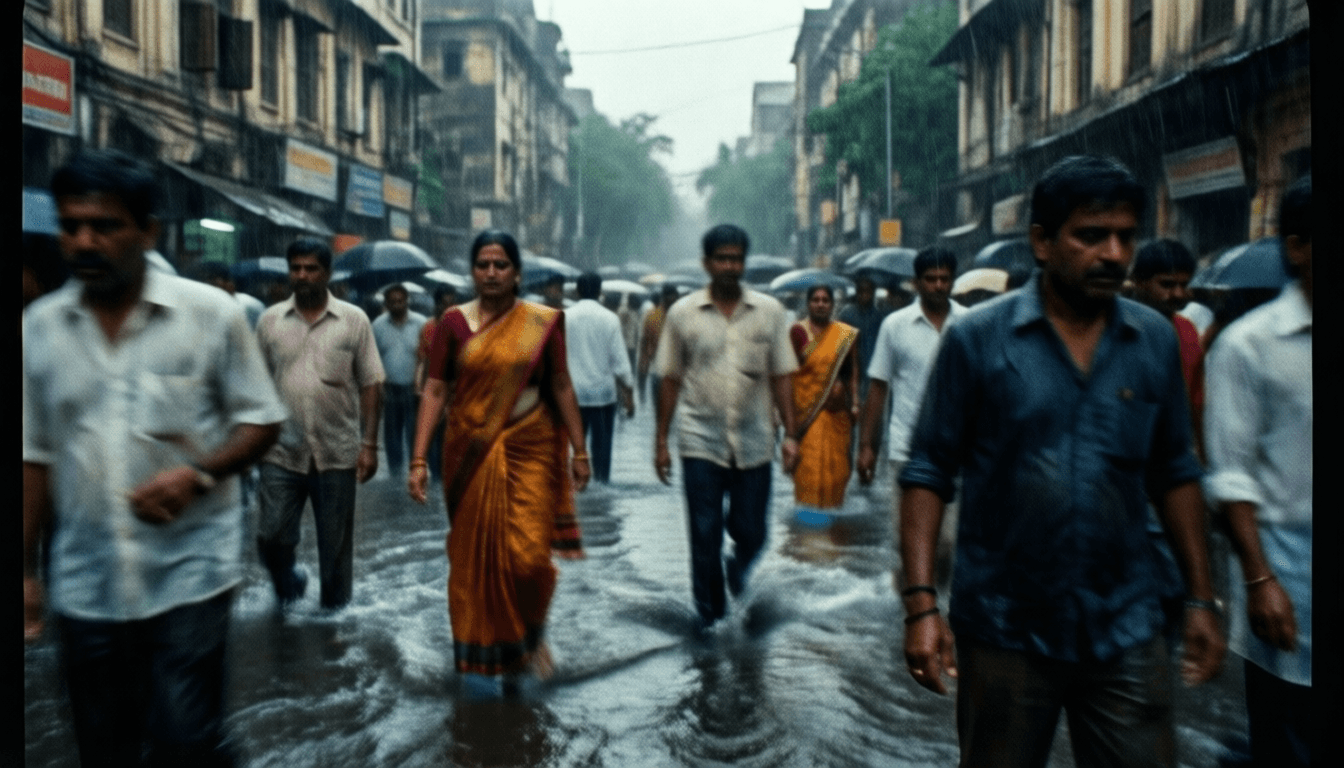
The first whispers about Mumbai's 'mood storms,' brought by the monsoon, weren't just simple folk tales, but phenomena caught in obscure corners of meteorological forums and historical archives. For decades, the city of Mumbai, defined by its annual monsoon, has experienced inexplicable emotional surges. This isn't mere metaphor. Records, once dismissed as anecdotal or mass hysteria, detail instances during particularly intense monsoons when large crowds exhibited sudden, simultaneous shifts in emotion. One street might be gripped by irrational euphoria, only to plunge into deep despair minutes later, or riots would inexplicably dissipate as localized downpours intensified.
The most compelling evidence that spurred my investigation was a brief entry in recently declassified British Indian geological survey data. An annotation detailing anomalous barometric readings around the Kalbadevi area in 1918 read: "Local atmospheric conditions show abnormally rapid and extreme pressure gradients coinciding with recorded public unrest. Recommend further investigation into potential atmospheric influence on crowd psychology." This annotation, once an interesting historical anomaly, began to resurface among independent data analysts. They linked it to viral videos of intense protests in Dadar where sudden, localized atmospheric stagnation occurred over the site, and the crowd's psychology abruptly shifted from aggressive to calm, then to apathetic confusion. Official explanations cited 'anomalous microclimatic disturbances,' but my research suggested something far more deliberate.
My target was a derelict colonial-era pump house, vast and centuries old, buried beneath the sprawling slums near Kalbadevi. This was the precise geographic epicenter identified by correlating the 1918 barometric anomalies with modern 'mood storm' reports. Local legend called the pump house 'where the rain breathes.' After bribing local gangs for entry into the structurally unsound building, I descended crumbling steps into the damp, subterranean passages.
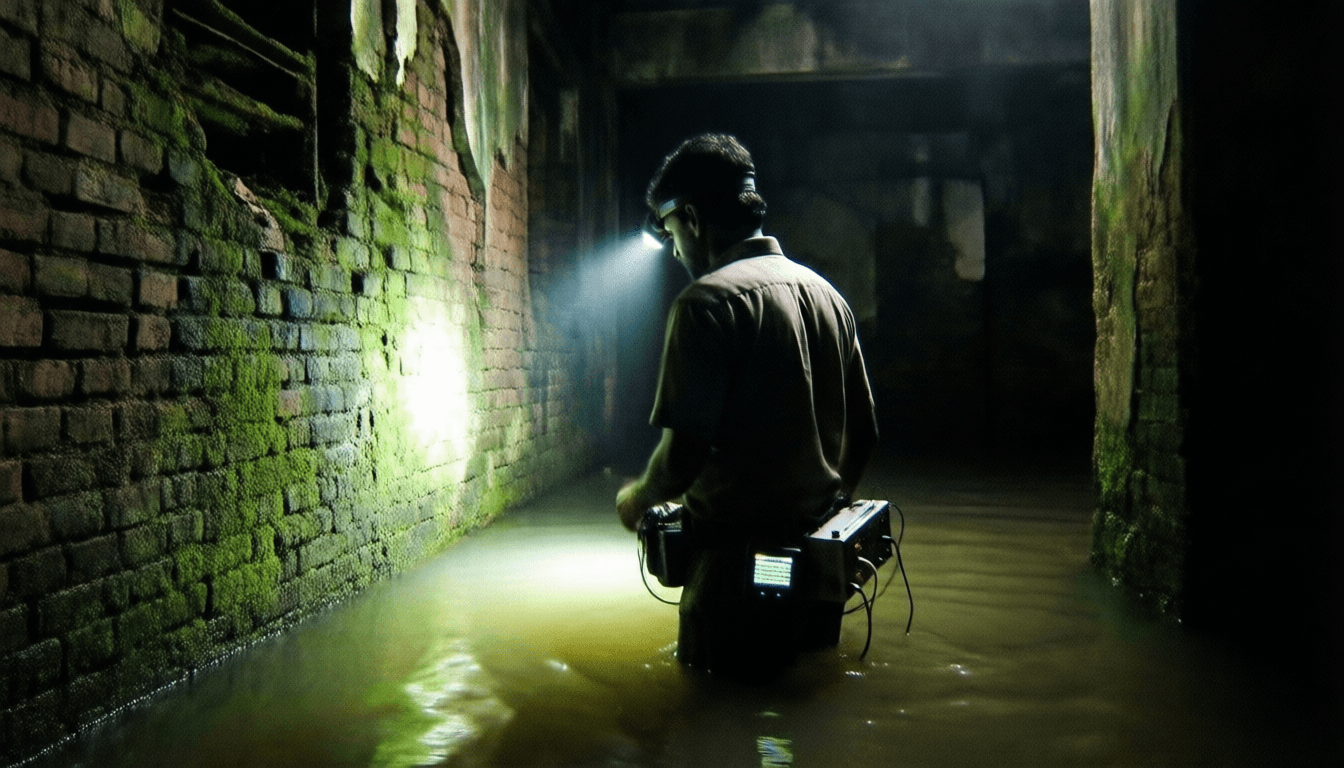
The air immediately grew heavy. A presence clung to my skin, almost viscous. The incessant roar of the monsoon above was muffled, a distant, rhythmic thrum felt not in my ears, but in my chest. The scent was ancient, organic: wet earth, decaying brick, and a faint metallic tang of copper, hinting at oxidation or perhaps something else entirely. My equipment—high-sensitivity atmospheric pressure sensors, infrasound recorders, and specialized EM field detectors—already felt sluggish, fighting an unseen resistance. Water dripped ceaselessly from the ceiling, pooling in stagnant puddles, reflecting the feeble beam of my headlamp. The entire structure felt like a colossal, damp lung, drawing slow, heavy breaths.
Wading through knee-deep channels of water was a continuous distortion of the senses. My sloshing footsteps didn't echo normally. Instead, the reverberations were strangely delayed, often heard *before* the sound occurred, or distorted into unintelligible stretches and dissipations. My infrasound recorder, set to detect below human hearing frequencies, began to pick up an erratic, pulsing rhythm. A low, guttural vibration that felt less like mechanical resonance and more like a colossal, slow heartbeat.
Atmospheric pressure sensors, calibrated for minute fluctuations, began to spike. Not localized bursts, but a gradual, pervasive increase, as if an unseen hand was pressing down, then suddenly vanishing, leaving pockets of abnormally light, almost oxygen-deprived air. My ears popped, not once, but repeatedly, with each invisible pressure zone I traversed.
But the most disturbing manifestation was psychological. Entirely divorced from my methodical purpose, a deep, melancholic introspection, bordering on despair, unexpectedly washed over me. It wasn't personal; it was a colossal, collective sadness seeping into my consciousness, making the very air heavy with sorrow. Then, just as abruptly, it shifted, twisting into an irrational, almost violent irritation, a frustrated anger that gnawed at my composure. I fought against the feelings; it was a battle against an internal state clearly externally sourced. A chilling certainty settled in: the air itself was *conscious*. It was a diffused, sentient presence, subtly testing, probing, influencing. The monsoon above, I realized, wasn't merely rain. It was a vast, complex medium through which something profound and unseen was communicating, or perhaps, simply *observing*.
I descended into the lowest, central chamber. It was a massive cylindrical water tank, partly submerged, its ancient machinery rusted into skeletal forms. The air here was almost entirely still, yet my EM field detector shrieked, and the infrasound recorder's needle trembled erratically. My body's internal pressure sensors hit critical mass, redlining with rapid, impossible oscillations, like a localized atmospheric seizure. Screams in my ears, a tightening in my chest, and a blinding headache hammered my skull. The pressure fluctuations were so violent my eardrums felt on the verge of rupturing. I gasped for air, but found none; it was as if oxygen itself momentarily vanished from around me.
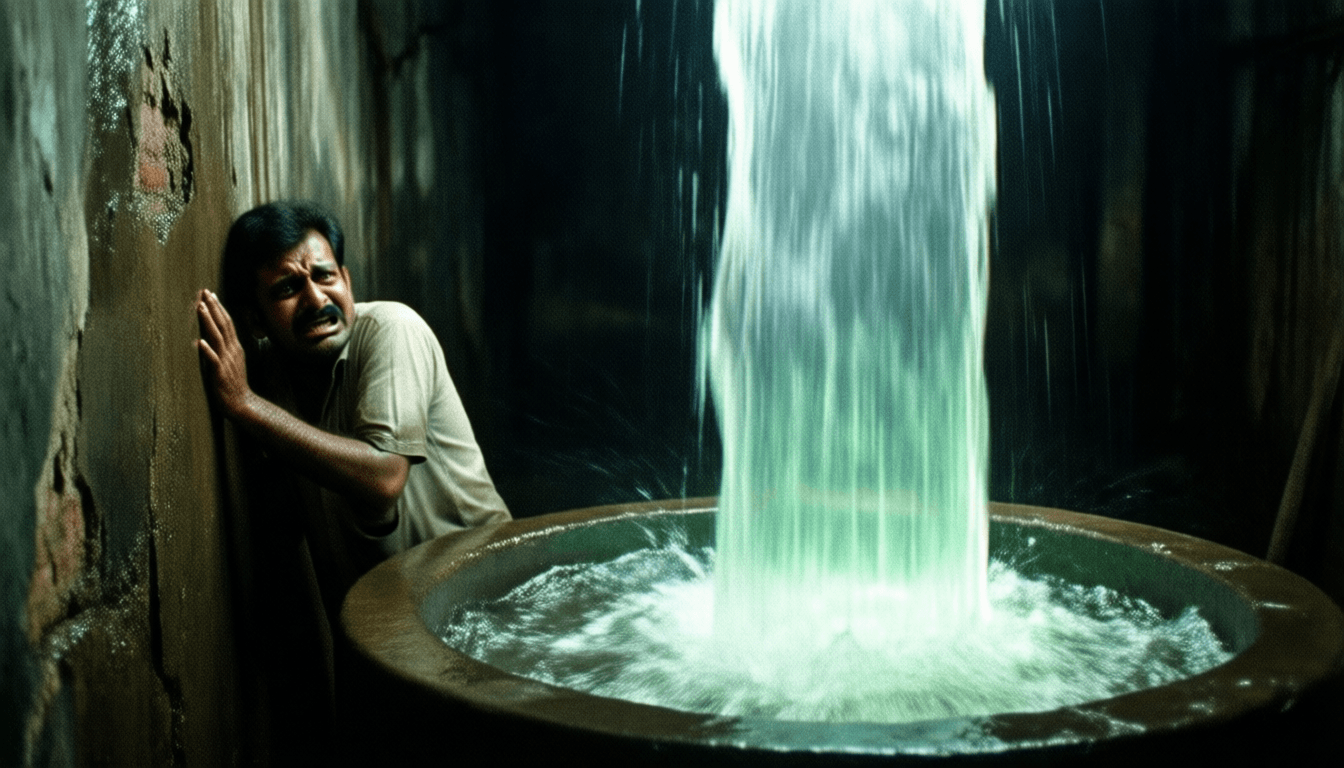
Then, the water in the tank began to move. Not flowing, but with an impossible, deliberate motion. In a perfect cylinder, its center utterly still, a column of water rose from the depths. It shimmered with a faint internal bioluminescence. It solidified in its liquid state, forming a seamless, impenetrable wall of fluid, pressing me back against the grimy concrete. This was no current. It was a static, impossibly heavy force that crushed me, stealing the air from my lungs. My ribs screamed, my vision blurred.
The mental assault intensified, overwhelming all my senses. My deepest, hidden anxieties erupted into vivid auditory hallucinations: my father’s harsh, disappointed voice, the metallic smell of a hospital, the absolute desolation of isolation. These weren't mere echoes; they were *projected* into my mind, amplified by the atmospheric chaos, distorting reality itself, making me physically nauseous. The pulsating light within the water column intensified, its rhythm terrifyingly synchronized with my agonizing heartbeat. This was not a creature. It was the *atmosphere itself*. A conscious, elemental force, breaking the rules of physics, exerting its will, attempting to break *mine*. My rebreather was useless against the overwhelming pressure.
In a desperate, primal surge, I fought back against the terror, the weight, the projected despair. I managed to trigger an emergency distress beacon. A meaningless act, but an act of defiance nonetheless. In that instant, the water column *collapsed* inwards. Not a breakdown, but a sudden, vacuum-like contraction. I was violently pulled forward, momentarily submerged in a violent rush of water, disoriented and choking. Then, the impossible pressure equalized just enough for me to escape, scrambling blindly towards the exit. It let me go. Perhaps it had gotten what it wanted, or deemed my resistance trivial.
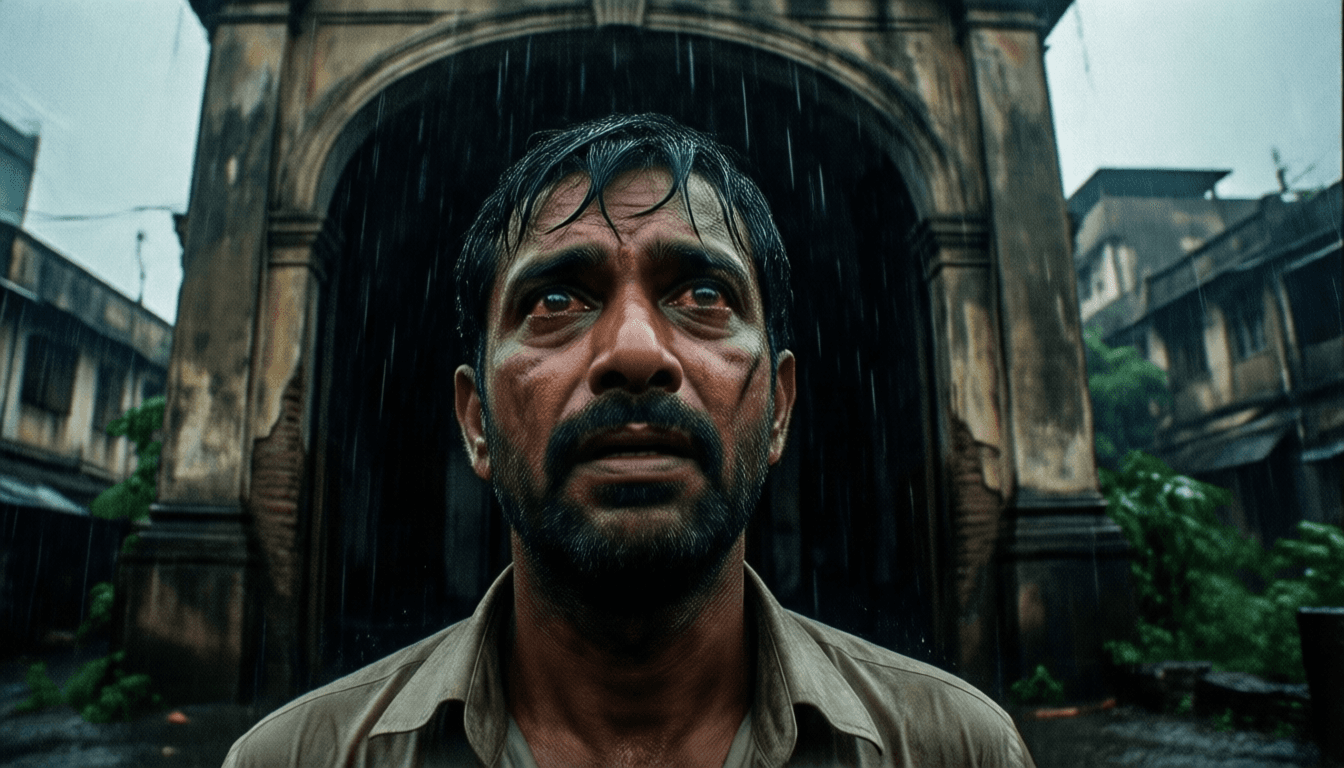
I emerged, battered and gasping, back into the relentless Mumbai monsoon. The rain poured, but it was no longer just water. Every raindrop felt like a pulse, a wave of information, a faint, rhythmic whisper resonating deep in my bones. My equipment, miraculously mostly intact, showed impossible data: barometric readings defying meteorological models, infrasound recordings with complex, patterned modulations, and strange EM spikes suggesting structured, intelligent energy signatures. Undeniable, unbelievable.
My body bore physical scars: bruised ribs, ruptured eardrums that would take weeks to heal, and a persistent low hum in my ears that never left, always present when it rained. But the most profound change was internal. I can no longer experience the monsoon as I once did. Every downpour now faintly, unbidden, evokes psychic echoes of the 'mood weavers'—flashes of inexplicable joy, waves of deep, collective sorrow. I instinctively avoid certain areas of Mumbai during heavy rain, a primal instinct overriding scientific curiosity.
The city, in my eyes, has changed. I see the vast crowds, the synchronized movements, the sudden, inexplicable shifts in collective emotion during intense weather. And I understand, with a chilling, undeniable certainty, that Mumbai does not merely *endure* the monsoon. It is *governed* by it. The weather is not just a force of nature. It is a silent, unseen, sentient observer and manipulator. And I, Aris Sharma, brushed against its consciousness. I survived, but the knowledge I carry is a permanent storm in itself, and now, every drop of rain whispers a secret I never wanted to uncover.
[ CLASSIFIED VERDICT ]
[ACCESS LOG - SOURCE FILE]
There's a rumor that Mumbai's monsoon is not just a seasonal phenomenon, but the breath of an invisible entity that manipulates the emotions of the entire city. During intense monsoon periods, large crowds are said to simultaneously experience sudden shifts in emotions like joy, sadness, and anger, a phenomenon attributed to a sentient atmospheric force residing in an old colonial-era pump house.