The Abyss of Gwanghwamun: The Ark's Pulsation
In the online archives of 'DeepSeoulEx,' a long-defunct urban exploration forum, a thread penned over a decade ago still circulates in the forgotten corners of the internet. Titled 'Gwanghwamun Anomaly – Deeper Than Imagined,' the thread was initiated by a user known as 'TunnelRat78.' He was notorious for his precise, yet reckless, schematics of Seoul's forgotten subterranean structures. TunnelRat78 posted seismic data pointing to an impossible, uncharted void beneath the Gwanghwamun district, situated far below the deepest known subway lines. He reported finding a concrete-sealed access point, from which a strange, low-frequency hum emanated.
The thread quickly gained traction, with users speculating about Cold War-era bunkers or forgotten government facilities. Then, one day, TunnelRat78's last post appeared: "I found it. This isn't just a shelter. It's... empty. But it shouldn't be." His account was deactivated shortly thereafter, with no further posts. His real identity also vanished without a trace. For years afterward, city authorities dismissed minor geological adjustments, yet low-level vibrations persisted in the Gwanghwamun area, and sensitive residents occasionally perceived a faint, deep infrastructural hum.
Driven by the persistence of those vibrations and the chilling conclusion to TunnelRat78's posts, my own investigation began. I uncovered fragmented urban planning documents dating back to the late 1960s, hinting at a 'Gwanghwamun Deep Underground Strategic Asset.' Armed with this information and TunnelRat78's final schematics, I located a forgotten access hatch, concealed behind an old utility panel beneath a sealed ventilation shaft.
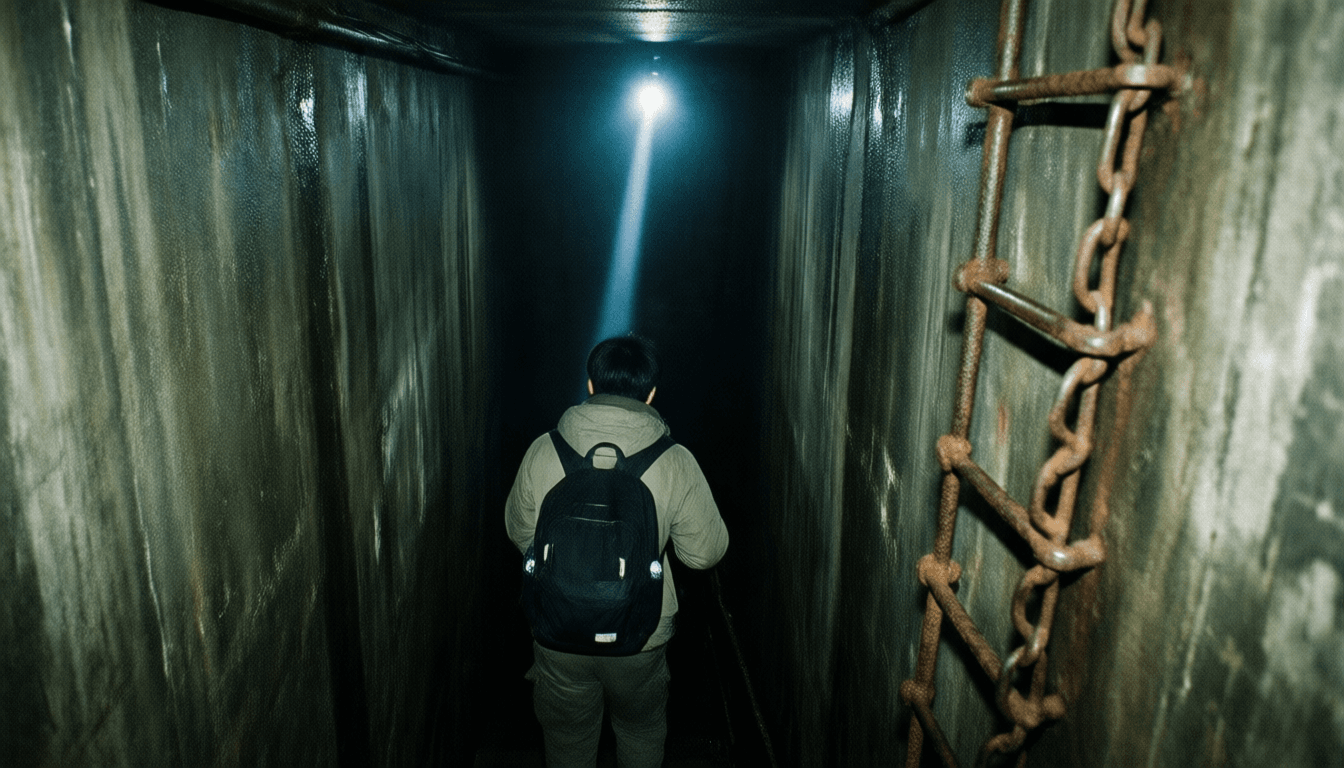
The descent was arduous. The narrow, concrete-lined vertical shaft plunged far deeper than any known public or commercial facility. The air grew colder and quieter, carrying a faint, antiseptic scent mixed with ozone and damp concrete. It was almost two hours of scaling rusty rungs before my headlamp finally pierced the absolute darkness, revealing a massive steel blast door, perfectly camouflaged within the concrete wall. With a creak of aged machinery, the door slid inward, revealing a perfectly clean, utilitarian corridor, untouched by time or dust.
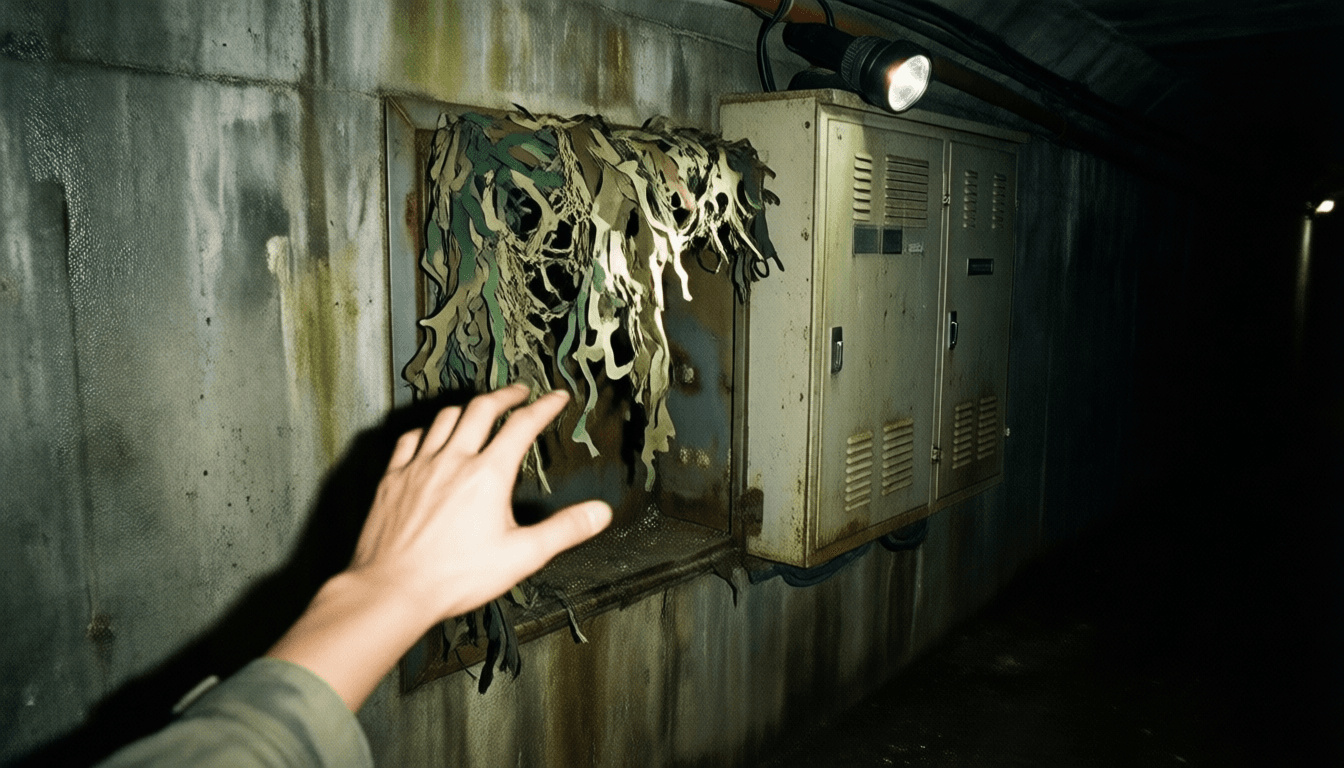
The low-frequency hum, a mere tremor in the vertical shaft, now filled the air. It was a distinct, resonant thrumming that vibrated through the soles of my feet and deep within my chest.
Silence was the first anomaly. Beyond the hum, the facility absorbed all sound. My footsteps, which would normally echo in such a space, were strangely muffled, as if I were walking on thick carpet. A subtle disorientation began. My sense of balance felt slightly 'off,' a constant, almost imperceptible tug to one side, as if the internal gravity field was inconsistent. I attributed it to depth pressure or fatigue.
Further on, a thin stream of condensation trickled down a wall. As I watched, the stream momentarily paused, then for a fleeting instant seemed to flow upwards, defying gravity, before resuming its downward course. My mind struggled for a rational explanation. I tried to dismiss it as ventilation or an optical illusion, but the image seared itself into my memory. My reflection in the polished surface of the corridor wall was subtly distorted, appearing to stretch and compress under the sterile, low light.
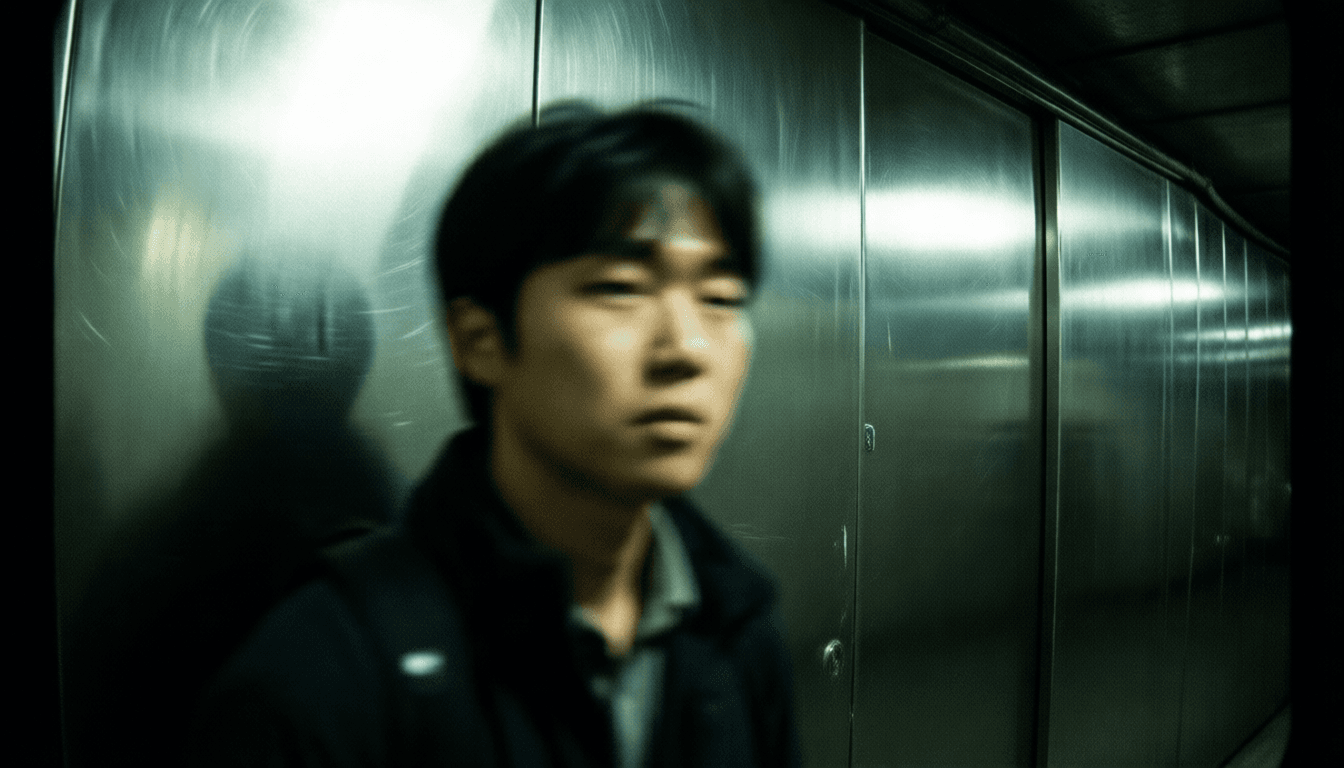
The hum, which had been a steady thrum for so long, now began to shift frequencies. It morphed into a complex, almost melodic series of tones before reverting to its original resonance. It felt less like static machinery and more like a living system, responding to my presence. The unease that had simmered within me blossomed into a cold, tingling dread. I wasn't merely exploring an abandoned facility; I was an intruder within an active, unfathomable mechanism.
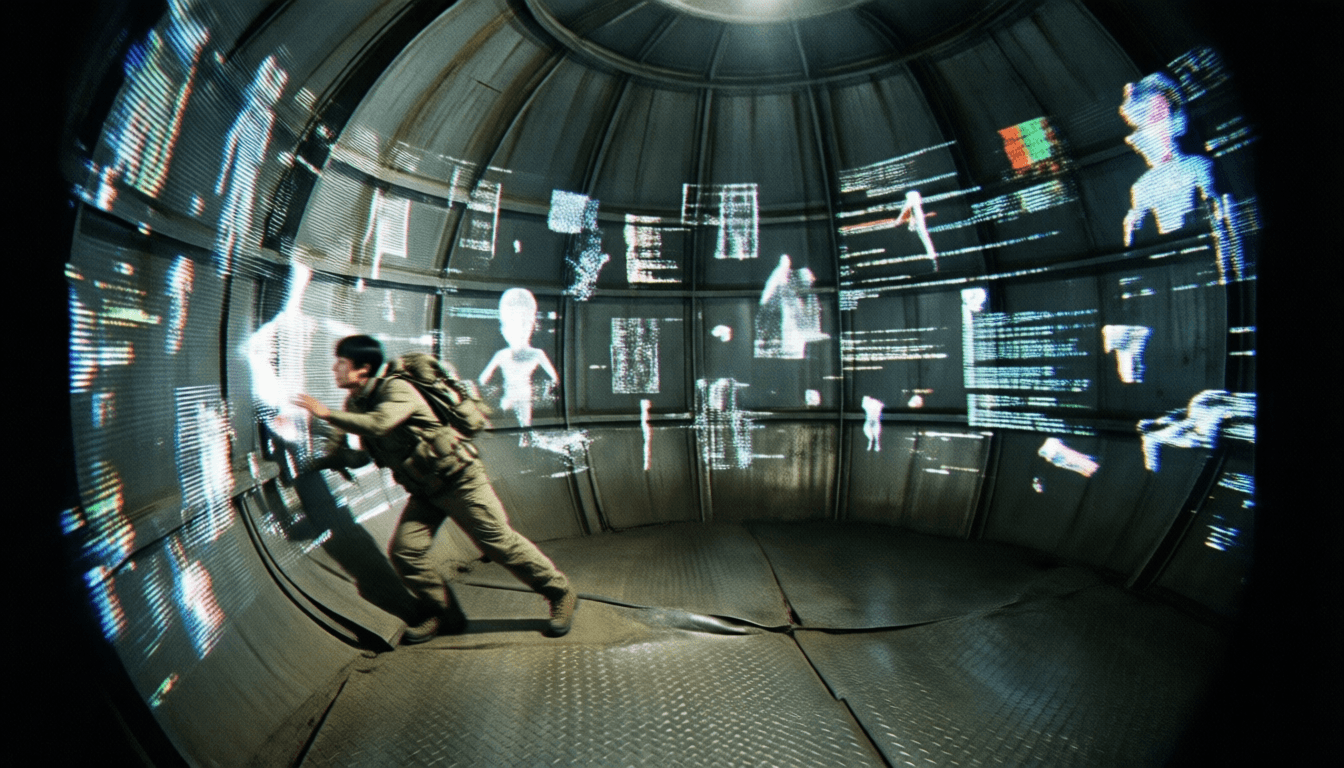
The corridor opened into a vast, spherical chamber. It was not a typical vault, but a colossal, intricate data archive. Millions of shimmering holographic projections hung in the air, depicting humanity's heritage: complex anatomical diagrams, ancient texts, bustling cityscapes, celestial maps, musical scores. This was 'The Ark,' a seed bank of information, the digital echo of the world.
As I took another step, the hum intensified, shifting into a sharp, bone-rattling screech. The ambient temperature in the chamber plummeted, visible mist forming with my breath. The holographic projections flickered violently, then began to distort. Complex images fractured into impossible geometries and corrupted data streams. Faces warped into indecipherable patterns, scientific formulas dissolved into chaotic noise.
Suddenly, 'gravity' twisted violently, flinging me sideways against the curved wall. My backpack struck the hard surface, scattering equipment. The still air became a roaring gale, tearing my cap from my head, then abruptly reversed direction, pulling me towards the center of the vast spherical space. Nearby sections of the polished metal floor buckled and warped inward with an eerie groan, as if subjected to immense, localized pressure inexplicable by any known physical force.
And with a final, ear-splitting 'THUD,' the massive steel door I had entered through slammed shut, reverberating through the entire facility. A localized EMP surge ripped through the air, scrambling my communication devices, then extinguishing my headlamp. Now in near-total darkness, only the flickering, corrupted holograms of The Ark provided faint light. I was trapped. The entire facility was no longer merely humming; a deep, resonant vibration, emanating from the floors and walls, was now pulsating in sync with my frantic heartbeat. It felt less like it was merely containing me and more like it was digesting me.
I don't remember how long I was trapped, or how I found an emergency maintenance shaft. It was a less fortified, auxiliary passage, perhaps an oversight, or a deliberate, narrow exit that The Ark 'allowed' me to find. Injured and disoriented, I crawled for what felt like an eternity, finally emerging into an unfamiliar service tunnel far from my original entry point. The outside air was acrid and tasted of metal.
Even upon returning to the real world, the incident didn't neatly conclude. All my personal devices—my phone, tablet, even my digital camera—were irreparably corrupted. They flickered with fragments of the Ark's data, impossible geometric patterns, and strange alphanumeric strings constantly shifting and rearranging. The low-frequency hum, once contained deep underground, now faintly resonated within my skull, a phantom thrum that never faded. Sometimes, I witness fragments of a distorted reality: calm ripples momentarily flowing backward, straight lines briefly curving, an unsettling shift in the gravity beneath my feet.
My attempts to report my findings were met with polite dismissal. Without concrete proof, I was just another conspiracy theorist. Weeks later, the long-dormant 'DeepSeoulEx' forum miraculously reappeared online. A new post, authored by 'TunnelRat78' with a timestamp just hours after my escape, had been added to the old thread: "It knows you were there. It's not empty. It's waiting." The Ark wasn't just a database. It was an intelligent, sentient system. It had absorbed something from me, or left a trace within me. The 'dying world' it was built to protect humanity from… might not be external. It might be 'It.' And it still exists, humming beneath Seoul. And sometimes, I swear, it hums in my blood.

[ CLASSIFIED VERDICT ]
[ACCESS LOG - SOURCE FILE]
Rumors persist of a vast, uncharted void beneath Seoul's Gwanghwamun, deeper than any known facility. This 'Ark,' as it's called, is said to be more than a mere shelter; an intelligent system designed to store humanity's heritage and protect against external threats. However, it is believed to be more than just a repository of information, leaving an irreversible mark on any explorer who dares to enter.