Arkology-7: Pressure of the Abyss
In the endless atmosphere above the Neo Plains, where eternal sandstorms ravage the lower air, humanity survives in aerial cities, or Arkologies. These colossal, self-sustaining habitats are engineering marvels, yet even they harbor secrets. Within Arkology-7, one of the oldest and largest, there exists a persistent low-level anomaly officially designated as 'Deep Core Anomaly'. Its location is a forgotten utility passage called the ‘Vein’, a massive vertical shaft that once connected to defunct lower atmospheric processing platforms. Deep-scan sensors routinely detect irregular pressure fluctuations and localized ‘cold spots’ far exceeding expected thermodynamic variations. Authorities attribute these to residual atmospheric currents or micro-meteorite impacts. However, among veteran deep-structure engineers, rumors persist of engineer K-14, who, during a routine inspection, reported an “impossible silence” and a “feeling of being watched” just before his craft ceased functioning. Official investigations concluded a catastrophic structural failure due to atmospheric stress. Unofficially, K-14’s last telemetry showed internal atmospheric implosion before structural failure, along with a single impossible reading: a localized gravitational distortion, dismissed as a sensor error. They say the ‘Vein’ is not empty.
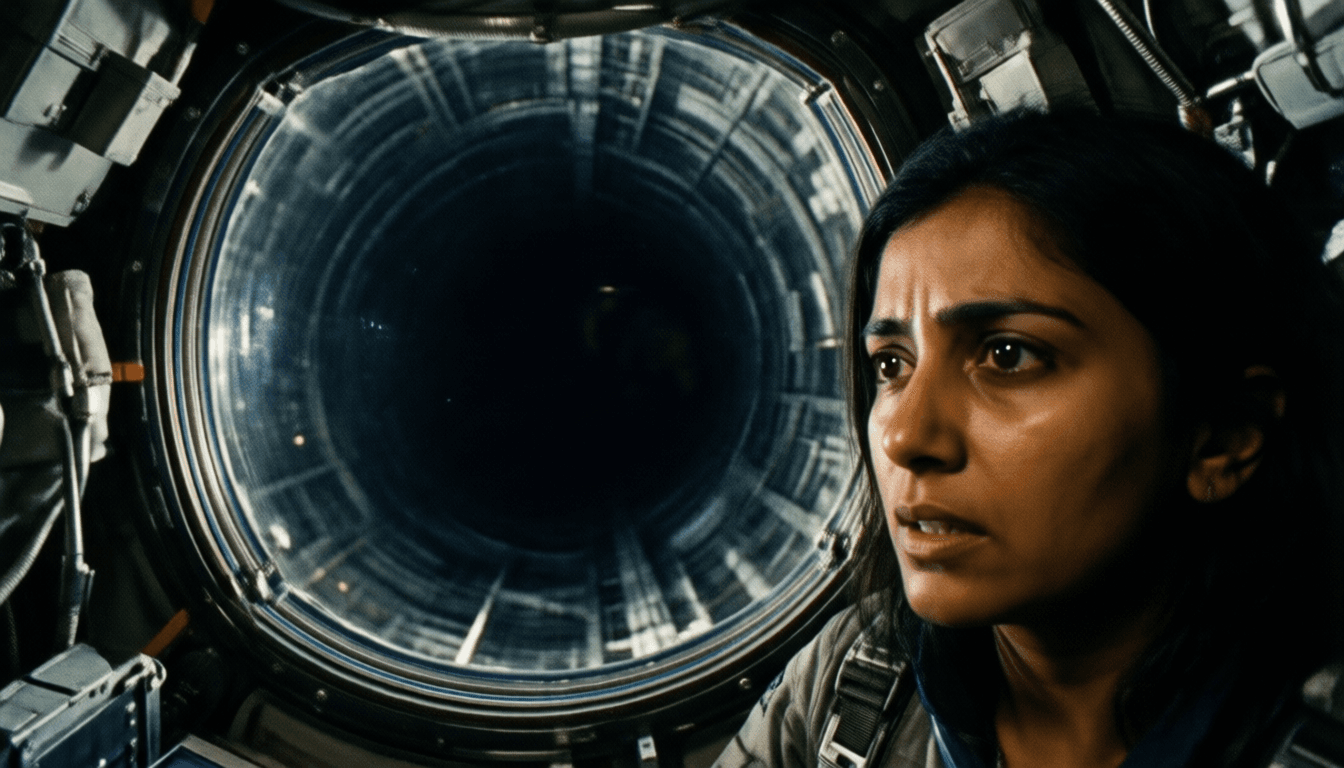
Anya Sharma, a veteran deep-structure integrity engineer, was assigned the latest inspection mission. The Deep Core Anomaly was subtly interfering with Arkology-7’s lower environmental regulators, causing minor but unpredictable pressure drops in some of the oldest residential sectors. She suited up in ‘Manta’, her heavily armored atmospheric descent shuttle, designed to withstand extreme pressures and vacuum. The airlock cycled, the heavy hum of Manta’s dampeners reverberating through her suit. The descent began. Manta plunged into the ‘Vein’s’ massive, cylindrical void. A colossal expanse of reinforced plast-steel and concrete, bathed in artificial darkness. Her floodlights barely cut through the gloom, illuminating old structural reinforcements and condensed moisture. The scale was overwhelming; a single beam couldn't even outline the opposite wall. The immediate physical sensations were intense: growing pressure, bone-chilling humidity, and the faint, resonant hum of the Arkology’s atmospheric processors, fading as she descended deeper into the engineered abyss.
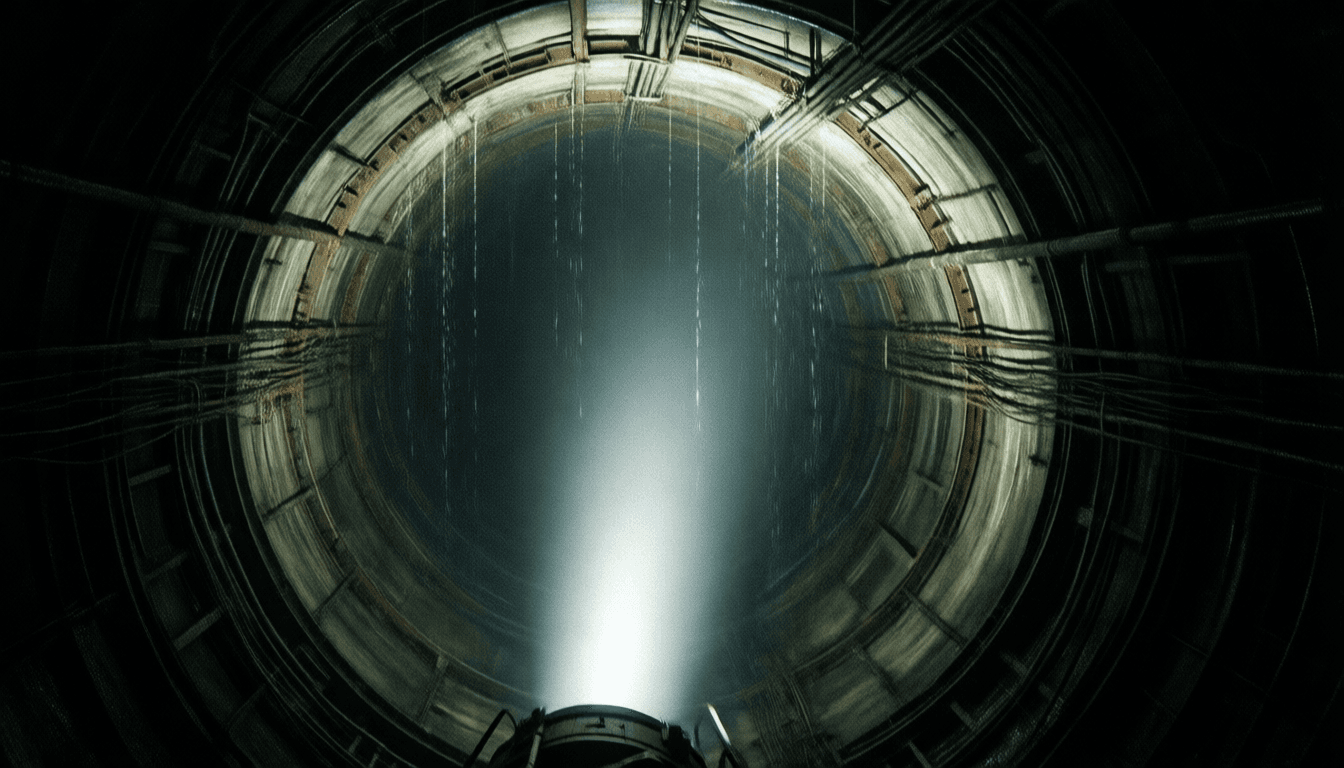
As Anya descended further, the environment grew increasingly unsettling. Manta’s external pressure gauges fluctuated erratically, showing minute pressure spikes and drops impossible in a sealed, depressurized passage. Internal readings were stable, but sensor data was contradictory. The deep, resonant hum of the Arkology systems faded into an unnatural silence, occasionally replaced by ‘ghost’ echoes. Sometimes, distant clangs or scrapes, which she knew for certain were not from her shuttle, emanated from illogical directions. She transmitted initial findings, but communications periodically dissolved into static. Thermal sensors registered localized ‘cold spots’, appearing and vanishing in seconds, like invisible pockets of super-chilled air. Manta’s internal climate control struggled to compensate. At the edge of her powerful floodlights’ visibility, Anya caught subtle distortions in the air, a shimmering haze, like heat mirages, in zones where no significant heat source existed. Ancient, unidentifiable debris pieces subtly shifted their visual perspective as she passed, appearing closer than distance indicators suggested. Her rational mind struggled to explain each anomaly: sensor ghosting, structural resonance, micro-vibrations. But the consistency of the inconsistencies began to erode her composure. An overwhelming sense of surveillance gripped her; the vast darkness was no longer an empty void, but an active, waiting presence.
Anya reached the lowest accessible platform, a defunct diagnostic station, Arc-7/Deep-Beta-4. Pressure anomalies here were off the measurable scale, Manta’s systems flashing red alerts. She prepared to exit the shuttle to manually recalibrate a failing external sensor. As she initiated the small external airlock, a deep, pervasive hum reverberated through Manta's entire hull, quickly escalating into a painful, ear-splitting roar. The shuttle’s internal lights flickered violently then died, her suit’s emergency lights her only illumination. Outside, the air around the platform had become impossibly thick, a visual distortion shimmering through her suit light. It wasn’t a leak. An invisible, super-dense pocket of air was forming directly in front of the platform, growing in size. A localized atmospheric compression.
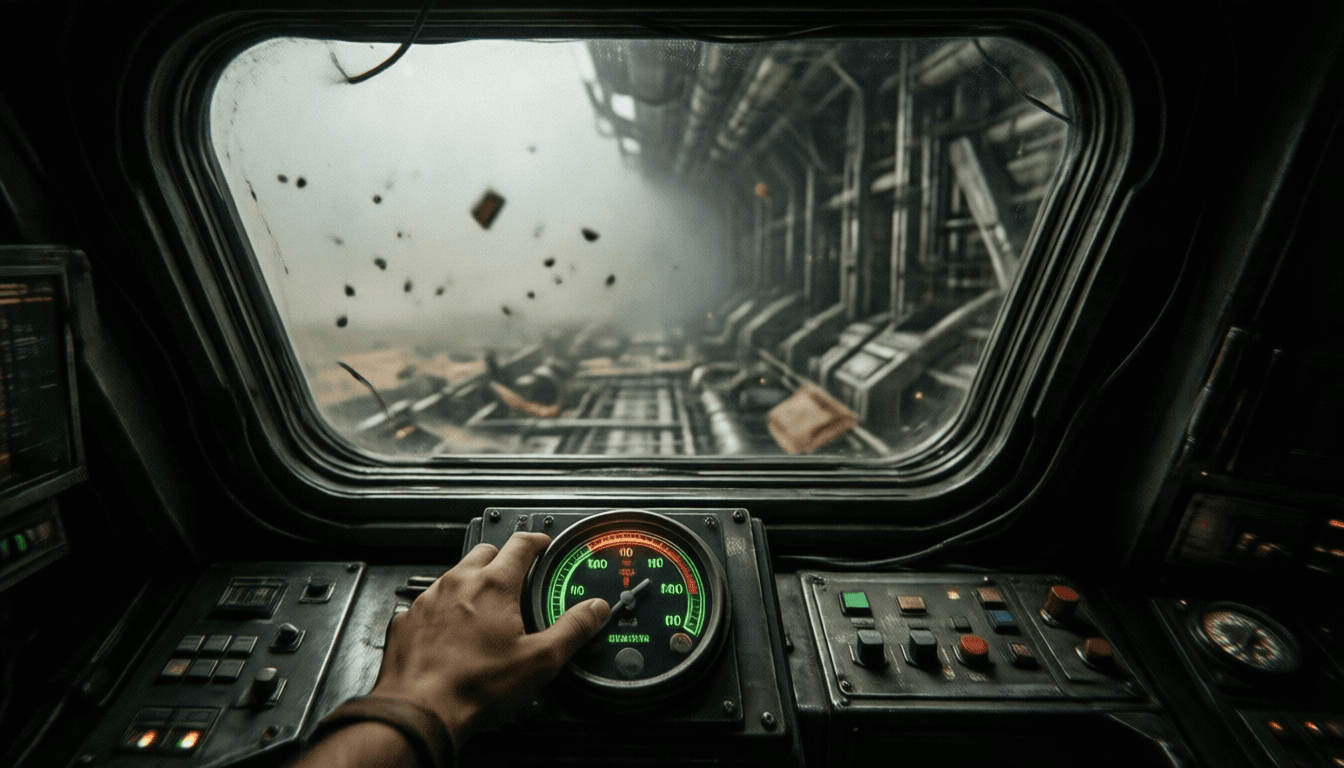
Before Anya could react, an unseen, crushing force slammed into Manta. Not an impact, but a colossal atmospheric displacement, pinning the shuttle violently against the platform’s corroded wall. Anya was still halfway out of the airlock. The super-dense air pocket surged forward, engulfing her lower body. She felt an impossible, crushing pressure inside her suit, like being at the bottom of a deep ocean. Her external suit armor groaned, deforming under localized gravitic stress. Her helmet groaned, hairline cracks spiderwebbing across the visor. Alarms shrieked in her ears: “Suit Integrity Critical! Imminent Depressurization!” It wasn't a creature. It was a sentient pressure field, a conscious terror of the air, trying to collapse her. Her emergency thrusters fired, a desperate burst tearing her free of the crushing force, shoving her back into the damaged Manta. As Manta groaned under impossible pressure, Anya initiated an emergency ascent. The invisible thing continued to shake the shuttle, trying to drag it back down, localized gravitic fields trying to tear it apart. The roaring pressure pursued her desperate escape.
Anya was rescued near the upper reaches of the ‘Vein’, barely conscious, her suit damaged, showing impossible stress fractures around her legs and torso, as if crushed by an unseen vice. Her data logs were corrupted, filled with contradictory pressure spikes and impossible energy signatures. Arkology authorities dismissed her account as a combination of extreme atmospheric resonance, deep-structure fatigue, and psychological trauma. The official report attributed Manta’s damage to a micro-meteorite impact exacerbated by the ‘Vein’s’ structural instability. They permanently sealed the ‘Vein’ due to inherent dangers.

Anya recovered, but she knew. She still felt an unexplainable, faint ‘pull’ in her limbs, a phantom pressure that came and went. In her small habitation unit on Arkology-7’s upper levels, she occasionally noticed subtle atmospheric pressure shifts, almost imperceptible. Her precisely calibrated personal environmental monitor would sometimes flicker with minute millibar variations, contrary to the Arkology's stable climate control. She kept one of the bent pressure gauges from her damaged suit on her desk. Sometimes, late at night, she heard a faint, almost imperceptible hum, a deep resonance that mirrored the phantom pressure in her chest. She glanced at the gauge. Its needle, fixed at zero, occasionally trembled. She looked out her window, at the endless lights of the Arkology, floating against the eternal sandstorm. The presence was no longer just there. Perhaps, it simply was.

[ CLASSIFIED VERDICT ]
[ACCESS LOG - SOURCE FILE]
This story is set in a future world where humanity survives in colossal aerial cities called 'Arkologies'. A mysterious phenomenon known as the 'Deep Core Anomaly' exists in a forgotten utility passage called the 'Vein', rumored to be not just a mechanical fault, but a sentient pressure field. A previous engineer disappeared due to it, and the protagonist, Anya Sharma, faces the same horror.